


Blog Categories
- African Incidents
- Atlantis Incidents
- Australian Incidents
- Belgian Incidents
- Bermuda Triangle Incidents
- Brazilian Incidents
- Canadian Incidents
- Chinese Incidents
- European Incidents
- France Incidents
- Ghosts
- Giants
- Italy Incidents
- Japanese Incidents
- Middle East Incidents
- Portugal Incidents
- Project Serpo
- Puerto Rico Incidents
- Russian Incidents
- Sasquatch
- Scandinavia Incidents
- Spanish Incidents
- UFOs
- United Kingdom Incidents
- United States Incidents
1909–1925: Connecticut’s Local UFO Notices
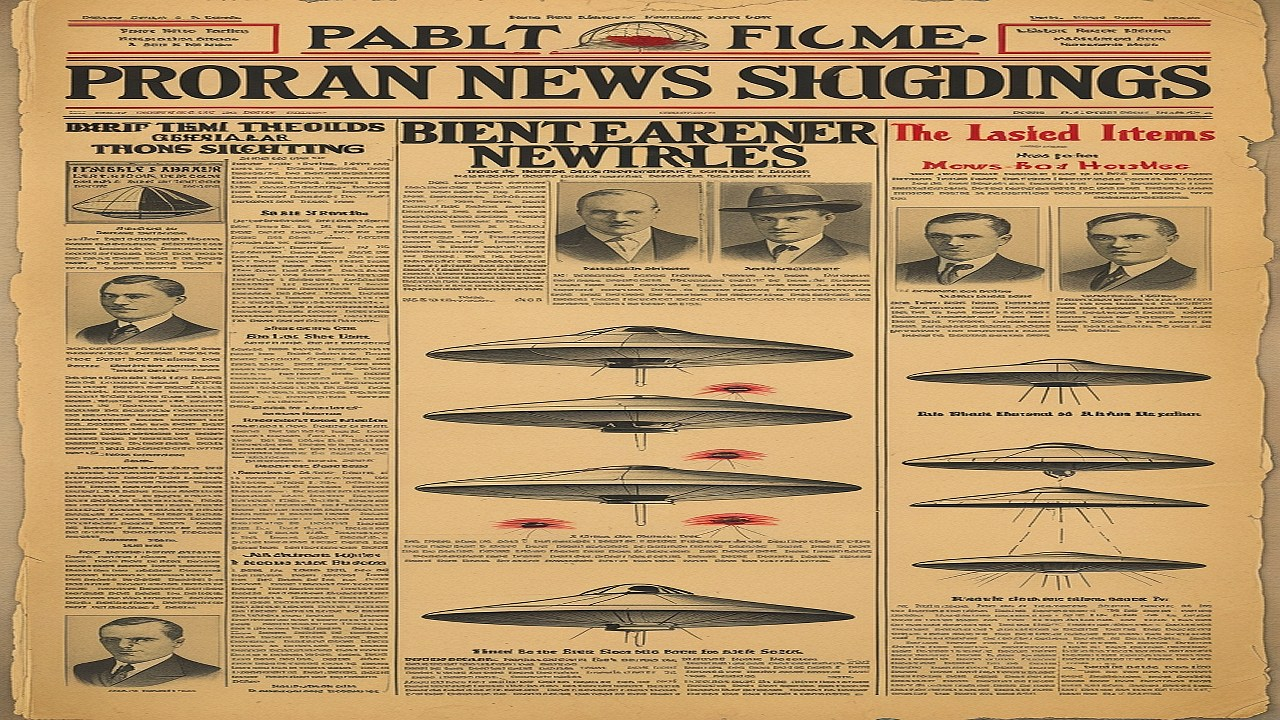
Between 1909 and 1925, Connecticut’s newspapers quietly recorded a handful of curious incidents that, while easily overlooked by modern standards, form an essential thread in the larger story of unidentified aerial phenomena. These were not the dramatic “mystery airship” flaps of 1896–97 or 1909–10, which captivated the nation and inspired widespread debate. Instead, they were smaller, scattered mentions—brief notes tucked into columns, often without attribution or follow-up. Yet, taken together, they reveal something deeper about the early twentieth-century public’s ongoing fascination with the sky and their readiness to report the unusual. These brief reports mark the slow, cultural transition between the imaginative “airship age” and the later modern UFO era that began after 1947.
The record shows that, during the 1910s and early 1920s, several Connecticut newspapers—including the Hartford Courant, the New Haven Register, the Norwich Bulletin, and regional town papers such as the Waterbury American and Willimantic Chronicle—occasionally printed items referring to mysterious lights, “airships,” or unusual objects seen overhead. Most of these accounts were brief and unspecific. A typical entry might read, “Residents of [town name] reported seeing a strange light moving slowly across the sky about nine o’clock last evening. Some said it was an airplane; others were uncertain.” These sentences, sometimes wedged between weather reports and social notices, did not attempt to interpret or investigate the events further.
What makes these scattered reports significant is not their content but their persistence. Even after public excitement over the major “mystery airship” waves had faded, Connecticut citizens and journalists remained attuned to the possibility of extraordinary things in the heavens. Their casual treatment of the sightings demonstrates that, by the early twentieth century, the idea of strange aerial craft had become an accepted—if minor —part of public discourse.
Context is essential to understanding this period. By 1909, aviation was no longer a fantasy. The Wright brothers had achieved controlled flight, dirigibles had crossed the English Channel, and balloon ascensions were popular fair attractions. Airplanes were entering military service, and public exhibitions of flight drew crowds across America. In this environment, seeing an unusual light in the sky did not immediately evoke the supernatural. More often, it raised curiosity about whether an inventor, a traveling exhibition, or even a secret government experiment might be responsible. The vocabulary of “airships” remained common, even though airplanes had become the dominant technology.
Connecticut’s industrial towns contributed to this atmosphere of speculation. Bridgeport, Hartford, and New Haven were centers of invention and production. Electric lights, searchlights, and early radio technologies were being tested. Nighttime illumination, still a relatively new phenomenon, could create striking and unfamiliar effects. A single arc light or advertising searchlight might project beams visible for miles, leading some observers to interpret them as moving craft. In smaller towns, where rural darkness still prevailed, even an ordinary meteor could spark discussion.
The newspapers of the period reflected this mixture of wonder and skepticism. Editors treated reports of aerial lights as novelties—something to amuse readers, not to alarm them. This treatment mirrored national trends. Throughout the United States, especially between 1910 and 1920, brief “mystery light” reports appeared in local papers. They were often linked to the lingering cultural fascination with flight, the unknown, and the promise of technological progress.
Connecticut’s geography also played a role. Its position along the northeastern seaboard placed it beneath busy travel routes between Boston, New York, and beyond. Military and private pilots occasionally flew across the state, and observers unfamiliar with the appearance of aircraft navigation lights might misinterpret them. During World War I, for example, nighttime flights and searchlight drills were occasionally conducted as part of training or defense preparations. Even years later, the memory of wartime vigilance remained strong, and unidentified lights could easily be viewed through that lens.
Though there were no verified “airship landings” or direct encounters in Connecticut during this period, the cumulative effect of these small reports was cultural continuity. They kept alive the sense that the sky could still surprise people. For communities accustomed to steady technological change, the idea that something unexplainable might appear overhead was both thrilling and reassuring—a reminder that not everything could yet be understood.
The influence of these early reports extends far beyond their brevity. They provided a social framework for interpreting future UFO sightings. When the “flying saucer” phenomenon erupted in 1947, newspapers and witnesses already possessed a century-long vocabulary for describing unexplained aerial phenomena. The language of “mystery airships,” “strange lights,” and “objects seen by many” was ready-made. Connecticut’s early twentieth-century reports, therefore, form part of the foundation on which modern UFO narratives rest.
It is worth noting that these stories also reflected the limitations of communication at the time. Rural communities depended on local papers for information. Without instant photography, portable recording devices, or standardized reporting, eyewitness accounts could only be preserved in text. The result was that most sightings were summarized in a few lines, stripped of context. A farmer might mention seeing a light, a neighbor might confirm it, and by the next morning, the local paper might run a headline: “Mysterious Light Over Town.” Within days, it would vanish from public memory. Yet, each of these fleeting notices adds to the mosaic of public perception during the early aviation age.
No single individual dominates this era of Connecticut reports, though several names associated with aviation and invention cast long shadows over the period. Figures like Gustave Whitehead, who allegedly flew a powered aircraft in Bridgeport before the Wright brothers, kept alive the idea that Connecticut might be home to secret or experimental machines. Balloonists and early aviators occasionally visited towns for fairs or exhibitions, performing nighttime flights that could have been misinterpreted by distant onlookers. In some cases, showmen deliberately courted publicity, knowing that rumors of mysterious lights could draw attention to upcoming performances.
Scholars who have studied these reports view them as part of an ongoing folklore of aerial novelty. The folklorist aspect is crucial: people did not necessarily believe these were extraterrestrial visitors, but they relished the mystery. The stories reflected collective curiosity and community storytelling traditions. They also demonstrate how quickly new technologies—balloons, airplanes, and electric lights—entered the mythic imagination.
From a sociological perspective, these reports reveal how early twentieth century communities negotiated the boundary between science and mystery. People trusted newspapers as authoritative sources. When local papers printed strange aerial stories without mockery, it signaled that curiosity about the unknown was socially acceptable. In a time of rapid modernization, when old certainties were giving way to technological wonders, the mysterious sky became a canvas for both fear and hope.
The impact of these scattered reports continues today in subtle but enduring ways. For historians of technology and culture, they provide valuable insight into how public perception adapts to innovation. For UFO researchers, they serve as a reminder that interest in unexplained aerial phenomena long predates the “modern” UFO age. Connecticut’s scattered airship notices show that the human impulse to look upward— and to wonder about what might exist beyond ordinary experience—was already firmly in place.
In modern terms, these early reports also prefigure the patterns seen in later UFO waves. The same dynamics—brief newspaper mentions, uncertain witnesses, speculation without proof—recur in the mid twentieth century and beyond. By studying the Connecticut reports from 1909 to 1925, we see how the cycle of sighting, reporting, and forgetting developed as part of American media culture.
Today, few people remember those fleeting newspaper items. Yet their legacy endures in every contemporary UFO headline and every whispered story of something unexplained moving through the night sky. They represent an era when human imagination stretched to meet new horizons, when electricity and aviation blurred the boundary between the known and the marvelous.
In that sense, the scattered Connecticut “airship” and strange-light reports of 1909–1925 were more than curiosities. They were a mirror reflecting the hopes and uncertainties of a changing age. They remind us that the modern fascination with UFOs did not appear suddenly—it evolved slowly, nurtured by generations of observers who looked to the sky and found in its mysteries a reflection of their own need to explore, to question, and to believe.
Between 1909 and 1925, Connecticut’s newspapers quietly recorded a handful of curious incidents that, while easily overlooked by modern standards, form an essential thread in the larger story of unidentified aerial phenomena. These were not the dramatic “mystery airship” flaps of 1896–97 or 1909–10, which captivated the nation and inspired widespread debate. Instead, they were smaller, scattered mentions—brief notes tucked into columns, often without attribution or follow-up. Yet, taken together, they reveal something deeper about the early twentieth-century public’s ongoing fascination with the sky and their readiness to report the unusual. These brief reports mark the slow, cultural transition between the imaginative “airship age” and the later modern UFO era that began after 1947.
The record shows that, during the 1910s and early 1920s, several Connecticut newspapers—including the Hartford Courant, the New Haven Register, the Norwich Bulletin, and regional town papers such as the Waterbury American and Willimantic Chronicle—occasionally printed items referring to mysterious lights, “airships,” or unusual objects seen overhead. Most of these accounts were brief and unspecific. A typical entry might read, “Residents of [town name] reported seeing a strange light moving slowly across the sky about nine o’clock last evening. Some said it was an airplane; others were uncertain.” These sentences, sometimes wedged between weather reports and social notices, did not attempt to interpret or investigate the events further.
What makes these scattered reports significant is not their content but their persistence. Even after public excitement over the major “mystery airship” waves had faded, Connecticut citizens and journalists remained attuned to the possibility of extraordinary things in the heavens. Their casual treatment of the sightings demonstrates that, by the early twentieth century, the idea of strange aerial craft had become an accepted—if minor —part of public discourse.
Context is essential to understanding this period. By 1909, aviation was no longer a fantasy. The Wright brothers had achieved controlled flight, dirigibles had crossed the English Channel, and balloon ascensions were popular fair attractions. Airplanes were entering military service, and public exhibitions of flight drew crowds across America. In this environment, seeing an unusual light in the sky did not immediately evoke the supernatural. More often, it raised curiosity about whether an inventor, a traveling exhibition, or even a secret government experiment might be responsible. The vocabulary of “airships” remained common, even though airplanes had become the dominant technology.
Connecticut’s industrial towns contributed to this atmosphere of speculation. Bridgeport, Hartford, and New Haven were centers of invention and production. Electric lights, searchlights, and early radio technologies were being tested. Nighttime illumination, still a relatively new phenomenon, could create striking and unfamiliar effects. A single arc light or advertising searchlight might project beams visible for miles, leading some observers to interpret them as moving craft. In smaller towns, where rural darkness still prevailed, even an ordinary meteor could spark discussion.
The newspapers of the period reflected this mixture of wonder and skepticism. Editors treated reports of aerial lights as novelties—something to amuse readers, not to alarm them. This treatment mirrored national trends. Throughout the United States, especially between 1910 and 1920, brief “mystery light” reports appeared in local papers. They were often linked to the lingering cultural fascination with flight, the unknown, and the promise of technological progress.
Connecticut’s geography also played a role. Its position along the northeastern seaboard placed it beneath busy travel routes between Boston, New York, and beyond. Military and private pilots occasionally flew across the state, and observers unfamiliar with the appearance of aircraft navigation lights might misinterpret them. During World War I, for example, nighttime flights and searchlight drills were occasionally conducted as part of training or defense preparations. Even years later, the memory of wartime vigilance remained strong, and unidentified lights could easily be viewed through that lens.
Though there were no verified “airship landings” or direct encounters in Connecticut during this period, the cumulative effect of these small reports was cultural continuity. They kept alive the sense that the sky could still surprise people. For communities accustomed to steady technological change, the idea that something unexplainable might appear overhead was both thrilling and reassuring—a reminder that not everything could yet be understood.
The influence of these early reports extends far beyond their brevity. They provided a social framework for interpreting future UFO sightings. When the “flying saucer” phenomenon erupted in 1947, newspapers and witnesses already possessed a century-long vocabulary for describing unexplained aerial phenomena. The language of “mystery airships,” “strange lights,” and “objects seen by many” was ready-made. Connecticut’s early twentieth-century reports, therefore, form part of the foundation on which modern UFO narratives rest.
It is worth noting that these stories also reflected the limitations of communication at the time. Rural communities depended on local papers for information. Without instant photography, portable recording devices, or standardized reporting, eyewitness accounts could only be preserved in text. The result was that most sightings were summarized in a few lines, stripped of context. A farmer might mention seeing a light, a neighbor might confirm it, and by the next morning, the local paper might run a headline: “Mysterious Light Over Town.” Within days, it would vanish from public memory. Yet, each of these fleeting notices adds to the mosaic of public perception during the early aviation age.
No single individual dominates this era of Connecticut reports, though several names associated with aviation and invention cast long shadows over the period. Figures like Gustave Whitehead, who allegedly flew a powered aircraft in Bridgeport before the Wright brothers, kept alive the idea that Connecticut might be home to secret or experimental machines. Balloonists and early aviators occasionally visited towns for fairs or exhibitions, performing nighttime flights that could have been misinterpreted by distant onlookers. In some cases, showmen deliberately courted publicity, knowing that rumors of mysterious lights could draw attention to upcoming performances.
Scholars who have studied these reports view them as part of an ongoing folklore of aerial novelty. The folklorist aspect is crucial: people did not necessarily believe these were extraterrestrial visitors, but they relished the mystery. The stories reflected collective curiosity and community storytelling traditions. They also demonstrate how quickly new technologies—balloons, airplanes, and electric lights—entered the mythic imagination.
From a sociological perspective, these reports reveal how early twentieth century communities negotiated the boundary between science and mystery. People trusted newspapers as authoritative sources. When local papers printed strange aerial stories without mockery, it signaled that curiosity about the unknown was socially acceptable. In a time of rapid modernization, when old certainties were giving way to technological wonders, the mysterious sky became a canvas for both fear and hope.
The impact of these scattered reports continues today in subtle but enduring ways. For historians of technology and culture, they provide valuable insight into how public perception adapts to innovation. For UFO researchers, they serve as a reminder that interest in unexplained aerial phenomena long predates the “modern” UFO age. Connecticut’s scattered airship notices show that the human impulse to look upward— and to wonder about what might exist beyond ordinary experience—was already firmly in place.
In modern terms, these early reports also prefigure the patterns seen in later UFO waves. The same dynamics—brief newspaper mentions, uncertain witnesses, speculation without proof—recur in the mid twentieth century and beyond. By studying the Connecticut reports from 1909 to 1925, we see how the cycle of sighting, reporting, and forgetting developed as part of American media culture.
Today, few people remember those fleeting newspaper items. Yet their legacy endures in every contemporary UFO headline and every whispered story of something unexplained moving through the night sky. They represent an era when human imagination stretched to meet new horizons, when electricity and aviation blurred the boundary between the known and the marvelous.
In that sense, the scattered Connecticut “airship” and strange-light reports of 1909–1925 were more than curiosities. They were a mirror reflecting the hopes and uncertainties of a changing age. They remind us that the modern fascination with UFOs did not appear suddenly—it evolved slowly, nurtured by generations of observers who looked to the sky and found in its mysteries a reflection of their own need to explore, to question, and to believe.