

Blog Categories
- African Incidents
- Atlantis Incidents
- Australian Incidents
- Belgian Incidents
- Bermuda Triangle Incidents
- Brazilian Incidents
- Canadian Incidents
- Chinese Incidents
- European Incidents
- France Incidents
- Ghosts
- Giants
- Italy Incidents
- Japanese Incidents
- Middle East Incidents
- Portugal Incidents
- Project Serpo
- Puerto Rico Incidents
- Russian Incidents
- Sasquatch
- Scandinavia Incidents
- Spanish Incidents
- UFOs
- United Kingdom Incidents
- United States Incidents
1540: Nuremberg Germany (lunar observation)
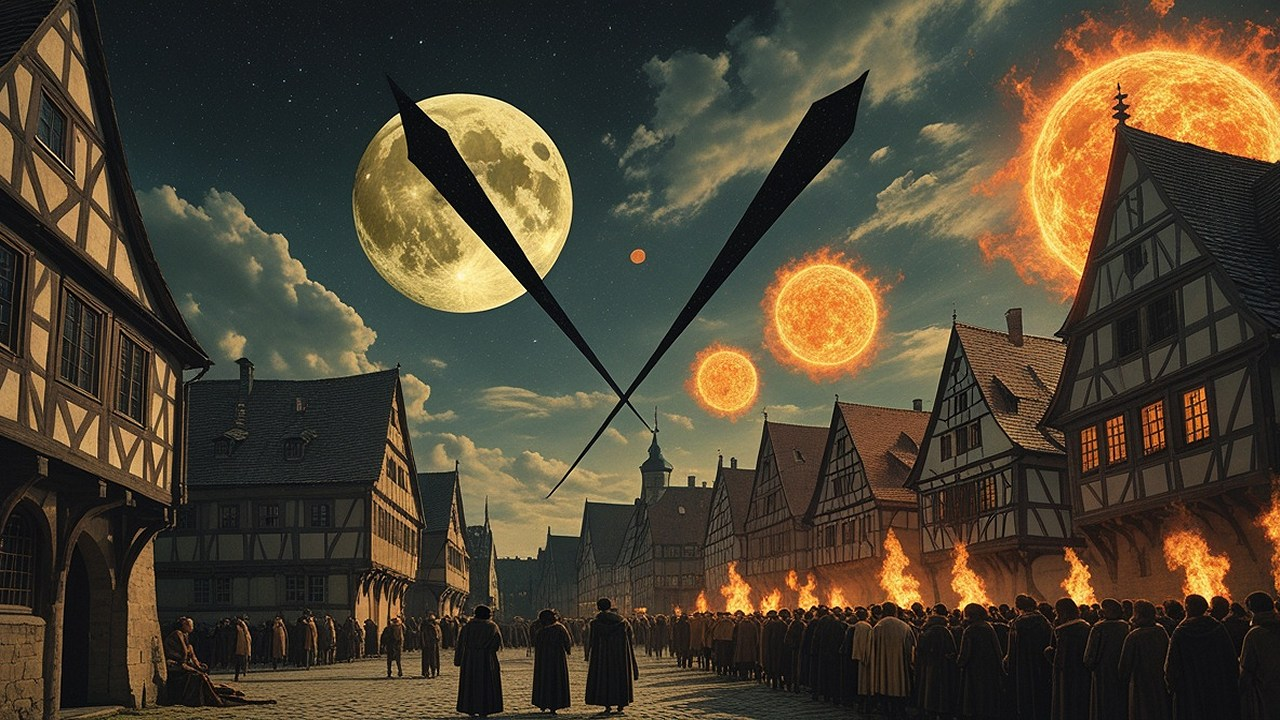
More than 480 years ago — long before telescopes, satellites, or space programs — people in Nuremberg, Germany looked up at the Moon in broad daylight and witnessed something extraordinary. On April 25, 1540, residents watched two great black spears cross the face of the Moon. Almost immediately afterward, glowing spherical objects emerged from both the Sun and the Moon, moving toward each other as if in confrontation.
This wasn’t a modern blurry video or a questionable eyewitness story. This event was recorded in the official city chronicle and illustrated in a contemporary woodcut — one of the earliest known visual records of a lunar anomaly in human history.
Today, we’re going back to the pre-telescopic era to examine one of the most compelling early lunar mysteries ever documented. This is the 1540 Nuremberg Moon Incident.
Let’s set the scene. It’s spring in 1540. Nuremberg is one of the most important cities in the Holy Roman Empire — a center of learning, trade, and scholarship. The citizens are no strangers to celestial events. Comets, eclipses, and unusual sky phenomena were often interpreted as omens. But what happened on April 25th was different.
According to the city chronicle, people gathered in the streets as “two great black spears” were seen crossing the lunar disk in broad daylight. These dark, elongated objects moved in a straight, deliberate path across the Moon’s surface. Then, spherical objects — described as glowing or fiery — emerged from both the Sun and the Moon, appearing to move toward one another.
The surviving woodcut, published shortly after the event, shows the Moon prominently in the center with the two black spear-like forms clearly visible against it. Surrounding both the Sun and Moon are round objects, some with trailing lines suggesting motion. The accompanying text describes it as a “terrible spectacle” that caused many citizens to fear divine judgment.
What makes this case so significant is its specificity to the Moon. While many 16th-century broadsides described “battles in the sky,” this event was anchored directly to the lunar surface. Objects were seen transiting the Moon, emerging from it, and interacting in relation to it. This wasn’t just lights in the sky — it was activity centered on our nearest celestial neighbor.
At the time, no one had the vocabulary of “UFOs” or “UAP.” These were educated merchants, scholars, and city officials simply recording what they saw. Nuremberg’s status as an intellectual hub makes mass hysteria or casual exaggeration unlikely. The event was serious enough to be preserved in official records and illustrated for distribution.
Skeptics have offered explanations over the centuries: unusual cloud formations, atmospheric refraction, or optical illusions. However, the woodcut’s detail and the multiple independent references in the chronicle suggest something genuinely striking occurred. The objects were described with specific shapes and motion that don’t easily align with known natural phenomena of the era.
This 1540 sighting doesn’t stand alone. It belongs to a fascinating pattern of pre-telescopic lunar anomalies recorded across Europe in the 1500s and 1600s.
Just 21 years later, in 1561, another famous Nuremberg woodcut depicted a massive celestial battle involving dozens of spherical and cylindrical objects emerging from the Sun and Moon. While often discussed as a general UFO event, the Moon again plays a central role in both the illustration and the text.
In 1665, the renowned Italian astronomer Giovanni Cassini — famous for discovering Saturn’s moons — recorded a bright object moving slowly across the Moon’s disk during a lunar eclipse. He noted it was too slow for a meteor and too fast for a planet or star.
These early accounts share remarkable similarities with modern lunar anomaly reports: objects transiting the lunar surface, objects appearing to emerge from the Moon, unusual motion patterns, and multiple credible witnesses. They establish something extremely important — the Moon has been producing unexplained visual phenomena for at least 500 years, long before humans had aircraft, drones, or space debris to blame.
The significance of the 1540 Nuremberg incident goes far beyond being an old curiosity. It shows that lunar anomalies predate modern astronomy by centuries. Before Galileo pointed his telescope at the Moon in 1609, people were already documenting strange activity on its surface. These reports create a continuous historical thread stretching from the pre-telescopic era to today’s claims of lunar structures, transient lunar phenomena, and unidentified objects near the Moon.
What were these “black spears” and glowing spheres? Were they natural atmospheric effects projected against the Moon? Were they misinterpretations of rare celestial events? Or were they something far more extraordinary — intelligently controlled objects interacting with or emerging from our Moon?
The 1540 event forces us to confront an uncomfortable reality: anomalous activity around the Moon is not a modern invention. It has been observed and recorded for hundreds of years by people who had no bias toward extraterrestrial explanations. They simply recorded what they saw because it was too unusual to ignore.
As telescopes improved in the 17th and 18th centuries, the reports became more precise, but the core mystery remained. Astronomers continued documenting lights, shadows, moving objects, and temporary phenomena on the lunar surface. The 1540 Nuremberg sighting stands as the earliest well-documented and illustrated example of a phenomenon that has continued into the space age.
In our modern context, this historical case takes on new relevance. With multiple nations and private companies planning crewed lunar missions, the question of what has been appearing on and around the Moon for centuries becomes more important than ever. If anomalous activity has been recorded since at least 1540, we must ask whether we are truly the first technological civilization to take interest in Earth’s nearest neighbor.
The citizens of Nuremberg in 1540 looked up and saw something on the Moon that challenged their understanding of the heavens. Today, with vastly better tools and knowledge, we continue to see reports of unusual lights, structures, and objects associated with the lunar surface. The more things change, the more the Moon seems to hold onto its mysteries.
The 1540 Nuremberg incident reminds us that the search for answers didn’t begin with Apollo or modern UAP task forces. It began when ordinary people looked up at the Moon and saw something that simply should not have been there.
More than 480 years ago — long before telescopes, satellites, or space programs — people in Nuremberg, Germany looked up at the Moon in broad daylight and witnessed something extraordinary. On April 25, 1540, residents watched two great black spears cross the face of the Moon. Almost immediately afterward, glowing spherical objects emerged from both the Sun and the Moon, moving toward each other as if in confrontation.
This wasn’t a modern blurry video or a questionable eyewitness story. This event was recorded in the official city chronicle and illustrated in a contemporary woodcut — one of the earliest known visual records of a lunar anomaly in human history.
Today, we’re going back to the pre-telescopic era to examine one of the most compelling early lunar mysteries ever documented. This is the 1540 Nuremberg Moon Incident.
Let’s set the scene. It’s spring in 1540. Nuremberg is one of the most important cities in the Holy Roman Empire — a center of learning, trade, and scholarship. The citizens are no strangers to celestial events. Comets, eclipses, and unusual sky phenomena were often interpreted as omens. But what happened on April 25th was different.
According to the city chronicle, people gathered in the streets as “two great black spears” were seen crossing the lunar disk in broad daylight. These dark, elongated objects moved in a straight, deliberate path across the Moon’s surface. Then, spherical objects — described as glowing or fiery — emerged from both the Sun and the Moon, appearing to move toward one another.
The surviving woodcut, published shortly after the event, shows the Moon prominently in the center with the two black spear-like forms clearly visible against it. Surrounding both the Sun and Moon are round objects, some with trailing lines suggesting motion. The accompanying text describes it as a “terrible spectacle” that caused many citizens to fear divine judgment.
What makes this case so significant is its specificity to the Moon. While many 16th-century broadsides described “battles in the sky,” this event was anchored directly to the lunar surface. Objects were seen transiting the Moon, emerging from it, and interacting in relation to it. This wasn’t just lights in the sky — it was activity centered on our nearest celestial neighbor.
At the time, no one had the vocabulary of “UFOs” or “UAP.” These were educated merchants, scholars, and city officials simply recording what they saw. Nuremberg’s status as an intellectual hub makes mass hysteria or casual exaggeration unlikely. The event was serious enough to be preserved in official records and illustrated for distribution.
Skeptics have offered explanations over the centuries: unusual cloud formations, atmospheric refraction, or optical illusions. However, the woodcut’s detail and the multiple independent references in the chronicle suggest something genuinely striking occurred. The objects were described with specific shapes and motion that don’t easily align with known natural phenomena of the era.
This 1540 sighting doesn’t stand alone. It belongs to a fascinating pattern of pre-telescopic lunar anomalies recorded across Europe in the 1500s and 1600s.
Just 21 years later, in 1561, another famous Nuremberg woodcut depicted a massive celestial battle involving dozens of spherical and cylindrical objects emerging from the Sun and Moon. While often discussed as a general UFO event, the Moon again plays a central role in both the illustration and the text.
In 1665, the renowned Italian astronomer Giovanni Cassini — famous for discovering Saturn’s moons — recorded a bright object moving slowly across the Moon’s disk during a lunar eclipse. He noted it was too slow for a meteor and too fast for a planet or star.
These early accounts share remarkable similarities with modern lunar anomaly reports: objects transiting the lunar surface, objects appearing to emerge from the Moon, unusual motion patterns, and multiple credible witnesses. They establish something extremely important — the Moon has been producing unexplained visual phenomena for at least 500 years, long before humans had aircraft, drones, or space debris to blame.
The significance of the 1540 Nuremberg incident goes far beyond being an old curiosity. It shows that lunar anomalies predate modern astronomy by centuries. Before Galileo pointed his telescope at the Moon in 1609, people were already documenting strange activity on its surface. These reports create a continuous historical thread stretching from the pre-telescopic era to today’s claims of lunar structures, transient lunar phenomena, and unidentified objects near the Moon.
What were these “black spears” and glowing spheres? Were they natural atmospheric effects projected against the Moon? Were they misinterpretations of rare celestial events? Or were they something far more extraordinary — intelligently controlled objects interacting with or emerging from our Moon?
The 1540 event forces us to confront an uncomfortable reality: anomalous activity around the Moon is not a modern invention. It has been observed and recorded for hundreds of years by people who had no bias toward extraterrestrial explanations. They simply recorded what they saw because it was too unusual to ignore.
As telescopes improved in the 17th and 18th centuries, the reports became more precise, but the core mystery remained. Astronomers continued documenting lights, shadows, moving objects, and temporary phenomena on the lunar surface. The 1540 Nuremberg sighting stands as the earliest well-documented and illustrated example of a phenomenon that has continued into the space age.
In our modern context, this historical case takes on new relevance. With multiple nations and private companies planning crewed lunar missions, the question of what has been appearing on and around the Moon for centuries becomes more important than ever. If anomalous activity has been recorded since at least 1540, we must ask whether we are truly the first technological civilization to take interest in Earth’s nearest neighbor.
The citizens of Nuremberg in 1540 looked up and saw something on the Moon that challenged their understanding of the heavens. Today, with vastly better tools and knowledge, we continue to see reports of unusual lights, structures, and objects associated with the lunar surface. The more things change, the more the Moon seems to hold onto its mysteries.
The 1540 Nuremberg incident reminds us that the search for answers didn’t begin with Apollo or modern UAP task forces. It began when ordinary people looked up at the Moon and saw something that simply should not have been there.