


Blog Categories
- African Incidents
- Atlantis Incidents
- Australian Incidents
- Belgian Incidents
- Bermuda Triangle Incidents
- Brazilian Incidents
- Canadian Incidents
- Chinese Incidents
- European Incidents
- France Incidents
- Ghosts
- Giants
- Italy Incidents
- Japanese Incidents
- Middle East Incidents
- Portugal Incidents
- Project Serpo
- Puerto Rico Incidents
- Russian Incidents
- Sasquatch
- Scandinavia Incidents
- Spanish Incidents
- UFOs
- United Kingdom Incidents
- United States Incidents
1741–1867: Russian Colonial UFO Reports
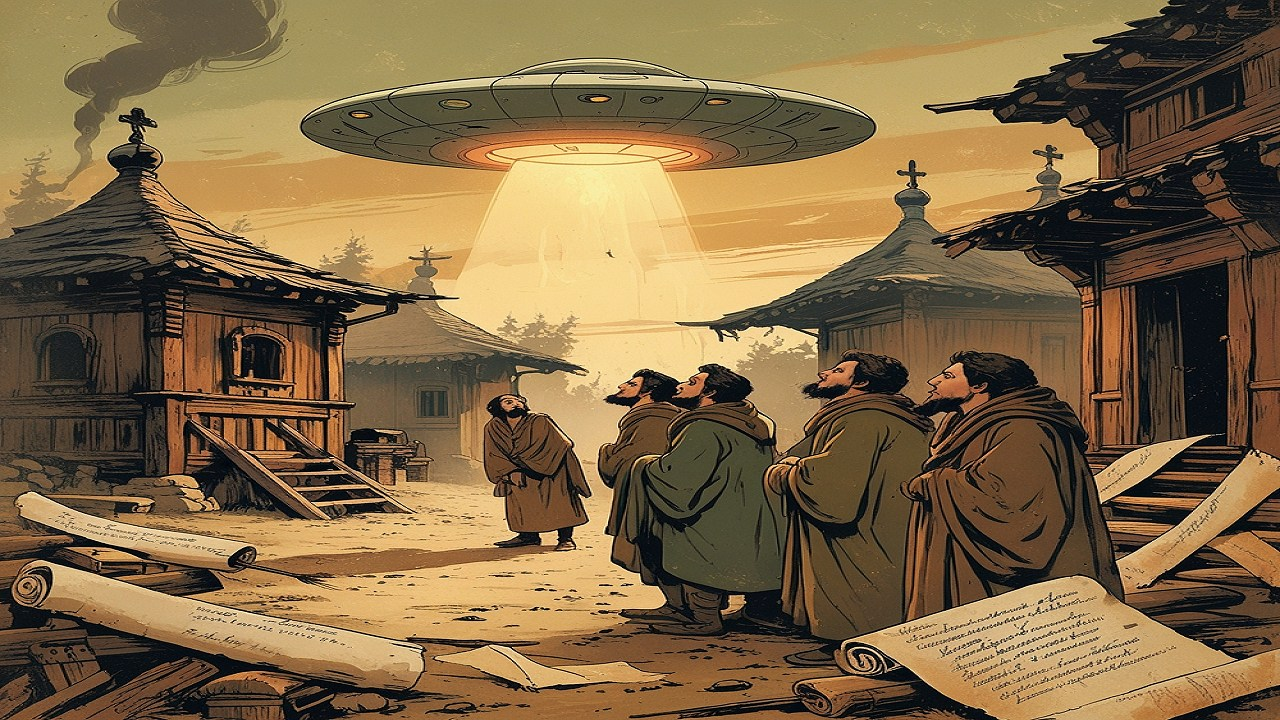
During the period of Russian colonization in Alaska, from 1741 to 1867, various accounts from Orthodox missionaries, fur traders, and military personnel documented unusual aerial phenomena.
These reports, found in personal letters, mission logs, and official records, describe events that, while interpreted through the religious and cultural lenses of the time, bear similarities to modern descriptions of unidentified flying objects (UFOs).
The 1762 Kodiak Island "Burning Star"
In 1762, Russian Orthodox missionaries on Kodiak Island reported witnessing a "burning star" that hovered low on the horizon for several minutes before disappearing. This event was considered a divine sign by the observers. Notably, there are no corresponding records of comet or meteor activity during this period, suggesting the phenomenon was not a known astronomical event.
1794 Cook Inlet "Ball of Flame"
A Russian naval officer documented an incident in 1794 near Cook Inlet, where a "ball of flame" was seen rising from the water and traveling inland. The object was observed by multiple crew members and was described as not matching known meteor activity. The lack of sound and the object's trajectory added to the mystery of the sighting.
Mount Saint Elias Lights (1800s)
Exploration parties near the Saint Elias Mountains reported seeing strange lights or "floating lanterns" in the high sky. These lights were described as white or bluish, hovering motionless or darting silently between peaks, and appearing at altitudes where no human aircraft or balloons could exist at the time.
1869 Barrow Glowing Red Disk
In 1869, a group of whalers near Barrow (now Utqiaġvik) recorded the appearance of a "glowing red disk" that remained visible for over an hour. The crew noted that it made no sound and "moved in ways no balloon could." This account was documented in a maritime journal and treated as an atmospheric oddity at the time.
1893 Yukon River Valley Floating Stars
During the early gold exploration years, miners along the Yukon River reported seeing "floating stars that moved against the wind" or "silent crafts above the treetops." These sightings were often dismissed as hallucinations due to isolation, but multiple groups reported similar phenomena in the same season.
Interpretations and Cultural Context
The Russian Orthodox missionaries and settlers often interpreted these phenomena through a religious framework, considering them as divine signs or omens.
The Indigenous populations, including the Tlingit and Inuit, had their interpretations, often viewing such occurrences as manifestations of spirits or otherworldly beings. The convergence of these perspectives provides a rich tapestry of cultural interpretations of unexplained aerial phenomena.
Conclusion
While the accounts from Russian America during 1741–1867 are few and often filtered through the cultural and religious lenses of the time, they provide intriguing historical records of unexplained aerial phenomena.
These reports, consistent in their descriptions of silent, luminous objects exhibiting unconventional movements, contribute to the broader understanding of UFO sightings and their interpretations across different cultures and historical periods.
During the period of Russian colonization in Alaska, from 1741 to 1867, various accounts from Orthodox missionaries, fur traders, and military personnel documented unusual aerial phenomena.
These reports, found in personal letters, mission logs, and official records, describe events that, while interpreted through the religious and cultural lenses of the time, bear similarities to modern descriptions of unidentified flying objects (UFOs).
The 1762 Kodiak Island "Burning Star"
In 1762, Russian Orthodox missionaries on Kodiak Island reported witnessing a "burning star" that hovered low on the horizon for several minutes before disappearing. This event was considered a divine sign by the observers. Notably, there are no corresponding records of comet or meteor activity during this period, suggesting the phenomenon was not a known astronomical event.
1794 Cook Inlet "Ball of Flame"
A Russian naval officer documented an incident in 1794 near Cook Inlet, where a "ball of flame" was seen rising from the water and traveling inland. The object was observed by multiple crew members and was described as not matching known meteor activity. The lack of sound and the object's trajectory added to the mystery of the sighting.
Mount Saint Elias Lights (1800s)
Exploration parties near the Saint Elias Mountains reported seeing strange lights or "floating lanterns" in the high sky. These lights were described as white or bluish, hovering motionless or darting silently between peaks, and appearing at altitudes where no human aircraft or balloons could exist at the time.
1869 Barrow Glowing Red Disk
In 1869, a group of whalers near Barrow (now Utqiaġvik) recorded the appearance of a "glowing red disk" that remained visible for over an hour. The crew noted that it made no sound and "moved in ways no balloon could." This account was documented in a maritime journal and treated as an atmospheric oddity at the time.
1893 Yukon River Valley Floating Stars
During the early gold exploration years, miners along the Yukon River reported seeing "floating stars that moved against the wind" or "silent crafts above the treetops." These sightings were often dismissed as hallucinations due to isolation, but multiple groups reported similar phenomena in the same season.
Interpretations and Cultural Context
The Russian Orthodox missionaries and settlers often interpreted these phenomena through a religious framework, considering them as divine signs or omens.
The Indigenous populations, including the Tlingit and Inuit, had their interpretations, often viewing such occurrences as manifestations of spirits or otherworldly beings. The convergence of these perspectives provides a rich tapestry of cultural interpretations of unexplained aerial phenomena.
Conclusion
While the accounts from Russian America during 1741–1867 are few and often filtered through the cultural and religious lenses of the time, they provide intriguing historical records of unexplained aerial phenomena.
These reports, consistent in their descriptions of silent, luminous objects exhibiting unconventional movements, contribute to the broader understanding of UFO sightings and their interpretations across different cultures and historical periods.