

Blog Categories
- African Incidents
- Atlantis Incidents
- Australian Incidents
- Belgian Incidents
- Bermuda Triangle Incidents
- Brazilian Incidents
- Canadian Incidents
- Chinese Incidents
- European Incidents
- France Incidents
- Ghosts
- Giants
- Italy Incidents
- Japanese Incidents
- Middle East Incidents
- Portugal Incidents
- Project Serpo
- Puerto Rico Incidents
- Russian Incidents
- Sasquatch
- Scandinavia Incidents
- Spanish Incidents
- UFOs
- United Kingdom Incidents
- United States Incidents
1762: Basel, Switzerland (multiple astronomers)
By the mid-18th century, astronomy had matured into a disciplined, international science. Telescopes were sharper, observatories more widespread, and astronomers more rigorous in timing, measuring, and recording. Yet even with these advances, the Moon—and sometimes the Sun—continued to produce phenomena that defied explanation.
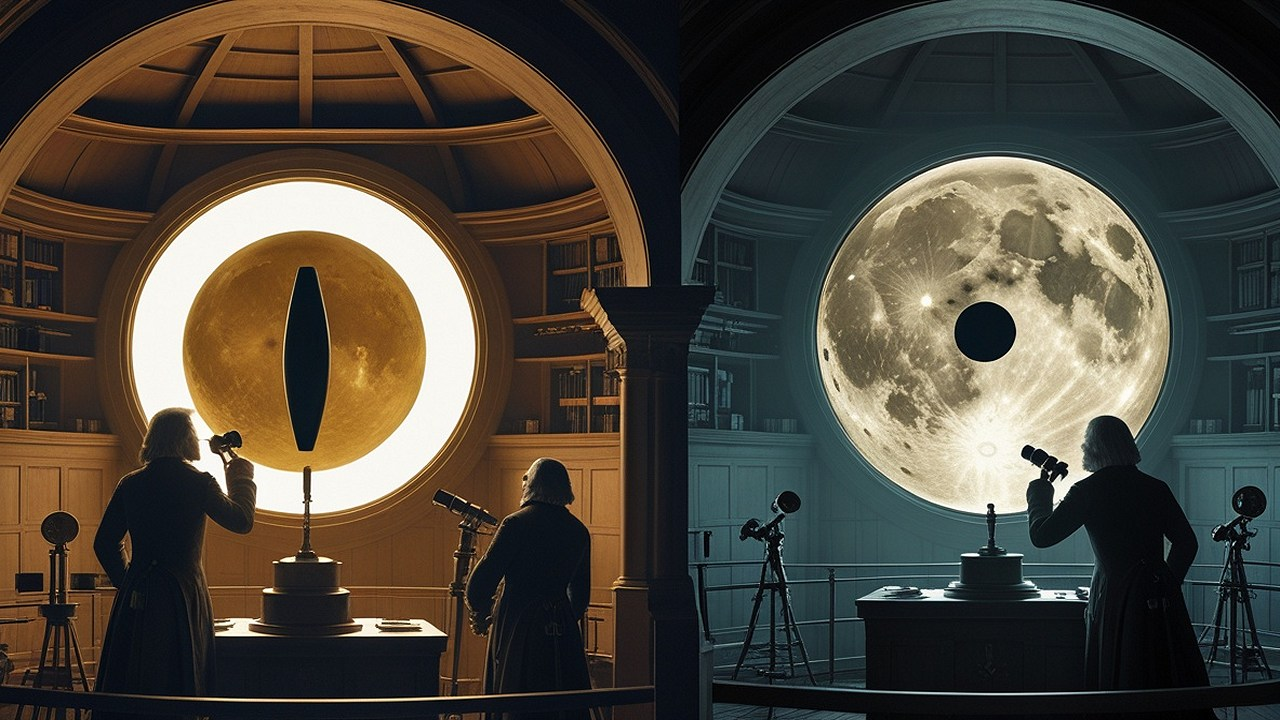
One of the most compelling pre-1900 cases occurred on October 18, 1762, and it is remarkable not only for what was seen, but for how it was documented: simultaneously by two independent observers separated by more than 100 kilometers, both trained astronomers using telescopes.
This is the story of the 1762 Basel-Soleure dual-station sighting — one of the strongest multi-observer pre-modern cases involving an unexplained object crossing both the Sun and the Moon. Welcome to the channel. Today we examine this extraordinary historical event in full detail, staying faithful to the recorded accounts.
The primary witness was Professor M. de Rostan, director of the Basel Observatory in Switzerland. At approximately 9:00 a.m. local time, de Rostan turned his telescope toward the Sun (using proper projection methods to avoid eye damage) and observed a dark, spindle-shaped object slowly transiting its disk. The body was elongated, with tapered ends, and moved with uniform speed from one limb of the Sun to the other. He estimated its angular size as roughly one-third that of the Sun’s diameter — large enough to be unmistakable, small enough to rule out known planets or major comets.
What makes this sighting extraordinary is the simultaneous corroboration from Soleure (Solothurn), roughly 70 km away. An independent observer — whose name is recorded in contemporary correspondence as “M. Croste” or a similar variant — watched the Moon at the same hour and saw an almost identical dark, spindle-shaped object slowly crossing the lunar disk. The two astronomers were not in communication; they reported their observations separately to the scientific community shortly afterward.
Both described the object as dark against the bright background (solar photosphere for de Rostan, lunar surface for the Soleure observer), both noted its steady, non-accelerating motion, and both estimated the transit duration at approximately three hours — far too long for a meteor, bird, or atmospheric effect.
The Basel Observatory log and subsequent letters preserved in European scientific correspondence describe the solar transit as “a dark spindle or fusiform body” moving “with perfect regularity.” The Soleure observer’s account, relayed through astronomical networks, used nearly identical language: “a dark, elongated form traversing the Moon from west to east.”
No known celestial object matched the timing, path, or duration. Mercury and Venus were not in transit that day; no comets were visible; no major meteor shower was active.
This dual observation is one of the strongest multi-station pre-1900 cases involving both the Sun and Moon simultaneously. The separation of observers rules out local atmospheric phenomena (mirages, clouds, or insects) affecting only one location. The duration eliminates most prosaic explanations: a high-altitude bird or balloon would not appear dark and spindle-shaped against both solar and lunar backgrounds for three hours. Optical illusions from the telescope (lens defects, internal reflections) would not produce identical descriptions from two different instruments 70 km apart.
Skeptical interpretations have been proposed over the centuries: a high-altitude atmospheric haze or smoke layer projected against both bodies, a rare alignment of terrestrial objects (e.g., distant balloons or kites), or even an unknown comet fragment. Yet none fully satisfy the evidence. The object’s darkness against both bright backgrounds, its consistent spindle shape, its uniform slow motion, and the near-simultaneous reports from separated stations make it resistant to simple dismissal.
The 1762 Basel-Soleure sighting occupies a unique place in lunar anomaly history. It bridges the pre-telescopic era of visual chronicles and the modern era of multi-instrument confirmation. It demonstrates that even with improved optics and scientific rigor, the Moon continued to produce phenomena that challenged explanation. And it raises the same question asked by earlier observers: if something is crossing or emerging from the Moon’s disk in a way that does not match known natural or man-made objects, what is it?
Later astronomers would record similar transits. In 1787, William Herschel (discoverer of Uranus) noted bright spots and moving lights on the Moon’s surface. In the 1830s and 1840s, observers reported luminous objects that appeared to “land” on the lunar disk before vanishing. But the 1762 case remains exceptional for its dual-station, simultaneous nature — two astronomers, two bodies (Sun and Moon), one unexplained object.
The Moon was under scrutiny as never before. And as telescopes grew stronger, the anomalies did not fade. They became clearer.
The 1762 Basel-Soleure sighting stands as one of the most compelling early multi-observer records of an unidentified object interacting with both the Sun and the Moon. Two trained astronomers, working independently and separated by distance, recorded nearly identical descriptions of a dark, spindle-shaped body moving with controlled, uniform motion. The case resists easy conventional explanations and remains a powerful example of how the phenomenon of anomalous lunar and solar transits has persisted across centuries of improving observation.
Whether this object represented advanced technology, an unknown natural phenomenon, or something else entirely, its dual-station documentation gives it lasting historical weight. It reminds us that the skies — and the Moon in particular — have been producing mysteries for as long as humans have looked upward with instruments and curiosity.
By the mid-18th century, astronomy had matured into a disciplined, international science. Telescopes were sharper, observatories more widespread, and astronomers more rigorous in timing, measuring, and recording. Yet even with these advances, the Moon—and sometimes the Sun—continued to produce phenomena that defied explanation.
One of the most compelling pre-1900 cases occurred on October 18, 1762, and it is remarkable not only for what was seen, but for how it was documented: simultaneously by two independent observers separated by more than 100 kilometers, both trained astronomers using telescopes.
This is the story of the 1762 Basel-Soleure dual-station sighting — one of the strongest multi-observer pre-modern cases involving an unexplained object crossing both the Sun and the Moon. Welcome to the channel. Today we examine this extraordinary historical event in full detail, staying faithful to the recorded accounts.
The primary witness was Professor M. de Rostan, director of the Basel Observatory in Switzerland. At approximately 9:00 a.m. local time, de Rostan turned his telescope toward the Sun (using proper projection methods to avoid eye damage) and observed a dark, spindle-shaped object slowly transiting its disk. The body was elongated, with tapered ends, and moved with uniform speed from one limb of the Sun to the other. He estimated its angular size as roughly one-third that of the Sun’s diameter — large enough to be unmistakable, small enough to rule out known planets or major comets.
What makes this sighting extraordinary is the simultaneous corroboration from Soleure (Solothurn), roughly 70 km away. An independent observer — whose name is recorded in contemporary correspondence as “M. Croste” or a similar variant — watched the Moon at the same hour and saw an almost identical dark, spindle-shaped object slowly crossing the lunar disk. The two astronomers were not in communication; they reported their observations separately to the scientific community shortly afterward.
Both described the object as dark against the bright background (solar photosphere for de Rostan, lunar surface for the Soleure observer), both noted its steady, non-accelerating motion, and both estimated the transit duration at approximately three hours — far too long for a meteor, bird, or atmospheric effect.
The Basel Observatory log and subsequent letters preserved in European scientific correspondence describe the solar transit as “a dark spindle or fusiform body” moving “with perfect regularity.” The Soleure observer’s account, relayed through astronomical networks, used nearly identical language: “a dark, elongated form traversing the Moon from west to east.”
No known celestial object matched the timing, path, or duration. Mercury and Venus were not in transit that day; no comets were visible; no major meteor shower was active.
This dual observation is one of the strongest multi-station pre-1900 cases involving both the Sun and Moon simultaneously. The separation of observers rules out local atmospheric phenomena (mirages, clouds, or insects) affecting only one location. The duration eliminates most prosaic explanations: a high-altitude bird or balloon would not appear dark and spindle-shaped against both solar and lunar backgrounds for three hours. Optical illusions from the telescope (lens defects, internal reflections) would not produce identical descriptions from two different instruments 70 km apart.
Skeptical interpretations have been proposed over the centuries: a high-altitude atmospheric haze or smoke layer projected against both bodies, a rare alignment of terrestrial objects (e.g., distant balloons or kites), or even an unknown comet fragment. Yet none fully satisfy the evidence. The object’s darkness against both bright backgrounds, its consistent spindle shape, its uniform slow motion, and the near-simultaneous reports from separated stations make it resistant to simple dismissal.
The 1762 Basel-Soleure sighting occupies a unique place in lunar anomaly history. It bridges the pre-telescopic era of visual chronicles and the modern era of multi-instrument confirmation. It demonstrates that even with improved optics and scientific rigor, the Moon continued to produce phenomena that challenged explanation. And it raises the same question asked by earlier observers: if something is crossing or emerging from the Moon’s disk in a way that does not match known natural or man-made objects, what is it?
Later astronomers would record similar transits. In 1787, William Herschel (discoverer of Uranus) noted bright spots and moving lights on the Moon’s surface. In the 1830s and 1840s, observers reported luminous objects that appeared to “land” on the lunar disk before vanishing. But the 1762 case remains exceptional for its dual-station, simultaneous nature — two astronomers, two bodies (Sun and Moon), one unexplained object.
The Moon was under scrutiny as never before. And as telescopes grew stronger, the anomalies did not fade. They became clearer.
The 1762 Basel-Soleure sighting stands as one of the most compelling early multi-observer records of an unidentified object interacting with both the Sun and the Moon. Two trained astronomers, working independently and separated by distance, recorded nearly identical descriptions of a dark, spindle-shaped body moving with controlled, uniform motion. The case resists easy conventional explanations and remains a powerful example of how the phenomenon of anomalous lunar and solar transits has persisted across centuries of improving observation.
Whether this object represented advanced technology, an unknown natural phenomenon, or something else entirely, its dual-station documentation gives it lasting historical weight. It reminds us that the skies — and the Moon in particular — have been producing mysteries for as long as humans have looked upward with instruments and curiosity.