


Blog Categories
- African Incidents
- Atlantis Incidents
- Australian Incidents
- Belgian Incidents
- Bermuda Triangle Incidents
- Brazilian Incidents
- Canadian Incidents
- Chinese Incidents
- European Incidents
- France Incidents
- Ghosts
- Giants
- Italy Incidents
- Japanese Incidents
- Middle East Incidents
- Portugal Incidents
- Project Serpo
- Puerto Rico Incidents
- Russian Incidents
- Sasquatch
- Scandinavia Incidents
- Spanish Incidents
- UFOs
- United Kingdom Incidents
- United States Incidents
1852: Gold Rush Region Sierra Nevada Foothills
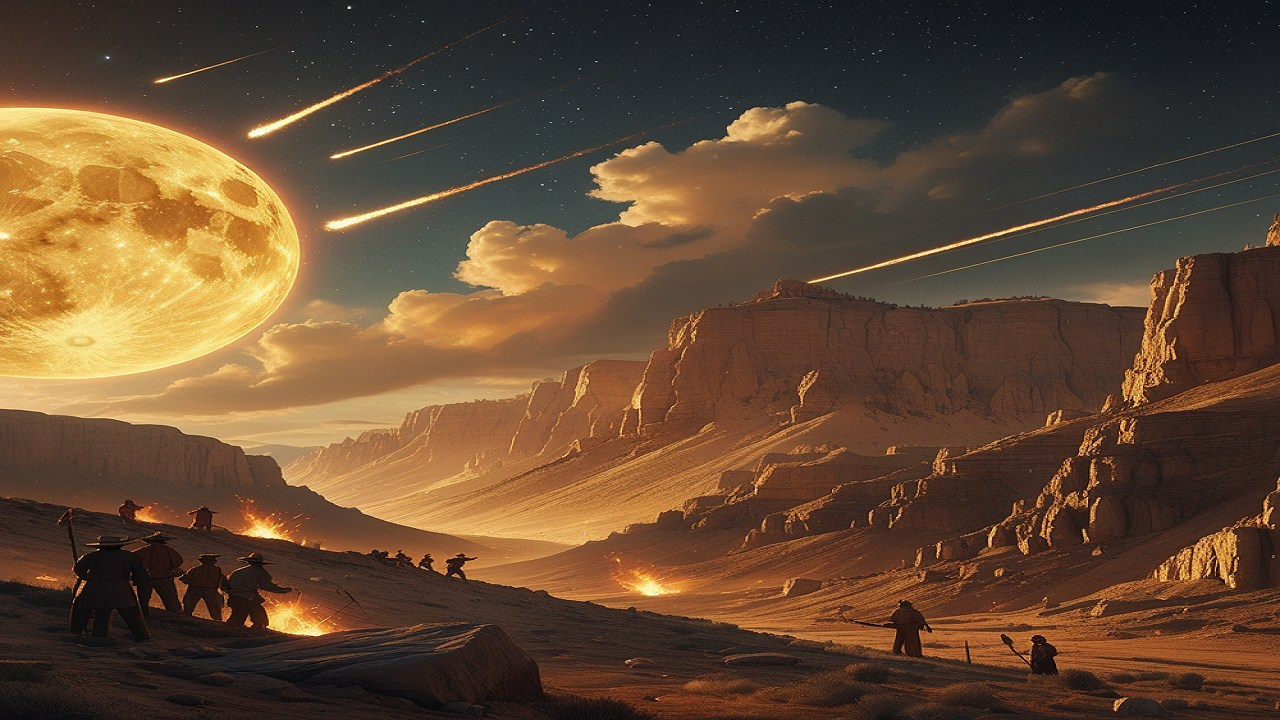
In 1852, amid the frenzy of California’s Gold Rush, a number of miners working the wealthy streams of the Sierra Nevada foothills reported something extraordinary in the night sky: a fiery disk, larger than the moon, glowing orange, trailing sparks, yet behaving unlike any known meteor. Remarkably, it slowed mid-flight, deviated in direction, and terrified those who saw it—who took the phenomenon as a bad omen. Though records from the time are fragmentary, the report remains a striking early encounter with anomalous aerial behavior in America’s western expansion.
Historical Context: The Sierra Nevada Goldfields in 1852
By 1852, California had rapidly transformed. The discovery of gold at Sutter’s Mill in 1848 had triggered mass migration—over 300,000 fortune seekers arrived via land and sea in just a few years. Placer mining flourished in the foothills above what later became cities like Grass Valley, Nevada City, and Placerville. These remote camps were populated by "49ers" from the eastern U.S., Latin America, Europe, and Asia.
It was in these high-altitude, isolated mining settlements—often lacking formal governance or church presence—that men spent long nights at the sluice and tentfires. In such tense, precarious settings, any unusual celestial event would stir both awe and apprehension.
The Fiery Disk Sighting: Descriptions and Reactions
Multiple miners reportedly observed a dramatic aerial object. Accounts— often passed down through letters and reminiscences—describe the object as:
“Larger than the moon,” glowing bright orange, with a tail of sparks streaming behind it.
Moving at high speed before slowing as if observing the terrain below, then shifting direction abruptly—behavior not consistent with any known meteor or natural phenomenon.
Finally, it ascended sharply upward, disappearing against the night sky.
Witnesses interpreted it as a bad omen—a disruptive symbol at a time when miners were risking their lives and fortunes. In perilous settings— where at least one in twenty succumbed to disease, injury, or dehydration —such a portent could deeply unsettle entire camps.
Effect on Mining Communities
Superstition and Social Impact
Miners in 1852 held a blend of rugged prospecting realism and deeply ingrained folk beliefs—many influenced by traditional European and Latin American omens. A sudden, unexplainable disk in the night sky evoked:
Fear of mining accidents, landslides, or floods.
Concerns about hostile neighbors or internal betrayal.
Warnings of disease outbreak or poor gold yields.
Several camps are said to have temporarily halted operations after the sighting, as groups debated whether to move, pray, or desist. Some prospectors wrote home that their companions felt the sighting meant “it was time to dig elsewhere.”
Long-Term Legacy
While no formal records survive linking deaths or major events directly to the sighting, the disk entered miners’ shared lore. It appears in some oral family stories from early Sierra pioneers and occasionally in local newspapers published in growing towns like Sacramento or San Francisco —often as mysterious anecdotes passed along from “early placer days.”
Even decades later, elders would recount that their fathers or uncles described seeing a celestial flame-disc over their camp—an omen that had hung in the air the night before their claim “dried up” or a partner fell ill.
Modern Interpretations
Proto-UFO Hypotheses
In the mid-20th century, ufologists compiled historical anomalous sightings as part of timelines. The 1852 Sierra disk often appears in lists of pre-aerial phenomenon cases. While lacking photographs or physical traces, its behavior—hover, direction change, apparent intelligence— suggests, to modern observers, similarities with reported UFO activity.
However, researchers caution that:
The descriptions—“fiery disk”, spark trails, color change—could stem from unusual bolides, comets, or atmospheric discharges (e.g., meteors burning with fragmentation) rather than advanced craft.
Eyewitness testimony from miners in flickering light, sometimes under the influence of alcohol or fatigue, may exaggerate observational detail.
Thus, most scholars classify the incident as anomalous but inconclusive.
Cultural Studies Perspective
Historians note that such stories illustrate the psychological impact of uncertainty in frontier life. In remote camps, an unexplained sky event could amplify fears of danger—whether environmental, competitive, or existential.
Mining journals and historical surveys on Sierra Nevada settlements seldom analyze the disk specifically, but place it alongside folk meteor tales and gold rush superstitions.
Notable Individuals & Sources
No documented name is attached to the original observer. The sighting is attributed to anonymous miners in multiple recollections recorded by their descendants.
Historians of the region, including those compiling oral histories in the Sierra foothill towns, have occasionally noted the disk in passing. Yet, no academic monograph singularly addresses it. In contrast, the Gold Rush era is well researched in works such as those by J. S. Holliday or Malcolm Rohrbough—all of which mention anomalous celestial anecdotes as reflection of emotional climate rather than literal events.
Thus, the case remains noteworthy as a fringe cultural artifact, rather than a formally documented event.
Impact Today
Local Folklore and Tourism
The disk sighting has attained minor status within local folklore in historical Gold Rush towns such as Nevada City, Auburn, or Coloma. Some annual heritage tours include the story as an atmospheric detail— telling visitors of a rare sky-fire that spooked miners in the spring of 1852.
However, it is not broadly embraced in mainstream California tourism, unlike ghost tales or gold-robbing myths. Its appeal lies mainly within niche historical enthusiasts and UFO-history hobbyists.
In UFO-History Circles
Among UFO researchers, the 1852 fiery disk is included in centralized timelines of pre-modern anomalous aerial activity, often grouped with similar reports—meteor-like objects that lingered, changed direction, or vanished unexpectedly.
These crowdsourced databases highlight it as an early example of anomalous aerial agency, contributing to arguments that unusual aerial events pre-date powered flight—and that modern UFO logs are part of a longer human pattern.
Academic Caution
Mainstream historians and scientists, including those studying superfireballs and bolide frequency, regard such accounts as possibly explainable by meteor science.
For instance, modern research into superfireballs suggests rare high energy bolides can flicker, fragment, momentarily slow due to atmospheric density changes, and leave glowing trails—though rarely appearing to reverse or ascend.
Most academics treat the 1852 sighting as an example of Gold Rush-era folklore, later exaggerated by retelling, rather than a literal UFO-style event.
Discussion: Why It Matters
This 1852 sighting—though minimally recorded—offers a window into:
How frontier people interpreted the night sky, especially when their livelihoods were tied to unpredictable success.
The role of superstition in nascent communities, where omens could influence group behavior.
Continuity of anomalous sky narratives—from indigenous star-people lore to miner sightings to 20th-century UFO reports.
It reminds us that human beings across history interpret unexplained aerial phenomena through emotional and cultural lenses. In 1852 the sighting was seen first as a portent; today it’s seen by some as proto-UFO, and by others as a dramatic meteor account transformed through storytelling.
Conclusion
In the spring of 1852, miners in California’s Sierra Nevada foothills witnessed a fiery, oversized disk crossing the sky—larger than the moon, trailing sparks, flickering, slowing, shifting direction, and ultimately ascending out of sight.
Horrified by its strangeness, they took it as a bad omen—a celestial warning amid the volatile uncertainty of Gold Rush camps.
While no records link it to specific deaths or mining disasters, the incident left enough impression to persist in oral lore. Today it is remembered fringely—in local heritage tours, in UFOlogy timelines, and in studies of frontier psychology. It intersects themes of environmental anxiety, human stargazing, and the impulse to find meaning in the uncanny.
Though modern interpretation offers alternate natural explanations, the miners’ own reactions—fear, awe, interpretation as sacred or ominous— provide a vivid snapshot of how dramatically a single sky event could impact lives in a time and place driven by hope and risk.
In 1852, amid the frenzy of California’s Gold Rush, a number of miners working the wealthy streams of the Sierra Nevada foothills reported something extraordinary in the night sky: a fiery disk, larger than the moon, glowing orange, trailing sparks, yet behaving unlike any known meteor. Remarkably, it slowed mid-flight, deviated in direction, and terrified those who saw it—who took the phenomenon as a bad omen. Though records from the time are fragmentary, the report remains a striking early encounter with anomalous aerial behavior in America’s western expansion.
Historical Context: The Sierra Nevada Goldfields in 1852
By 1852, California had rapidly transformed. The discovery of gold at Sutter’s Mill in 1848 had triggered mass migration—over 300,000 fortune seekers arrived via land and sea in just a few years. Placer mining flourished in the foothills above what later became cities like Grass Valley, Nevada City, and Placerville. These remote camps were populated by "49ers" from the eastern U.S., Latin America, Europe, and Asia.
It was in these high-altitude, isolated mining settlements—often lacking formal governance or church presence—that men spent long nights at the sluice and tentfires. In such tense, precarious settings, any unusual celestial event would stir both awe and apprehension.
The Fiery Disk Sighting: Descriptions and Reactions
Multiple miners reportedly observed a dramatic aerial object. Accounts— often passed down through letters and reminiscences—describe the object as:
“Larger than the moon,” glowing bright orange, with a tail of sparks streaming behind it.
Moving at high speed before slowing as if observing the terrain below, then shifting direction abruptly—behavior not consistent with any known meteor or natural phenomenon.
Finally, it ascended sharply upward, disappearing against the night sky.
Witnesses interpreted it as a bad omen—a disruptive symbol at a time when miners were risking their lives and fortunes. In perilous settings— where at least one in twenty succumbed to disease, injury, or dehydration —such a portent could deeply unsettle entire camps.
Effect on Mining Communities
Superstition and Social Impact
Miners in 1852 held a blend of rugged prospecting realism and deeply ingrained folk beliefs—many influenced by traditional European and Latin American omens. A sudden, unexplainable disk in the night sky evoked:
Fear of mining accidents, landslides, or floods.
Concerns about hostile neighbors or internal betrayal.
Warnings of disease outbreak or poor gold yields.
Several camps are said to have temporarily halted operations after the sighting, as groups debated whether to move, pray, or desist. Some prospectors wrote home that their companions felt the sighting meant “it was time to dig elsewhere.”
Long-Term Legacy
While no formal records survive linking deaths or major events directly to the sighting, the disk entered miners’ shared lore. It appears in some oral family stories from early Sierra pioneers and occasionally in local newspapers published in growing towns like Sacramento or San Francisco —often as mysterious anecdotes passed along from “early placer days.”
Even decades later, elders would recount that their fathers or uncles described seeing a celestial flame-disc over their camp—an omen that had hung in the air the night before their claim “dried up” or a partner fell ill.
Modern Interpretations
Proto-UFO Hypotheses
In the mid-20th century, ufologists compiled historical anomalous sightings as part of timelines. The 1852 Sierra disk often appears in lists of pre-aerial phenomenon cases. While lacking photographs or physical traces, its behavior—hover, direction change, apparent intelligence— suggests, to modern observers, similarities with reported UFO activity.
However, researchers caution that:
The descriptions—“fiery disk”, spark trails, color change—could stem from unusual bolides, comets, or atmospheric discharges (e.g., meteors burning with fragmentation) rather than advanced craft.
Eyewitness testimony from miners in flickering light, sometimes under the influence of alcohol or fatigue, may exaggerate observational detail.
Thus, most scholars classify the incident as anomalous but inconclusive.
Cultural Studies Perspective
Historians note that such stories illustrate the psychological impact of uncertainty in frontier life. In remote camps, an unexplained sky event could amplify fears of danger—whether environmental, competitive, or existential.
Mining journals and historical surveys on Sierra Nevada settlements seldom analyze the disk specifically, but place it alongside folk meteor tales and gold rush superstitions.
Notable Individuals & Sources
No documented name is attached to the original observer. The sighting is attributed to anonymous miners in multiple recollections recorded by their descendants.
Historians of the region, including those compiling oral histories in the Sierra foothill towns, have occasionally noted the disk in passing. Yet, no academic monograph singularly addresses it. In contrast, the Gold Rush era is well researched in works such as those by J. S. Holliday or Malcolm Rohrbough—all of which mention anomalous celestial anecdotes as reflection of emotional climate rather than literal events.
Thus, the case remains noteworthy as a fringe cultural artifact, rather than a formally documented event.
Impact Today
Local Folklore and Tourism
The disk sighting has attained minor status within local folklore in historical Gold Rush towns such as Nevada City, Auburn, or Coloma. Some annual heritage tours include the story as an atmospheric detail— telling visitors of a rare sky-fire that spooked miners in the spring of 1852.
However, it is not broadly embraced in mainstream California tourism, unlike ghost tales or gold-robbing myths. Its appeal lies mainly within niche historical enthusiasts and UFO-history hobbyists.
In UFO-History Circles
Among UFO researchers, the 1852 fiery disk is included in centralized timelines of pre-modern anomalous aerial activity, often grouped with similar reports—meteor-like objects that lingered, changed direction, or vanished unexpectedly.
These crowdsourced databases highlight it as an early example of anomalous aerial agency, contributing to arguments that unusual aerial events pre-date powered flight—and that modern UFO logs are part of a longer human pattern.
Academic Caution
Mainstream historians and scientists, including those studying superfireballs and bolide frequency, regard such accounts as possibly explainable by meteor science.
For instance, modern research into superfireballs suggests rare high energy bolides can flicker, fragment, momentarily slow due to atmospheric density changes, and leave glowing trails—though rarely appearing to reverse or ascend.
Most academics treat the 1852 sighting as an example of Gold Rush-era folklore, later exaggerated by retelling, rather than a literal UFO-style event.
Discussion: Why It Matters
This 1852 sighting—though minimally recorded—offers a window into:
How frontier people interpreted the night sky, especially when their livelihoods were tied to unpredictable success.
The role of superstition in nascent communities, where omens could influence group behavior.
Continuity of anomalous sky narratives—from indigenous star-people lore to miner sightings to 20th-century UFO reports.
It reminds us that human beings across history interpret unexplained aerial phenomena through emotional and cultural lenses. In 1852 the sighting was seen first as a portent; today it’s seen by some as proto-UFO, and by others as a dramatic meteor account transformed through storytelling.
Conclusion
In the spring of 1852, miners in California’s Sierra Nevada foothills witnessed a fiery, oversized disk crossing the sky—larger than the moon, trailing sparks, flickering, slowing, shifting direction, and ultimately ascending out of sight.
Horrified by its strangeness, they took it as a bad omen—a celestial warning amid the volatile uncertainty of Gold Rush camps.
While no records link it to specific deaths or mining disasters, the incident left enough impression to persist in oral lore. Today it is remembered fringely—in local heritage tours, in UFOlogy timelines, and in studies of frontier psychology. It intersects themes of environmental anxiety, human stargazing, and the impulse to find meaning in the uncanny.
Though modern interpretation offers alternate natural explanations, the miners’ own reactions—fear, awe, interpretation as sacred or ominous— provide a vivid snapshot of how dramatically a single sky event could impact lives in a time and place driven by hope and risk.