


Blog Categories
- African Incidents
- Atlantis Incidents
- Australian Incidents
- Belgian Incidents
- Bermuda Triangle Incidents
- Brazilian Incidents
- Canadian Incidents
- Chinese Incidents
- European Incidents
- France Incidents
- Ghosts
- Giants
- Italy Incidents
- Japanese Incidents
- Middle East Incidents
- Portugal Incidents
- Project Serpo
- Puerto Rico Incidents
- Russian Incidents
- Sasquatch
- Scandinavia Incidents
- Spanish Incidents
- UFOs
- United Kingdom Incidents
- United States Incidents
1869: Barrow Glowing Red Disk UFO
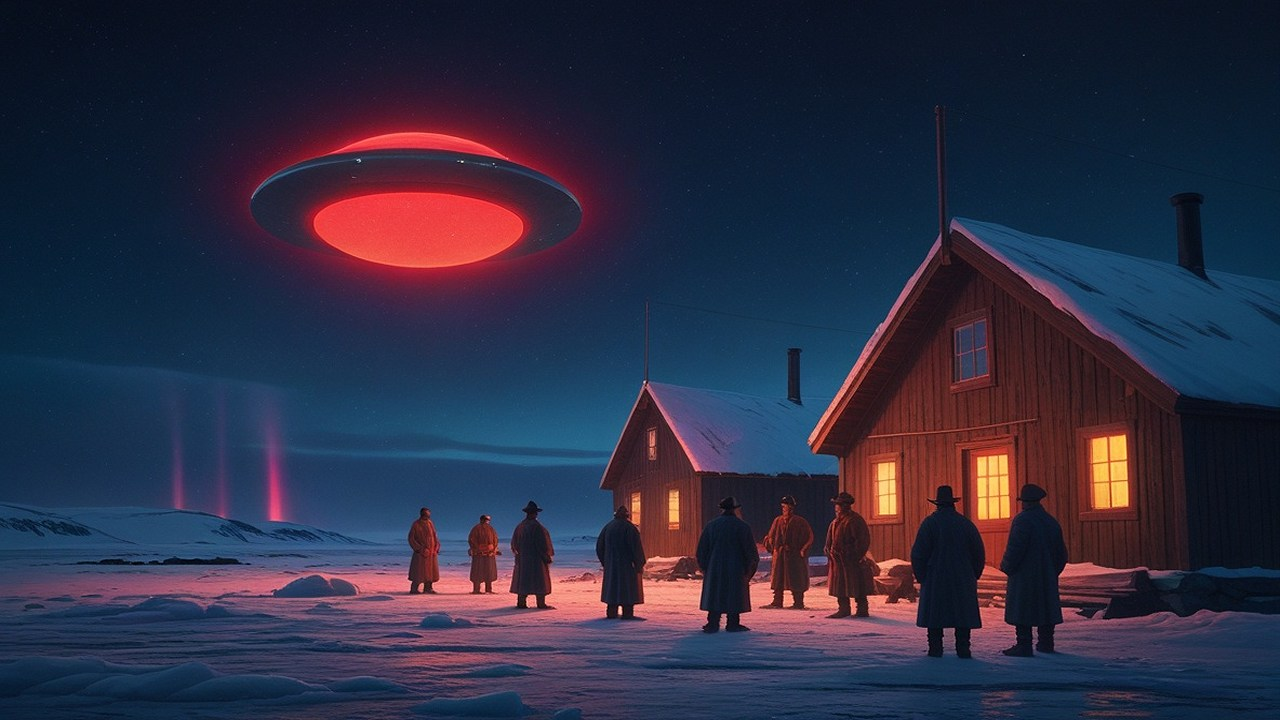
In the winter of 1869, long before airplanes, satellites, or even widespread electric lighting, a group of whalers stationed in one of the most remote and unforgiving places on Earth looked up into the Arctic sky and saw something impossible.
They saw a glowing red disk hovering silently above Barrow, Alaska. The object remained visible for over an hour. It moved with deliberate, controlled motions — hovering stationary, then making sudden smooth movements, sharp turns, and rapid accelerations that no known technology or natural phenomenon of the 19th century could explain.
This is the story of the 1869 Barrow Glowing Red Disk — one of the earliest well-documented and credible unidentified aerial phenomena reports in North American history. A sighting recorded not by fringe enthusiasts, but by hardened whalers in a maritime journal, at a time when powered flight was still decades away.
Welcome to the channel. Today we’re going deep into one of the most compelling pre-20th century UAP cases ever recorded.
Let’s set the scene. It’s 1869. The United States is still recovering from the Civil War. The American frontier is pushing westward, but Alaska — recently purchased from Russia in 1867 — remains a frozen, largely unexplored wilderness. Barrow, now known as Utqiagvik, was a remote whaling outpost on the northern coast of Alaska. Whalers from various nations would overwinter there, hunting bowhead whales in the harsh Arctic waters. Life was brutal: extreme cold, isolation, and constant danger.
Against this backdrop of survival and hardship, something extraordinary appeared in the sky.
According to the maritime journal entry, multiple members of the whaling crew observed a luminous red disk hovering in the sky during the evening hours. The object was described as distinctly disk-shaped, glowing with a steady red light that did not flicker like a flame. It maintained a stationary position for extended periods before making sudden, smooth movements across the sky. Witnesses noted sharp turns and rapid accelerations that seemed impossible for any natural celestial body or man-made object of the era.
The duration of the sighting — over an hour — is particularly significant. This was not a fleeting meteor or a quick atmospheric flash. The object lingered long enough for the crew to study it carefully, discuss it among themselves, and document its behavior in detail. The journal emphasized the object’s silence. There was no sound accompanying its movements, no roaring, no crackling — just silent, controlled flight in the Arctic night.
At the time, the only human-made flying objects were balloons, and their capabilities were extremely limited. Balloons drifted with the wind. They could not hover against the wind, make sharp turns, or accelerate rapidly. The whalers, experienced seafarers who understood wind, weather, and basic navigation, would have immediately recognized if this was simply a balloon or lantern. They knew it was not.
The journal entry stands as a credible historical record. These were not imaginative storytellers or superstitious locals. They were practical, tough men who made their living in one of the most dangerous environments on the planet. Their documentation was straightforward and observational — exactly what we look for in strong historical UAP cases.
When we examine this sighting through a modern lens, the parallels to contemporary UAP reports are striking. Glowing red or orange orbs and disks that hover, move with intelligent control, and exhibit rapid acceleration are still being reported today by military pilots and commercial aviators. The 1869 Barrow case contains many of the same performance characteristics: prolonged hover, sudden directional changes, and high-speed departure without conventional propulsion signatures.
Natural explanations have been proposed over the years. Some suggest it could have been ball lightning, a rare and poorly understood phenomenon that appears as glowing spheres. However, ball lightning is typically short-lived, lasting only seconds, and is usually associated with thunderstorms — conditions not mentioned in the journal. Others have pointed to atmospheric optical effects or misidentified celestial bodies, but these fail to explain the object’s ability to remain stationary for long periods and then accelerate dramatically.
The credibility of the witnesses and the detailed nature of the journal entry make this one of the strongest 19th-century UAP cases in North America. It occurred at a time when there was no cultural context or expectation of extraterrestrial visitors. The whalers had no reason to invent such a story. They simply recorded what they saw because it was extraordinary and potentially important for navigation or safety.
This sighting does not stand alone. The Arctic and sub-Arctic regions have produced numerous historical reports of unusual aerial phenomena. In the 1800s, exploration parties near Mount Saint Elias reported white or bluish lights hovering or darting silently between mountain peaks at altitudes where no human technology could operate. Later, in the 1950s and 1960s, military personnel and civilians in Arctic regions documented disc-shaped objects with similar flight characteristics. These accounts form a long-term pattern of luminous, maneuverable objects appearing in polar environments — regions that remain strategically and scientifically significant today.
The 1869 Barrow incident challenges us to reconsider the timeline of the UFO phenomenon. For decades, many assumed the modern era began with Kenneth Arnold’s sighting in 1947. But cases like this one demonstrate that anomalous aerial objects have been observed and documented for centuries — long before human aviation or space technology could provide easy explanations. The Arctic’s harsh conditions and the practical mindset of the whalers actually strengthen the case. These were not people prone to fantasy. They were survivors who relied on accurate observation.
In the broader context of UAP research, the Barrow sighting fits the profile of what we now classify as a structured craft or transmedium object. Its ability to hover silently in extreme cold and then accelerate rapidly suggests propulsion or energy systems far beyond 19th-century capabilities. The red glow could indicate plasma or some form of advanced illumination technology. Whatever its origin, the object demonstrated control and performance that implies intelligence.
The fact that this event was recorded in a maritime journal rather than sensationalized newspaper accounts adds to its credibility. Maritime logs were serious business — used for navigation, legal records, and scientific observation. The straightforward tone of the entry suggests the crew was documenting a genuine anomaly rather than embellishing for dramatic effect.
As we continue our modern search for answers through official UAP investigations, congressional hearings, and advanced sensor technology, historical cases like the 1869 Barrow sighting provide essential context. They show continuity. They remind us that the phenomenon we are studying today has deep historical roots. The same characteristics — silent hover, sudden acceleration, luminous appearance — appear again and again across centuries and cultures.
The whalers of Barrow in 1869 looked up and saw something that defied their understanding of the natural world. Today, with vastly better tools and knowledge, we continue to see similar objects reported by military pilots and commercial aviators. The more things change, the more the skies seem determined to keep their secrets.
The 1869 Glowing Red Disk over Barrow, Alaska, stands as a powerful early chapter in humanity’s long encounter with the unknown. It wasn’t just a light in the sky. It was a controlled, intelligent object operating in one of the most isolated places on Earth — observed and documented by credible witnesses who had no framework to explain what they were seeing.
More than 150 years later, we’re still searching for answers. But thanks to records like this maritime journal, we know the mystery didn’t begin in the 1940s. It has been with us for a very long time.
In the winter of 1869, long before airplanes, satellites, or even widespread electric lighting, a group of whalers stationed in one of the most remote and unforgiving places on Earth looked up into the Arctic sky and saw something impossible.
They saw a glowing red disk hovering silently above Barrow, Alaska. The object remained visible for over an hour. It moved with deliberate, controlled motions — hovering stationary, then making sudden smooth movements, sharp turns, and rapid accelerations that no known technology or natural phenomenon of the 19th century could explain.
This is the story of the 1869 Barrow Glowing Red Disk — one of the earliest well-documented and credible unidentified aerial phenomena reports in North American history. A sighting recorded not by fringe enthusiasts, but by hardened whalers in a maritime journal, at a time when powered flight was still decades away.
Welcome to the channel. Today we’re going deep into one of the most compelling pre-20th century UAP cases ever recorded.
Let’s set the scene. It’s 1869. The United States is still recovering from the Civil War. The American frontier is pushing westward, but Alaska — recently purchased from Russia in 1867 — remains a frozen, largely unexplored wilderness. Barrow, now known as Utqiagvik, was a remote whaling outpost on the northern coast of Alaska. Whalers from various nations would overwinter there, hunting bowhead whales in the harsh Arctic waters. Life was brutal: extreme cold, isolation, and constant danger.
Against this backdrop of survival and hardship, something extraordinary appeared in the sky.
According to the maritime journal entry, multiple members of the whaling crew observed a luminous red disk hovering in the sky during the evening hours. The object was described as distinctly disk-shaped, glowing with a steady red light that did not flicker like a flame. It maintained a stationary position for extended periods before making sudden, smooth movements across the sky. Witnesses noted sharp turns and rapid accelerations that seemed impossible for any natural celestial body or man-made object of the era.
The duration of the sighting — over an hour — is particularly significant. This was not a fleeting meteor or a quick atmospheric flash. The object lingered long enough for the crew to study it carefully, discuss it among themselves, and document its behavior in detail. The journal emphasized the object’s silence. There was no sound accompanying its movements, no roaring, no crackling — just silent, controlled flight in the Arctic night.
At the time, the only human-made flying objects were balloons, and their capabilities were extremely limited. Balloons drifted with the wind. They could not hover against the wind, make sharp turns, or accelerate rapidly. The whalers, experienced seafarers who understood wind, weather, and basic navigation, would have immediately recognized if this was simply a balloon or lantern. They knew it was not.
The journal entry stands as a credible historical record. These were not imaginative storytellers or superstitious locals. They were practical, tough men who made their living in one of the most dangerous environments on the planet. Their documentation was straightforward and observational — exactly what we look for in strong historical UAP cases.
When we examine this sighting through a modern lens, the parallels to contemporary UAP reports are striking. Glowing red or orange orbs and disks that hover, move with intelligent control, and exhibit rapid acceleration are still being reported today by military pilots and commercial aviators. The 1869 Barrow case contains many of the same performance characteristics: prolonged hover, sudden directional changes, and high-speed departure without conventional propulsion signatures.
Natural explanations have been proposed over the years. Some suggest it could have been ball lightning, a rare and poorly understood phenomenon that appears as glowing spheres. However, ball lightning is typically short-lived, lasting only seconds, and is usually associated with thunderstorms — conditions not mentioned in the journal. Others have pointed to atmospheric optical effects or misidentified celestial bodies, but these fail to explain the object’s ability to remain stationary for long periods and then accelerate dramatically.
The credibility of the witnesses and the detailed nature of the journal entry make this one of the strongest 19th-century UAP cases in North America. It occurred at a time when there was no cultural context or expectation of extraterrestrial visitors. The whalers had no reason to invent such a story. They simply recorded what they saw because it was extraordinary and potentially important for navigation or safety.
This sighting does not stand alone. The Arctic and sub-Arctic regions have produced numerous historical reports of unusual aerial phenomena. In the 1800s, exploration parties near Mount Saint Elias reported white or bluish lights hovering or darting silently between mountain peaks at altitudes where no human technology could operate. Later, in the 1950s and 1960s, military personnel and civilians in Arctic regions documented disc-shaped objects with similar flight characteristics. These accounts form a long-term pattern of luminous, maneuverable objects appearing in polar environments — regions that remain strategically and scientifically significant today.
The 1869 Barrow incident challenges us to reconsider the timeline of the UFO phenomenon. For decades, many assumed the modern era began with Kenneth Arnold’s sighting in 1947. But cases like this one demonstrate that anomalous aerial objects have been observed and documented for centuries — long before human aviation or space technology could provide easy explanations. The Arctic’s harsh conditions and the practical mindset of the whalers actually strengthen the case. These were not people prone to fantasy. They were survivors who relied on accurate observation.
In the broader context of UAP research, the Barrow sighting fits the profile of what we now classify as a structured craft or transmedium object. Its ability to hover silently in extreme cold and then accelerate rapidly suggests propulsion or energy systems far beyond 19th-century capabilities. The red glow could indicate plasma or some form of advanced illumination technology. Whatever its origin, the object demonstrated control and performance that implies intelligence.
The fact that this event was recorded in a maritime journal rather than sensationalized newspaper accounts adds to its credibility. Maritime logs were serious business — used for navigation, legal records, and scientific observation. The straightforward tone of the entry suggests the crew was documenting a genuine anomaly rather than embellishing for dramatic effect.
As we continue our modern search for answers through official UAP investigations, congressional hearings, and advanced sensor technology, historical cases like the 1869 Barrow sighting provide essential context. They show continuity. They remind us that the phenomenon we are studying today has deep historical roots. The same characteristics — silent hover, sudden acceleration, luminous appearance — appear again and again across centuries and cultures.
The whalers of Barrow in 1869 looked up and saw something that defied their understanding of the natural world. Today, with vastly better tools and knowledge, we continue to see similar objects reported by military pilots and commercial aviators. The more things change, the more the skies seem determined to keep their secrets.
The 1869 Glowing Red Disk over Barrow, Alaska, stands as a powerful early chapter in humanity’s long encounter with the unknown. It wasn’t just a light in the sky. It was a controlled, intelligent object operating in one of the most isolated places on Earth — observed and documented by credible witnesses who had no framework to explain what they were seeing.
More than 150 years later, we’re still searching for answers. But thanks to records like this maritime journal, we know the mystery didn’t begin in the 1940s. It has been with us for a very long time.