


Blog Categories
- African Incidents
- Atlantis Incidents
- Australian Incidents
- Belgian Incidents
- Bermuda Triangle Incidents
- Brazilian Incidents
- Canadian Incidents
- Chinese Incidents
- European Incidents
- France Incidents
- Ghosts
- Giants
- Italy Incidents
- Japanese Incidents
- Middle East Incidents
- Portugal Incidents
- Project Serpo
- Puerto Rico Incidents
- Russian Incidents
- Sasquatch
- Scandinavia Incidents
- Spanish Incidents
- UFOs
- United Kingdom Incidents
- United States Incidents
1897: Strange Craft Over Tombstone
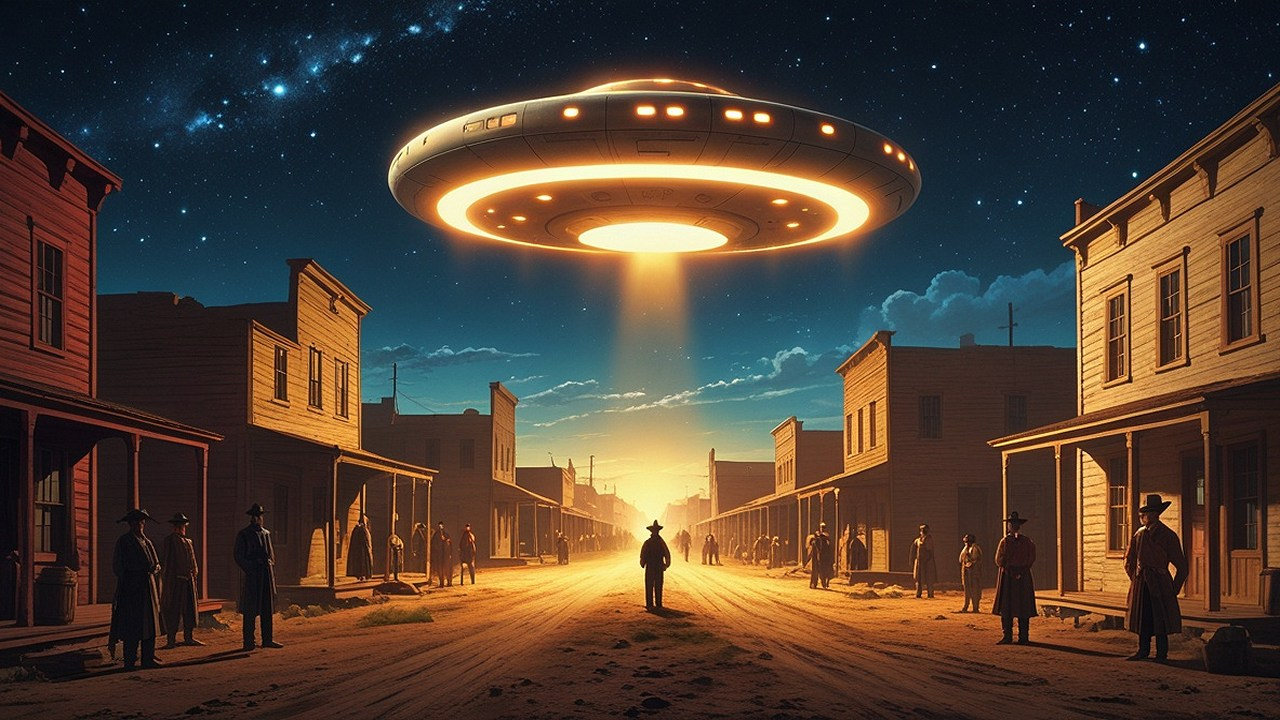
In the spring of 1897, long before Roswell, before Kenneth Arnold coined the term “flying saucers,” and decades before the modern UFO era, something extraordinary swept across the skies of the United States. Thousands of Americans from California to the Midwest and into the South reported seeing mysterious cigar-shaped craft equipped with bright lights, moving through the night sky in ways that defied the technology of the time.
This was the Great Airship Wave of 1896–1897 — one of the earliest mass sighting events in American history. And while specific, well-documented sightings over Tombstone, Arizona remain elusive in surviving records, the broader wave touched the American West and left an indelible mark on our understanding of unexplained aerial phenomena.
Tonight, we’re diving into this fascinating chapter of early UAP history and exploring why the 1897 airship wave, including its possible connection to places like Tombstone, deserves a prominent place in the story of UFOs in America.
Let’s go back to the winter of 1896 and the spring of 1897.
The United States was in a period of rapid industrialization and technological optimism. The Wright brothers were still years away from their first powered flight. Airships as we understand them today were barely conceptual. Yet across the country, people began reporting sightings of large, structured craft with bright lights, often cigar-shaped, sometimes with visible windows or even occupants.
The wave started in California in late 1896 and quickly spread eastward. Newspapers from Sacramento to Chicago carried eyewitness accounts. People described objects that could hover, change direction, and travel at speeds and altitudes that no known balloon or aircraft could achieve. Some reports included detailed descriptions of the crafts and even alleged encounters with their occupants.
While many sightings were concentrated in the Midwest and California, the wave extended into the American Southwest, including Arizona. Although direct, detailed documentation of an airship specifically over Tombstone in 1897 is scarce in surviving newspaper archives, the broader phenomenon was widely discussed across the region. Tombstone, famous for its Wild West history and silver mining boom, was still a notable town in 1897. Its residents, accustomed to frontier life and dramatic events, would have been well-positioned to notice anything unusual in the night sky.
The typical airship reported during this wave was described as cigar-shaped or elongated, equipped with powerful searchlights or rows of bright lights. Witnesses frequently noted the objects’ ability to move against the wind, hover, and perform maneuvers that seemed intelligently controlled. These characteristics directly parallel many modern UAP reports, making the 1897 wave a crucial early chapter in the history of the phenomenon.
Why is this wave so important? Because it occurred at a time when human aviation was virtually nonexistent. The only flying devices were basic balloons, which were at the mercy of wind currents and could not perform the controlled movements described by thousands of witnesses. The airships of 1897 moved with purpose and precision that suggested either secret human invention far beyond public knowledge or something entirely non-human.
Public reaction to the sightings was a mixture of wonder, fear, and skepticism. Newspapers debated whether these were secret inventions by lone geniuses, hoaxes, or perhaps even visitors from another world. Some people interpreted the airships through a religious lens, seeing them as signs or omens. Others dismissed the reports as mass hysteria or misidentification of planets and stars. Yet the sheer volume and geographic spread of the sightings made it difficult to dismiss the entire wave outright.
In Arizona and the Southwest, the cultural context added another layer. The region was still transitioning from frontier territory to more settled communities. Indigenous oral traditions and settler folklore often included stories of sky beings and unusual celestial events. Against this backdrop, reports of mysterious lighted craft would have carried special significance.
While specific Tombstone accounts from 1897 are not well-preserved in major archives, the broader airship wave touched the American West and contributed to a national conversation about advanced technology and the possibility of extraterrestrial visitors. The phenomenon captured the public imagination in a way that prefigured the flying saucer craze of the 1940s and 1950s.
The legacy of the 1897 airship wave is profound. It represents one of the earliest instances of mass sightings of unidentified aerial objects in the United States. Researchers and enthusiasts continue to study this period as a precursor to the modern UFO phenomenon. The reports from 1896–1897 show striking similarities to later cases: structured craft, bright lights, intelligent movement, and widespread public sightings.
Some modern interpreters suggest these airships were early examples of the same phenomenon we now call UAP — possibly extraterrestrial, interdimensional, or ultra-terrestrial in nature. Others propose they were secret human inventions, perhaps built by brilliant but unknown inventors. Whatever their origin, the airships of 1897 demonstrated capabilities that challenged the technological understanding of the time.
The absence of detailed Tombstone-specific records does not diminish the importance of the broader wave. Many sightings from this era were only briefly mentioned in local papers or passed down through oral history. The fact that the phenomenon was reported across such a wide geographic area, including the American Southwest, strengthens the case that something genuinely unusual was occurring.
As we continue our modern search for answers through official UAP investigations, congressional hearings, and whistleblower testimony, historical cases like the 1897 airship wave provide essential context. They show that this mystery has deep roots in American history. The same questions we ask today — What are these objects? Where do they come from? Why are they here? — were being asked by our ancestors over 125 years ago.
The glowing airships that drifted across the American skies in 1897 may have eventually disappeared from view, but their impact on public consciousness and their place in the timeline of unexplained aerial phenomena endure. They remind us that humanity’s encounter with the unknown is not a modern invention. It is part of a much longer story — one that continues to unfold in our skies today.
The Great Airship Wave of 1897 stands as powerful evidence that something extraordinary has been visiting us for a very long time. And as we push for full disclosure in the 21st century, these early cases deserve renewed attention and respect as foundational pieces of the puzzle.
In the spring of 1897, long before Roswell, before Kenneth Arnold coined the term “flying saucers,” and decades before the modern UFO era, something extraordinary swept across the skies of the United States. Thousands of Americans from California to the Midwest and into the South reported seeing mysterious cigar-shaped craft equipped with bright lights, moving through the night sky in ways that defied the technology of the time.
This was the Great Airship Wave of 1896–1897 — one of the earliest mass sighting events in American history. And while specific, well-documented sightings over Tombstone, Arizona remain elusive in surviving records, the broader wave touched the American West and left an indelible mark on our understanding of unexplained aerial phenomena.
Tonight, we’re diving into this fascinating chapter of early UAP history and exploring why the 1897 airship wave, including its possible connection to places like Tombstone, deserves a prominent place in the story of UFOs in America.
Let’s go back to the winter of 1896 and the spring of 1897.
The United States was in a period of rapid industrialization and technological optimism. The Wright brothers were still years away from their first powered flight. Airships as we understand them today were barely conceptual. Yet across the country, people began reporting sightings of large, structured craft with bright lights, often cigar-shaped, sometimes with visible windows or even occupants.
The wave started in California in late 1896 and quickly spread eastward. Newspapers from Sacramento to Chicago carried eyewitness accounts. People described objects that could hover, change direction, and travel at speeds and altitudes that no known balloon or aircraft could achieve. Some reports included detailed descriptions of the crafts and even alleged encounters with their occupants.
While many sightings were concentrated in the Midwest and California, the wave extended into the American Southwest, including Arizona. Although direct, detailed documentation of an airship specifically over Tombstone in 1897 is scarce in surviving newspaper archives, the broader phenomenon was widely discussed across the region. Tombstone, famous for its Wild West history and silver mining boom, was still a notable town in 1897. Its residents, accustomed to frontier life and dramatic events, would have been well-positioned to notice anything unusual in the night sky.
The typical airship reported during this wave was described as cigar-shaped or elongated, equipped with powerful searchlights or rows of bright lights. Witnesses frequently noted the objects’ ability to move against the wind, hover, and perform maneuvers that seemed intelligently controlled. These characteristics directly parallel many modern UAP reports, making the 1897 wave a crucial early chapter in the history of the phenomenon.
Why is this wave so important? Because it occurred at a time when human aviation was virtually nonexistent. The only flying devices were basic balloons, which were at the mercy of wind currents and could not perform the controlled movements described by thousands of witnesses. The airships of 1897 moved with purpose and precision that suggested either secret human invention far beyond public knowledge or something entirely non-human.
Public reaction to the sightings was a mixture of wonder, fear, and skepticism. Newspapers debated whether these were secret inventions by lone geniuses, hoaxes, or perhaps even visitors from another world. Some people interpreted the airships through a religious lens, seeing them as signs or omens. Others dismissed the reports as mass hysteria or misidentification of planets and stars. Yet the sheer volume and geographic spread of the sightings made it difficult to dismiss the entire wave outright.
In Arizona and the Southwest, the cultural context added another layer. The region was still transitioning from frontier territory to more settled communities. Indigenous oral traditions and settler folklore often included stories of sky beings and unusual celestial events. Against this backdrop, reports of mysterious lighted craft would have carried special significance.
While specific Tombstone accounts from 1897 are not well-preserved in major archives, the broader airship wave touched the American West and contributed to a national conversation about advanced technology and the possibility of extraterrestrial visitors. The phenomenon captured the public imagination in a way that prefigured the flying saucer craze of the 1940s and 1950s.
The legacy of the 1897 airship wave is profound. It represents one of the earliest instances of mass sightings of unidentified aerial objects in the United States. Researchers and enthusiasts continue to study this period as a precursor to the modern UFO phenomenon. The reports from 1896–1897 show striking similarities to later cases: structured craft, bright lights, intelligent movement, and widespread public sightings.
Some modern interpreters suggest these airships were early examples of the same phenomenon we now call UAP — possibly extraterrestrial, interdimensional, or ultra-terrestrial in nature. Others propose they were secret human inventions, perhaps built by brilliant but unknown inventors. Whatever their origin, the airships of 1897 demonstrated capabilities that challenged the technological understanding of the time.
The absence of detailed Tombstone-specific records does not diminish the importance of the broader wave. Many sightings from this era were only briefly mentioned in local papers or passed down through oral history. The fact that the phenomenon was reported across such a wide geographic area, including the American Southwest, strengthens the case that something genuinely unusual was occurring.
As we continue our modern search for answers through official UAP investigations, congressional hearings, and whistleblower testimony, historical cases like the 1897 airship wave provide essential context. They show that this mystery has deep roots in American history. The same questions we ask today — What are these objects? Where do they come from? Why are they here? — were being asked by our ancestors over 125 years ago.
The glowing airships that drifted across the American skies in 1897 may have eventually disappeared from view, but their impact on public consciousness and their place in the timeline of unexplained aerial phenomena endure. They remind us that humanity’s encounter with the unknown is not a modern invention. It is part of a much longer story — one that continues to unfold in our skies today.
The Great Airship Wave of 1897 stands as powerful evidence that something extraordinary has been visiting us for a very long time. And as we push for full disclosure in the 21st century, these early cases deserve renewed attention and respect as foundational pieces of the puzzle.