


Blog Categories
- African Incidents
- Atlantis Incidents
- Australian Incidents
- Belgian Incidents
- Bermuda Triangle Incidents
- Brazilian Incidents
- Canadian Incidents
- Chinese Incidents
- European Incidents
- France Incidents
- Ghosts
- Giants
- Italy Incidents
- Japanese Incidents
- Middle East Incidents
- Portugal Incidents
- Project Serpo
- Puerto Rico Incidents
- Russian Incidents
- Sasquatch
- Scandinavia Incidents
- Spanish Incidents
- UFOs
- United Kingdom Incidents
- United States Incidents
1897: The Cripple Creek Air-Ship Sightings
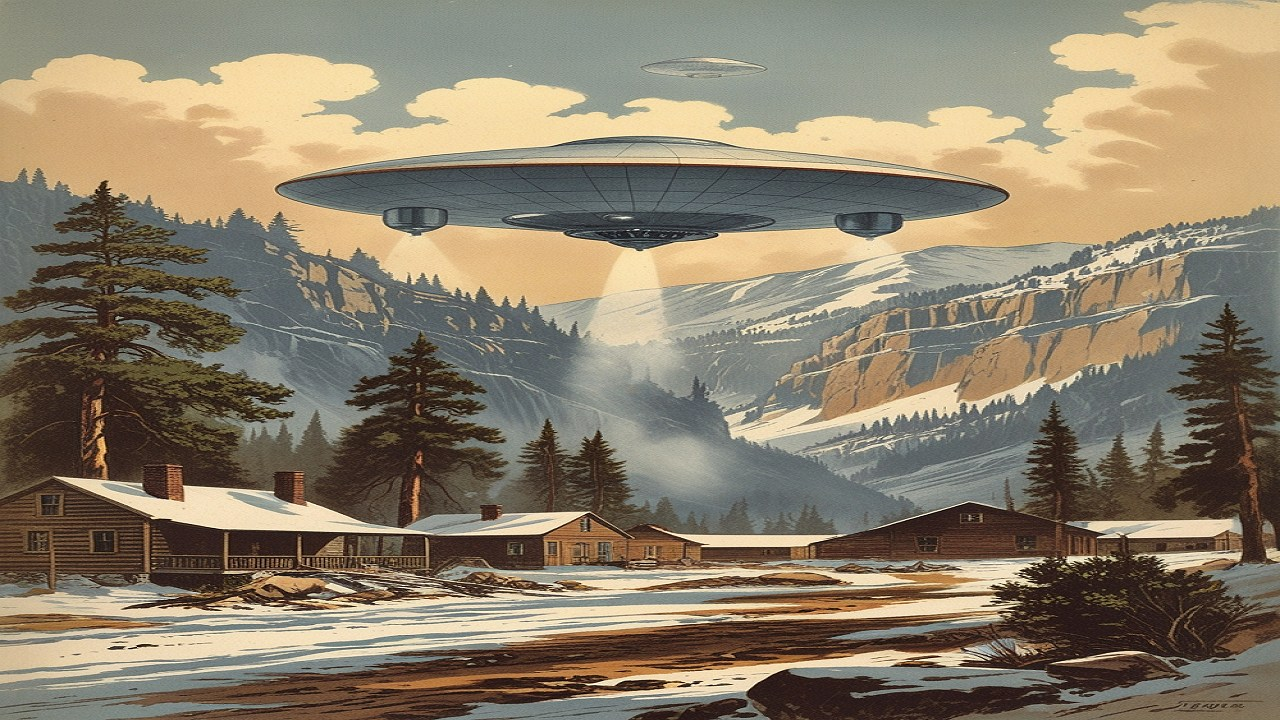
In April 1897, during a period now known as the “mystery airship wave” in the U.S., there was a report from Cripple Creek, a gold mining area in Colorado, of an unusual aerial phenomenon. The Rocky Mountain News of Denver ran a story on April 19, 1897, under the headline “CRIPPLE SAW IT. — The Mysterious Air Ship Reported to Have Been Seen Over the Gold Camp Yesterday.”
According to that article, “miners and residents” in and around the Cripple Creek gold camp claimed to have seen what was described as an “air-ship” overhead the previous day (i.e. April 18, 1897). The report gives few technical details; it is not clear how big the object was, what shape it had, exactly how it was lit, how long it was observed, or whether any noise was heard. The article emphasizes that the witnesses came from a mining population—miners and people associated with the gold camps —who were accustomed to the rugged terrain and mountain darkness.
Another article in The Rocky Mountain News, from April 14, 1897, mentions “Professor Hough and his theory that the supposed airship is the star 'Alpha Ormois’ … don't stand as high in the minds of thousands of citizens of this city …” which indicates that there was public debate, skepticism, and alternative explanations floating around in Denver and beyond for what was being seen.
So the Cripple Creek case is one among many under the umbrella of that 1897 airship flap—reports of unknown craft, lights in the sky, or “air ships” in places without conventional aircraft flight.
The Local Context: Cripple Creek, Mining Camp Environment
Cripple Creek in 1897 was a thriving gold mining district in Colorado. The town and camps around it were part of a boom, with a large population of miners, investors, businesses, and support infrastructure.
Lives in the mining camps were often hard: rugged work, remote terrain, limited lightning at night (so light in the sky could be more noticeable), and weather and darkness that could obscure perception. The residents were used to danger, to unpredictable events, to natural phenomena (storms, atmospheric weirdness), but likely less accustomed to flying machines—which were still in their infancy, especially powered heavier than-air flight.
In this environment, a strange light or object overhead would stand out and generate discussion. The miners and local populace were people accustomed to risk and speculation—gold veins, volcanic geology, unexplained cave-ins, etc.—so the claim of an unusual aerial machine could tap both their curiosity and their fears.
Effects & Reactions at the Time
Public Interest and Newspaper Sensation: As with many of the 1897 airship reports, once a sighting made the press in a mining region like Cripple Creek, word spread. Newspapers in Denver and elsewhere picked up the story. The Rocky Mountain News was one of the more influential papers in the area, and by reporting the Cripple Creek sighting, it lent legitimacy and visibility to the claim.
Skepticism and Alternative Explanations: The mention of “Professor Hough” and his theory (that some of the supposed airships could be stars) in the Denver press suggests that there was already a debate between writers, scientists, or at least educated observers: was this really a craft, or simply optical illusions, bright stars, planets, or other celestial bodies misinterpreted? People accustomed to reading newspapers knew the possibility of hoaxes, exaggerations, misreporting.
Fear, Wonder, and Social Talk: While the specific Cripple Creek report does not seem to include descriptions of panic, there is evidence in analogous reports from other towns during that wave that people were excited, frightened, curious, and sometimes even alarmed.
For miners, who had daily exposure to physical danger, an aerial object could represent either a sign of progress (someone inventing something new) or something more ominous. In remote or semi-remote areas, anything unexplained in the sky could feed into folk beliefs, rumors, or spiritual interpretations.
Economic / Investment Impacts: I did not find credible evidence that the Cripple Creek airship sighting directly caused economic changes (e.g. investment in airship or aeronautical ventures, or panic selling, or mining investment shifts). The major economic factors in Cripple Creek in that era remained gold yield, supply lines, mining labor issues (strikes), and natural challenges. So while the report added to regional lore, there is no documented large-scale economic consequence directly tied to the airship report.
Notable People
Professor Hough: This individual is named in the Denver Rocky Mountain News in relation to the theory that some of the air-ship sightings could be stars, specifically “Alpha Ormois” (likely a mis-print or variant name). His mention shows that educated observers or scientific figures were already trying to provide natural explanations. The coverage shows that his viewpoint was known, though it was not necessarily accepted by everyone.
Miners and Residents of Cripple Creek: Although no specific individual witness names are given (in the source I located), the community of miners was central. The sighting over the “gold camp” indicates that multiple witnesses with presumably rough character were involved; these were people who might tie their credibility to their physical labor, toughness, daylight visibility of ores, etc. The fact that newspapers printed their accounts suggests they were considered credible enough or at least interesting enough to readers.
Editors and Newspaper Reporters of the Rocky Mountain News: They are notable for choosing to report the story, for verifying or framing certain details (or lack thereof), for including the skepticism. The newspapers are one of the few records we have. Their choices affect what survives in history.
What We Don’t Know / Gaps
Because of the age and kind of sources, there are many blanks:
No known technical drawings, photographs, or physical evidence of the “air-ship” from the Cripple Creek report.
No detailed witness statements preserved (that I could find) giving shape, size, speed estimates, light configurations, or duration and direction precisely.
Unclear whether the object was heard or silent. No data on whether people thought it was mechanical or living, or who might have made it.
No follow-up investigation (at least none well documented) from government bodies, scientists, or inventor communities that traces the cause (if human experimenter, balloon, optical illusion, etc.).
Because reports are via newspapers, there is always possibility of embellishment, errors in transcription or printing, telescoping of time, etc.
Legacy and Impact over Time
Even with limited detail, the Cripple Creek case has a legacy, especially in UFO / airship history and local folklore:
Part of the 1897 Airship Wave Record: The Cripple Creek sighting is regularly cited in catalogues and summaries of the 1897 mystery airship phenomenon. It contributes to the picture that many different communities, including remote mining towns in rugged terrain, saw something unexplained. It supports the hypothesis that sightings were not isolated to more populous or flatter regions.
Cultural / Local Lore: In Cripple Creek and in Teller County (which includes the Cripple Creek mining district), stories like the air-ship contribute to the historical identity. When people talk about Cripple Creek’s past, mining, boomtowns, strikes, ghost towns, etc., the mysterious light/air-ship stories pepper the narrative, adding flavor.
Such stories are sometimes included in local history talks, museums, folklore collections.
Influence on Later UFO / Airship Research: Later researchers have used the Cripple Creek case as a comparison point: to examine how mining communities report unexplained phenomena; to analyze the influence of terrain (mountains, darkness) on perception; to explore how newspaper reporting frames belief vs skepticism.
Skeptical and Scientific Interpretation: Over time, some have tried to reinterpret such reports as misidentifications of planets, stars, atmospheric phenomena (meteors, aurora, reflections), or perhaps early balloons, searchlights, etc. The presence of alternative explanations (as illustrated by “Professor Hough’s theory” in Denver) is part of the legacy. The Cripple Creek case serves as a case study in how early witnesses and journalists handled ambiguity.
Relevance Today
What relevance does the Cripple Creek air-ship sighting hold in the twenty-first century?
Historical precedent in UFO / UAP studies: In modern conversations about UFOs (or UAPs as sometimes called), there is interest in historical sightings to understand patterns: common descriptions, times of year, what kinds of people report them, what environmental/geographical features seem associated. The 1897 airship wave, including the Cripple Creek report, is often used to show that sightings predate modern aviation and radar; that people in that era were observing aerial anomalies without the cultural and technological context of jets, satellites, or drones.
Folklore, tourism, and local heritage: The story is part of the story of Cripple Creek itself—a mining boomtown, with tales of fortune and hardship. Such legends add to local color, and in a region that now depends in part on historical tourism, ghost town tours, mining history museums, etc., stories like this help with attracting interest from people curious in the strange or mysterious.
Cautionary example in witness credibility and media role: For those studying UFO/airship phenomena critically, the Cripple Creek case reminds us how witness reputation, local press, community belief, and lack of physical evidence play major roles in how stories develop and survive. It shows how even brief reports can exert influence over long time spans.
Notable Limitations & Why It Remains Unresolved
Lack of physical or material trace. Without artifacts, photos, corroborating documents beyond newspaper articles, there is little that can be scientifically examined.
Absence of multiple independent sources with detail. Many stories from the 1897 wave are heard second- or third-hand by later writers; few have preserved original statements.
Potential for exaggeration or embellishment. Frontier newspapers often thrived on sensational stories, especially ones that sold papers or captured imagination. The Cripple Creek report may have been influenced by other airship stories, by rapid communication of reports, by public expectations or anxieties.
The difficulty of verifying who exactly witnessed the event, what the observer’s vantage point was, how long, whether environmental conditions (moonlight, clouds) allowed for misinterpretation of atmospheric light effects.
Conclusion
The April 1897 Cripple Creek “air-ship” case stands as a small but intriguing piece of UFO / aerial mystery history. It lacks many of the concrete details that modern UFO cases sometimes supply, but its importance lies not in its completeness so much as its representativeness and its context.
At the time, the report stirred curiosity in Colorado. It became part of conversations about what technological marvels might lie ahead, what natural phenomena might exist as yet poorly understood. It joined a wave of similar sightings across the country in Spring 1897, adding a mountain mining town to what might otherwise appear as reports from flatter, more populated regions.
Today, it offers historians, UFO researchers, folklorists, and curious locals a window into how people of that era saw, reported, and believed—or doubted—strange sightings in the sky. The lack of resolution keeps it mysterious, which is part of its power: it reminds us that not all phenomena are neatly explained, and that sometimes a story lives on through its questions more than through its answers.
In April 1897, during a period now known as the “mystery airship wave” in the U.S., there was a report from Cripple Creek, a gold mining area in Colorado, of an unusual aerial phenomenon. The Rocky Mountain News of Denver ran a story on April 19, 1897, under the headline “CRIPPLE SAW IT. — The Mysterious Air Ship Reported to Have Been Seen Over the Gold Camp Yesterday.”
According to that article, “miners and residents” in and around the Cripple Creek gold camp claimed to have seen what was described as an “air-ship” overhead the previous day (i.e. April 18, 1897). The report gives few technical details; it is not clear how big the object was, what shape it had, exactly how it was lit, how long it was observed, or whether any noise was heard. The article emphasizes that the witnesses came from a mining population—miners and people associated with the gold camps —who were accustomed to the rugged terrain and mountain darkness.
Another article in The Rocky Mountain News, from April 14, 1897, mentions “Professor Hough and his theory that the supposed airship is the star 'Alpha Ormois’ … don't stand as high in the minds of thousands of citizens of this city …” which indicates that there was public debate, skepticism, and alternative explanations floating around in Denver and beyond for what was being seen.
So the Cripple Creek case is one among many under the umbrella of that 1897 airship flap—reports of unknown craft, lights in the sky, or “air ships” in places without conventional aircraft flight.
The Local Context: Cripple Creek, Mining Camp Environment
Cripple Creek in 1897 was a thriving gold mining district in Colorado. The town and camps around it were part of a boom, with a large population of miners, investors, businesses, and support infrastructure.
Lives in the mining camps were often hard: rugged work, remote terrain, limited lightning at night (so light in the sky could be more noticeable), and weather and darkness that could obscure perception. The residents were used to danger, to unpredictable events, to natural phenomena (storms, atmospheric weirdness), but likely less accustomed to flying machines—which were still in their infancy, especially powered heavier than-air flight.
In this environment, a strange light or object overhead would stand out and generate discussion. The miners and local populace were people accustomed to risk and speculation—gold veins, volcanic geology, unexplained cave-ins, etc.—so the claim of an unusual aerial machine could tap both their curiosity and their fears.
Effects & Reactions at the Time
Public Interest and Newspaper Sensation: As with many of the 1897 airship reports, once a sighting made the press in a mining region like Cripple Creek, word spread. Newspapers in Denver and elsewhere picked up the story. The Rocky Mountain News was one of the more influential papers in the area, and by reporting the Cripple Creek sighting, it lent legitimacy and visibility to the claim.
Skepticism and Alternative Explanations: The mention of “Professor Hough” and his theory (that some of the supposed airships could be stars) in the Denver press suggests that there was already a debate between writers, scientists, or at least educated observers: was this really a craft, or simply optical illusions, bright stars, planets, or other celestial bodies misinterpreted? People accustomed to reading newspapers knew the possibility of hoaxes, exaggerations, misreporting.
Fear, Wonder, and Social Talk: While the specific Cripple Creek report does not seem to include descriptions of panic, there is evidence in analogous reports from other towns during that wave that people were excited, frightened, curious, and sometimes even alarmed.
For miners, who had daily exposure to physical danger, an aerial object could represent either a sign of progress (someone inventing something new) or something more ominous. In remote or semi-remote areas, anything unexplained in the sky could feed into folk beliefs, rumors, or spiritual interpretations.
Economic / Investment Impacts: I did not find credible evidence that the Cripple Creek airship sighting directly caused economic changes (e.g. investment in airship or aeronautical ventures, or panic selling, or mining investment shifts). The major economic factors in Cripple Creek in that era remained gold yield, supply lines, mining labor issues (strikes), and natural challenges. So while the report added to regional lore, there is no documented large-scale economic consequence directly tied to the airship report.
Notable People
Professor Hough: This individual is named in the Denver Rocky Mountain News in relation to the theory that some of the air-ship sightings could be stars, specifically “Alpha Ormois” (likely a mis-print or variant name). His mention shows that educated observers or scientific figures were already trying to provide natural explanations. The coverage shows that his viewpoint was known, though it was not necessarily accepted by everyone.
Miners and Residents of Cripple Creek: Although no specific individual witness names are given (in the source I located), the community of miners was central. The sighting over the “gold camp” indicates that multiple witnesses with presumably rough character were involved; these were people who might tie their credibility to their physical labor, toughness, daylight visibility of ores, etc. The fact that newspapers printed their accounts suggests they were considered credible enough or at least interesting enough to readers.
Editors and Newspaper Reporters of the Rocky Mountain News: They are notable for choosing to report the story, for verifying or framing certain details (or lack thereof), for including the skepticism. The newspapers are one of the few records we have. Their choices affect what survives in history.
What We Don’t Know / Gaps
Because of the age and kind of sources, there are many blanks:
No known technical drawings, photographs, or physical evidence of the “air-ship” from the Cripple Creek report.
No detailed witness statements preserved (that I could find) giving shape, size, speed estimates, light configurations, or duration and direction precisely.
Unclear whether the object was heard or silent. No data on whether people thought it was mechanical or living, or who might have made it.
No follow-up investigation (at least none well documented) from government bodies, scientists, or inventor communities that traces the cause (if human experimenter, balloon, optical illusion, etc.).
Because reports are via newspapers, there is always possibility of embellishment, errors in transcription or printing, telescoping of time, etc.
Legacy and Impact over Time
Even with limited detail, the Cripple Creek case has a legacy, especially in UFO / airship history and local folklore:
Part of the 1897 Airship Wave Record: The Cripple Creek sighting is regularly cited in catalogues and summaries of the 1897 mystery airship phenomenon. It contributes to the picture that many different communities, including remote mining towns in rugged terrain, saw something unexplained. It supports the hypothesis that sightings were not isolated to more populous or flatter regions.
Cultural / Local Lore: In Cripple Creek and in Teller County (which includes the Cripple Creek mining district), stories like the air-ship contribute to the historical identity. When people talk about Cripple Creek’s past, mining, boomtowns, strikes, ghost towns, etc., the mysterious light/air-ship stories pepper the narrative, adding flavor.
Such stories are sometimes included in local history talks, museums, folklore collections.
Influence on Later UFO / Airship Research: Later researchers have used the Cripple Creek case as a comparison point: to examine how mining communities report unexplained phenomena; to analyze the influence of terrain (mountains, darkness) on perception; to explore how newspaper reporting frames belief vs skepticism.
Skeptical and Scientific Interpretation: Over time, some have tried to reinterpret such reports as misidentifications of planets, stars, atmospheric phenomena (meteors, aurora, reflections), or perhaps early balloons, searchlights, etc. The presence of alternative explanations (as illustrated by “Professor Hough’s theory” in Denver) is part of the legacy. The Cripple Creek case serves as a case study in how early witnesses and journalists handled ambiguity.
Relevance Today
What relevance does the Cripple Creek air-ship sighting hold in the twenty-first century?
Historical precedent in UFO / UAP studies: In modern conversations about UFOs (or UAPs as sometimes called), there is interest in historical sightings to understand patterns: common descriptions, times of year, what kinds of people report them, what environmental/geographical features seem associated. The 1897 airship wave, including the Cripple Creek report, is often used to show that sightings predate modern aviation and radar; that people in that era were observing aerial anomalies without the cultural and technological context of jets, satellites, or drones.
Folklore, tourism, and local heritage: The story is part of the story of Cripple Creek itself—a mining boomtown, with tales of fortune and hardship. Such legends add to local color, and in a region that now depends in part on historical tourism, ghost town tours, mining history museums, etc., stories like this help with attracting interest from people curious in the strange or mysterious.
Cautionary example in witness credibility and media role: For those studying UFO/airship phenomena critically, the Cripple Creek case reminds us how witness reputation, local press, community belief, and lack of physical evidence play major roles in how stories develop and survive. It shows how even brief reports can exert influence over long time spans.
Notable Limitations & Why It Remains Unresolved
Lack of physical or material trace. Without artifacts, photos, corroborating documents beyond newspaper articles, there is little that can be scientifically examined.
Absence of multiple independent sources with detail. Many stories from the 1897 wave are heard second- or third-hand by later writers; few have preserved original statements.
Potential for exaggeration or embellishment. Frontier newspapers often thrived on sensational stories, especially ones that sold papers or captured imagination. The Cripple Creek report may have been influenced by other airship stories, by rapid communication of reports, by public expectations or anxieties.
The difficulty of verifying who exactly witnessed the event, what the observer’s vantage point was, how long, whether environmental conditions (moonlight, clouds) allowed for misinterpretation of atmospheric light effects.
Conclusion
The April 1897 Cripple Creek “air-ship” case stands as a small but intriguing piece of UFO / aerial mystery history. It lacks many of the concrete details that modern UFO cases sometimes supply, but its importance lies not in its completeness so much as its representativeness and its context.
At the time, the report stirred curiosity in Colorado. It became part of conversations about what technological marvels might lie ahead, what natural phenomena might exist as yet poorly understood. It joined a wave of similar sightings across the country in Spring 1897, adding a mountain mining town to what might otherwise appear as reports from flatter, more populated regions.
Today, it offers historians, UFO researchers, folklorists, and curious locals a window into how people of that era saw, reported, and believed—or doubted—strange sightings in the sky. The lack of resolution keeps it mysterious, which is part of its power: it reminds us that not all phenomena are neatly explained, and that sometimes a story lives on through its questions more than through its answers.