


Blog Categories
- African Incidents
- Atlantis Incidents
- Australian Incidents
- Belgian Incidents
- Bermuda Triangle Incidents
- Brazilian Incidents
- Canadian Incidents
- Chinese Incidents
- European Incidents
- France Incidents
- Ghosts
- Giants
- Italy Incidents
- Japanese Incidents
- Middle East Incidents
- Portugal Incidents
- Project Serpo
- Puerto Rico Incidents
- Russian Incidents
- Sasquatch
- Scandinavia Incidents
- Spanish Incidents
- UFOs
- United Kingdom Incidents
- United States Incidents
1897: The Quiet Continuation of Airship Reports in the American West
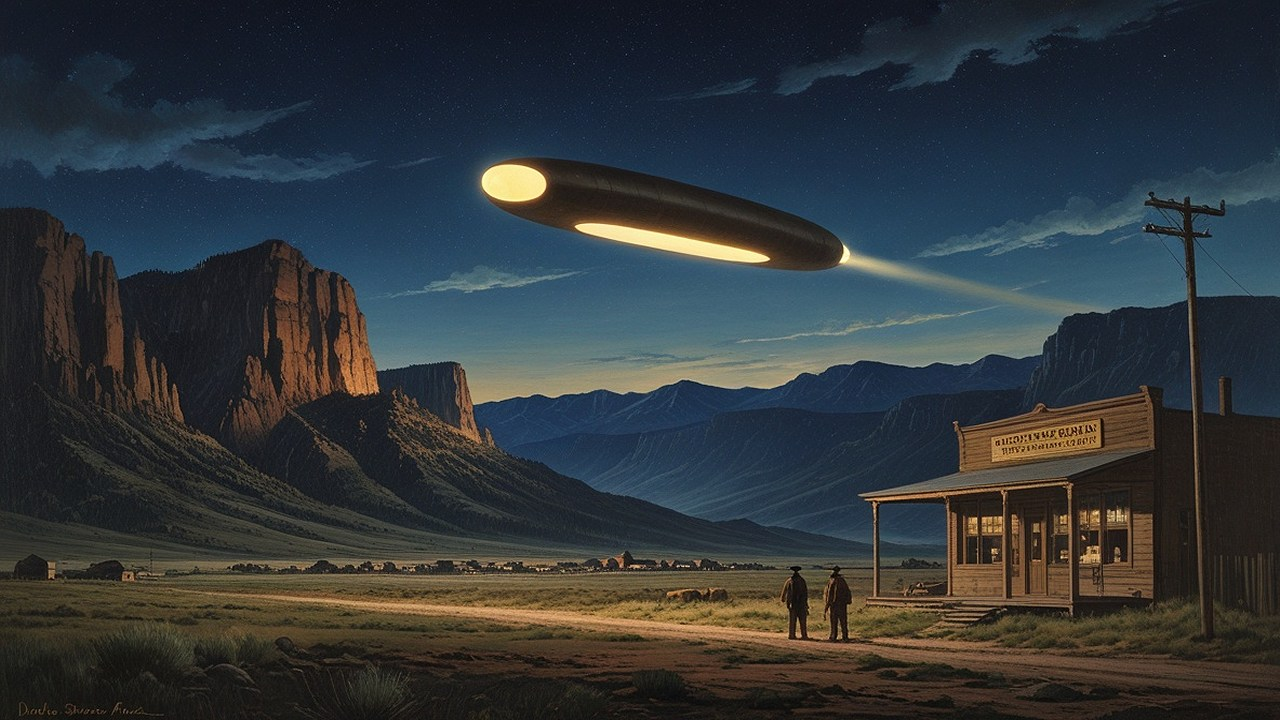
In the opening decade of the twentieth century, the United States stood at the threshold of profound technological and social transformation. The Wright brothers’ first powered flight in 1903 signaled the beginning of the aviation age, while the nation continued its rapid westward expansion, industrialization, and integration of new territories. Yet amid these advances, scattered reports of unusual aerial phenomena persisted, particularly in the American West. These accounts represented echoes of the dramatic mystery airship wave of 1896–1897, carrying forward descriptions of lighted objects moving against the wind or hovering in ways that defied contemporary understanding. While specific Idaho sightings from this exact period remain limited in primary sources, the state was occasionally referenced in broader Western U.S. compilations of early twentieth-century anomalous aerial activity. Idaho newspapers and regional accounts from the era noted similar phenomena, contributing to the ongoing pattern of strange lights and unusual craft observed across the frontier landscapes of the West.
The early 1900s marked a pivotal moment in American history. The country was emerging from the economic challenges of the 1890s and embracing a new era of innovation and growth. Electricity was becoming more widespread in urban centers, the automobile industry was in its infancy, and the promise of controlled, powered flight captured the imagination of inventors and the public alike. In the American West, this period was one of continued settlement and development. Idaho, admitted to the Union in 1890, was still a young state characterized by vast open spaces, rugged mountains, fertile valleys, and growing communities centered around mining, agriculture, and rail transport. The night skies over these landscapes remained remarkably dark by modern standards, offering clear views of celestial objects and any unusual phenomena that might appear among them.
The mystery airship wave of 1896–1897 had been a national phenomenon, with thousands of reports describing elongated, cigar-shaped craft equipped with bright lights. These objects were often said to hover silently or move with apparent control against prevailing winds—behaviors that stood in stark contrast to the limited aerial technology of the era. Although the intensity of the wave diminished after 1897, echoes of these sightings continued into the early twentieth century, particularly in the expansive regions of the American West. These lingering reports typically involved lighted objects or luminous phenomena that moved in deliberate patterns, sometimes hovering for extended periods before accelerating away. The descriptions maintained a striking consistency with those from the earlier wave, suggesting a continuity of observation rather than isolated incidents.
In the Western states, including areas near Idaho, these echoes manifested through occasional newspaper mentions and regional accounts. Idaho’s newspapers, serving growing communities in places like Boise, Idaho Falls, and smaller mining towns, occasionally carried stories or letters describing bright lights or unusual craft in the night sky. While these references were often brief and lacked the sensational detail of some Midwest or California reports from the 1890s, they contributed to the broader pattern of anomalous aerial activity documented across the West. Witnesses in the region described lighted objects moving against the wind or hovering in ways that stood out against the dark, open horizons. These accounts aligned with similar reports from neighboring states, reinforcing the sense that the phenomenon observed during the national wave had not entirely disappeared but persisted in a more intermittent form.
The characteristics of these early twentieth-century reports closely paralleled those of the 1896–1897 wave. Observers frequently noted the absence of sound, despite the apparent size and motion of the objects. Many described bright lights or clusters of illumination that maintained a steady glow while traversing the sky or hovering motionless. Some accounts mentioned the lights changing configuration or intensity, while others emphasized their deliberate, non-random movement. In an era when human-made aerial devices were still rudimentary—limited primarily to unpowered balloons, kites, and experimental gliders—these behaviors challenged contemporary explanations. The reports stood out precisely because they did not conform to known natural phenomena or the limited technology of the time.
The cultural context of the early 1900s shaped how these sightings were interpreted. Newspapers remained the dominant medium for sharing news of unusual events, and local editors in Western towns often presented the stories with a blend of curiosity and measured skepticism. The rapid pace of technological change created an atmosphere in which speculation about advanced human inventions was common. Many observers assumed the lights represented secret experiments by inventors working in isolation or perhaps even foreign powers testing new aerial capabilities. Others viewed them through the lens of frontier experience, where unusual lights in the night sky could evoke both wonder and caution. In Idaho and similar Western regions, the relative isolation of many communities meant that local newspapers played a particularly important role in recording and circulating these accounts, helping to preserve them within the historical record.
For Idaho specifically, these early 1900s echoes represent an important layer in the state’s documented connection to anomalous aerial activity. Although specific Idaho incidents from 1900–1910 lack the prominence of some other regional reports, the state’s occasional inclusion in broader Western U.S. compilations demonstrates its participation in the continuing pattern. Idaho’s rugged terrain, open skies, and developing communities provided settings where such phenomena could be observed and noted. The dark night skies of the region, free from significant artificial light pollution, made even subtle luminous objects stand out clearly. Regional accounts helped connect local observations to the wider Western narrative, contributing to a cumulative record that would inform later understandings of Idaho’s UFO history.
The significance of these lingering mystery airship echoes lies in their demonstration of continuity across the turn of the century. The phenomenon observed so dramatically in 1896–1897 did not end abruptly but transitioned into a quieter, more sporadic presence in the early 1900s. This continuity is valuable for understanding the longer historical arc of unidentified aerial phenomena in the United States. It shows that the core behaviors—lighted objects moving against the wind or hovering with apparent control—recurred over time in similar forms, even as the national intensity of reporting fluctuated. For Idaho and the American West, these accounts helped maintain awareness of the phenomenon during a period of rapid change, bridging the dramatic wave of the 1890s with later twentieth-century developments.
Skeptical explanations for these reports have included misidentifications of stars, planets, or atmospheric effects, as well as conventional aircraft or balloons. Some accounts were undoubtedly influenced by the sensational newspaper culture of the era or by the excitement surrounding emerging aviation technology. However, the persistence of similar descriptions across different locations and years suggests that at least some observations reflected genuine anomalies that stood out against the backdrop of known phenomena. The limited infrastructure and population of the early twentieth-century West meant that many sightings occurred in areas with few independent corroborators, yet the consistency with the earlier wave lends them additional historical weight.
The legacy of these early 1900s echoes extends into the broader study of UFOs. They serve as a transitional link between the intense national wave of the 1890s and the more systematic investigations that would emerge later in the century. For Idaho, they represent an early thread in the state’s connection to unexplained aerial activity—a connection that would become more visible with the events of 1947 and subsequent decades. Although the pre-1910 record may lack a single dominant Idaho case, the state’s participation in the broader Western pattern through newspaper accounts and regional references establishes an important foundation.
In reflecting on this period, it becomes clear that the early twentieth century did not mark the end of mystery airship reports but rather their evolution into a quieter presence. The American West, including areas near Idaho, continued to serve as a setting where such phenomena were observed and preserved in local records. These echoes remind us that humanity’s encounter with unexplained objects in the sky has deep historical roots, extending across the threshold of the modern era and challenging simple explanations even amid rapid technological progress.
The scattered references to lingering mystery airship or luminous object reports in the American West during the early 1900s, including areas near Idaho, represent an important transitional phase in the history of unidentified aerial phenomena. Building on the dramatic wave of 1896–1897, these accounts maintained a thread of observation characterized by lighted objects moving against the wind or hovering in ways that stood out against the backdrop of a changing nation. While specific Idaho incidents from this period lack the prominence of some other regional reports, the state’s inclusion in broader compilations demonstrates its connection to the wider Western pattern. These early twentieth-century echoes underscore the persistence of the phenomenon and its place within Idaho’s longer UFO history—a history rooted in the open skies and frontier landscapes of the American West.