


Blog Categories
- African Incidents
- Atlantis Incidents
- Australian Incidents
- Belgian Incidents
- Bermuda Triangle Incidents
- Brazilian Incidents
- Canadian Incidents
- Chinese Incidents
- European Incidents
- France Incidents
- Ghosts
- Giants
- Italy Incidents
- Japanese Incidents
- Middle East Incidents
- Portugal Incidents
- Project Serpo
- Puerto Rico Incidents
- Russian Incidents
- Sasquatch
- Scandinavia Incidents
- Spanish Incidents
- UFOs
- United Kingdom Incidents
- United States Incidents
1901–1925: Florida and the Early Phantom Year
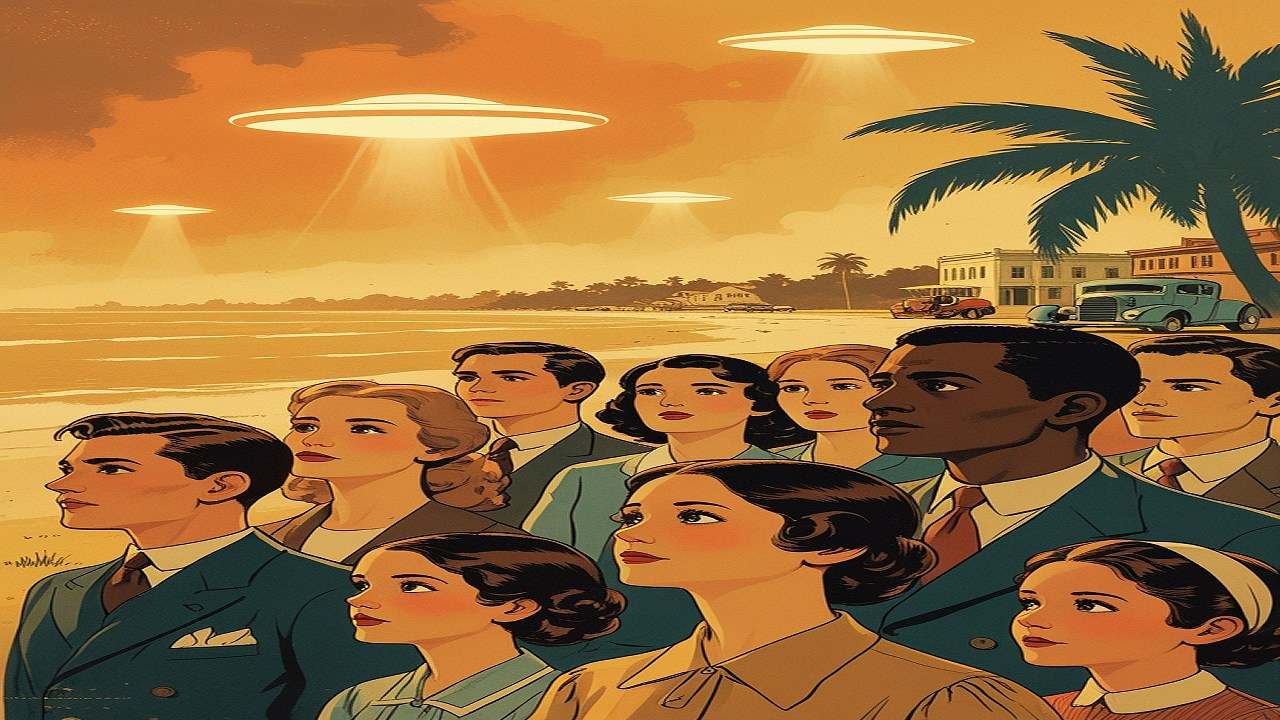
The first quarter of the twentieth century was a quiet but curious time for Florida in the realm of unexplained aerial phenomena. While other parts of the world were caught up in reports of mysterious airships, strange lights, and “ghost airplanes,” Florida remained largely on the sidelines. Yet even in its relative silence, the state was far from isolated. Newspaper telegraphs, traveling showmen, and sailors’ tales carried whispers of strange machines in the sky—stories that stirred imaginations from Key West to Pensacola.
At the dawn of the century, the memory of the 1896–1897 Mystery Airship Wave still lingered in American folklore. Across the Midwest and western states, reports had described cigar-shaped craft drifting silently above towns, often with brilliant searchlights and claims of human-like pilots. By the time the new century began, these stories had become legends—printed, reprinted, and retold until they took on a mythic glow.
Floridians read about them through syndicated stories in The Savannah Morning News or The Atlanta Constitution, which circulated widely across the South. The average Floridian in 1901 might never have seen an airship, but they had certainly heard of one.
Florida itself was changing. The early 1900s brought Henry Flagler’s expansion of the East Coast Railway and a new influx of settlers, fishermen, and entrepreneurs. With the night skies still free of commercial aviation lights, any unusual glow or streak above the palmettos drew attention. Meteor showers, burning debris, or experimental flares from military ships could easily be mistaken for something extraordinary. While no major newspapers recorded a formal “UFO” event, local curiosity about the heavens was strong—and that curiosity set the stage for how Floridians would later interpret future sightings.
In 1909, a second wave of “phantom airship” reports broke out—this time in New Zealand, the British Isles, and parts of the United States. In Iowa, Kansas, and Oklahoma, farmers claimed to see metallic craft moving against the wind. In the United Kingdom, hundreds reported cigar-shaped vessels shining bright lights over the coast. American newspapers picked up the British stories, and within weeks, small-town editors in Georgia and Alabama reprinted them. Florida’s papers, though quieter, almost certainly carried snippets of these reports in their foreign dispatch columns. For readers in Jacksonville or Tampa, these were glimpses of a strange, growing mystery: if others saw such machines, could they not also come here?
The years between 1910 and 1915 brought technological marvels that blurred the line between imagination and reality. The Wright brothers’ invention had proven that heavier-than-air flight was possible, and early aviation exhibitions began touring across the country. In 1911, Glenn Curtiss flew exhibitions in Florida, dazzling crowds who saw a flying machine for the first time. For those unaccustomed to aircraft, such events could easily blend with rumors of mysterious lights or “ghostly” craft seen after dark. When night fell over rural areas and a glowing object streaked overhead, people were left to wonder if it was a meteor—or one of those rumored “phantom airships” from northern papers.
The First World War intensified the public’s fascination with the sky. For the first time, warplanes, zeppelins, and experimental aerial bombs filled the headlines. Reports of “enemy aircraft” over Europe were common, and American readers absorbed every word. In coastal states like Florida, with its strategic harbors and long stretches of unguarded shoreline, rumors sometimes circulated about strange lights at sea or “unidentified” objects passing over naval stations. The St. Johns River, with its shipping activity and naval presence, occasionally produced sightings of unexplained flares or floating orbs—most of which could be traced to maritime exercises or weather balloons. Still, the sense that “something” might be out there grew stronger each year.
By 1917, when America entered the war, Floridians began to see real aircraft more frequently. The U.S. Navy operated training stations along the Gulf Coast, and air patrols sometimes crossed the peninsula. To the untrained eye, the sight of a silent biplane gliding across the twilight sky could still seem otherworldly. A handful of anecdotes, passed down through local families, speak of “silent lanterns” or “lights that moved without sound” near coastal areas during this period. None were recorded in official reports, but they fit the pattern of wartime confusion, when secrecy and rumor often replaced clarity.
After the war, in the early 1920s, Florida’s skies began to change again. New air routes, barnstorming pilots, and night navigation experiments became common. The state’s flat terrain and long coastline made it a natural testing ground for aviation. Newspapers were filled with stories of “first flights,” mail pilots, and record attempts. Amid all this activity, a handful of strange stories filtered in—glowing orbs over the Gulf, cigar shaped lights near Tallahassee, and one curious tale of a “fire canoe in the clouds” reportedly seen by fishermen near Cedar Key around 1923. Whether these were meteors, test flares, or fabrications, they added to a growing sense that the sky itself was no longer predictable.
Globally, the phantom airship era was winding down. The world had learned to accept airplanes and zeppelins as part of modern life. Yet, the stories of unexplainable lights and craft never truly disappeared—they evolved. Spiritualists of the 1920s claimed the lights were “etheric ships” from higher planes. Inventors speculated that lost civilizations or Martians might be testing their craft above the Earth. Science fiction was being born, and Florida, with its vast horizons and frequent meteor activity, was an ideal canvas for such speculation.
Between 1901 and 1925, Florida served as a quiet observer of humanity’s growing obsession with the skies. Its residents followed world events, read of airship scares in Europe, and witnessed aviation’s infancy firsthand. While the state produced no major UFO headlines in this period, it incubated the mindset that would later make it one of America’s prime hotspots for mysterious aerial encounters.
When the modern UFO era dawned after 1947, Floridians were already prepared—they had been watching the heavens for decades.
In historical context, this period represents the transitional age of the unknown: a time when the sky shifted from myth to machine, from the realm of angels to the domain of engineers. The lines blurred, and imagination filled the gaps that science had yet to explain. It is precisely in this space—between curiosity and certainty—that the seeds of Florida’s future UFO encounters were planted.
So while the newspapers of 1901–1925 may be largely silent, the silence itself speaks volumes. It tells of a people watching the dawn of flight, straining to see what lay beyond their horizons, and quietly preparing for a mystery that had not yet arrived. The next great chapter—the era of saucers, disks, and glowing domes—was just over the horizon, and Florida’s night skies were waiting.
The first quarter of the twentieth century was a quiet but curious time for Florida in the realm of unexplained aerial phenomena. While other parts of the world were caught up in reports of mysterious airships, strange lights, and “ghost airplanes,” Florida remained largely on the sidelines. Yet even in its relative silence, the state was far from isolated. Newspaper telegraphs, traveling showmen, and sailors’ tales carried whispers of strange machines in the sky—stories that stirred imaginations from Key West to Pensacola.
At the dawn of the century, the memory of the 1896–1897 Mystery Airship Wave still lingered in American folklore. Across the Midwest and western states, reports had described cigar-shaped craft drifting silently above towns, often with brilliant searchlights and claims of human-like pilots. By the time the new century began, these stories had become legends—printed, reprinted, and retold until they took on a mythic glow.
Floridians read about them through syndicated stories in The Savannah Morning News or The Atlanta Constitution, which circulated widely across the South. The average Floridian in 1901 might never have seen an airship, but they had certainly heard of one.
Florida itself was changing. The early 1900s brought Henry Flagler’s expansion of the East Coast Railway and a new influx of settlers, fishermen, and entrepreneurs. With the night skies still free of commercial aviation lights, any unusual glow or streak above the palmettos drew attention. Meteor showers, burning debris, or experimental flares from military ships could easily be mistaken for something extraordinary. While no major newspapers recorded a formal “UFO” event, local curiosity about the heavens was strong—and that curiosity set the stage for how Floridians would later interpret future sightings.
In 1909, a second wave of “phantom airship” reports broke out—this time in New Zealand, the British Isles, and parts of the United States. In Iowa, Kansas, and Oklahoma, farmers claimed to see metallic craft moving against the wind. In the United Kingdom, hundreds reported cigar-shaped vessels shining bright lights over the coast. American newspapers picked up the British stories, and within weeks, small-town editors in Georgia and Alabama reprinted them. Florida’s papers, though quieter, almost certainly carried snippets of these reports in their foreign dispatch columns. For readers in Jacksonville or Tampa, these were glimpses of a strange, growing mystery: if others saw such machines, could they not also come here?
The years between 1910 and 1915 brought technological marvels that blurred the line between imagination and reality. The Wright brothers’ invention had proven that heavier-than-air flight was possible, and early aviation exhibitions began touring across the country. In 1911, Glenn Curtiss flew exhibitions in Florida, dazzling crowds who saw a flying machine for the first time. For those unaccustomed to aircraft, such events could easily blend with rumors of mysterious lights or “ghostly” craft seen after dark. When night fell over rural areas and a glowing object streaked overhead, people were left to wonder if it was a meteor—or one of those rumored “phantom airships” from northern papers.
The First World War intensified the public’s fascination with the sky. For the first time, warplanes, zeppelins, and experimental aerial bombs filled the headlines. Reports of “enemy aircraft” over Europe were common, and American readers absorbed every word. In coastal states like Florida, with its strategic harbors and long stretches of unguarded shoreline, rumors sometimes circulated about strange lights at sea or “unidentified” objects passing over naval stations. The St. Johns River, with its shipping activity and naval presence, occasionally produced sightings of unexplained flares or floating orbs—most of which could be traced to maritime exercises or weather balloons. Still, the sense that “something” might be out there grew stronger each year.
By 1917, when America entered the war, Floridians began to see real aircraft more frequently. The U.S. Navy operated training stations along the Gulf Coast, and air patrols sometimes crossed the peninsula. To the untrained eye, the sight of a silent biplane gliding across the twilight sky could still seem otherworldly. A handful of anecdotes, passed down through local families, speak of “silent lanterns” or “lights that moved without sound” near coastal areas during this period. None were recorded in official reports, but they fit the pattern of wartime confusion, when secrecy and rumor often replaced clarity.
After the war, in the early 1920s, Florida’s skies began to change again. New air routes, barnstorming pilots, and night navigation experiments became common. The state’s flat terrain and long coastline made it a natural testing ground for aviation. Newspapers were filled with stories of “first flights,” mail pilots, and record attempts. Amid all this activity, a handful of strange stories filtered in—glowing orbs over the Gulf, cigar shaped lights near Tallahassee, and one curious tale of a “fire canoe in the clouds” reportedly seen by fishermen near Cedar Key around 1923. Whether these were meteors, test flares, or fabrications, they added to a growing sense that the sky itself was no longer predictable.
Globally, the phantom airship era was winding down. The world had learned to accept airplanes and zeppelins as part of modern life. Yet, the stories of unexplainable lights and craft never truly disappeared—they evolved. Spiritualists of the 1920s claimed the lights were “etheric ships” from higher planes. Inventors speculated that lost civilizations or Martians might be testing their craft above the Earth. Science fiction was being born, and Florida, with its vast horizons and frequent meteor activity, was an ideal canvas for such speculation.
Between 1901 and 1925, Florida served as a quiet observer of humanity’s growing obsession with the skies. Its residents followed world events, read of airship scares in Europe, and witnessed aviation’s infancy firsthand. While the state produced no major UFO headlines in this period, it incubated the mindset that would later make it one of America’s prime hotspots for mysterious aerial encounters.
When the modern UFO era dawned after 1947, Floridians were already prepared—they had been watching the heavens for decades.
In historical context, this period represents the transitional age of the unknown: a time when the sky shifted from myth to machine, from the realm of angels to the domain of engineers. The lines blurred, and imagination filled the gaps that science had yet to explain. It is precisely in this space—between curiosity and certainty—that the seeds of Florida’s future UFO encounters were planted.
So while the newspapers of 1901–1925 may be largely silent, the silence itself speaks volumes. It tells of a people watching the dawn of flight, straining to see what lay beyond their horizons, and quietly preparing for a mystery that had not yet arrived. The next great chapter—the era of saucers, disks, and glowing domes—was just over the horizon, and Florida’s night skies were waiting.