


Blog Categories
- African Incidents
- Atlantis Incidents
- Australian Incidents
- Belgian Incidents
- Bermuda Triangle Incidents
- Brazilian Incidents
- Canadian Incidents
- Chinese Incidents
- European Incidents
- France Incidents
- Ghosts
- Giants
- Italy Incidents
- Japanese Incidents
- Middle East Incidents
- Portugal Incidents
- Project Serpo
- Puerto Rico Incidents
- Russian Incidents
- Sasquatch
- Scandinavia Incidents
- Spanish Incidents
- UFOs
- United Kingdom Incidents
- United States Incidents
1909: UFO Dreams in Colorado Press
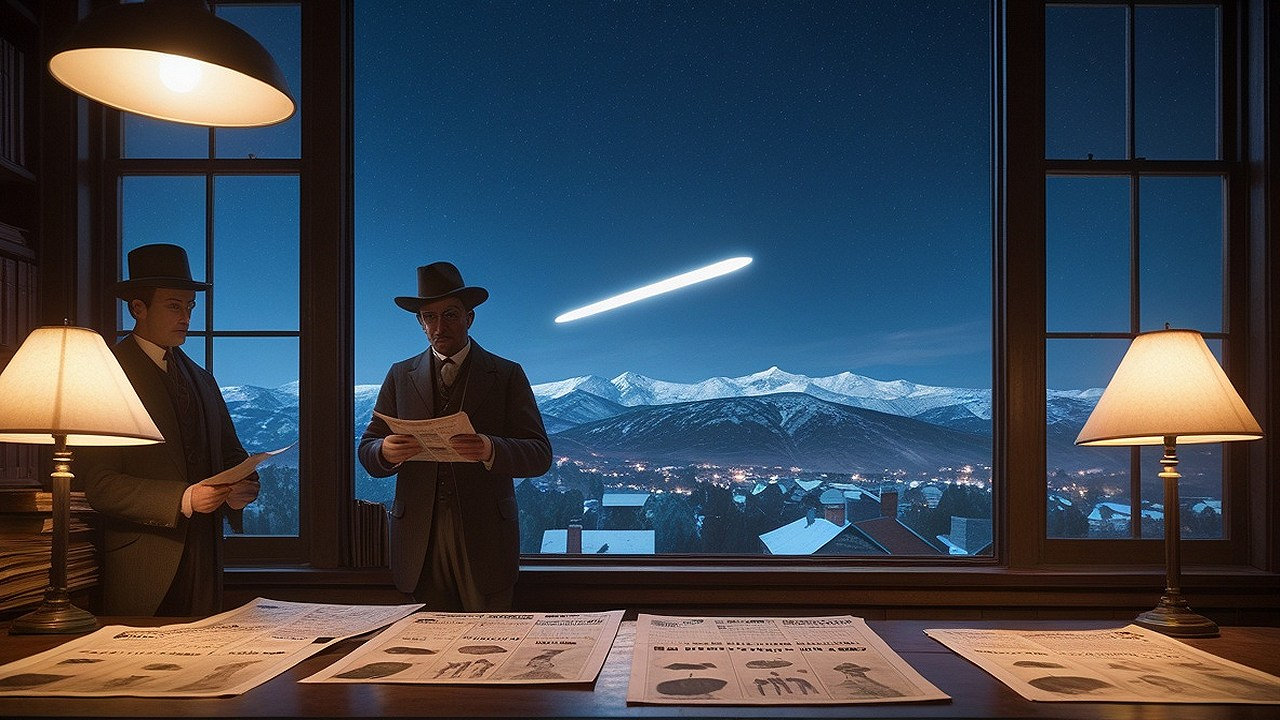
In the summer of 1909, while the rest of the world watched the first real airplanes take to the sky, Colorado newspapers were busy joking about airships. At first glance these stories look like nothing more than light entertainment—short columns, witty quips, and tongue-in-cheek notices about “Denver’s own airship.” But look closer and something more interesting appears. Beneath the humor ran a current of genuine fascination with mysterious things in the sky, a fascination that reached back to the great airship wave of 1896 and 1897 and pointed forward to Colorado’s later reputation as a place where unidentified aerial objects would be reported for generations.
This is the story of how jokes and dreams in the Colorado press of 1909 helped keep the idea of unknown aerial craft alive in the public mind.
By 1909 aviation was no longer pure fantasy. The Wright brothers had flown in 1903. Glenn Curtiss was setting speed records. In July of that same year Louis Blériot would cross the English Channel. Count Zeppelin’s rigid airships were already becoming symbols of technological ambition in Europe. Newspapers across America carried photographs and breathless reports of these achievements. Yet for most people living in the Rocky Mountains, an actual flying machine remained something they had only read about. The centers of aviation activity were far away—Ohio, New York, Europe. Colorado sat on the periphery, watching the future arrive through the pages of its daily and weekly papers.
That distance did not kill curiosity. It fed it. Local editors in Denver and Summit County discovered that airships made excellent copy. They published short satirical pieces imagining how flying machines might one day replace horses in the mining camps, or how Denver businessmen could beat traffic by taking to the air. Some notices hinted, still with a smile, that someone somewhere in the region might already be working on an aerial project. The tone was rarely serious. The subject, however, kept returning. Week after week the theme of airships stayed alive in readers’ conversations.
Why did these jokes resonate? Part of the answer lies in the economic and social climate of the time. Mining in Summit County was well past its boom years. Denver was growing rapidly and dealing with all the pressures that come with expansion. Against that backdrop, airship humor offered welcome relief—a chance to laugh about a future that felt both impossible and strangely inevitable. At the same time the jokes tapped a deeper anticipation. Even people who had never seen an airplane could sense that the world was changing. The playful suggestion that Denver or the high-country towns might somehow join the aviation age gave ordinary readers a way to place themselves at the edge of progress.
There was another layer, one that connects these 1909 notices directly to the history of unidentified aerial phenomena. Just twelve years earlier, in 1896 and 1897, Colorado had been part of the great American airship wave. Residents across the state had reported lights and structured craft moving through the night sky in ways that defied easy explanation. Those reports were still within living memory in 1909. Many of the adults reading the Denver and Summit County papers would have remembered the earlier excitement, the newspaper coverage, and the unanswered questions. The 1909 jokes never claimed to be continuing that wave. Yet by keeping airships in the public conversation they ensured that the older stories were never completely forgotten. Humor became a vehicle for cultural memory.
The same pattern was visible across the United States. In 1909 American newspapers everywhere mixed solid aviation reporting with speculation and satire. Editors knew that flight sold papers. They also knew that the boundary between proven technology and pure wonder was still thin. A story could begin with the Wright brothers’ latest demonstration and end with a fanciful aside about what might be flying over the local county before long. Colorado’s airship notices fit this national mood perfectly. They allowed regional papers to participate in a country-wide conversation while giving the material a local accent.
No famous inventor or aviator was directly tied to the Denver and Summit County items of 1909. The real authors of the phenomenon were the newspaper editors and journalists who decided the subject was worth space. The Denver Post and the Rocky Mountain News shaped much of the city’s imagination. Smaller county papers followed their lead, adding their own wry commentary. In the background stood the genuine pioneers—the Wrights, Curtiss, Blériot, Zeppelin—whose real accomplishments gave even the silliest local joke a foundation of possibility. Without those documented advances, the humor would have had nothing to land on.
At the time the notices were meant to be ephemeral. They filled column inches, drew a smile, and were forgotten by the next edition. Yet their significance has grown with distance. Historians of aviation and researchers of unidentified aerial phenomena now read them as cultural evidence. They show that Colorado’s later status as a state with a rich UFO history did not begin suddenly in the 1940s or 1950s. It rested on earlier layers of attention to strange things in the sky—layers that included both serious sighting reports and, as in 1909, humor and speculation.
Modern compilations of Colorado UFO history sometimes include references to these 1909 airship jokes precisely because they demonstrate continuity. The jokes prove that the idea of mysterious aerial craft never disappeared from local consciousness. It simply changed costume—from the alarmed or puzzled reports of 1896–97 to the lighter, more satirical treatment of 1909. In both periods Coloradans were looking up and wondering what might be possible.
The summer of 1909 therefore occupies a quiet but revealing place in the longer story of how Americans have thought about objects in the sky. In Summit County and Denver the newspapers did not publish scientific treatises or formal investigation reports. They published jokes, brief notices, and playful speculation. Those pieces captured the excitement and the uncertainty of an age when flight was real yet still rare enough to feel magical. They kept the theme of airships alive in ordinary conversation. And by doing so they helped maintain a cultural readiness to consider that the sky might contain more than weather and stars.
The 1909 Colorado airship notices were never intended as evidence of unidentified flying objects. They were entertainment. Yet entertainment can preserve memory. The same communities that laughed about Denver airships in 1909 had, only a few years earlier, read serious accounts of unknown craft moving through their skies. The jokes did not erase those earlier reports. They kept the subject familiar. When, decades later, new waves of sightings arrived, the cultural ground had already been prepared by generations of newspaper stories—some earnest, some comic—about things that flew without explanation.
In the end the airship jokes and dreams of 1909 remind us that the history of unidentified aerial phenomena is not made solely of dramatic encounters and official investigations. It is also made of ordinary people reading the paper, smiling at a tall tale, and still glancing upward at night with a little more curiosity than before. Colorado’s press that summer gave its readers permission to imagine flying machines over the Rockies. Some of those readers had already seen lights they could not explain. Others would see them in the years to come. The jokes did not create the mystery. They simply refused to let it fade.
The summer of 1909 stands as a curious but telling moment in Colorado’s long history of sky-watching. In Summit County and Denver, newspapers filled their pages with playful remarks about airships, capturing both the excitement and the uncertainty of the age. These notices were not scientific records, nor were they meant to be taken literally. Yet they reveal the depth of fascination with flight and the persistence of aerial mystery in the local imagination—a persistence that would quietly feed the state’s later and far more serious engagement with the unidentified.
In the summer of 1909, while the rest of the world watched the first real airplanes take to the sky, Colorado newspapers were busy joking about airships. At first glance these stories look like nothing more than light entertainment—short columns, witty quips, and tongue-in-cheek notices about “Denver’s own airship.” But look closer and something more interesting appears. Beneath the humor ran a current of genuine fascination with mysterious things in the sky, a fascination that reached back to the great airship wave of 1896 and 1897 and pointed forward to Colorado’s later reputation as a place where unidentified aerial objects would be reported for generations.
This is the story of how jokes and dreams in the Colorado press of 1909 helped keep the idea of unknown aerial craft alive in the public mind.
By 1909 aviation was no longer pure fantasy. The Wright brothers had flown in 1903. Glenn Curtiss was setting speed records. In July of that same year Louis Blériot would cross the English Channel. Count Zeppelin’s rigid airships were already becoming symbols of technological ambition in Europe. Newspapers across America carried photographs and breathless reports of these achievements. Yet for most people living in the Rocky Mountains, an actual flying machine remained something they had only read about. The centers of aviation activity were far away—Ohio, New York, Europe. Colorado sat on the periphery, watching the future arrive through the pages of its daily and weekly papers.
That distance did not kill curiosity. It fed it. Local editors in Denver and Summit County discovered that airships made excellent copy. They published short satirical pieces imagining how flying machines might one day replace horses in the mining camps, or how Denver businessmen could beat traffic by taking to the air. Some notices hinted, still with a smile, that someone somewhere in the region might already be working on an aerial project. The tone was rarely serious. The subject, however, kept returning. Week after week the theme of airships stayed alive in readers’ conversations.
Why did these jokes resonate? Part of the answer lies in the economic and social climate of the time. Mining in Summit County was well past its boom years. Denver was growing rapidly and dealing with all the pressures that come with expansion. Against that backdrop, airship humor offered welcome relief—a chance to laugh about a future that felt both impossible and strangely inevitable. At the same time the jokes tapped a deeper anticipation. Even people who had never seen an airplane could sense that the world was changing. The playful suggestion that Denver or the high-country towns might somehow join the aviation age gave ordinary readers a way to place themselves at the edge of progress.
There was another layer, one that connects these 1909 notices directly to the history of unidentified aerial phenomena. Just twelve years earlier, in 1896 and 1897, Colorado had been part of the great American airship wave. Residents across the state had reported lights and structured craft moving through the night sky in ways that defied easy explanation. Those reports were still within living memory in 1909. Many of the adults reading the Denver and Summit County papers would have remembered the earlier excitement, the newspaper coverage, and the unanswered questions. The 1909 jokes never claimed to be continuing that wave. Yet by keeping airships in the public conversation they ensured that the older stories were never completely forgotten. Humor became a vehicle for cultural memory.
The same pattern was visible across the United States. In 1909 American newspapers everywhere mixed solid aviation reporting with speculation and satire. Editors knew that flight sold papers. They also knew that the boundary between proven technology and pure wonder was still thin. A story could begin with the Wright brothers’ latest demonstration and end with a fanciful aside about what might be flying over the local county before long. Colorado’s airship notices fit this national mood perfectly. They allowed regional papers to participate in a country-wide conversation while giving the material a local accent.
No famous inventor or aviator was directly tied to the Denver and Summit County items of 1909. The real authors of the phenomenon were the newspaper editors and journalists who decided the subject was worth space. The Denver Post and the Rocky Mountain News shaped much of the city’s imagination. Smaller county papers followed their lead, adding their own wry commentary. In the background stood the genuine pioneers—the Wrights, Curtiss, Blériot, Zeppelin—whose real accomplishments gave even the silliest local joke a foundation of possibility. Without those documented advances, the humor would have had nothing to land on.
At the time the notices were meant to be ephemeral. They filled column inches, drew a smile, and were forgotten by the next edition. Yet their significance has grown with distance. Historians of aviation and researchers of unidentified aerial phenomena now read them as cultural evidence. They show that Colorado’s later status as a state with a rich UFO history did not begin suddenly in the 1940s or 1950s. It rested on earlier layers of attention to strange things in the sky—layers that included both serious sighting reports and, as in 1909, humor and speculation.
Modern compilations of Colorado UFO history sometimes include references to these 1909 airship jokes precisely because they demonstrate continuity. The jokes prove that the idea of mysterious aerial craft never disappeared from local consciousness. It simply changed costume—from the alarmed or puzzled reports of 1896–97 to the lighter, more satirical treatment of 1909. In both periods Coloradans were looking up and wondering what might be possible.
The summer of 1909 therefore occupies a quiet but revealing place in the longer story of how Americans have thought about objects in the sky. In Summit County and Denver the newspapers did not publish scientific treatises or formal investigation reports. They published jokes, brief notices, and playful speculation. Those pieces captured the excitement and the uncertainty of an age when flight was real yet still rare enough to feel magical. They kept the theme of airships alive in ordinary conversation. And by doing so they helped maintain a cultural readiness to consider that the sky might contain more than weather and stars.
The 1909 Colorado airship notices were never intended as evidence of unidentified flying objects. They were entertainment. Yet entertainment can preserve memory. The same communities that laughed about Denver airships in 1909 had, only a few years earlier, read serious accounts of unknown craft moving through their skies. The jokes did not erase those earlier reports. They kept the subject familiar. When, decades later, new waves of sightings arrived, the cultural ground had already been prepared by generations of newspaper stories—some earnest, some comic—about things that flew without explanation.
In the end the airship jokes and dreams of 1909 remind us that the history of unidentified aerial phenomena is not made solely of dramatic encounters and official investigations. It is also made of ordinary people reading the paper, smiling at a tall tale, and still glancing upward at night with a little more curiosity than before. Colorado’s press that summer gave its readers permission to imagine flying machines over the Rockies. Some of those readers had already seen lights they could not explain. Others would see them in the years to come. The jokes did not create the mystery. They simply refused to let it fade.
The summer of 1909 stands as a curious but telling moment in Colorado’s long history of sky-watching. In Summit County and Denver, newspapers filled their pages with playful remarks about airships, capturing both the excitement and the uncertainty of the age. These notices were not scientific records, nor were they meant to be taken literally. Yet they reveal the depth of fascination with flight and the persistence of aerial mystery in the local imagination—a persistence that would quietly feed the state’s later and far more serious engagement with the unidentified.