


Blog Categories
- African Incidents
- Atlantis Incidents
- Australian Incidents
- Belgian Incidents
- Bermuda Triangle Incidents
- Brazilian Incidents
- Canadian Incidents
- Chinese Incidents
- European Incidents
- France Incidents
- Ghosts
- Giants
- Italy Incidents
- Japanese Incidents
- Middle East Incidents
- Portugal Incidents
- Project Serpo
- Puerto Rico Incidents
- Russian Incidents
- Sasquatch
- Scandinavia Incidents
- Spanish Incidents
- UFOs
- United Kingdom Incidents
- United States Incidents
1915: Ottawa, Ontario: Phantom Invasion
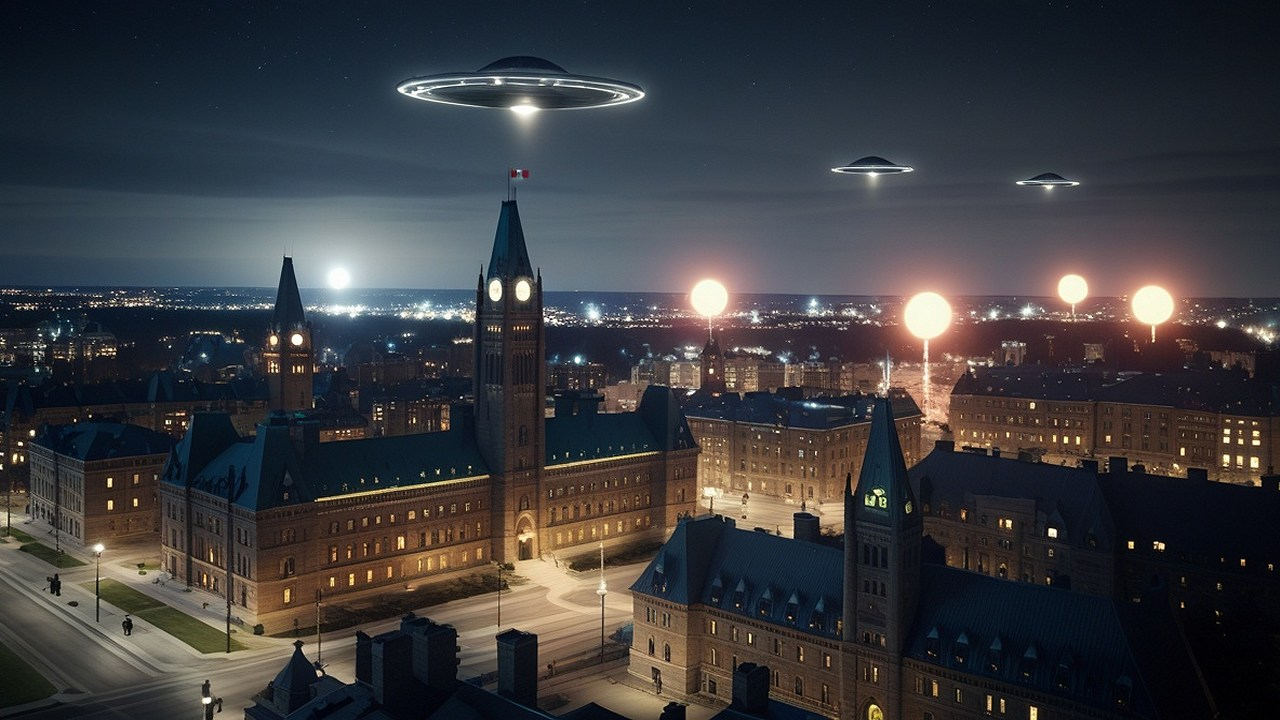
On the evening of February 14, 1915, amidst the tensions of World War I, Ottawa experienced a peculiar event that would come to be known as the "Phantom Air Raid." This incident, marked by reports of unidentified flying objects and a citywide blackout, has since been the subject of historical analysis and speculation. What began as urgent warnings of enemy aircraft crossing the border quickly escalated into one of the most intriguing aerial mysteries in early Canadian history—and one that still resists a fully satisfying conventional explanation.
This is the story of the 1915 Phantom Invasion of Ottawa. Welcome to the channel. Today we examine the events of that February night in full detail, staying faithful to the historical record while highlighting why this case continues to fascinate those who study unidentified aerial phenomena.
Around 10:30 p.m., Prime Minister Sir Robert Borden received an urgent call from Mayor Donaldson of Brockville, Ontario. The mayor reported that at least three aircraft, believed to be German, had crossed the St. Lawrence River from Morristown, New York, and were heading northward. Witnesses in Brockville claimed to have seen these planes shining powerful searchlights and dropping "fireballs" into the river. The sighting caused panic among residents, many of whom were returning from evening church services.
In response, Borden contacted the Canadian Militia, and Brockville’s chief of police reached out to Colonel Percy Sherwood, Commissioner of the Dominion Police. By 11:15 p.m., Sherwood ordered a blackout of key government buildings in Ottawa, including the Centre Block of Parliament Hill, the Royal Mint, and Rideau Hall, to prevent them from becoming targets. The capital of Canada was suddenly plunged into darkness on the belief that hostile aircraft were approaching.
The following day, newspapers were filled with accounts of the supposed air raid. The Globe’s headline read: “Ottawa In Darkness Awaits Aeroplane Raid. Several Aeroplanes Make A Raid Into The Dominion Of Canada.” The Ottawa Journal reported that “Ottawa feels first thrill of war,” noting that citizens were stopping strangers on the street to discuss the event. In the House of Commons, Sir Wilfrid Laurier inquired about the incident, and Borden confirmed the reports but stated he was unable to provide details about the origin of the aircraft. That night, fearing a renewed attack, government buildings were blacked out again, and Parliament sat behind drawn curtains.
The panic was real. The response was official and immediate. Yet no aircraft ever appeared over Ottawa. As the hours passed without an attack, investigations began to determine what had actually been seen.
Attention turned to reports that youths in Morristown had released three “fireworks balloons” that exploded over Brockville. Remnants of these balloons were found on the ice of the St. Lawrence River and near the Brockville Asylum. The youths claimed they were commemorating the centenary of the end of the War of 1812, though some suspected it was a prank aimed at scaring Canadians.
At first glance, this explanation appears tidy. A wartime prank using fireworks balloons, misidentified by anxious citizens as German aircraft. But the details do not align as cleanly as the official story suggests. The Dominion Observatory reported that the wind that night was consistently from the east. This is a critical point. Balloons launched from Morristown, New York, under an east wind would have drifted westward—not north toward Ottawa and Brockville’s reported flight path. The wind direction undermines the simple balloon narrative. If the objects were truly balloons, the prevailing wind should have carried them in a different direction entirely.
This discrepancy has never been fully resolved. It leaves open the possibility that whatever was seen over Brockville and reported heading toward Ottawa was not behaving like ordinary free-floating balloons. The objects were described as carrying powerful searchlights and dropping “fireballs.” These are not the typical characteristics of simple fireworks balloons. The combination of directed lighting, apparent controlled movement, and the failure of the wind data to support the balloon trajectory introduces genuine uncertainty into the conventional explanation.
Further complicating the picture are reports of similar sightings in other Ontario towns and as far away as Manitoba on the same night. The phenomenon was not confined to a single location along the St. Lawrence. Multiple communities experienced unexplained aerial activity within the same narrow timeframe. When independent observers separated by significant distances report anomalous lights or objects on the same evening, the likelihood of a single localized prank decreases. A broader event—or at least a broader set of observations—appears to have occurred.
In recent years, some researchers have revisited the Phantom Air Raid with fresh eyes. The event has been featured in books on the paranormal, including “The Canadian UFO Report: The Best Cases Revealed,” which suggests that the sightings might have been of unidentified flying objects rather than enemy aircraft or balloons. This interpretation does not require dismissing the wartime context or the real panic that followed. Instead, it asks whether the objects observed that night fit the pattern of luminous, apparently controlled aerial phenomena that have been reported across decades and continents.
The 1915 incident occurred long before the modern UFO era began in 1947. There were no jet aircraft, no public radar networks, and no widespread cultural template for “flying saucers.” Yet the core elements—unidentified lights or craft, official alarm, a blackout ordered at the highest levels of government, and a conventional explanation that fails to account for all the data—mirror patterns seen in later, better-documented cases. The fact that the capital of Canada was blacked out on the strength of these reports underscores how seriously the observations were taken at the time.
Wartime conditions certainly heightened anxiety. The possibility of German aircraft operating near the Canadian border was not unthinkable in 1915, even if the technology of the day made a sustained cross-border air raid highly improbable. Fear can amplify perceptions. It can also, however, motivate careful reporting. The witnesses in Brockville were not anonymous internet commenters; they were residents returning from church, local officials, and police who felt compelled to alert the highest levels of government. The Prime Minister himself acted on the information. These were not trivial claims treated lightly.
The wind discrepancy remains one of the strongest arguments against a complete dismissal of the case. If the balloons were launched from Morristown and the wind was from the east, their path should not have matched the northward trajectory reported by witnesses. Either the wind data is wrong, the launch location is wrong, the trajectory reports are wrong, or the objects were capable of moving independently of the prevailing wind. The last possibility is the one that keeps the case alive in UFO research.
The broader sightings reported across Ontario and into Manitoba on the same night add another layer. A single prank in Morristown cannot easily explain anomalous observations hundreds of kilometers away. Something—whether a wave of misidentifications, a rare atmospheric event, or genuine unidentified objects—appears to have been visible over a wide area that February evening.
The Phantom Air Raid of 1915 stands as a striking example of how unidentified aerial phenomena can intersect with national security concerns. A young country at war ordered its capital darkened because of reports of unknown aircraft. The subsequent investigation produced an explanation that satisfied many at the time but left critical inconsistencies unresolved. More than a century later, the case continues to invite re-examination.
When we look at the 1915 Ottawa events through the lens of modern UFO research, several features stand out. Multiple independent witnesses. Official corroboration at the highest levels. A rapid and serious government response. A conventional explanation that fails to account for meteorological data. And reports of similar activity across a wide geographic region on the same night. These are the same elements that elevate other historical cases from mere folklore to subjects worthy of serious study.
The incident also reminds us that the human response to the unknown has remained remarkably consistent. In 1915 the unknown was interpreted through the filter of wartime threat. Today it might be interpreted through the filter of advanced technology or non-human intelligence. The underlying experience—seeing something in the sky that does not fit expected categories—remains the same.
Whether the objects over Brockville and the wider region that night were a prank whose details have been imperfectly reconstructed, an unusual atmospheric or astronomical event, or something genuinely unidentified, the historical record shows that the event was significant enough to black out the Canadian capital and dominate headlines. The gaps in the balloon explanation ensure that the Phantom Air Raid cannot be closed as neatly as some would prefer.
The 1915 Phantom Invasion remains a curious and compelling episode. It captures a moment when the skies over Canada produced reports that officialdom could neither fully confirm nor fully dismiss. In the tension between wartime fear, incomplete conventional explanations, and the persistent sense that something unusual was observed, we find a classic early case of unidentified aerial phenomena. The lights, the fireballs, the reported aircraft, and the blackout of Ottawa continue to mark one of the most intriguing nights in Canadian aerial history.
On the evening of February 14, 1915, amidst the tensions of World War I, Ottawa experienced a peculiar event that would come to be known as the "Phantom Air Raid." This incident, marked by reports of unidentified flying objects and a citywide blackout, has since been the subject of historical analysis and speculation. What began as urgent warnings of enemy aircraft crossing the border quickly escalated into one of the most intriguing aerial mysteries in early Canadian history—and one that still resists a fully satisfying conventional explanation.
This is the story of the 1915 Phantom Invasion of Ottawa. Welcome to the channel. Today we examine the events of that February night in full detail, staying faithful to the historical record while highlighting why this case continues to fascinate those who study unidentified aerial phenomena.
Around 10:30 p.m., Prime Minister Sir Robert Borden received an urgent call from Mayor Donaldson of Brockville, Ontario. The mayor reported that at least three aircraft, believed to be German, had crossed the St. Lawrence River from Morristown, New York, and were heading northward. Witnesses in Brockville claimed to have seen these planes shining powerful searchlights and dropping "fireballs" into the river. The sighting caused panic among residents, many of whom were returning from evening church services.
In response, Borden contacted the Canadian Militia, and Brockville’s chief of police reached out to Colonel Percy Sherwood, Commissioner of the Dominion Police. By 11:15 p.m., Sherwood ordered a blackout of key government buildings in Ottawa, including the Centre Block of Parliament Hill, the Royal Mint, and Rideau Hall, to prevent them from becoming targets. The capital of Canada was suddenly plunged into darkness on the belief that hostile aircraft were approaching.
The following day, newspapers were filled with accounts of the supposed air raid. The Globe’s headline read: “Ottawa In Darkness Awaits Aeroplane Raid. Several Aeroplanes Make A Raid Into The Dominion Of Canada.” The Ottawa Journal reported that “Ottawa feels first thrill of war,” noting that citizens were stopping strangers on the street to discuss the event. In the House of Commons, Sir Wilfrid Laurier inquired about the incident, and Borden confirmed the reports but stated he was unable to provide details about the origin of the aircraft. That night, fearing a renewed attack, government buildings were blacked out again, and Parliament sat behind drawn curtains.
The panic was real. The response was official and immediate. Yet no aircraft ever appeared over Ottawa. As the hours passed without an attack, investigations began to determine what had actually been seen.
Attention turned to reports that youths in Morristown had released three “fireworks balloons” that exploded over Brockville. Remnants of these balloons were found on the ice of the St. Lawrence River and near the Brockville Asylum. The youths claimed they were commemorating the centenary of the end of the War of 1812, though some suspected it was a prank aimed at scaring Canadians.
At first glance, this explanation appears tidy. A wartime prank using fireworks balloons, misidentified by anxious citizens as German aircraft. But the details do not align as cleanly as the official story suggests. The Dominion Observatory reported that the wind that night was consistently from the east. This is a critical point. Balloons launched from Morristown, New York, under an east wind would have drifted westward—not north toward Ottawa and Brockville’s reported flight path. The wind direction undermines the simple balloon narrative. If the objects were truly balloons, the prevailing wind should have carried them in a different direction entirely.
This discrepancy has never been fully resolved. It leaves open the possibility that whatever was seen over Brockville and reported heading toward Ottawa was not behaving like ordinary free-floating balloons. The objects were described as carrying powerful searchlights and dropping “fireballs.” These are not the typical characteristics of simple fireworks balloons. The combination of directed lighting, apparent controlled movement, and the failure of the wind data to support the balloon trajectory introduces genuine uncertainty into the conventional explanation.
Further complicating the picture are reports of similar sightings in other Ontario towns and as far away as Manitoba on the same night. The phenomenon was not confined to a single location along the St. Lawrence. Multiple communities experienced unexplained aerial activity within the same narrow timeframe. When independent observers separated by significant distances report anomalous lights or objects on the same evening, the likelihood of a single localized prank decreases. A broader event—or at least a broader set of observations—appears to have occurred.
In recent years, some researchers have revisited the Phantom Air Raid with fresh eyes. The event has been featured in books on the paranormal, including “The Canadian UFO Report: The Best Cases Revealed,” which suggests that the sightings might have been of unidentified flying objects rather than enemy aircraft or balloons. This interpretation does not require dismissing the wartime context or the real panic that followed. Instead, it asks whether the objects observed that night fit the pattern of luminous, apparently controlled aerial phenomena that have been reported across decades and continents.
The 1915 incident occurred long before the modern UFO era began in 1947. There were no jet aircraft, no public radar networks, and no widespread cultural template for “flying saucers.” Yet the core elements—unidentified lights or craft, official alarm, a blackout ordered at the highest levels of government, and a conventional explanation that fails to account for all the data—mirror patterns seen in later, better-documented cases. The fact that the capital of Canada was blacked out on the strength of these reports underscores how seriously the observations were taken at the time.
Wartime conditions certainly heightened anxiety. The possibility of German aircraft operating near the Canadian border was not unthinkable in 1915, even if the technology of the day made a sustained cross-border air raid highly improbable. Fear can amplify perceptions. It can also, however, motivate careful reporting. The witnesses in Brockville were not anonymous internet commenters; they were residents returning from church, local officials, and police who felt compelled to alert the highest levels of government. The Prime Minister himself acted on the information. These were not trivial claims treated lightly.
The wind discrepancy remains one of the strongest arguments against a complete dismissal of the case. If the balloons were launched from Morristown and the wind was from the east, their path should not have matched the northward trajectory reported by witnesses. Either the wind data is wrong, the launch location is wrong, the trajectory reports are wrong, or the objects were capable of moving independently of the prevailing wind. The last possibility is the one that keeps the case alive in UFO research.
The broader sightings reported across Ontario and into Manitoba on the same night add another layer. A single prank in Morristown cannot easily explain anomalous observations hundreds of kilometers away. Something—whether a wave of misidentifications, a rare atmospheric event, or genuine unidentified objects—appears to have been visible over a wide area that February evening.
The Phantom Air Raid of 1915 stands as a striking example of how unidentified aerial phenomena can intersect with national security concerns. A young country at war ordered its capital darkened because of reports of unknown aircraft. The subsequent investigation produced an explanation that satisfied many at the time but left critical inconsistencies unresolved. More than a century later, the case continues to invite re-examination.
When we look at the 1915 Ottawa events through the lens of modern UFO research, several features stand out. Multiple independent witnesses. Official corroboration at the highest levels. A rapid and serious government response. A conventional explanation that fails to account for meteorological data. And reports of similar activity across a wide geographic region on the same night. These are the same elements that elevate other historical cases from mere folklore to subjects worthy of serious study.
The incident also reminds us that the human response to the unknown has remained remarkably consistent. In 1915 the unknown was interpreted through the filter of wartime threat. Today it might be interpreted through the filter of advanced technology or non-human intelligence. The underlying experience—seeing something in the sky that does not fit expected categories—remains the same.
Whether the objects over Brockville and the wider region that night were a prank whose details have been imperfectly reconstructed, an unusual atmospheric or astronomical event, or something genuinely unidentified, the historical record shows that the event was significant enough to black out the Canadian capital and dominate headlines. The gaps in the balloon explanation ensure that the Phantom Air Raid cannot be closed as neatly as some would prefer.
The 1915 Phantom Invasion remains a curious and compelling episode. It captures a moment when the skies over Canada produced reports that officialdom could neither fully confirm nor fully dismiss. In the tension between wartime fear, incomplete conventional explanations, and the persistent sense that something unusual was observed, we find a classic early case of unidentified aerial phenomena. The lights, the fireballs, the reported aircraft, and the blackout of Ottawa continue to mark one of the most intriguing nights in Canadian aerial history.