


Blog Categories
- African Incidents
- Atlantis Incidents
- Australian Incidents
- Belgian Incidents
- Bermuda Triangle Incidents
- Brazilian Incidents
- Canadian Incidents
- Chinese Incidents
- European Incidents
- France Incidents
- Ghosts
- Giants
- Italy Incidents
- Japanese Incidents
- Middle East Incidents
- Portugal Incidents
- Project Serpo
- Puerto Rico Incidents
- Russian Incidents
- Sasquatch
- Scandinavia Incidents
- Spanish Incidents
- UFOs
- United Kingdom Incidents
- United States Incidents
1930: UFO Sighting in Waterloo Alabama
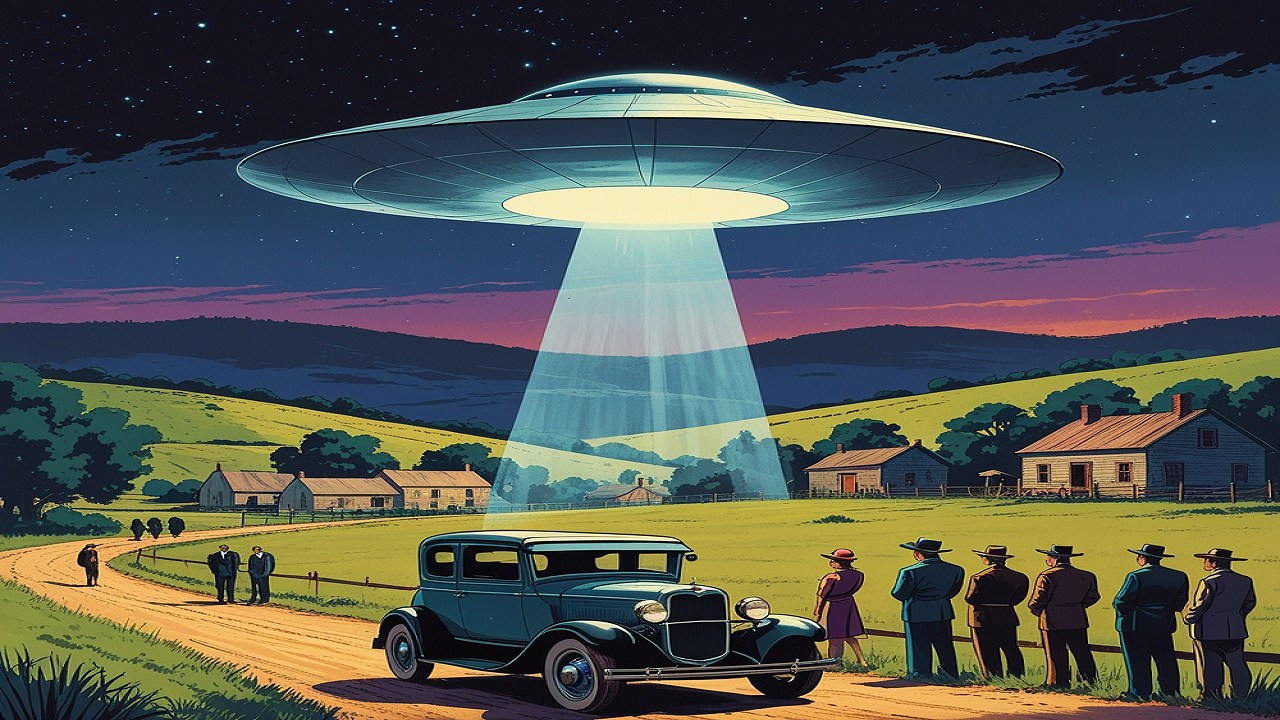
In the quiet, rural town of Waterloo, nestled in the northwest corner of Alabama near the Tennessee River, an extraordinary event took place in the summer of 1930. This was a time long before "flying saucers" became part of popular culture, predating the famous 1947 Roswell incident and the formal establishment of UFO investigation projects by the U.S. government.
Yet, in the fading twilight of a Southern evening, a small group of witnesses had an experience so inexplicable and vivid that it would remain etched in memory for generations. The 1930 Waterloo UFO encounter, although little-known, represents one of the earliest recorded unexplained aerial phenomena in modern U.S. history. It foreshadowed the cultural, psychological, and sociological implications of the UFO phenomenon that would later grip the nation.
The Sighting
According to an account preserved and later published by the Syracuse New Times, the event took place when a woman named Mary and her family were returning from a visit to relatives. As they drove down a dusty country road near Waterloo, they encountered an unusual light in the sky.
It was described as a basketball-sized orb, glowing with an intense white light, and it appeared to be intelligently controlled. As the object hovered near their vehicle, the orb’s light was so powerful that it lit the interior of their car as though it were midday.
The family, deeply religious and conservative like much of the rural South at the time, was shaken. They reportedly stopped the car, and for a few minutes, simply watched in awe. The orb then slowly floated away, maneuvering gently into the surrounding woods, where it eventually disappeared. No sound was associated with its movement, and no damage or physical traces were found—only the memory and the emotional impact remained.
Cultural and Social Context
The early 1930s were a period marked by economic hardship, religious conservatism, and technological infancy in rural America. Electricity had only recently reached many areas, and air travel was still novel and rare. In this context, the appearance of a luminous, floating orb that behaved with apparent intelligence was not just startling—it was almost unfathomable.
Unlike today, there were no widespread media narratives about extraterrestrial life or advanced technology to contextualize such an event. Most UFO sightings during this period were interpreted through religious or supernatural lenses.
For the family and others in the community who heard the story, the event became a strange tale passed on in hushed tones. It was not something one discussed publicly.
To speak openly about such a sighting could invite mockery, suspicion, or accusations of mental instability. However, the oral preservation of the event suggests it left a deep impression on those involved.
Psychological Impact
The primary witnesses, especially Mary, reported feelings of awe mixed with fear. The light, while beautiful, seemed otherworldly. This emotional combination is common in later UFO reports and is often described in terms akin to religious or spiritual experiences.
The silence of the object, its deliberate movements, and its close proximity contributed to a sense of “being watched” or “being chosen,” feelings that resonate across many high-strangeness cases. There is no indication that the witnesses suffered long-term trauma, but the encounter undeniably challenged their worldview.
Broader Significance
While the Waterloo incident was isolated and never officially investigated by authorities—partly because there were no formal mechanisms to do so in 1930—it holds a special place in the annals of UFO history. It stands out as a "pre-modern" sighting, untainted by Cold War anxieties or post war media sensationalism.
In this way, it represents a more "pure" account, uncolored by the psychological and cultural frameworks that shaped later UFO narratives.
In hindsight, this encounter can be seen as an early indicator of a phenomenon that would explode into the national consciousness in the following decades. It underscores the idea that UFO sightings are not bound by time, place, or cultural context.
They occur in big cities and small towns, to the highly educated and to those with little formal schooling, suggesting a universality that continues to perplex scientists and sociologists alike.
Lasting
Legacy Although the Waterloo incident never reached the notoriety of Roswell or the Chiles-Whitted sighting in Montgomery (1948), its story has been kept alive through regional storytelling and digital preservation.
In recent years, as interest in early 20th-century UFO accounts has grown, this case has received new attention from researchers eager to understand how pre-1947 events shaped public perception of the phenomenon.
It has also become a touchstone for those studying the psychological and sociological impacts of UFO sightings in rural America. The Waterloo case offers a fascinating study in how such encounters were interpreted in the absence of media-driven narratives.
Rather than assuming aliens or advanced technology, the witnesses framed the experience within their existing belief systems—some seeing it as a sign from God, others simply as a mystery that was not meant to be understood.
Today, the event remains largely unknown outside of UFO research circles, but its significance endures. It is cited in discussions of early UFO encounters and is sometimes referenced in Alabama-based folklore and paranormal compilations. No physical evidence exists, and no prominent figures were directly involved, which perhaps adds to the event’s mystique. Its authenticity is bolstered not by fame or analysis, but by its quiet persistence in local memory.
Conclusion
The 1930 UFO sighting in Waterloo, Alabama, may not have reshaped national policy or ignited a media frenzy, but it occupies an important space in the tapestry of American anomalous experiences. It reminds us that the UFO phenomenon did not begin with radar or military pilots—it began in the silent wonder of ordinary people encountering the inexplicable.
For Mary and her family, the glowing orb in the Alabama night sky was more than a strange light; it was a transformative moment that transcended understanding.
In many ways, the impact of the Waterloo incident still echoes today. As our society continues to grapple with the implications of unexplained aerial phenomena—with governments now acknowledging their existence —the testimonies of early witnesses gain new relevance.
They offer a glimpse into a time when people encountered the extraordinary with humility and wonder, long before the skies were filled with satellites and speculation. The 1930 Waterloo encounter, though quiet and largely forgotten, deserves its place in the history of America’s long and mysterious relationship with the skies.
In the quiet, rural town of Waterloo, nestled in the northwest corner of Alabama near the Tennessee River, an extraordinary event took place in the summer of 1930. This was a time long before "flying saucers" became part of popular culture, predating the famous 1947 Roswell incident and the formal establishment of UFO investigation projects by the U.S. government.
Yet, in the fading twilight of a Southern evening, a small group of witnesses had an experience so inexplicable and vivid that it would remain etched in memory for generations. The 1930 Waterloo UFO encounter, although little-known, represents one of the earliest recorded unexplained aerial phenomena in modern U.S. history. It foreshadowed the cultural, psychological, and sociological implications of the UFO phenomenon that would later grip the nation.
The Sighting
According to an account preserved and later published by the Syracuse New Times, the event took place when a woman named Mary and her family were returning from a visit to relatives. As they drove down a dusty country road near Waterloo, they encountered an unusual light in the sky.
It was described as a basketball-sized orb, glowing with an intense white light, and it appeared to be intelligently controlled. As the object hovered near their vehicle, the orb’s light was so powerful that it lit the interior of their car as though it were midday.
The family, deeply religious and conservative like much of the rural South at the time, was shaken. They reportedly stopped the car, and for a few minutes, simply watched in awe. The orb then slowly floated away, maneuvering gently into the surrounding woods, where it eventually disappeared. No sound was associated with its movement, and no damage or physical traces were found—only the memory and the emotional impact remained.
Cultural and Social Context
The early 1930s were a period marked by economic hardship, religious conservatism, and technological infancy in rural America. Electricity had only recently reached many areas, and air travel was still novel and rare. In this context, the appearance of a luminous, floating orb that behaved with apparent intelligence was not just startling—it was almost unfathomable.
Unlike today, there were no widespread media narratives about extraterrestrial life or advanced technology to contextualize such an event. Most UFO sightings during this period were interpreted through religious or supernatural lenses.
For the family and others in the community who heard the story, the event became a strange tale passed on in hushed tones. It was not something one discussed publicly.
To speak openly about such a sighting could invite mockery, suspicion, or accusations of mental instability. However, the oral preservation of the event suggests it left a deep impression on those involved.
Psychological Impact
The primary witnesses, especially Mary, reported feelings of awe mixed with fear. The light, while beautiful, seemed otherworldly. This emotional combination is common in later UFO reports and is often described in terms akin to religious or spiritual experiences.
The silence of the object, its deliberate movements, and its close proximity contributed to a sense of “being watched” or “being chosen,” feelings that resonate across many high-strangeness cases. There is no indication that the witnesses suffered long-term trauma, but the encounter undeniably challenged their worldview.
Broader Significance
While the Waterloo incident was isolated and never officially investigated by authorities—partly because there were no formal mechanisms to do so in 1930—it holds a special place in the annals of UFO history. It stands out as a "pre-modern" sighting, untainted by Cold War anxieties or post war media sensationalism.
In this way, it represents a more "pure" account, uncolored by the psychological and cultural frameworks that shaped later UFO narratives.
In hindsight, this encounter can be seen as an early indicator of a phenomenon that would explode into the national consciousness in the following decades. It underscores the idea that UFO sightings are not bound by time, place, or cultural context.
They occur in big cities and small towns, to the highly educated and to those with little formal schooling, suggesting a universality that continues to perplex scientists and sociologists alike.
Lasting
Legacy Although the Waterloo incident never reached the notoriety of Roswell or the Chiles-Whitted sighting in Montgomery (1948), its story has been kept alive through regional storytelling and digital preservation.
In recent years, as interest in early 20th-century UFO accounts has grown, this case has received new attention from researchers eager to understand how pre-1947 events shaped public perception of the phenomenon.
It has also become a touchstone for those studying the psychological and sociological impacts of UFO sightings in rural America. The Waterloo case offers a fascinating study in how such encounters were interpreted in the absence of media-driven narratives.
Rather than assuming aliens or advanced technology, the witnesses framed the experience within their existing belief systems—some seeing it as a sign from God, others simply as a mystery that was not meant to be understood.
Today, the event remains largely unknown outside of UFO research circles, but its significance endures. It is cited in discussions of early UFO encounters and is sometimes referenced in Alabama-based folklore and paranormal compilations. No physical evidence exists, and no prominent figures were directly involved, which perhaps adds to the event’s mystique. Its authenticity is bolstered not by fame or analysis, but by its quiet persistence in local memory.
Conclusion
The 1930 UFO sighting in Waterloo, Alabama, may not have reshaped national policy or ignited a media frenzy, but it occupies an important space in the tapestry of American anomalous experiences. It reminds us that the UFO phenomenon did not begin with radar or military pilots—it began in the silent wonder of ordinary people encountering the inexplicable.
For Mary and her family, the glowing orb in the Alabama night sky was more than a strange light; it was a transformative moment that transcended understanding.
In many ways, the impact of the Waterloo incident still echoes today. As our society continues to grapple with the implications of unexplained aerial phenomena—with governments now acknowledging their existence —the testimonies of early witnesses gain new relevance.
They offer a glimpse into a time when people encountered the extraordinary with humility and wonder, long before the skies were filled with satellites and speculation. The 1930 Waterloo encounter, though quiet and largely forgotten, deserves its place in the history of America’s long and mysterious relationship with the skies.