


Blog Categories
- African Incidents
- Atlantis Incidents
- Australian Incidents
- Belgian Incidents
- Bermuda Triangle Incidents
- Brazilian Incidents
- Canadian Incidents
- Chinese Incidents
- European Incidents
- France Incidents
- Ghosts
- Giants
- Italy Incidents
- Japanese Incidents
- Middle East Incidents
- Portugal Incidents
- Project Serpo
- Puerto Rico Incidents
- Russian Incidents
- Sasquatch
- Scandinavia Incidents
- Spanish Incidents
- UFOs
- United Kingdom Incidents
- United States Incidents
1947: Fort Myers Disc Fragments Recovered
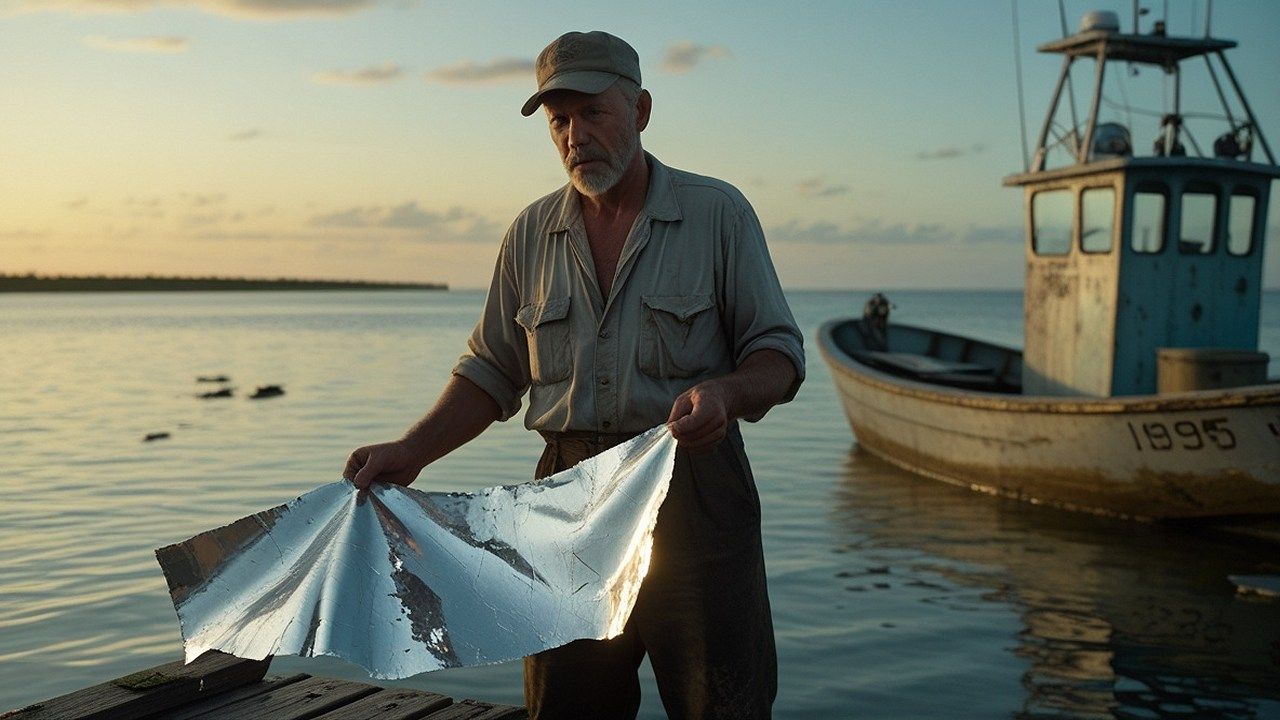
If you think the 1947 flying-disc story was only lights in the sky, you are missing the part that still bothers people. That summer, Americans were not just reporting objects overhead. Some of them were reporting material on the ground. Florida was part of that moment. Near Fort Myers, on the Gulf Coast, local newspapers carried accounts that a fisherman had recovered pieces of metallic debris from the water or the shoreline. People who saw those pieces, or who repeated the descriptions in print, said the metal was foil-like, flexible, unusually hard to tear, and that it reacted to heat in a way they did not expect.
That is the Fort Myers fragment report. It is brief. The fisherman was never widely identified beyond those short local descriptions. The pieces were never put in a museum. The Army called it balloon gear and moved on. And still the story sits at the beginning of Florida’s UFO record, because it is one of the earliest local claims that the mystery was not only visual. Something physical had come out of the sky.
Put yourself in that summer. The country was already in a flying-disc wave. Kenneth Arnold’s June sighting had given the nation a new phrase. Wire services were feeding papers every day. Then came the New Mexico headlines: an Army airfield announcing a recovered flying disc, then pulling the statement back and calling it a weather balloon. That sequence was still fresh when Fort Myers entered the conversation. People on the Gulf Coast were already hearing the national story on the radio and reading it in widely circulated papers. Then they heard that debris had been pulled from their own water or shoreline. Of course they compared the two. Of course they wondered whether strange craft were appearing across the country, not in one isolated desert.
The core descriptions, across the accounts that survive, stay consistent. The fragments were thin and metallic. They were not easy to tear or cut. One detail that circulated was that when the material was placed near a flame, it appeared to burn without producing the kind of heat a person would expect. Those claims sound familiar if you know the New Mexico debris language of the same weeks: lightweight metal that held shape under stress, foil that did not behave like kitchen foil. A pro-UFO reading does not invent a lab report that does not exist. It notices the match. Two regions, same summer, same family of descriptions.
The Army answer in Fort Myers was fast and dismissive. Military representatives said the debris was almost certainly from a weather balloon or related meteorological equipment. That is the same pattern used in New Mexico. Weather balloons were common. They did scatter lightweight materials when they failed or were cut down. That explanation is not a joke. It has to sit on the table. What the official line does not erase is the timing. The discovery landed while the nation was still arguing about what flying discs were. Even if the material was ordinary, the moment made it feel extraordinary. People were not examining foil in a vacuum. They were examining foil after being told, then untold, that the Army had recovered a disc.
Newspapers did the rest. Small-town papers lived on wire copy. Flying-disc stories sold. Editors knew readers wanted updates. Rumor, speculation, and genuine eyewitness language ran in the same columns. The Fort Myers report fit the national patchwork. Readers took the details, connected them to Roswell-week headlines, and added their own meaning. That is how a local recovery becomes folklore without ever becoming a formal case file.
The public mood matters here. World War II had put radar, jets, and rockets into ordinary conversation. Americans had just learned that the sky could hold machines they would not have recognized five years earlier. The Cold War was starting. Secret aircraft and foreign technology were live fears. Some people heard Fort Myers and thought: advanced human hardware, tested or lost. Others heard the same story and thought: this does not sound like anything we build. Both reactions grew out of the same summer. The fragment report fed both.
Here is what the Fort Myers case is not. It is not a multi-year government investigation. It is not a chain of custody with signed receipts. The fragments were never displayed publicly. No museum or private collection has produced an item claimed to be from that recovery. Researchers working mid-century local papers have a recorded event and an unclear substance. That limitation has to be said out loud. A serious UFO channel does not pretend a missing box of metal is sitting in an archive if the chapter says it is not.
What the case still does is important. It is an early crash-retrieval story in Florida. The idea that objects or materials from the sky could be recovered and handled was still new in 1947. Stories like Fort Myers taught the public that the phenomenon might leave residue. That narrative comes back for decades, sometimes with better documentation, sometimes with less. Fort Myers stands near the start of that line in this state.
It also changed how Florida felt about the wave. National stories are abstract until they happen near home. When a community hears that unusual metal may have come out of local water, the subject stops being “something in New Mexico.” It becomes “something on our coast.” People talk. They remember. Even residents who later accepted the balloon explanation had already lived through the impression that Florida was a participant, not a spectator.
A weather balloon can shed material. That is true. It is also true that the same summer’s most famous balloon explanation was attached to a story the Army itself had first called a flying disc. Fort Myers inherits that tension. Officials reach for the familiar object. Witnesses and readers reach for the unfamiliar properties: foil that resists tearing, heat behavior that does not match expectation. You do not need a secret hangar to see why that tension survived.
For Florida UFO history, this report sits near the origin point. Later decades would bring triangles, orbs, police tracks, and abduction claims. 1947 on the Gulf Coast is quieter than those files, and more fragile. It survives as newspaper language and oral recollection. That fragility is not a reason to delete it. It is a reason to keep the wording tight: a fisherman, fragments from water or shoreline near Fort Myers, foil-like metal, hard to tear, unexpected reaction to heat, Army balloon explanation, no public display, no surviving specimen in a known collection.
If you are building a map of early physical-evidence claims, Fort Myers belongs on it. Not as proof of an alien hull. As proof that in the first weeks of the modern UFO era, Florida produced the same kind of story the rest of the country was producing: not only a light, but a piece. The nation was asking what was in the sky. For a moment, people on the Gulf Coast thought they were holding the answer in their hands.
That is why the case is still told. Not because the metal was photographed in a lab. Because ordinary people encountered something unfamiliar and tried to make sense of it at the exact moment America invented the flying-disc conversation. Whether the fragments were balloon gear or something the official line never fully tested in public, they made Florida part of that conversation. The sky was no longer only weather. It had started leaving things behind.
If you want more early cases told from the record, not from rumor, stay with this channel. The first wave was not just Arnold and Roswell. It was also a fisherman on the Florida coast, and a handful of strange metal that the Army was in a hurry to name.
If you think the 1947 flying-disc story was only lights in the sky, you are missing the part that still bothers people. That summer, Americans were not just reporting objects overhead. Some of them were reporting material on the ground. Florida was part of that moment. Near Fort Myers, on the Gulf Coast, local newspapers carried accounts that a fisherman had recovered pieces of metallic debris from the water or the shoreline. People who saw those pieces, or who repeated the descriptions in print, said the metal was foil-like, flexible, unusually hard to tear, and that it reacted to heat in a way they did not expect.
That is the Fort Myers fragment report. It is brief. The fisherman was never widely identified beyond those short local descriptions. The pieces were never put in a museum. The Army called it balloon gear and moved on. And still the story sits at the beginning of Florida’s UFO record, because it is one of the earliest local claims that the mystery was not only visual. Something physical had come out of the sky.
Put yourself in that summer. The country was already in a flying-disc wave. Kenneth Arnold’s June sighting had given the nation a new phrase. Wire services were feeding papers every day. Then came the New Mexico headlines: an Army airfield announcing a recovered flying disc, then pulling the statement back and calling it a weather balloon. That sequence was still fresh when Fort Myers entered the conversation. People on the Gulf Coast were already hearing the national story on the radio and reading it in widely circulated papers. Then they heard that debris had been pulled from their own water or shoreline. Of course they compared the two. Of course they wondered whether strange craft were appearing across the country, not in one isolated desert.
The core descriptions, across the accounts that survive, stay consistent. The fragments were thin and metallic. They were not easy to tear or cut. One detail that circulated was that when the material was placed near a flame, it appeared to burn without producing the kind of heat a person would expect. Those claims sound familiar if you know the New Mexico debris language of the same weeks: lightweight metal that held shape under stress, foil that did not behave like kitchen foil. A pro-UFO reading does not invent a lab report that does not exist. It notices the match. Two regions, same summer, same family of descriptions.
The Army answer in Fort Myers was fast and dismissive. Military representatives said the debris was almost certainly from a weather balloon or related meteorological equipment. That is the same pattern used in New Mexico. Weather balloons were common. They did scatter lightweight materials when they failed or were cut down. That explanation is not a joke. It has to sit on the table. What the official line does not erase is the timing. The discovery landed while the nation was still arguing about what flying discs were. Even if the material was ordinary, the moment made it feel extraordinary. People were not examining foil in a vacuum. They were examining foil after being told, then untold, that the Army had recovered a disc.
Newspapers did the rest. Small-town papers lived on wire copy. Flying-disc stories sold. Editors knew readers wanted updates. Rumor, speculation, and genuine eyewitness language ran in the same columns. The Fort Myers report fit the national patchwork. Readers took the details, connected them to Roswell-week headlines, and added their own meaning. That is how a local recovery becomes folklore without ever becoming a formal case file.
The public mood matters here. World War II had put radar, jets, and rockets into ordinary conversation. Americans had just learned that the sky could hold machines they would not have recognized five years earlier. The Cold War was starting. Secret aircraft and foreign technology were live fears. Some people heard Fort Myers and thought: advanced human hardware, tested or lost. Others heard the same story and thought: this does not sound like anything we build. Both reactions grew out of the same summer. The fragment report fed both.
Here is what the Fort Myers case is not. It is not a multi-year government investigation. It is not a chain of custody with signed receipts. The fragments were never displayed publicly. No museum or private collection has produced an item claimed to be from that recovery. Researchers working mid-century local papers have a recorded event and an unclear substance. That limitation has to be said out loud. A serious UFO channel does not pretend a missing box of metal is sitting in an archive if the chapter says it is not.
What the case still does is important. It is an early crash-retrieval story in Florida. The idea that objects or materials from the sky could be recovered and handled was still new in 1947. Stories like Fort Myers taught the public that the phenomenon might leave residue. That narrative comes back for decades, sometimes with better documentation, sometimes with less. Fort Myers stands near the start of that line in this state.
It also changed how Florida felt about the wave. National stories are abstract until they happen near home. When a community hears that unusual metal may have come out of local water, the subject stops being “something in New Mexico.” It becomes “something on our coast.” People talk. They remember. Even residents who later accepted the balloon explanation had already lived through the impression that Florida was a participant, not a spectator.
A weather balloon can shed material. That is true. It is also true that the same summer’s most famous balloon explanation was attached to a story the Army itself had first called a flying disc. Fort Myers inherits that tension. Officials reach for the familiar object. Witnesses and readers reach for the unfamiliar properties: foil that resists tearing, heat behavior that does not match expectation. You do not need a secret hangar to see why that tension survived.
For Florida UFO history, this report sits near the origin point. Later decades would bring triangles, orbs, police tracks, and abduction claims. 1947 on the Gulf Coast is quieter than those files, and more fragile. It survives as newspaper language and oral recollection. That fragility is not a reason to delete it. It is a reason to keep the wording tight: a fisherman, fragments from water or shoreline near Fort Myers, foil-like metal, hard to tear, unexpected reaction to heat, Army balloon explanation, no public display, no surviving specimen in a known collection.
If you are building a map of early physical-evidence claims, Fort Myers belongs on it. Not as proof of an alien hull. As proof that in the first weeks of the modern UFO era, Florida produced the same kind of story the rest of the country was producing: not only a light, but a piece. The nation was asking what was in the sky. For a moment, people on the Gulf Coast thought they were holding the answer in their hands.
That is why the case is still told. Not because the metal was photographed in a lab. Because ordinary people encountered something unfamiliar and tried to make sense of it at the exact moment America invented the flying-disc conversation. Whether the fragments were balloon gear or something the official line never fully tested in public, they made Florida part of that conversation. The sky was no longer only weather. It had started leaving things behind.
If you want more early cases told from the record, not from rumor, stay with this channel. The first wave was not just Arnold and Roswell. It was also a fisherman on the Florida coast, and a handful of strange metal that the Army was in a hurry to name.