


Blog Categories
- African Incidents
- Atlantis Incidents
- Australian Incidents
- Belgian Incidents
- Bermuda Triangle Incidents
- Brazilian Incidents
- Canadian Incidents
- Chinese Incidents
- European Incidents
- France Incidents
- Ghosts
- Giants
- Italy Incidents
- Japanese Incidents
- Middle East Incidents
- Portugal Incidents
- Project Serpo
- Puerto Rico Incidents
- Russian Incidents
- Sasquatch
- Scandinavia Incidents
- Spanish Incidents
- UFOs
- United Kingdom Incidents
- United States Incidents
1948: The Chiles-Whitted UFO Encounter
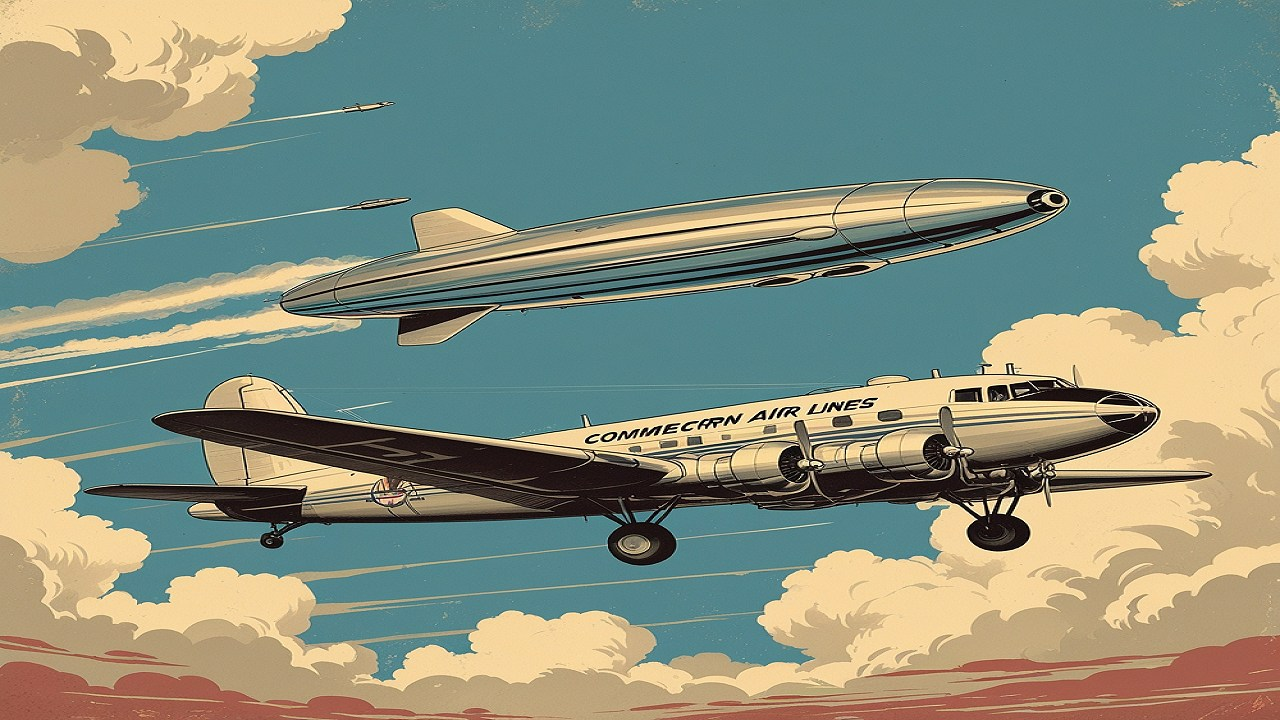
On July 24, 1948, two experienced airline pilots flying over Montgomery, Alabama, witnessed something so startling and unexplainable that it not only shocked them but also changed the trajectory of how the United States government approached unidentified flying objects (UFOs). This event, known as the Chiles-Whitted Encounter, is one of the earliest and most influential UFO sightings in the post–World War II era.
Unlike many obscure sightings relegated to hearsay or folklore, this encounter involved credible witnesses, official investigation, and long lasting effects on military policy and public perception. It helped ignite serious governmental interest in UFOs and remains a pillar case in ufological history.
The Encounter
Captain Clarence S. Chiles and First Officer John B. Whitted were flying an Eastern Air Lines DC-3 passenger plane from Houston to Atlanta with 20 passengers aboard in the early morning hours of July 24, 1948. At approximately 2:45 a.m., while cruising at an altitude of about 5,000 feet near Montgomery, Alabama, both men observed an object approaching at tremendous speed.
According to their reports, the object was shaped like a torpedo or a cigar, with no wings or visible means of propulsion. It was glowing bluish-white and had a row of rectangular windows along its fuselage. As it passed their aircraft on the right side, it emitted a red-orange flame from its rear and quickly shot upward into the night sky before vanishing.
Captain Chiles estimated the object to be about 100 feet long and 25 feet in diameter. It passed so close that both pilots instinctively ducked, fearing a mid-air collision. Although none of the passengers saw the object in its entirety, at least one reported seeing a bright flash of light, supporting the pilots' testimony.
No turbulence or noise accompanied the encounter. It was as if the craft simply sliced through the air with no resistance.
Credibility and Investigation
What made the Chiles-Whitted encounter so significant was the credibility of the witnesses. Both men were former military pilots with combat experience and extensive flight hours. Their reputations were impeccable, and they had no history of making sensational claims.
The U.S. Air Force, which had recently initiated Project Sign to investigate UFO reports, took their testimony very seriously. This case quickly rose to national attention, not because of media hype but because government authorities were genuinely alarmed.
Project Sign's initial evaluation leaned toward the "extraterrestrial hypothesis"—the belief that the object might be of interplanetary origin. This idea was controversial and ultimately rejected by higher military officials, who feared public panic.
Instead, the official explanation offered by the Air Force was that the pilots had seen a meteor or bolide (a bright meteor that explodes in the atmosphere).
However, Chiles and Whitted vehemently rejected this explanation. They argued that the object was solid, mechanical, and under intelligent control —characteristics inconsistent with a natural phenomenon.
Cultural and Psychological Impact
The sighting occurred at a time when America was still adjusting to the new realities of the atomic age. The Cold War was just beginning, and concerns about advanced Soviet technology loomed large.
Against this backdrop, the idea of unidentified flying objects capable of speeds and maneuvers far beyond known aircraft struck a chord of both awe and fear. The Chiles-Whitted encounter contributed to a growing sense of unease that would define the early UFO era in American culture.
Psychologically, the encounter had a profound effect on both pilots. Captain Chiles, in later interviews, remained convinced of what he saw and never wavered from his account. He expressed frustration at the official dismissal of the sighting and the ridicule that often followed those who came forward with similar experiences.
Their emotional reaction—an immediate dive away from the object and a lingering sense of wonder and confusion—reflected a very human response to the unknown. This case helped establish the idea that even trained observers could be baffled by aerial phenomena.
Influence on Government Policy
The Chiles-Whitted incident was a major contributing factor to the creation of more formalized government inquiry into UFOs. After this and several other high-profile sightings, Project Sign's stance hardened, and its findings were eventually replaced with the more cautious and skeptical Project Grudge, followed later by Project Blue Book.
The case also influenced how military and aviation authorities treated UFO sightings. Until this point, reports had been sporadically logged but rarely investigated with rigor. The detailed and consistent accounts from credible witnesses like Chiles and Whitted forced the military to consider the possibility that some sightings could involve real, physical craft of unknown origin.
Long-Term Legacy
Today, the Chiles-Whitted case remains one of the most compelling daylight (or more accurately, early morning) sightings in the history of UFO research. It has been studied extensively by civilian ufologists and mainstream historians alike. The encounter is often cited as an example of why eyewitness testimony—particularly from trained professionals— should not be so easily dismissed.
Skeptics have continued to push the meteor theory, and in some circles, the case is classified as “explained.” However, the explanations fail to account for key details: the apparent windows on the craft, its ability to change trajectory instantly, and its proximity to the DC-3.
Pilots don’t duck from meteors, and they certainly don’t describe them as metallic, structured objects.
No physical evidence was ever recovered, and no radar data supported the sighting, although civilian radar was limited in scope at the time. Nonetheless, the encounter is often referenced in congressional hearings, academic studies, and books about aviation anomalies and UFOs. It has also been dramatized in several documentaries and TV series, contributing to its continued presence in the public consciousness.
Conclusion
The Chiles-Whitted encounter stands as a landmark event in the history of UFO sightings—not just for its dramatic content but for its role in shaping how such incidents are perceived, investigated, and remembered. It is a prime example of how unexplained phenomena can intersect with military, scientific, and public interests, often in unsettling ways.
Unlike many UFO reports that dwell in the margins of hearsay, the Chiles-Whitted sighting was witnessed by reputable individuals, documented in official reports, and seriously analyzed by government agencies. It remains unexplained to this day, continuing to intrigue skeptics and believers alike.
As our understanding of aerial phenomena evolves—particularly with recent declassifications and official admissions from the U.S. government —the Chiles-Whitted case takes on new relevance. It challenges us to reconsider how we define evidence, how we treat witnesses, and how we interpret the persistent mystery of what lies beyond the stars—or perhaps much closer.
On July 24, 1948, two experienced airline pilots flying over Montgomery, Alabama, witnessed something so startling and unexplainable that it not only shocked them but also changed the trajectory of how the United States government approached unidentified flying objects (UFOs). This event, known as the Chiles-Whitted Encounter, is one of the earliest and most influential UFO sightings in the post–World War II era.
Unlike many obscure sightings relegated to hearsay or folklore, this encounter involved credible witnesses, official investigation, and long lasting effects on military policy and public perception. It helped ignite serious governmental interest in UFOs and remains a pillar case in ufological history.
The Encounter
Captain Clarence S. Chiles and First Officer John B. Whitted were flying an Eastern Air Lines DC-3 passenger plane from Houston to Atlanta with 20 passengers aboard in the early morning hours of July 24, 1948. At approximately 2:45 a.m., while cruising at an altitude of about 5,000 feet near Montgomery, Alabama, both men observed an object approaching at tremendous speed.
According to their reports, the object was shaped like a torpedo or a cigar, with no wings or visible means of propulsion. It was glowing bluish-white and had a row of rectangular windows along its fuselage. As it passed their aircraft on the right side, it emitted a red-orange flame from its rear and quickly shot upward into the night sky before vanishing.
Captain Chiles estimated the object to be about 100 feet long and 25 feet in diameter. It passed so close that both pilots instinctively ducked, fearing a mid-air collision. Although none of the passengers saw the object in its entirety, at least one reported seeing a bright flash of light, supporting the pilots' testimony.
No turbulence or noise accompanied the encounter. It was as if the craft simply sliced through the air with no resistance.
Credibility and Investigation
What made the Chiles-Whitted encounter so significant was the credibility of the witnesses. Both men were former military pilots with combat experience and extensive flight hours. Their reputations were impeccable, and they had no history of making sensational claims.
The U.S. Air Force, which had recently initiated Project Sign to investigate UFO reports, took their testimony very seriously. This case quickly rose to national attention, not because of media hype but because government authorities were genuinely alarmed.
Project Sign's initial evaluation leaned toward the "extraterrestrial hypothesis"—the belief that the object might be of interplanetary origin. This idea was controversial and ultimately rejected by higher military officials, who feared public panic.
Instead, the official explanation offered by the Air Force was that the pilots had seen a meteor or bolide (a bright meteor that explodes in the atmosphere).
However, Chiles and Whitted vehemently rejected this explanation. They argued that the object was solid, mechanical, and under intelligent control —characteristics inconsistent with a natural phenomenon.
Cultural and Psychological Impact
The sighting occurred at a time when America was still adjusting to the new realities of the atomic age. The Cold War was just beginning, and concerns about advanced Soviet technology loomed large.
Against this backdrop, the idea of unidentified flying objects capable of speeds and maneuvers far beyond known aircraft struck a chord of both awe and fear. The Chiles-Whitted encounter contributed to a growing sense of unease that would define the early UFO era in American culture.
Psychologically, the encounter had a profound effect on both pilots. Captain Chiles, in later interviews, remained convinced of what he saw and never wavered from his account. He expressed frustration at the official dismissal of the sighting and the ridicule that often followed those who came forward with similar experiences.
Their emotional reaction—an immediate dive away from the object and a lingering sense of wonder and confusion—reflected a very human response to the unknown. This case helped establish the idea that even trained observers could be baffled by aerial phenomena.
Influence on Government Policy
The Chiles-Whitted incident was a major contributing factor to the creation of more formalized government inquiry into UFOs. After this and several other high-profile sightings, Project Sign's stance hardened, and its findings were eventually replaced with the more cautious and skeptical Project Grudge, followed later by Project Blue Book.
The case also influenced how military and aviation authorities treated UFO sightings. Until this point, reports had been sporadically logged but rarely investigated with rigor. The detailed and consistent accounts from credible witnesses like Chiles and Whitted forced the military to consider the possibility that some sightings could involve real, physical craft of unknown origin.
Long-Term Legacy
Today, the Chiles-Whitted case remains one of the most compelling daylight (or more accurately, early morning) sightings in the history of UFO research. It has been studied extensively by civilian ufologists and mainstream historians alike. The encounter is often cited as an example of why eyewitness testimony—particularly from trained professionals— should not be so easily dismissed.
Skeptics have continued to push the meteor theory, and in some circles, the case is classified as “explained.” However, the explanations fail to account for key details: the apparent windows on the craft, its ability to change trajectory instantly, and its proximity to the DC-3.
Pilots don’t duck from meteors, and they certainly don’t describe them as metallic, structured objects.
No physical evidence was ever recovered, and no radar data supported the sighting, although civilian radar was limited in scope at the time. Nonetheless, the encounter is often referenced in congressional hearings, academic studies, and books about aviation anomalies and UFOs. It has also been dramatized in several documentaries and TV series, contributing to its continued presence in the public consciousness.
Conclusion
The Chiles-Whitted encounter stands as a landmark event in the history of UFO sightings—not just for its dramatic content but for its role in shaping how such incidents are perceived, investigated, and remembered. It is a prime example of how unexplained phenomena can intersect with military, scientific, and public interests, often in unsettling ways.
Unlike many UFO reports that dwell in the margins of hearsay, the Chiles-Whitted sighting was witnessed by reputable individuals, documented in official reports, and seriously analyzed by government agencies. It remains unexplained to this day, continuing to intrigue skeptics and believers alike.
As our understanding of aerial phenomena evolves—particularly with recent declassifications and official admissions from the U.S. government —the Chiles-Whitted case takes on new relevance. It challenges us to reconsider how we define evidence, how we treat witnesses, and how we interpret the persistent mystery of what lies beyond the stars—or perhaps much closer.