


Blog Categories
- African Incidents
- Atlantis Incidents
- Australian Incidents
- Belgian Incidents
- Bermuda Triangle Incidents
- Brazilian Incidents
- Canadian Incidents
- Chinese Incidents
- European Incidents
- France Incidents
- Ghosts
- Giants
- Italy Incidents
- Japanese Incidents
- Middle East Incidents
- Portugal Incidents
- Project Serpo
- Puerto Rico Incidents
- Russian Incidents
- Sasquatch
- Scandinavia Incidents
- Spanish Incidents
- UFOs
- United Kingdom Incidents
- United States Incidents
1950: Huntsville Daylight Sighting
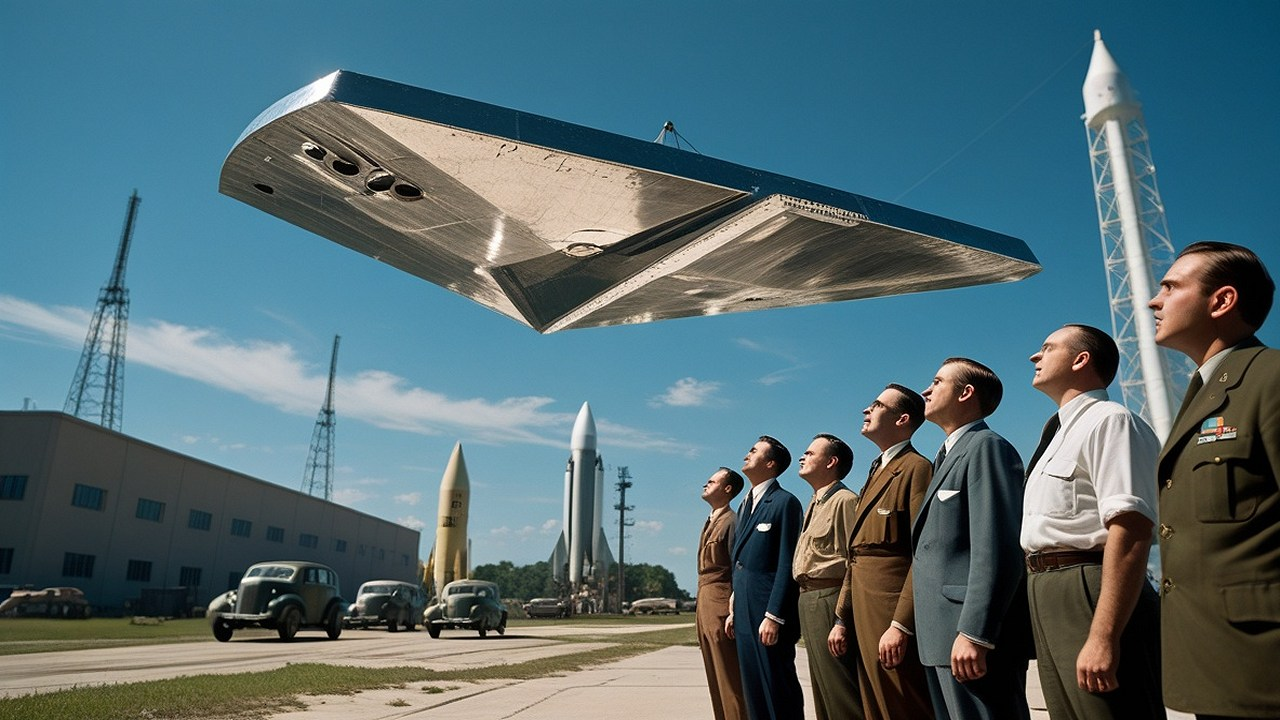
On July 13, 1950, at approximately 5:00 p.m., two employees at Redstone Arsenal in Huntsville, Alabama, witnessed something that should not have existed in the skies of 1950 America.
They saw a polished aluminum object shaped like a bowtie — two triangles joined together — flying straight and level. As they watched, one of the triangular sections rotated a quarter turn in the opposite direction before snapping back into its original position. Then, without warning, the entire object executed a perfect right-angle turn and accelerated away at high speed.
This was not a secret American aircraft. This was not a balloon. And it most certainly was not a misidentified natural phenomenon. What these credible witnesses observed at one of the most important emerging missile facilities in the United States remains one of the strongest and most intriguing daylight UFO cases of the early 1950s.
Welcome to the channel. Today we’re examining the 1950 Huntsville Bowtie UFO sighting — a case that occurred right in the heart of America’s budding rocket program, at a time when Wernher von Braun and his team of German scientists were transforming Redstone Arsenal into a cornerstone of U.S. missile and space development.
Let’s go back to that warm July afternoon in 1950.
Redstone Arsenal was in the midst of a dramatic transformation. Originally built in 1941 as a chemical weapons manufacturing facility, it had recently been redesignated as the Ordnance Guided Missile Center. The U.S. Army was centralizing its missile development efforts, and a key part of that initiative involved bringing over German rocket scientists under Operation Paperclip — including the legendary Wernher von Braun, the mastermind behind Germany’s V-2 rocket program during World War II.
These scientists were now working to help America catch up and surpass Soviet capabilities in rocketry. The atmosphere at Redstone was one of intense focus, innovation, and Cold War urgency. Against this high-stakes backdrop, two employees — one of them identified as Mr. Washburn — looked up and saw something extraordinary.
The object was described as a polished aluminum craft shaped like a bowtie or two triangles joined at their bases. It flew straight and level at first, reflecting sunlight with a metallic sheen that suggested solidity and advanced construction. Then came the most unusual maneuver: one triangular section rotated a quarter turn in the opposite direction from the rest of the craft before returning to its original alignment. Shortly afterward, the entire object made a sharp, instantaneous right-angle turn and accelerated rapidly away from the area.
The witnesses were not civilians unfamiliar with aviation. They were employees at a top-secret missile research facility. Their observation carries significant weight. In 1950, the only flying machines in existence were propeller-driven aircraft, early jets, and balloons. None of them could hover, rotate sections independently, execute perfect right-angle turns at speed, or accelerate the way this object did.
The timing is especially compelling. This sighting occurred just three years after the Kenneth Arnold sighting that launched the modern UFO era and during the same period when the U.S. military was quietly investigating flying saucer reports through projects like Sign and Grudge. Redstone Arsenal would soon become central to America’s missile and space programs, eventually playing a major role in the launch of Explorer 1, America’s first satellite, in 1958.
The fact that this advanced-looking craft was seen directly over a facility working on cutting-edge rocket technology raises profound questions. Was it interested in human missile development? Was it monitoring the arrival of von Braun and his team? Or was its presence simply coincidental?
What makes this case particularly strong is the detailed description of the object’s behavior. The independent rotation of one triangular section suggests either modular construction or some form of sophisticated control system far beyond 1950 capabilities. The right-angle turn without any visible banking or deceleration violates basic aerodynamic principles. The polished aluminum appearance implies a solid, metallic structure rather than a plasma or atmospheric effect.
In the broader context of early UFO history, the 1950 Huntsville sighting fits into a pattern of high-quality military and industrial site encounters. Similar reports were coming in from sensitive facilities across the United States during this period. The proximity to Wernher von Braun’s team adds an extra layer of intrigue. These were the same scientists who had developed the V-2 — the world’s first long-range guided ballistic missile. If extraterrestrial or unknown intelligences were monitoring humanity’s leap into rocket technology, Redstone Arsenal would have been a logical place to observe.
The sighting did not appear to cause widespread panic or major investigations at the time. This was still the very early days of the UFO phenomenon, when many sightings were explained away or simply filed without fanfare. However, its documentation in contemporary records makes it a valuable historical case. It demonstrates that even in the earliest years of the modern UFO era, objects with extraordinary performance were being seen near critical defense installations.
When we examine this case through a modern lens, the parallels to contemporary UAP reports are striking. Objects that can hover, rotate sections independently, execute instantaneous right-angle turns, and accelerate rapidly without sonic booms continue to be reported by military pilots and radar operators today. The 1950 Huntsville bowtie craft displayed many of the same characteristics that now concern national security analysts.
The credibility of the witnesses cannot be overstated. These were not random civilians. They were employees at a sensitive military research facility during a period of intense national security focus. Their observation carries the same weight as later sightings by trained military personnel. The fact that the sighting occurred in broad daylight at 5:00 p.m. further strengthens the case, as visibility was excellent and misidentification less likely.
The 1950 Huntsville sighting also challenges the notion that UFOs only became a concern after the Kenneth Arnold sighting in 1947. While Arnold’s report certainly brought the phenomenon into public consciousness, cases like this one show that unusual aerial objects were being observed at sensitive sites even in the immediate post-war years. The presence of von Braun’s team adds historical depth, connecting the sighting to the very beginnings of America’s space program.
As we continue our modern push for UAP transparency through congressional hearings, whistleblower testimony, and official reports, historical cases like the 1950 Huntsville bowtie UFO provide crucial context. They remind us that this phenomenon has been interacting with — or at least observing — human military and technological development for a very long time.
The polished aluminum bowtie that maneuvered over Redstone Arsenal in 1950 may have departed long ago, but its significance endures. It stands as early evidence that something highly advanced was operating in American skies during the dawn of the missile age — witnessed by credible observers at one of the most strategically important locations in the country.
More than seven decades later, we’re still trying to understand what these objects are, where they come from, and why they seem particularly interested in our military and aerospace facilities. The Huntsville sighting remains a powerful reminder that the UFO phenomenon did not begin with Roswell or the modern era. It was already here, quietly observing, as humanity took its first serious steps toward the stars.
On July 13, 1950, at approximately 5:00 p.m., two employees at Redstone Arsenal in Huntsville, Alabama, witnessed something that should not have existed in the skies of 1950 America.
They saw a polished aluminum object shaped like a bowtie — two triangles joined together — flying straight and level. As they watched, one of the triangular sections rotated a quarter turn in the opposite direction before snapping back into its original position. Then, without warning, the entire object executed a perfect right-angle turn and accelerated away at high speed.
This was not a secret American aircraft. This was not a balloon. And it most certainly was not a misidentified natural phenomenon. What these credible witnesses observed at one of the most important emerging missile facilities in the United States remains one of the strongest and most intriguing daylight UFO cases of the early 1950s.
Welcome to the channel. Today we’re examining the 1950 Huntsville Bowtie UFO sighting — a case that occurred right in the heart of America’s budding rocket program, at a time when Wernher von Braun and his team of German scientists were transforming Redstone Arsenal into a cornerstone of U.S. missile and space development.
Let’s go back to that warm July afternoon in 1950.
Redstone Arsenal was in the midst of a dramatic transformation. Originally built in 1941 as a chemical weapons manufacturing facility, it had recently been redesignated as the Ordnance Guided Missile Center. The U.S. Army was centralizing its missile development efforts, and a key part of that initiative involved bringing over German rocket scientists under Operation Paperclip — including the legendary Wernher von Braun, the mastermind behind Germany’s V-2 rocket program during World War II.
These scientists were now working to help America catch up and surpass Soviet capabilities in rocketry. The atmosphere at Redstone was one of intense focus, innovation, and Cold War urgency. Against this high-stakes backdrop, two employees — one of them identified as Mr. Washburn — looked up and saw something extraordinary.
The object was described as a polished aluminum craft shaped like a bowtie or two triangles joined at their bases. It flew straight and level at first, reflecting sunlight with a metallic sheen that suggested solidity and advanced construction. Then came the most unusual maneuver: one triangular section rotated a quarter turn in the opposite direction from the rest of the craft before returning to its original alignment. Shortly afterward, the entire object made a sharp, instantaneous right-angle turn and accelerated rapidly away from the area.
The witnesses were not civilians unfamiliar with aviation. They were employees at a top-secret missile research facility. Their observation carries significant weight. In 1950, the only flying machines in existence were propeller-driven aircraft, early jets, and balloons. None of them could hover, rotate sections independently, execute perfect right-angle turns at speed, or accelerate the way this object did.
The timing is especially compelling. This sighting occurred just three years after the Kenneth Arnold sighting that launched the modern UFO era and during the same period when the U.S. military was quietly investigating flying saucer reports through projects like Sign and Grudge. Redstone Arsenal would soon become central to America’s missile and space programs, eventually playing a major role in the launch of Explorer 1, America’s first satellite, in 1958.
The fact that this advanced-looking craft was seen directly over a facility working on cutting-edge rocket technology raises profound questions. Was it interested in human missile development? Was it monitoring the arrival of von Braun and his team? Or was its presence simply coincidental?
What makes this case particularly strong is the detailed description of the object’s behavior. The independent rotation of one triangular section suggests either modular construction or some form of sophisticated control system far beyond 1950 capabilities. The right-angle turn without any visible banking or deceleration violates basic aerodynamic principles. The polished aluminum appearance implies a solid, metallic structure rather than a plasma or atmospheric effect.
In the broader context of early UFO history, the 1950 Huntsville sighting fits into a pattern of high-quality military and industrial site encounters. Similar reports were coming in from sensitive facilities across the United States during this period. The proximity to Wernher von Braun’s team adds an extra layer of intrigue. These were the same scientists who had developed the V-2 — the world’s first long-range guided ballistic missile. If extraterrestrial or unknown intelligences were monitoring humanity’s leap into rocket technology, Redstone Arsenal would have been a logical place to observe.
The sighting did not appear to cause widespread panic or major investigations at the time. This was still the very early days of the UFO phenomenon, when many sightings were explained away or simply filed without fanfare. However, its documentation in contemporary records makes it a valuable historical case. It demonstrates that even in the earliest years of the modern UFO era, objects with extraordinary performance were being seen near critical defense installations.
When we examine this case through a modern lens, the parallels to contemporary UAP reports are striking. Objects that can hover, rotate sections independently, execute instantaneous right-angle turns, and accelerate rapidly without sonic booms continue to be reported by military pilots and radar operators today. The 1950 Huntsville bowtie craft displayed many of the same characteristics that now concern national security analysts.
The credibility of the witnesses cannot be overstated. These were not random civilians. They were employees at a sensitive military research facility during a period of intense national security focus. Their observation carries the same weight as later sightings by trained military personnel. The fact that the sighting occurred in broad daylight at 5:00 p.m. further strengthens the case, as visibility was excellent and misidentification less likely.
The 1950 Huntsville sighting also challenges the notion that UFOs only became a concern after the Kenneth Arnold sighting in 1947. While Arnold’s report certainly brought the phenomenon into public consciousness, cases like this one show that unusual aerial objects were being observed at sensitive sites even in the immediate post-war years. The presence of von Braun’s team adds historical depth, connecting the sighting to the very beginnings of America’s space program.
As we continue our modern push for UAP transparency through congressional hearings, whistleblower testimony, and official reports, historical cases like the 1950 Huntsville bowtie UFO provide crucial context. They remind us that this phenomenon has been interacting with — or at least observing — human military and technological development for a very long time.
The polished aluminum bowtie that maneuvered over Redstone Arsenal in 1950 may have departed long ago, but its significance endures. It stands as early evidence that something highly advanced was operating in American skies during the dawn of the missile age — witnessed by credible observers at one of the most strategically important locations in the country.
More than seven decades later, we’re still trying to understand what these objects are, where they come from, and why they seem particularly interested in our military and aerospace facilities. The Huntsville sighting remains a powerful reminder that the UFO phenomenon did not begin with Roswell or the modern era. It was already here, quietly observing, as humanity took its first serious steps toward the stars.