


Blog Categories
- African Incidents
- Atlantis Incidents
- Australian Incidents
- Belgian Incidents
- Bermuda Triangle Incidents
- Brazilian Incidents
- Canadian Incidents
- Chinese Incidents
- European Incidents
- France Incidents
- Ghosts
- Giants
- Italy Incidents
- Japanese Incidents
- Middle East Incidents
- Portugal Incidents
- Project Serpo
- Puerto Rico Incidents
- Russian Incidents
- Sasquatch
- Scandinavia Incidents
- Spanish Incidents
- UFOs
- United Kingdom Incidents
- United States Incidents
1950s - 1960s: Shadows Beneath the Skylines
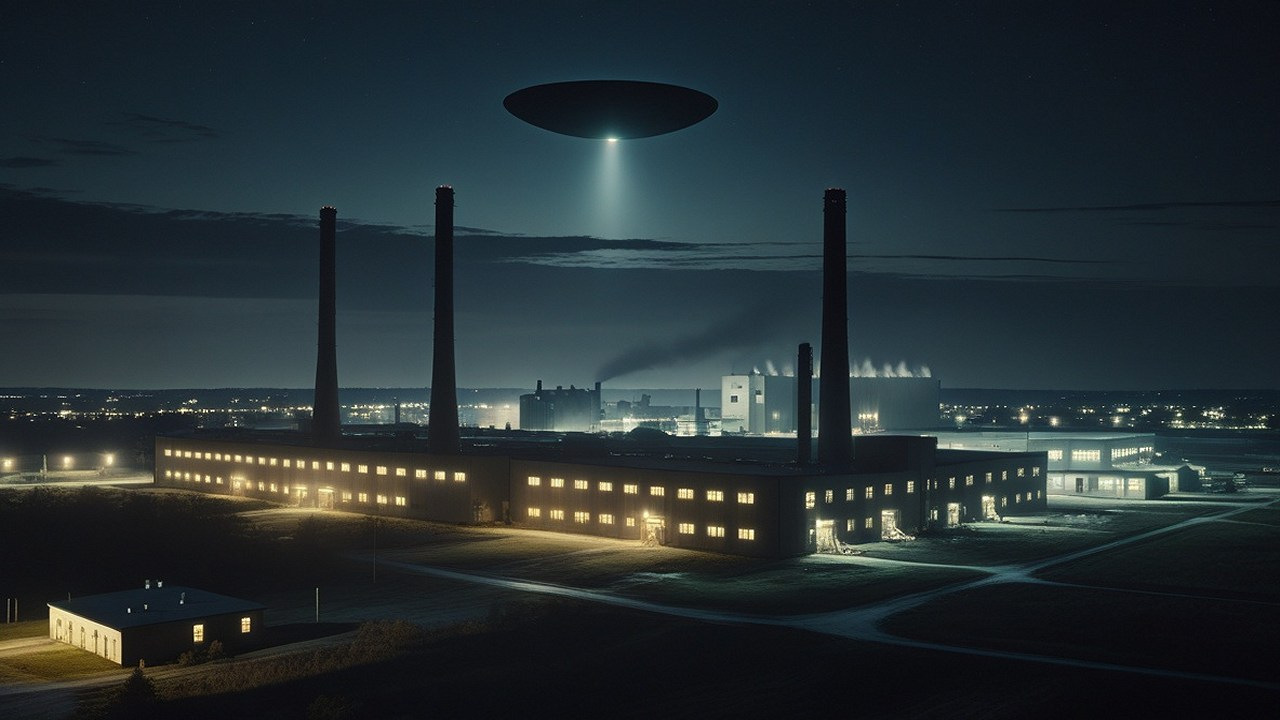
The Cold War shaped not only geopolitics but also the imagination of a nation. In Connecticut, that imagination was intertwined with the hum of engines, the secretive glow of factory floors, and the guarded silence of engineers working under the strictest security clearances. Between the 1950s and 1960s, the state’s defense and aerospace sector became a vital artery in America’s technological competition with the Soviet Union. It was an era of immense pride, innovation, and paranoia. Within that environment—where secrecy was both patriotic duty and occupational hazard—rumors began to circulate of strange craft, unidentifiable materials, and whispered discussions of technologies that seemed to exceed known physics.
Though no credible whistleblower from this period ever stepped forward publicly to link Connecticut’s defense industries to UFO research, the atmosphere itself—of innovation bordering on the mysterious—laid the groundwork for the region’s later fascination with unidentified aerial phenomena. The rumors, vague and unsubstantiated as they were, reflected both the mystique of the aerospace age and the human need to find meaning in secrecy. This is the story of those shadows beneath the skylines. Welcome to the channel. Today we examine this intriguing chapter of Cold War Connecticut in full detail, staying strictly faithful to the historical record.
To understand how these rumors took root, one must first appreciate what Connecticut represented during the Cold War. The state was not merely a participant in the American defense network—it was one of its beating hearts. Companies like Pratt & Whitney, Sikorsky Aircraft, and Electric Boat became synonymous with technological progress. Pratt & Whitney’s jet engines powered both commercial and military fleets. Sikorsky’s helicopters symbolized American mobility and air superiority. Electric Boat, in Groton, produced submarines that patrolled the oceans with nuclear capability.
This environment of advanced engineering, guarded by strict confidentiality agreements and federal oversight, meant that the boundaries between “known” and “classified” were constantly blurred. Employees, engineers, and technicians often worked on small fragments of larger projects without ever seeing the full design or understanding the broader purpose. In that vacuum of information, speculation flourished. When a coworker mentioned a mock-up of an “odd-shaped craft” or a test material that behaved strangely under stress, there was little way to confirm or deny what it truly was. Secrecy itself became the soil in which extraordinary stories could grow.
Most of the circulating claims during this time were second-hand—stories that began with phrases like “a friend who worked at Sikorsky said…” or “someone at Pratt told me they saw something they couldn’t explain.” These accounts often centered around three recurring motifs.
First were the “odd materials.” Employees or contractors allegedly handled metals or composites that seemed unusually light, heat-resistant, or resilient compared to known alloys. These were almost certainly advanced aerospace materials being tested for high-performance aircraft or engines, yet in the public imagination they became linked to rumors of recovered non-human technology. The very fact that such materials were spoken of in hushed tones only deepened the mystery.
Second were the “craft-shaped mockups.” At Sikorsky and occasionally at Pratt & Whitney test facilities, there were mentions of small-scale models or full-size test articles with unconventional shapes—disc-like, ovoid, or delta-winged. The 1950s and 1960s saw numerous experimental aircraft designs, including vertical takeoff and landing concepts and unconventional fuselage profiles. To outsiders or lower-level employees, these might easily have appeared “unearthly.” In an era when the public was already primed by flying-saucer reports, the line between advanced prototype and something more exotic blurred quickly.
Third were the “unidentified discussions.” Some workers reported overhearing classified briefings or hallway chatter referring to “unidentified craft,” “foreign objects,” or “performance beyond conventional propulsion.” Given the era, such language likely referred to Soviet aircraft, missile testing, or radar anomalies. Still, when filtered through Cold War tension and the growing cultural awareness of UFOs, these phrases took on a more otherworldly tone. The vocabulary of the unknown was already in the air.
By the late 1950s, Connecticut was not just a place of industry but of rumor. The same papers that printed articles about UFO sightings over New England occasionally ran stories about “strange goings-on” near defense plants. None were substantiated, but their persistence showed how UFO culture and military secrecy were becoming entangled in public consciousness. The more tightly information was controlled, the more powerfully the imagination filled the gaps.
This was not unique to Connecticut. Across the country, particularly near major defense contractors—Lockheed in California, Wright-Patterson in Ohio, and Boeing in Washington—similar whispers circulated. Every time an experimental aircraft broke radar expectations or a prototype was glimpsed by civilians, UFO reports followed. In that sense, Connecticut’s participation in this rumor ecosystem was an extension of national phenomena: technological secrecy meeting a public primed to interpret mystery through the lens of the flying saucer.
What made Connecticut’s case distinct was its density of advanced manufacturing within a small geographic area. The state’s industrial towns—East Hartford, Stratford, Groton—were close to residential neighborhoods. Workers brought fragments of classified conversation home to families, who might relay them to neighbors or journalists. The proximity between secret development and public life allowed speculation to spread more easily than in more isolated defense regions. Secrecy and everyday life shared the same streets.
For ordinary people in Connecticut, the idea that their local factories might be involved in something extraordinary was both exciting and unsettling. It reinforced local pride—Connecticut was on the front line of progress—but it also fueled the suspicion that “things” were happening behind closed doors that the public was never meant to know. In the workplace, secrecy was routine, yet even within that structure, curiosity simmered. Engineers accustomed to precise, empirical thinking could still find themselves puzzled by an unexplained test order or an unfamiliar alloy. Over coffee breaks and in carpool conversations, these details could evolve into half-believed myths. Some employees who later spoke anonymously to UFO researchers in the 1970s and 1980s recalled this culture vividly: not necessarily of confirmed alien secrets, but of pervasive silence. The less people were told, the more they imagined.
The rumors also affected how the wider public viewed official explanations for UFO sightings. When military authorities or scientists dismissed reports as misidentifications, people in Connecticut—living near major defense firms—were inclined to wonder whether such denials were simply part of the same web of secrecy that surrounded their local industries. The credibility gap between government statements and public belief widened in precisely such environments. Once secrecy becomes the norm, every official denial risks sounding like another layer of the cover.
Although no verified evidence ever tied Connecticut’s aerospace sector to UFO research or reverse-engineering programs, the rumors themselves had lasting consequences. They established a local cultural backdrop that made later whistleblower stories and UFO disclosures more believable. When figures in later decades claimed that crash-retrieval programs existed, people in Connecticut could easily imagine their state’s defense industries being peripherally involved. The Cold War’s legacy of secrecy still influences the region’s identity. Decades later, when discussions about unidentified aerial phenomena resurfaced in mainstream media, journalists and enthusiasts often pointed to Connecticut’s Cold War history as circumstantial context. It is not that the state has been proven to hide non-human craft—it is that it represents a place where advanced human technology and extreme confidentiality coexisted, breeding fertile ground for myths that still echo today.
There were no named individuals in these early rumors who can be verified as public witnesses or whistleblowers. Instead, the notable actors were institutional: the corporations and the security apparatus surrounding them. Pratt & Whitney, headquartered in East Hartford, symbolized the pinnacle of jet propulsion technology. Sikorsky Aircraft in Stratford carried a pioneering reputation into military helicopter innovation. Electric Boat, in Groton, designed submarines that redefined warfare beneath the seas. Together they formed a triangle of technological secrecy and Cold War purpose. Local journalists occasionally tried to pierce the veil. Reporters from regional papers pursued leads about “strange sightings near plants,” but usually met official silence. Federal oversight and company policies ensured that classified projects never reached the press. Still, the mere act of inquiry kept the rumors alive, cementing them into the folklore of Connecticut industry.
Looking back, the early defense-industry rumors of the 1950s–1960s in Connecticut illustrate a key truth about the UFO narrative: often, the mystery lies as much in human perception and institutional secrecy as in any single physical phenomenon. A state that built the engines and aircraft of America’s most advanced arsenal naturally became a magnet for speculation about unidentified craft. The stories, though unproven, reflected the spirit of their age—an age when science, secrecy, and fear combined to blur the boundaries between imagination and technology.
In the final analysis, Connecticut’s defense industry may not have been hiding alien spacecraft. What it did hide was something equally powerful: the unknown. And for a generation living in the shadow of Cold War secrecy, the unknown was more than enough to inspire stories that have lasted for decades—stories that remind us how mystery often takes flight from the very places where knowledge is most tightly guarded. The same factories that helped win the technological race also helped create a lasting regional fascination with what else might have been flying—quietly, secretly—above the skylines of Connecticut.
The Cold War shaped not only geopolitics but also the imagination of a nation. In Connecticut, that imagination was intertwined with the hum of engines, the secretive glow of factory floors, and the guarded silence of engineers working under the strictest security clearances. Between the 1950s and 1960s, the state’s defense and aerospace sector became a vital artery in America’s technological competition with the Soviet Union. It was an era of immense pride, innovation, and paranoia. Within that environment—where secrecy was both patriotic duty and occupational hazard—rumors began to circulate of strange craft, unidentifiable materials, and whispered discussions of technologies that seemed to exceed known physics.
Though no credible whistleblower from this period ever stepped forward publicly to link Connecticut’s defense industries to UFO research, the atmosphere itself—of innovation bordering on the mysterious—laid the groundwork for the region’s later fascination with unidentified aerial phenomena. The rumors, vague and unsubstantiated as they were, reflected both the mystique of the aerospace age and the human need to find meaning in secrecy. This is the story of those shadows beneath the skylines. Welcome to the channel. Today we examine this intriguing chapter of Cold War Connecticut in full detail, staying strictly faithful to the historical record.
To understand how these rumors took root, one must first appreciate what Connecticut represented during the Cold War. The state was not merely a participant in the American defense network—it was one of its beating hearts. Companies like Pratt & Whitney, Sikorsky Aircraft, and Electric Boat became synonymous with technological progress. Pratt & Whitney’s jet engines powered both commercial and military fleets. Sikorsky’s helicopters symbolized American mobility and air superiority. Electric Boat, in Groton, produced submarines that patrolled the oceans with nuclear capability.
This environment of advanced engineering, guarded by strict confidentiality agreements and federal oversight, meant that the boundaries between “known” and “classified” were constantly blurred. Employees, engineers, and technicians often worked on small fragments of larger projects without ever seeing the full design or understanding the broader purpose. In that vacuum of information, speculation flourished. When a coworker mentioned a mock-up of an “odd-shaped craft” or a test material that behaved strangely under stress, there was little way to confirm or deny what it truly was. Secrecy itself became the soil in which extraordinary stories could grow.
Most of the circulating claims during this time were second-hand—stories that began with phrases like “a friend who worked at Sikorsky said…” or “someone at Pratt told me they saw something they couldn’t explain.” These accounts often centered around three recurring motifs.
First were the “odd materials.” Employees or contractors allegedly handled metals or composites that seemed unusually light, heat-resistant, or resilient compared to known alloys. These were almost certainly advanced aerospace materials being tested for high-performance aircraft or engines, yet in the public imagination they became linked to rumors of recovered non-human technology. The very fact that such materials were spoken of in hushed tones only deepened the mystery.
Second were the “craft-shaped mockups.” At Sikorsky and occasionally at Pratt & Whitney test facilities, there were mentions of small-scale models or full-size test articles with unconventional shapes—disc-like, ovoid, or delta-winged. The 1950s and 1960s saw numerous experimental aircraft designs, including vertical takeoff and landing concepts and unconventional fuselage profiles. To outsiders or lower-level employees, these might easily have appeared “unearthly.” In an era when the public was already primed by flying-saucer reports, the line between advanced prototype and something more exotic blurred quickly.
Third were the “unidentified discussions.” Some workers reported overhearing classified briefings or hallway chatter referring to “unidentified craft,” “foreign objects,” or “performance beyond conventional propulsion.” Given the era, such language likely referred to Soviet aircraft, missile testing, or radar anomalies. Still, when filtered through Cold War tension and the growing cultural awareness of UFOs, these phrases took on a more otherworldly tone. The vocabulary of the unknown was already in the air.
By the late 1950s, Connecticut was not just a place of industry but of rumor. The same papers that printed articles about UFO sightings over New England occasionally ran stories about “strange goings-on” near defense plants. None were substantiated, but their persistence showed how UFO culture and military secrecy were becoming entangled in public consciousness. The more tightly information was controlled, the more powerfully the imagination filled the gaps.
This was not unique to Connecticut. Across the country, particularly near major defense contractors—Lockheed in California, Wright-Patterson in Ohio, and Boeing in Washington—similar whispers circulated. Every time an experimental aircraft broke radar expectations or a prototype was glimpsed by civilians, UFO reports followed. In that sense, Connecticut’s participation in this rumor ecosystem was an extension of national phenomena: technological secrecy meeting a public primed to interpret mystery through the lens of the flying saucer.
What made Connecticut’s case distinct was its density of advanced manufacturing within a small geographic area. The state’s industrial towns—East Hartford, Stratford, Groton—were close to residential neighborhoods. Workers brought fragments of classified conversation home to families, who might relay them to neighbors or journalists. The proximity between secret development and public life allowed speculation to spread more easily than in more isolated defense regions. Secrecy and everyday life shared the same streets.
For ordinary people in Connecticut, the idea that their local factories might be involved in something extraordinary was both exciting and unsettling. It reinforced local pride—Connecticut was on the front line of progress—but it also fueled the suspicion that “things” were happening behind closed doors that the public was never meant to know. In the workplace, secrecy was routine, yet even within that structure, curiosity simmered. Engineers accustomed to precise, empirical thinking could still find themselves puzzled by an unexplained test order or an unfamiliar alloy. Over coffee breaks and in carpool conversations, these details could evolve into half-believed myths. Some employees who later spoke anonymously to UFO researchers in the 1970s and 1980s recalled this culture vividly: not necessarily of confirmed alien secrets, but of pervasive silence. The less people were told, the more they imagined.
The rumors also affected how the wider public viewed official explanations for UFO sightings. When military authorities or scientists dismissed reports as misidentifications, people in Connecticut—living near major defense firms—were inclined to wonder whether such denials were simply part of the same web of secrecy that surrounded their local industries. The credibility gap between government statements and public belief widened in precisely such environments. Once secrecy becomes the norm, every official denial risks sounding like another layer of the cover.
Although no verified evidence ever tied Connecticut’s aerospace sector to UFO research or reverse-engineering programs, the rumors themselves had lasting consequences. They established a local cultural backdrop that made later whistleblower stories and UFO disclosures more believable. When figures in later decades claimed that crash-retrieval programs existed, people in Connecticut could easily imagine their state’s defense industries being peripherally involved. The Cold War’s legacy of secrecy still influences the region’s identity. Decades later, when discussions about unidentified aerial phenomena resurfaced in mainstream media, journalists and enthusiasts often pointed to Connecticut’s Cold War history as circumstantial context. It is not that the state has been proven to hide non-human craft—it is that it represents a place where advanced human technology and extreme confidentiality coexisted, breeding fertile ground for myths that still echo today.
There were no named individuals in these early rumors who can be verified as public witnesses or whistleblowers. Instead, the notable actors were institutional: the corporations and the security apparatus surrounding them. Pratt & Whitney, headquartered in East Hartford, symbolized the pinnacle of jet propulsion technology. Sikorsky Aircraft in Stratford carried a pioneering reputation into military helicopter innovation. Electric Boat, in Groton, designed submarines that redefined warfare beneath the seas. Together they formed a triangle of technological secrecy and Cold War purpose. Local journalists occasionally tried to pierce the veil. Reporters from regional papers pursued leads about “strange sightings near plants,” but usually met official silence. Federal oversight and company policies ensured that classified projects never reached the press. Still, the mere act of inquiry kept the rumors alive, cementing them into the folklore of Connecticut industry.
Looking back, the early defense-industry rumors of the 1950s–1960s in Connecticut illustrate a key truth about the UFO narrative: often, the mystery lies as much in human perception and institutional secrecy as in any single physical phenomenon. A state that built the engines and aircraft of America’s most advanced arsenal naturally became a magnet for speculation about unidentified craft. The stories, though unproven, reflected the spirit of their age—an age when science, secrecy, and fear combined to blur the boundaries between imagination and technology.
In the final analysis, Connecticut’s defense industry may not have been hiding alien spacecraft. What it did hide was something equally powerful: the unknown. And for a generation living in the shadow of Cold War secrecy, the unknown was more than enough to inspire stories that have lasted for decades—stories that remind us how mystery often takes flight from the very places where knowledge is most tightly guarded. The same factories that helped win the technological race also helped create a lasting regional fascination with what else might have been flying—quietly, secretly—above the skylines of Connecticut.