


Blog Categories
- African Incidents
- Atlantis Incidents
- Australian Incidents
- Belgian Incidents
- Bermuda Triangle Incidents
- Brazilian Incidents
- Canadian Incidents
- Chinese Incidents
- European Incidents
- France Incidents
- Ghosts
- Giants
- Italy Incidents
- Japanese Incidents
- Middle East Incidents
- Portugal Incidents
- Project Serpo
- Puerto Rico Incidents
- Russian Incidents
- Sasquatch
- Scandinavia Incidents
- Spanish Incidents
- UFOs
- United Kingdom Incidents
- United States Incidents
1952 - Auburn Bright Object
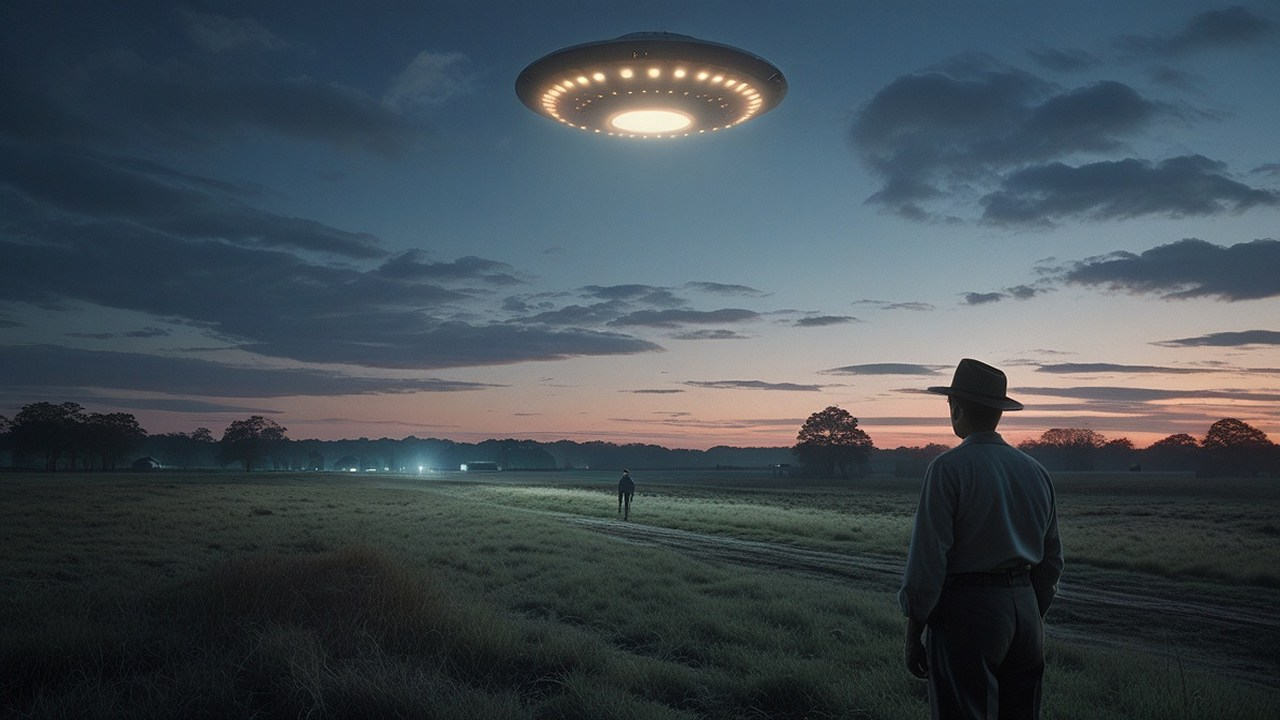
The early 1950s marked a significant period in the history of unidentified flying object sightings in the United States. Amidst the Cold War tensions and the burgeoning space age, numerous reports of unexplained aerial phenomena captured the attention of both the public and government agencies. One such incident occurred on November 7, 1952, in Auburn, Alabama, where a bright, circular object was observed stationary in the sky east of the city. While this sighting did not garner the widespread attention of other contemporaneous events, it remains a noteworthy example of the era’s UFO encounters.
This is the story of the 1952 Auburn bright object sighting — a classic case from the early days of Project Blue Book that perfectly illustrates the challenges of distinguishing between the ordinary and the truly unexplained. Today we examine the full details, the official investigation, and why this relatively quiet Alabama report still matters in the broader history of UFOs.
Welcome to the channel. We’re diving into a lesser-known but fascinating 1952 case from Auburn, Alabama. Everything here is drawn directly from the historical account provided. No added speculation. Just the facts as documented at the time.
Let’s set the scene on November 7, 1952.
On the afternoon of November 7, 1952, at approximately 4:45 p.m., a civilian observer in Auburn, Alabama, reported seeing a bright, circular object stationary in the sky east of the city. The weather conditions at the time included scattered clouds at 12,000 feet and broken clouds at 25,000 feet, with visibility limited to four miles due to smoke. The observer described the object as resembling a star, leading investigators to consider the possibility that the sighting was a misidentification of a celestial body. Given that sunset occurred around 4:45 p.m. Central Standard Time, it was plausible that the brighter stars were becoming visible in the darkening sky. Consequently, the official assessment concluded that the object was “probably a star.”
The following day, on November 8, 1952, at approximately 5:15 p.m., multiple witnesses in the Auburn, Alabama, and Columbus, Georgia, areas reported observing a silver-colored, spherical or oval-shaped object in the sky. The object was described as having a translucent outer edge emitting a green light, with two bright spots on its surface. Some observers, using telescopes, believed the object to be a balloon. The official conclusion for this sighting was that it was “probably a balloon.”
These two closely timed sightings in the Auburn area occurred during one of the busiest years for UFO reports in the early 1950s. Project Blue Book, the U.S. Air Force’s systematic study of unidentified flying objects, had been established earlier that year to investigate the surge in sightings. The Auburn cases were evaluated under this new program, reflecting the Air Force’s effort to determine whether such phenomena posed any threat to national security or had scientific value.
The Auburn sightings took place against the backdrop of heightened public interest in UFOs. The United States was in the midst of the Cold War, with concerns about Soviet technology and the emerging space age. Reports of unusual objects in the sky were coming in from across the country, and the Air Force was under pressure to provide explanations. In the case of Auburn, the investigators leaned toward prosaic explanations — first a star becoming visible at twilight, and the next day a balloon. These conclusions were consistent with the project’s overall findings, where the vast majority of reports were eventually attributed to misidentifications of natural phenomena or conventional objects.
The credibility of the witnesses in the Auburn cases is worth noting. The initial observer on November 7 was a civilian who took the time to report what they saw. The multiple witnesses on November 8 included people who used telescopes, indicating a level of deliberate observation. While the official explanations were reasonable given the available information, the timing of the two sightings — on consecutive days in the same general area — has kept the case interesting to researchers. The transition from a star-like object to a silver-colored spherical object with green light and bright spots shows how quickly conditions and perceptions can change in twilight hours.
The impact on the local community in Auburn appears to have been limited. There is little information suggesting widespread alarm or lasting concern among residents. The official explanations attributing the sightings to a star and a balloon likely helped calm any potential unease. This pattern was common in many smaller UFO reports of the era — they generated local discussion but rarely escalated into major public events unless amplified by media or multiple high-credibility witnesses.
In the broader context of 1952, the Auburn sightings were part of a much larger wave. That year saw thousands of UFO reports across the United States, prompting the Air Force to formalize its investigation efforts under Project Blue Book. The CIA also became involved, convening the Robertson Panel in January 1953 to review the evidence. The panel concluded that UFOs did not pose a direct threat to national security but recommended a public education campaign to reduce interest in the subject, fearing that mass hysteria could overwhelm communication channels in an emergency.
The Auburn case exemplifies the challenges faced by investigators during this period. Distinguishing between genuine anomalies and misidentifications of common objects or natural occurrences required careful analysis of witness testimony, weather conditions, and astronomical data. The official conclusions of “probably a star” and “probably a balloon” were pragmatic but left some researchers wondering whether all aspects of the sightings had been fully explained.
The legacy of the 1952 Auburn bright object sightings is modest but enduring. While not as famous as some contemporaneous cases, they contribute to the historical record of early 1950s UFO activity. They remind us of the difficulties in evaluating eyewitness reports from an era when aviation and space technology were rapidly evolving. In recent years, renewed interest in historical UFO sightings — fueled by declassified documents and official acknowledgments of unexplained aerial phenomena — has brought renewed attention to cases like Auburn. Revisiting such reports provides valuable insights into the historical context and evolution of public and governmental responses to the unexplained.
The bright circular object stationary in the sky east of Auburn on November 7, 1952, and the silver-colored spherical object observed the following day, may ultimately have been explainable as a star and a balloon. Yet their documentation in Project Blue Book files ensures they remain part of the official record of the era’s UFO activity. In the study of unidentified phenomena, even smaller, less dramatic cases like these help build the larger picture of what was being reported across the United States in the early 1950s.
The skies above Auburn, Alabama, in November 1952 were active with something that caught the attention of multiple observers. Whether ultimately identified or not, these sightings capture a moment in American history when the unknown still appeared in the everyday sky, prompting questions that continue to intrigue us today.
As we look back on the early days of Project Blue Book, cases like the 1952 Auburn bright object serve as reminders of the persistent human impulse to look up and wonder. In a small Alabama town, ordinary people saw something unusual in the twilight sky — and took the time to report it. Their accounts, preserved in the historical record, keep the conversation about unexplained aerial phenomena alive more than seventy years later.
The early 1950s marked a significant period in the history of unidentified flying object sightings in the United States. Amidst the Cold War tensions and the burgeoning space age, numerous reports of unexplained aerial phenomena captured the attention of both the public and government agencies. One such incident occurred on November 7, 1952, in Auburn, Alabama, where a bright, circular object was observed stationary in the sky east of the city. While this sighting did not garner the widespread attention of other contemporaneous events, it remains a noteworthy example of the era’s UFO encounters.
This is the story of the 1952 Auburn bright object sighting — a classic case from the early days of Project Blue Book that perfectly illustrates the challenges of distinguishing between the ordinary and the truly unexplained. Today we examine the full details, the official investigation, and why this relatively quiet Alabama report still matters in the broader history of UFOs.
Welcome to the channel. We’re diving into a lesser-known but fascinating 1952 case from Auburn, Alabama. Everything here is drawn directly from the historical account provided. No added speculation. Just the facts as documented at the time.
Let’s set the scene on November 7, 1952.
On the afternoon of November 7, 1952, at approximately 4:45 p.m., a civilian observer in Auburn, Alabama, reported seeing a bright, circular object stationary in the sky east of the city. The weather conditions at the time included scattered clouds at 12,000 feet and broken clouds at 25,000 feet, with visibility limited to four miles due to smoke. The observer described the object as resembling a star, leading investigators to consider the possibility that the sighting was a misidentification of a celestial body. Given that sunset occurred around 4:45 p.m. Central Standard Time, it was plausible that the brighter stars were becoming visible in the darkening sky. Consequently, the official assessment concluded that the object was “probably a star.”
The following day, on November 8, 1952, at approximately 5:15 p.m., multiple witnesses in the Auburn, Alabama, and Columbus, Georgia, areas reported observing a silver-colored, spherical or oval-shaped object in the sky. The object was described as having a translucent outer edge emitting a green light, with two bright spots on its surface. Some observers, using telescopes, believed the object to be a balloon. The official conclusion for this sighting was that it was “probably a balloon.”
These two closely timed sightings in the Auburn area occurred during one of the busiest years for UFO reports in the early 1950s. Project Blue Book, the U.S. Air Force’s systematic study of unidentified flying objects, had been established earlier that year to investigate the surge in sightings. The Auburn cases were evaluated under this new program, reflecting the Air Force’s effort to determine whether such phenomena posed any threat to national security or had scientific value.
The Auburn sightings took place against the backdrop of heightened public interest in UFOs. The United States was in the midst of the Cold War, with concerns about Soviet technology and the emerging space age. Reports of unusual objects in the sky were coming in from across the country, and the Air Force was under pressure to provide explanations. In the case of Auburn, the investigators leaned toward prosaic explanations — first a star becoming visible at twilight, and the next day a balloon. These conclusions were consistent with the project’s overall findings, where the vast majority of reports were eventually attributed to misidentifications of natural phenomena or conventional objects.
The credibility of the witnesses in the Auburn cases is worth noting. The initial observer on November 7 was a civilian who took the time to report what they saw. The multiple witnesses on November 8 included people who used telescopes, indicating a level of deliberate observation. While the official explanations were reasonable given the available information, the timing of the two sightings — on consecutive days in the same general area — has kept the case interesting to researchers. The transition from a star-like object to a silver-colored spherical object with green light and bright spots shows how quickly conditions and perceptions can change in twilight hours.
The impact on the local community in Auburn appears to have been limited. There is little information suggesting widespread alarm or lasting concern among residents. The official explanations attributing the sightings to a star and a balloon likely helped calm any potential unease. This pattern was common in many smaller UFO reports of the era — they generated local discussion but rarely escalated into major public events unless amplified by media or multiple high-credibility witnesses.
In the broader context of 1952, the Auburn sightings were part of a much larger wave. That year saw thousands of UFO reports across the United States, prompting the Air Force to formalize its investigation efforts under Project Blue Book. The CIA also became involved, convening the Robertson Panel in January 1953 to review the evidence. The panel concluded that UFOs did not pose a direct threat to national security but recommended a public education campaign to reduce interest in the subject, fearing that mass hysteria could overwhelm communication channels in an emergency.
The Auburn case exemplifies the challenges faced by investigators during this period. Distinguishing between genuine anomalies and misidentifications of common objects or natural occurrences required careful analysis of witness testimony, weather conditions, and astronomical data. The official conclusions of “probably a star” and “probably a balloon” were pragmatic but left some researchers wondering whether all aspects of the sightings had been fully explained.
The legacy of the 1952 Auburn bright object sightings is modest but enduring. While not as famous as some contemporaneous cases, they contribute to the historical record of early 1950s UFO activity. They remind us of the difficulties in evaluating eyewitness reports from an era when aviation and space technology were rapidly evolving. In recent years, renewed interest in historical UFO sightings — fueled by declassified documents and official acknowledgments of unexplained aerial phenomena — has brought renewed attention to cases like Auburn. Revisiting such reports provides valuable insights into the historical context and evolution of public and governmental responses to the unexplained.
The bright circular object stationary in the sky east of Auburn on November 7, 1952, and the silver-colored spherical object observed the following day, may ultimately have been explainable as a star and a balloon. Yet their documentation in Project Blue Book files ensures they remain part of the official record of the era’s UFO activity. In the study of unidentified phenomena, even smaller, less dramatic cases like these help build the larger picture of what was being reported across the United States in the early 1950s.
The skies above Auburn, Alabama, in November 1952 were active with something that caught the attention of multiple observers. Whether ultimately identified or not, these sightings capture a moment in American history when the unknown still appeared in the everyday sky, prompting questions that continue to intrigue us today.
As we look back on the early days of Project Blue Book, cases like the 1952 Auburn bright object serve as reminders of the persistent human impulse to look up and wonder. In a small Alabama town, ordinary people saw something unusual in the twilight sky — and took the time to report it. Their accounts, preserved in the historical record, keep the conversation about unexplained aerial phenomena alive more than seventy years later.