


Blog Categories
- African Incidents
- Atlantis Incidents
- Australian Incidents
- Belgian Incidents
- Bermuda Triangle Incidents
- Brazilian Incidents
- Canadian Incidents
- Chinese Incidents
- European Incidents
- France Incidents
- Ghosts
- Giants
- Italy Incidents
- Japanese Incidents
- Middle East Incidents
- Portugal Incidents
- Project Serpo
- Puerto Rico Incidents
- Russian Incidents
- Sasquatch
- Scandinavia Incidents
- Spanish Incidents
- UFOs
- United Kingdom Incidents
- United States Incidents
1967: The Falcon Lake Incident
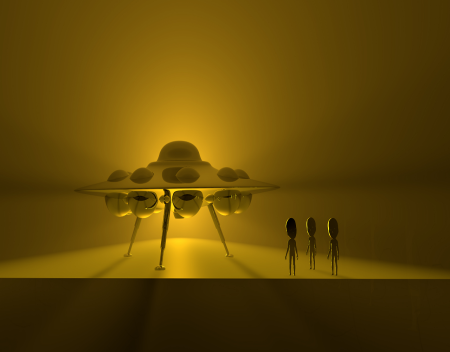
The year is 1967, the place, near Falcon Lake, on the boundary between Manitoba and Ontario. The witness had a very close encounter where he was severely injured by a UFO and its occupants.
On May 20th, 1957 at about 12:15 hours, Stephen Michalak, was engaged in some amateur prospecting, was startled to see two cigar-shaped objects with "bumps" on them, glowing red, and descending. The objects appeared more oval and disk shaped as they came closer. Suddenly, the object furthest away stopped in midair as the other came nearer and then landed about 160 feet away. The object in the air hovered for a short period then departed silently, changing color from red to orange to gray, then back to orange as it disappeared behind clouds. The craft on the ground also changed color, from red to gray and finally "hot stainless steel," surrounded by a golden glow. It was about thirty-five feet in diameter and twelve feet high.
Michalak knelt on a rock as he observed the object through welding goggles that he normally wore to protect his eyes from chips of rock. A dazzling purple light flooded out of openings in the upper part of the object. The witness sat on the rock for the next half hour, sketching the object and noting as many details as possible. Waves of warm air and a smell of sulfur radiated from the craft, and there were noises like the whirring of an electric motor as well as a hissing sound.
A door then opened in the side of the craft, with lights coming from the inside. Michalak decided to approach closer, and when he was sixty feet away heard two human-like voices, one higher pitched than the other. Convinced by now that the device was a new experimental American aircraft, he asked the occupants if they were having trouble. There was no response, although the voices had subsided, so he asked in Russian, "Do you speak Russian?" There was still no response, even when he tried German, Italian, French, and Ukrainian, then English again. Michalak approached even closer, so close that the light from it became unbearable, so he pushed down the tinted green lenses on his goggles and peered inside the opening. He saw a "maze" of lights on a panel, and beams of light in horizontal and diagonal patterns, as well as a group of lights flashing in a random sequence. He then stepped back and awaited a reaction.
Suddenly, three panels closed completely over the opening, so Michalak began to examine the side of the craft with his gloved hand. He could see no indications of welding or joints, and the surface was highly polished, appearing like colored glass reflecting light. When he pulled his hand back he found that the glove had burned and melted, as had his hat. The craft, or at least the rim, then seemed to change position, for he found himself facing a grid-type "exhaust vent," which he had noticed earlier to the left of the opening. A blast of hot air then struck his chest, setting his shirt and vest alight, and causing severe pain. He ripped these off and looked up to see the craft taking off like the first object, and felt a rush of air.
A strong smell similar to burned electrical circuits combined with sulfur pervaded the air. Michalak’s burning clothes set some moss on fire, so he stamped on the ground to extinguish the flames and then walked back to where he had left his things. He noticed that his compass was behaving erratically, but after a short while went back to normal. Returning to the landing site, which looked as though it had been swept clean apart from a fifteen-foot circle of pine needles, dirt, and leaves.
Michalak began to suffer from a pounding headache as well as nausea. He headed back to his motel, vomiting frequently on the way.
On reaching the highway, Michalak realized that he was now about a mile from where he had originally entered the woods, so set off in the correct direction. A passing RCMP officer stopped in his car, listened to Michalak’s story, and then left, explaining that he had other duties to perform. The witness eventually made it back to the motel, but believing he was "contaminated," decided to remain outside. At 4:00 p.m., however, he went into the motel coffee shop and asked for a doctor, but as the nearest was forty-five miles away he decided to catch the next bus home to Winnipeg. While waiting, he telephoned the Winnipeg Tribune.
"The pain was unbearable. I was afraid that I had ruined my health and visualized the resulting hell should I become disabled," he said. "There had to be some way of getting medical help. I thought of the press. I did not want to alarm my wife, or cause a panic in the family. I phoned her as a last resort, telling her that I had been in an accident." When he arrived home his son took him to Misericordia Hospital, where he stayed overnight.
On arrival at the hospital Michalak refrained from telling the examining physician the full story, preferring to say only that he had been burned by "exhaust coming out of an airplane." He was treated for first-degree burns and released. Two days later he was examined by his family doctor, who prescribed pain-killers and seasickness tablets. Tests a week later by the Whiteshell Nuclear Research Establishment showed no radiation above the normal background level.
For several days after the incident Michalak was unable to keep his food down and lost twenty-two pounds. His blood lymphocyte count was down from twenty-five to sixteen percent, returning to normal after four weeks. Medical reports also showed that he had skin infections, "having hive-like areas with impetiginous centers." He suffered from diarrhea, "generalized urticaria" (hives), and periodically felt weak, dizzy, and nauseated. He also experienced numbness and chronic swelling of the joints. An "awful stench" seemed to come from inside his body at times.
A hematologist’s report indicated that Michalak’s blood had "some atypical lymphoid cells in the marrow plus a moderate increase in the number of plasma cells." The witness also complained of a burning sensation around his neck and chest, and occasions when his body "turned violet," his hands swelled "like a balloon," his vision failed and he lapsed into unconsciousness.
In August 1968 Michalak spent two weeks at the Mayo Clinic in Rochester, Minnesota, USA, at his own expense. He was found to be in good health, apart from neurological dermatitis, and simple syncope (fainting spells due to sudden cerebral blood pressure loss) attributed to hyperventilation or impaired cardiac input (Michalak had been suffering from heart problems for a number of years). Psychiatric tests showed no evidence of delusions, hallucinations or other emotional disorders. A peculiar geometric pattern of burn marks which appeared on Michalak’s chest and abdomen was diagnosed as being thermal in origin. The marks matched the "exhaust grill" of the UFO, which had about thirty small openings.
Altogether, Michalak was examined by a total of twenty-seven doctors, and none was able fully to explain the cause of his symptoms. Investigations were carried out by the Departments of Health and Social Welfare, National Defense, the National Research Council, the University of Colorado, the Canadian Aerial Phenomena Research Organization, the RCMP, the RCAF, as well as at the Whiteshell Nuclear Research Establishment. Dr. Horace Dudley, former Chief of the Radioisotope Laboratory, US Naval Hospital, New York, believes that the symptoms of nausea and vomiting, followed by diarrhea, loss of weight, and the drop in the lymphocyte count, "is a classical picture of severe whole body [exposure to] radiation with X or gamma rays. I would guess," said Dr. Dudley, "that Mr. Michalak received in the order of 100 to 200 roentgens. It is very fortunate that this dose of radiation only lasted a very short time or he would certainly have received a lethal dose . . ."
Stewart Hunt, an investigator for the Department of Health and Social Welfare, found a small contaminated area at the landing site, no larger than 100 square inches that showed a "significant" level of radium 226, for which no satisfactory explanation could be found. Tests conducted by the Whiteshell Nuclear Research Establishment, however, apparently revealed nothing abnormal, and in June 1979 a reanalysis confirmed that all the energies detected could be adequately explained in terms of the decay of natural uranium. Despite these findings, the radiation found by Hunt was of sufficient quantity for the Radiation Protection Division to consider restricting entry to the forest area in 1967.
A year after the encounter. Michalak returned to the landing site with a friend and, using a Geiger counter, discovered two "W-shaped" silver bars, four and a half inches in length, as well as some other chunks of the same material, under some lichen above which the UFO was alleged to have hovered. In spite of doubts raised by the University of Colorado UFO Project investigator Roy Craig, researcher Brian Cannon found that the silver concentration was "much higher than would normally be found in native silver such as sterling or coinage," though the amount of copper, at one or two percent, was consistent with commercial silver, if less than many specimens. The metal showed signs of heating, bending, and radioactivity, and was imbedded on the outside with fine quartz crystals as well as small crystals of a uranium silicate material and pitchblende, and feldspar and hematite. Yet why, asks Chris Rutkowski, was this silver missed earlier by other investigators?
Squadron Leader P. Bissky, representing the Royal Canadian Air Force, concluded that the entire case was a hoax, yet a statement in the National Research Council’s Non-Meteoritic (i.e. UFO) Sightings File (Department of National Defense, DND 222) reads: "Neither the DND, nor the RCMP investigation teams were able to provide evidence which could dispute Mr. Michalak’s story." And the RCMP forensic analysis was "unable to reach any conclusion as to what may have caused the burn damage" to Michalak’s clothing.
On 27 May 1967 MP Ed Schreyer asked in the House of Commons about UFO investigations, with the Michalak case in mind. The Speaker of the House "cut off the subject without government reply."
On 6 November 1967 Defense Minister Leo Cadieux, replying to requests by several Cabinet members to obtain information on the Michalak case, stated that "it is not the intention of the Department of National Defense to make public the report of the alleged sighting."
On 11 November 1967 Ed Schreyer (who subsequently became Governor-General) formally placed a written question on the Commons order paper seeking information on UFOs.
On 14 October 1968, seventeen months after the incident, House Leader Donald MacDonald refused MP Barry Mather access to reports on the Michalak case.
But on 6 February 1969 Mather was given permission by a member of the Privy Council to examine their file on UFOs, "from which a few pages have simply been removed." Significantly, it was stated that outright release of the file "would not be in the public’s interest and [would] create a dangerous precedent that would not contribute to the good administration of the country’s business."
Although most of the government report on the Michalak case was eventually made available to inquirers at the National Research Council, the complete file has never been released.
In 1982, when the Canadian government passed the Freedom of Information Act, researcher Graham Conway filed a FOIA request for the Michalak file, which an authoritative document listed as being the most complete and extensive among the UFO reports, containing between 125 and 150 pages. He received only 113 pages.
Graham Conway has confirmed that the Canadian government clandestinely collects UFO material on a daily basis from all the various UFO groups that keep up to date with developments in the field.
My Take: This is a great case with real evidence. Radiation burns. How can you explain that away? How did he get radiation burns in that grill like pattern while in the forest?
Resources: Above Top Secret, Timothy Good, 1988
The year is 1967, the place, near Falcon Lake, on the boundary between Manitoba and Ontario. The witness had a very close encounter where he was severely injured by a UFO and its occupants.
On May 20th, 1957 at about 12:15 hours, Stephen Michalak, was engaged in some amateur prospecting, was startled to see two cigar-shaped objects with "bumps" on them, glowing red, and descending. The objects appeared more oval and disk shaped as they came closer. Suddenly, the object furthest away stopped in midair as the other came nearer and then landed about 160 feet away. The object in the air hovered for a short period then departed silently, changing color from red to orange to gray, then back to orange as it disappeared behind clouds. The craft on the ground also changed color, from red to gray and finally "hot stainless steel," surrounded by a golden glow. It was about thirty-five feet in diameter and twelve feet high.
Michalak knelt on a rock as he observed the object through welding goggles that he normally wore to protect his eyes from chips of rock. A dazzling purple light flooded out of openings in the upper part of the object. The witness sat on the rock for the next half hour, sketching the object and noting as many details as possible. Waves of warm air and a smell of sulfur radiated from the craft, and there were noises like the whirring of an electric motor as well as a hissing sound.
A door then opened in the side of the craft, with lights coming from the inside. Michalak decided to approach closer, and when he was sixty feet away heard two human-like voices, one higher pitched than the other. Convinced by now that the device was a new experimental American aircraft, he asked the occupants if they were having trouble. There was no response, although the voices had subsided, so he asked in Russian, "Do you speak Russian?" There was still no response, even when he tried German, Italian, French, and Ukrainian, then English again. Michalak approached even closer, so close that the light from it became unbearable, so he pushed down the tinted green lenses on his goggles and peered inside the opening. He saw a "maze" of lights on a panel, and beams of light in horizontal and diagonal patterns, as well as a group of lights flashing in a random sequence. He then stepped back and awaited a reaction.
Suddenly, three panels closed completely over the opening, so Michalak began to examine the side of the craft with his gloved hand. He could see no indications of welding or joints, and the surface was highly polished, appearing like colored glass reflecting light. When he pulled his hand back he found that the glove had burned and melted, as had his hat. The craft, or at least the rim, then seemed to change position, for he found himself facing a grid-type "exhaust vent," which he had noticed earlier to the left of the opening. A blast of hot air then struck his chest, setting his shirt and vest alight, and causing severe pain. He ripped these off and looked up to see the craft taking off like the first object, and felt a rush of air.
A strong smell similar to burned electrical circuits combined with sulfur pervaded the air. Michalak’s burning clothes set some moss on fire, so he stamped on the ground to extinguish the flames and then walked back to where he had left his things. He noticed that his compass was behaving erratically, but after a short while went back to normal. Returning to the landing site, which looked as though it had been swept clean apart from a fifteen-foot circle of pine needles, dirt, and leaves.
Michalak began to suffer from a pounding headache as well as nausea. He headed back to his motel, vomiting frequently on the way.
On reaching the highway, Michalak realized that he was now about a mile from where he had originally entered the woods, so set off in the correct direction. A passing RCMP officer stopped in his car, listened to Michalak’s story, and then left, explaining that he had other duties to perform. The witness eventually made it back to the motel, but believing he was "contaminated," decided to remain outside. At 4:00 p.m., however, he went into the motel coffee shop and asked for a doctor, but as the nearest was forty-five miles away he decided to catch the next bus home to Winnipeg. While waiting, he telephoned the Winnipeg Tribune.
"The pain was unbearable. I was afraid that I had ruined my health and visualized the resulting hell should I become disabled," he said. "There had to be some way of getting medical help. I thought of the press. I did not want to alarm my wife, or cause a panic in the family. I phoned her as a last resort, telling her that I had been in an accident." When he arrived home his son took him to Misericordia Hospital, where he stayed overnight.
On arrival at the hospital Michalak refrained from telling the examining physician the full story, preferring to say only that he had been burned by "exhaust coming out of an airplane." He was treated for first-degree burns and released. Two days later he was examined by his family doctor, who prescribed pain-killers and seasickness tablets. Tests a week later by the Whiteshell Nuclear Research Establishment showed no radiation above the normal background level.
For several days after the incident Michalak was unable to keep his food down and lost twenty-two pounds. His blood lymphocyte count was down from twenty-five to sixteen percent, returning to normal after four weeks. Medical reports also showed that he had skin infections, "having hive-like areas with impetiginous centers." He suffered from diarrhea, "generalized urticaria" (hives), and periodically felt weak, dizzy, and nauseated. He also experienced numbness and chronic swelling of the joints. An "awful stench" seemed to come from inside his body at times.
A hematologist’s report indicated that Michalak’s blood had "some atypical lymphoid cells in the marrow plus a moderate increase in the number of plasma cells." The witness also complained of a burning sensation around his neck and chest, and occasions when his body "turned violet," his hands swelled "like a balloon," his vision failed and he lapsed into unconsciousness.
In August 1968 Michalak spent two weeks at the Mayo Clinic in Rochester, Minnesota, USA, at his own expense. He was found to be in good health, apart from neurological dermatitis, and simple syncope (fainting spells due to sudden cerebral blood pressure loss) attributed to hyperventilation or impaired cardiac input (Michalak had been suffering from heart problems for a number of years). Psychiatric tests showed no evidence of delusions, hallucinations or other emotional disorders. A peculiar geometric pattern of burn marks which appeared on Michalak’s chest and abdomen was diagnosed as being thermal in origin. The marks matched the "exhaust grill" of the UFO, which had about thirty small openings.
Altogether, Michalak was examined by a total of twenty-seven doctors, and none was able fully to explain the cause of his symptoms. Investigations were carried out by the Departments of Health and Social Welfare, National Defense, the National Research Council, the University of Colorado, the Canadian Aerial Phenomena Research Organization, the RCMP, the RCAF, as well as at the Whiteshell Nuclear Research Establishment. Dr. Horace Dudley, former Chief of the Radioisotope Laboratory, US Naval Hospital, New York, believes that the symptoms of nausea and vomiting, followed by diarrhea, loss of weight, and the drop in the lymphocyte count, "is a classical picture of severe whole body [exposure to] radiation with X or gamma rays. I would guess," said Dr. Dudley, "that Mr. Michalak received in the order of 100 to 200 roentgens. It is very fortunate that this dose of radiation only lasted a very short time or he would certainly have received a lethal dose . . ."
Stewart Hunt, an investigator for the Department of Health and Social Welfare, found a small contaminated area at the landing site, no larger than 100 square inches that showed a "significant" level of radium 226, for which no satisfactory explanation could be found. Tests conducted by the Whiteshell Nuclear Research Establishment, however, apparently revealed nothing abnormal, and in June 1979 a reanalysis confirmed that all the energies detected could be adequately explained in terms of the decay of natural uranium. Despite these findings, the radiation found by Hunt was of sufficient quantity for the Radiation Protection Division to consider restricting entry to the forest area in 1967.
A year after the encounter. Michalak returned to the landing site with a friend and, using a Geiger counter, discovered two "W-shaped" silver bars, four and a half inches in length, as well as some other chunks of the same material, under some lichen above which the UFO was alleged to have hovered. In spite of doubts raised by the University of Colorado UFO Project investigator Roy Craig, researcher Brian Cannon found that the silver concentration was "much higher than would normally be found in native silver such as sterling or coinage," though the amount of copper, at one or two percent, was consistent with commercial silver, if less than many specimens. The metal showed signs of heating, bending, and radioactivity, and was imbedded on the outside with fine quartz crystals as well as small crystals of a uranium silicate material and pitchblende, and feldspar and hematite. Yet why, asks Chris Rutkowski, was this silver missed earlier by other investigators?
Squadron Leader P. Bissky, representing the Royal Canadian Air Force, concluded that the entire case was a hoax, yet a statement in the National Research Council’s Non-Meteoritic (i.e. UFO) Sightings File (Department of National Defense, DND 222) reads: "Neither the DND, nor the RCMP investigation teams were able to provide evidence which could dispute Mr. Michalak’s story." And the RCMP forensic analysis was "unable to reach any conclusion as to what may have caused the burn damage" to Michalak’s clothing.
On 27 May 1967 MP Ed Schreyer asked in the House of Commons about UFO investigations, with the Michalak case in mind. The Speaker of the House "cut off the subject without government reply."
On 6 November 1967 Defense Minister Leo Cadieux, replying to requests by several Cabinet members to obtain information on the Michalak case, stated that "it is not the intention of the Department of National Defense to make public the report of the alleged sighting."
On 11 November 1967 Ed Schreyer (who subsequently became Governor-General) formally placed a written question on the Commons order paper seeking information on UFOs.
On 14 October 1968, seventeen months after the incident, House Leader Donald MacDonald refused MP Barry Mather access to reports on the Michalak case.
But on 6 February 1969 Mather was given permission by a member of the Privy Council to examine their file on UFOs, "from which a few pages have simply been removed." Significantly, it was stated that outright release of the file "would not be in the public’s interest and [would] create a dangerous precedent that would not contribute to the good administration of the country’s business."
Although most of the government report on the Michalak case was eventually made available to inquirers at the National Research Council, the complete file has never been released.
In 1982, when the Canadian government passed the Freedom of Information Act, researcher Graham Conway filed a FOIA request for the Michalak file, which an authoritative document listed as being the most complete and extensive among the UFO reports, containing between 125 and 150 pages. He received only 113 pages.
Graham Conway has confirmed that the Canadian government clandestinely collects UFO material on a daily basis from all the various UFO groups that keep up to date with developments in the field.
My Take: This is a great case with real evidence. Radiation burns. How can you explain that away? How did he get radiation burns in that grill like pattern while in the forest?
Resources: Above Top Secret, Timothy Good, 1988