


Blog Categories
- African Incidents
- Atlantis Incidents
- Australian Incidents
- Belgian Incidents
- Bermuda Triangle Incidents
- Brazilian Incidents
- Canadian Incidents
- Chinese Incidents
- European Incidents
- France Incidents
- Ghosts
- Giants
- Italy Incidents
- Japanese Incidents
- Middle East Incidents
- Portugal Incidents
- Project Serpo
- Puerto Rico Incidents
- Russian Incidents
- Sasquatch
- Scandinavia Incidents
- Spanish Incidents
- UFOs
- United Kingdom Incidents
- United States Incidents
1969: Mission Bay UFO
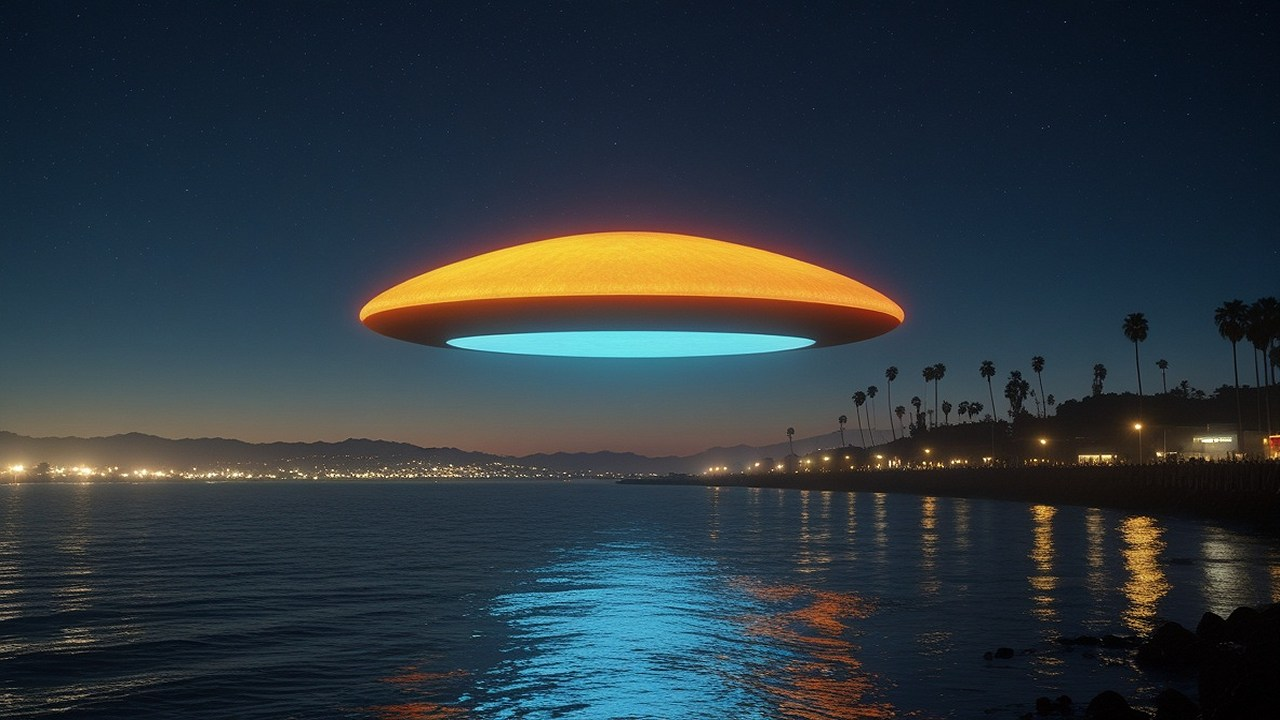
On the evening of January 4, 1969, San Diego’s Mission Bay—normally a serene hub of sailboats, joggers, and the sound of waves—became the stage for one of Southern California’s most talked-about UFO sightings of the late 1960s. Over a dozen witnesses, drawn from various walks of life, including local radio hosts, reported observing a glowing egg-shaped craft hovering silently above the water. The object’s unusual behavior—its soundless hovering, its gradual shifts in color from orange to blue and back again, and its sustained presence for nearly 10 minutes—distinguished it from the usual quick, ambiguous glimpses that dominate UFO reports. This was a prolonged, multi-witness event, in full view of the public, and it made enough of a local impression to be covered by both news outlets and police blotters.
This is the story of the January 4, 1969, Mission Bay UFO. Welcome to the channel. Today we examine this compelling multi-witness case in full detail, staying strictly faithful to the historical record.
San Diego in early 1969 was a city straddling the old and the new. It was still a Navy town, heavily influenced by military activity from nearby bases, but it was also developing into a major tourist and cultural destination. Mission Bay, located just north of downtown, was a central recreational area—a 4,600-acre aquatic park that drew locals for fishing, boating, and evening walks. That night, temperatures were cool for Southern California, in the low 50s, with mostly clear skies and light winds. Visibility was excellent—conditions that make aerial observations easier to track and less prone to misinterpretation.
Sometime after 8:00 p.m., witnesses began noticing a strange glowing object over the bay. It was described as egg-shaped, not perfectly spherical or disc-like, and it hung in the air without the typical motion of an aircraft or helicopter. The object’s surface or illumination appeared to shift between a deep orange glow and a cool blue light, the transitions occurring gradually rather than flashing like a beacon.
One group of witnesses, including two San Diego radio hosts returning from a dinner engagement, were among the first to call in reports. Their professional backgrounds made them particularly articulate in describing what they saw, and their involvement would later help ensure that local media covered the story. As word spread via phone calls and local chatter, more people stepped outside or looked toward the bay, adding to the witness pool. By the time the object finally departed, more than a dozen individuals—spread across different vantage points—had observed it.
Descriptions were consistent. The object maintained a steady hover roughly a few hundred feet above the water. There was no audible sound, even in the still nighttime air, which made its presence unsettling to some. The color changes from orange to blue were slow, almost pulsating, giving the impression that the craft was generating its own light. The object remained in roughly the same position for most of the sighting but occasionally made small lateral shifts, as though “drifting” or adjusting position. Several witnesses noted that the color change seemed to correlate with slight alterations in brightness, as if the intensity of the glow fluctuated along with its hue.
The sighting lasted close to 10 minutes—a notably long duration for a UFO report. This allowed witnesses to study the object without the usual rush of fleeting impressions. Such a sustained presence also makes atmospheric or astronomical explanations less likely, since planets, stars, and aircraft rarely behave in such a manner for so long in a fixed location. The departure was sudden but not instantaneous. The object tilted slightly and then ascended vertically at a steady but rapid pace until it was no longer visible against the night sky. No sonic boom, no contrail, and no flashing lights marked its exit—only the gradual fading of its glow as it rose into the distance.
The incident was recorded in police blotters—likely a result of multiple calls made to local authorities during the sighting. While there is no surviving evidence that officers were dispatched to the scene in time to witness the object directly, the official acknowledgment in public records means the event was considered noteworthy enough to log. The story made its way into local San Diego news reports within days. The presence of radio hosts among the witnesses gave the case a degree of credibility in the public eye, as these individuals were accustomed to speaking clearly and responsibly in public forums. However, the media coverage was largely confined to San Diego and its immediate surroundings. In 1969, UFO reports were plentiful across the United States, and national outlets were selective about which cases they elevated.
While the Air Force’s official UFO investigation program—Project Blue Book—was still active in January 1969, there is no public record confirming that this specific incident was investigated under its auspices. Several explanations were considered by skeptics at the time. Some pointed to the possibility of an experimental military craft, given San Diego’s proximity to Navy and Marine bases. However, the absence of sound and the object’s egg-shaped form were unusual even for experimental vehicles of the era. Atmospheric phenomena such as lenticular clouds and mirages can sometimes produce unusual light effects, but these rarely persist in the same spot for ten minutes, change colors, and then ascend rapidly. A helicopter with modified lighting was another suggestion; helicopters can appear quieter from a distance if wind and background noise obscure rotor sounds, but the absence of navigation lights and the shifting glow made this explanation less convincing to witnesses. No definitive conclusion was reached, and the case remains unexplained.
In the weeks following the sighting, San Diego saw an uptick in UFO-related chatter. The Mission Bay case became a conversational touchstone among locals who had always been curious about aerial phenomena but had never heard of so many credible witnesses describing the same thing at once. For some, it was a moment that shifted their outlook on the UFO question from abstract curiosity to personal interest. The fact that the witnesses included recognizable media figures meant the story was less likely to be dismissed as rumor or fabrication.
The Mission Bay incident stands out in California UFO history for several reasons. It involved multiple credible witnesses, including individuals accustomed to public scrutiny. The long duration of observation reduced the likelihood of simple misidentification. The event was locally documented in police blotters and news reports. And it occurred during the final year of Project Blue Book, at a time when public interest in UFOs was high but official investigations were winding down. In retrospect, it also reflects a transitional moment in UFO culture. By 1969, the “flying saucer” era of the 1950s had broadened into a wider range of reported shapes—egg-shaped, cigar-shaped, and orb-like objects were increasingly common.
Today, the January 4, 1969, Mission Bay case resonates with modern UFO research in several ways. Recent interest in Unidentified Aerial Phenomena emphasizes the value of multi-witness, extended-duration sightings under good observational conditions. The event’s color changes and silent hover mirror characteristics reported in contemporary UAP accounts by both civilian and military observers. Additionally, the case remains a local piece of San Diego history—often rediscovered by regional historians and UFO researchers compiling California sighting records. It stands as an example of how credible, well-documented cases can occur in populated areas and still fade into relative obscurity without sustained follow-up.
The Mission Bay UFO of January 4, 1969, was more than just a momentary flash in the night sky. It was a prolonged, multi-witness encounter with a clearly defined, unusual aerial object—an object that defied easy explanation, was witnessed by respected members of the community, and was documented in both police and media records. For those who saw it, the experience became a personal benchmark for what an unidentified flying object truly looks like when it is more than a point of light in the distance. For researchers, it remains a valuable, if under-publicized, case from a pivotal era in UFO history.
In the cool, clear evening air over Mission Bay, more than a dozen people watched a glowing egg-shaped craft hang silently above the water. It shifted slowly from orange to blue, drifted slightly, and held its position long enough for careful observation before tilting and rising vertically into the night. No sound. No conventional lights. No easy answer. More than fifty years later, that sustained, multi-witness encounter still stands as one of Southern California’s most intriguing documented sightings of the late 1960s—a quiet, luminous question mark suspended over the water for ten full minutes.
On the evening of January 4, 1969, San Diego’s Mission Bay—normally a serene hub of sailboats, joggers, and the sound of waves—became the stage for one of Southern California’s most talked-about UFO sightings of the late 1960s. Over a dozen witnesses, drawn from various walks of life, including local radio hosts, reported observing a glowing egg-shaped craft hovering silently above the water. The object’s unusual behavior—its soundless hovering, its gradual shifts in color from orange to blue and back again, and its sustained presence for nearly 10 minutes—distinguished it from the usual quick, ambiguous glimpses that dominate UFO reports. This was a prolonged, multi-witness event, in full view of the public, and it made enough of a local impression to be covered by both news outlets and police blotters.
This is the story of the January 4, 1969, Mission Bay UFO. Welcome to the channel. Today we examine this compelling multi-witness case in full detail, staying strictly faithful to the historical record.
San Diego in early 1969 was a city straddling the old and the new. It was still a Navy town, heavily influenced by military activity from nearby bases, but it was also developing into a major tourist and cultural destination. Mission Bay, located just north of downtown, was a central recreational area—a 4,600-acre aquatic park that drew locals for fishing, boating, and evening walks. That night, temperatures were cool for Southern California, in the low 50s, with mostly clear skies and light winds. Visibility was excellent—conditions that make aerial observations easier to track and less prone to misinterpretation.
Sometime after 8:00 p.m., witnesses began noticing a strange glowing object over the bay. It was described as egg-shaped, not perfectly spherical or disc-like, and it hung in the air without the typical motion of an aircraft or helicopter. The object’s surface or illumination appeared to shift between a deep orange glow and a cool blue light, the transitions occurring gradually rather than flashing like a beacon.
One group of witnesses, including two San Diego radio hosts returning from a dinner engagement, were among the first to call in reports. Their professional backgrounds made them particularly articulate in describing what they saw, and their involvement would later help ensure that local media covered the story. As word spread via phone calls and local chatter, more people stepped outside or looked toward the bay, adding to the witness pool. By the time the object finally departed, more than a dozen individuals—spread across different vantage points—had observed it.
Descriptions were consistent. The object maintained a steady hover roughly a few hundred feet above the water. There was no audible sound, even in the still nighttime air, which made its presence unsettling to some. The color changes from orange to blue were slow, almost pulsating, giving the impression that the craft was generating its own light. The object remained in roughly the same position for most of the sighting but occasionally made small lateral shifts, as though “drifting” or adjusting position. Several witnesses noted that the color change seemed to correlate with slight alterations in brightness, as if the intensity of the glow fluctuated along with its hue.
The sighting lasted close to 10 minutes—a notably long duration for a UFO report. This allowed witnesses to study the object without the usual rush of fleeting impressions. Such a sustained presence also makes atmospheric or astronomical explanations less likely, since planets, stars, and aircraft rarely behave in such a manner for so long in a fixed location. The departure was sudden but not instantaneous. The object tilted slightly and then ascended vertically at a steady but rapid pace until it was no longer visible against the night sky. No sonic boom, no contrail, and no flashing lights marked its exit—only the gradual fading of its glow as it rose into the distance.
The incident was recorded in police blotters—likely a result of multiple calls made to local authorities during the sighting. While there is no surviving evidence that officers were dispatched to the scene in time to witness the object directly, the official acknowledgment in public records means the event was considered noteworthy enough to log. The story made its way into local San Diego news reports within days. The presence of radio hosts among the witnesses gave the case a degree of credibility in the public eye, as these individuals were accustomed to speaking clearly and responsibly in public forums. However, the media coverage was largely confined to San Diego and its immediate surroundings. In 1969, UFO reports were plentiful across the United States, and national outlets were selective about which cases they elevated.
While the Air Force’s official UFO investigation program—Project Blue Book—was still active in January 1969, there is no public record confirming that this specific incident was investigated under its auspices. Several explanations were considered by skeptics at the time. Some pointed to the possibility of an experimental military craft, given San Diego’s proximity to Navy and Marine bases. However, the absence of sound and the object’s egg-shaped form were unusual even for experimental vehicles of the era. Atmospheric phenomena such as lenticular clouds and mirages can sometimes produce unusual light effects, but these rarely persist in the same spot for ten minutes, change colors, and then ascend rapidly. A helicopter with modified lighting was another suggestion; helicopters can appear quieter from a distance if wind and background noise obscure rotor sounds, but the absence of navigation lights and the shifting glow made this explanation less convincing to witnesses. No definitive conclusion was reached, and the case remains unexplained.
In the weeks following the sighting, San Diego saw an uptick in UFO-related chatter. The Mission Bay case became a conversational touchstone among locals who had always been curious about aerial phenomena but had never heard of so many credible witnesses describing the same thing at once. For some, it was a moment that shifted their outlook on the UFO question from abstract curiosity to personal interest. The fact that the witnesses included recognizable media figures meant the story was less likely to be dismissed as rumor or fabrication.
The Mission Bay incident stands out in California UFO history for several reasons. It involved multiple credible witnesses, including individuals accustomed to public scrutiny. The long duration of observation reduced the likelihood of simple misidentification. The event was locally documented in police blotters and news reports. And it occurred during the final year of Project Blue Book, at a time when public interest in UFOs was high but official investigations were winding down. In retrospect, it also reflects a transitional moment in UFO culture. By 1969, the “flying saucer” era of the 1950s had broadened into a wider range of reported shapes—egg-shaped, cigar-shaped, and orb-like objects were increasingly common.
Today, the January 4, 1969, Mission Bay case resonates with modern UFO research in several ways. Recent interest in Unidentified Aerial Phenomena emphasizes the value of multi-witness, extended-duration sightings under good observational conditions. The event’s color changes and silent hover mirror characteristics reported in contemporary UAP accounts by both civilian and military observers. Additionally, the case remains a local piece of San Diego history—often rediscovered by regional historians and UFO researchers compiling California sighting records. It stands as an example of how credible, well-documented cases can occur in populated areas and still fade into relative obscurity without sustained follow-up.
The Mission Bay UFO of January 4, 1969, was more than just a momentary flash in the night sky. It was a prolonged, multi-witness encounter with a clearly defined, unusual aerial object—an object that defied easy explanation, was witnessed by respected members of the community, and was documented in both police and media records. For those who saw it, the experience became a personal benchmark for what an unidentified flying object truly looks like when it is more than a point of light in the distance. For researchers, it remains a valuable, if under-publicized, case from a pivotal era in UFO history.
In the cool, clear evening air over Mission Bay, more than a dozen people watched a glowing egg-shaped craft hang silently above the water. It shifted slowly from orange to blue, drifted slightly, and held its position long enough for careful observation before tilting and rising vertically into the night. No sound. No conventional lights. No easy answer. More than fifty years later, that sustained, multi-witness encounter still stands as one of Southern California’s most intriguing documented sightings of the late 1960s—a quiet, luminous question mark suspended over the water for ten full minutes.