


Blog Categories
- African Incidents
- Atlantis Incidents
- Australian Incidents
- Belgian Incidents
- Bermuda Triangle Incidents
- Brazilian Incidents
- Canadian Incidents
- Chinese Incidents
- European Incidents
- France Incidents
- Ghosts
- Giants
- Italy Incidents
- Japanese Incidents
- Middle East Incidents
- Portugal Incidents
- Project Serpo
- Puerto Rico Incidents
- Russian Incidents
- Sasquatch
- Scandinavia Incidents
- Spanish Incidents
- UFOs
- United Kingdom Incidents
- United States Incidents
1977: Canary Islands Massive Luminous Object
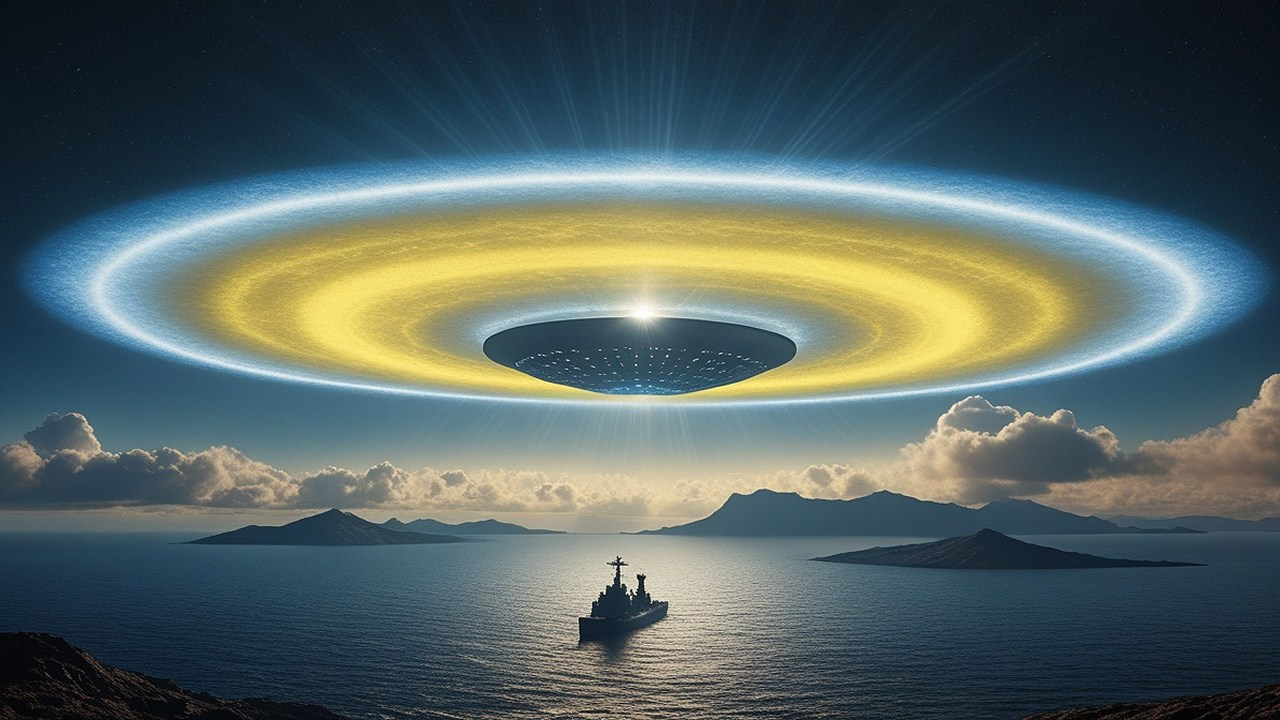
On the night of June 22, 1976, something extraordinary appeared in the skies over the Canary Islands.
For nearly forty minutes, a massive luminous object lit up the Atlantic Ocean and the islands below it. Thousands of people saw it. Police officers saw it. Sailors saw it. Doctors saw it. Military personnel saw it. And one of the most detailed accounts came from a respected medical doctor who described not just a light in the sky, but a crystalline sphere containing figures.
This was not a brief flash. This was not a single confused witness. This was a widespread, prolonged, multi-island event that forced the Spanish Air Force to open an official investigation. And when that investigation concluded, the phenomenon was left officially unidentified.
Welcome to one of the most compelling mass sightings of the 1970s – the Canary Islands luminous object of 1976.
The Canary Islands sit in the Atlantic Ocean off the northwest coast of Africa. On that June night, the skies over Tenerife, La Palma, La Gomera, Gran Canaria, and the waters near Fuerteventura became the stage for something that still defies easy explanation nearly fifty years later.
It began around 9:27 in the evening local time. The Spanish Navy corvette Atrevida was positioned off the coast of Fuerteventura when its crew first noticed an intense yellow-blue light emerging from the direction of the shoreline and moving toward their ship. At first, some thought it might be the landing lights of a conventional aircraft. That interpretation did not last long.
The light did not behave like any aircraft they knew. It became stationary in the sky. Then a luminous rotating beam appeared. The object expanded into a vast, glowing halo that dominated the night. This halo persisted for a long time, changing in appearance and intensity before finally dissipating or moving away.
Trained naval personnel were watching it in real time. That single fact already sets this case apart from many others.
But the Atrevida was far from alone.
Across the archipelago, hundreds – ultimately thousands – of people reported the same basic phenomenon. A large luminous sphere or orb. Intense colors shifting between yellow, blue, and white. An object that appeared to rise from the horizon or even the surface of the sea itself. An object that changed shape and brightness over the course of nearly forty minutes.
The geographic spread is one of the most impressive aspects of this event. Sightings came in from multiple islands simultaneously. Independent witnesses, separated by significant distances of ocean, described consistent details. In the history of unidentified aerial phenomena, mass sightings of this scale and duration are rare. The Canary Islands event stands among the strongest examples.
Among all the accounts, one stands out for its extraordinary level of detail – the testimony of Dr. Francisco Julio Padrón León, a medical doctor from the town of Gáldar on Gran Canaria.
That night, Dr. Padrón was traveling by taxi to make a house call. Suddenly, both he and the driver noticed a slightly glowing, nearly transparent spherical object at road level nearby. The doctor described it as crystalline in appearance. Stars were visible through its surface. It carried a bluish tint.
Inside the lower third of the sphere, he reported seeing a platform that looked metallic, complete with consoles. And on that platform were two tall humanoid figures dressed in bright red clothing or suits, appearing to interact with the controls.
Let that register for a moment. A transparent, crystalline sphere. Stars visible through it. A metallic platform with consoles. Two tall figures in red.
Local police and military investigators later looked into Dr. Padrón’s background and psychological profile. They found no obvious reason to question his credibility. He was a respected professional with no apparent motive to invent such a story.
Of course, the most sensational elements of his account – particularly the presence of the figures – have been treated with caution by many researchers. That is understandable. Extraordinary claims require careful handling. Yet the core observation of a large luminous object was independently confirmed by a huge number of other witnesses across the islands. The doctor’s more detailed description does not stand alone; it sits within a much larger body of consistent reports.
The Spanish authorities did not ignore what was happening. The Spanish Air Force opened an official investigative file known as Expediente 760622. Investigators collected witness statements. They examined available radar data. They evaluated possible conventional explanations – aircraft, missile tests, atmospheric phenomena, meteorological effects.
After reviewing the evidence, none of those explanations fully accounted for the complete set of observations. The event was categorized as an unidentified aerial phenomenon.
Years later, portions of these official records were declassified. Journalist and author J. J. Benítez obtained many of the files and published them in 1977, bringing the case to wider public attention and cementing its place in the literature of unidentified aerial phenomena.
For the people who lived through that night, this was not just another light in the sky. Newspapers reported it the next day. Conversations continued for years. In communities across the islands, the event entered local lore. It became one of those shared experiences that people return to when discussing the unexplained.
The psychological impact was real. Many witnesses found their assumptions about the night sky challenged. People who had never given serious thought to unidentified aerial phenomena suddenly had to confront the possibility that something genuinely anomalous had occurred above their homes and above the ocean they knew so well.
Skeptics have offered alternative interpretations over the years. Some have pointed to possible twilight effects from classified missile tests. Others have suggested rare atmospheric optics. These ideas deserve consideration. Any serious examination of a case like this should weigh conventional possibilities carefully.
Yet the combination of factors here makes easy dismissal difficult. We have a formal report from a naval vessel. We have consistent descriptions from thousands of people across multiple islands. We have a prolonged duration of nearly forty minutes. We have color changes, shape changes, and a stationary hovering phase followed by complex luminous behavior. And we have an official military investigation that ultimately left the case unidentified.
When trained military observers and large numbers of independent civilian witnesses describe the same anomalous display, and when official investigators cannot match it to known technology or natural phenomena of the time, the case earns its place among the more significant events in the historical record.
Scholars who study mass sightings often highlight the Canary Islands case precisely because of this multi-witness, multi-location character. Isolated reports can be debated endlessly. Simultaneous observations by people who had no opportunity to coordinate their stories carry greater weight.
The timing of the event also matters. The mid-1970s were a period of advancing aviation and defense technology, as well as heightened public interest in aerial mysteries. The Canary Islands sighting became a focal point for both serious investigators and the wider public.
In the decades that followed, the case retained its relevance. When more documents were released in the 1990s, a new generation of researchers examined the official testimony and compared it with other historical reports. The availability of these files strengthened arguments for greater transparency in how governments handle unidentified aerial phenomena. In that sense, the Canary Islands incident contributed to a slow but real shift in attitudes – a growing recognition that some sightings deserve careful, open investigation rather than automatic dismissal.
There was also a practical effect within Spanish defense and aviation circles. The reports from naval vessels and the air force investigation underscored the need for clearer procedures when logging and analyzing unidentified objects, especially when both human witnesses and technical sensors are involved. Discussions about integrating civilian observations with military data have continued in Europe ever since, and they remain relevant today.
Today, the 1976 Canary Islands sighting continues to appear in books, documentaries, and research papers. It is frequently referenced alongside other major cases of that era as part of a global wave of anomalous reports. For those who study these events carefully, the combination of factors is hard to ignore: the sheer number of witnesses, the presence of trained military observers, the official documentation, the duration, the visual intensity, and the ultimate classification as unidentified.
A massive luminous object rose into the sky over the Atlantic. It was seen from multiple islands. It was tracked by a naval crew. It displayed complex changes in light and form for nearly forty minutes. A medical doctor described a crystalline sphere containing a platform and figures. Official investigators collected the evidence and could not identify what it was.
That is the record we have.
Whether one approaches this case as a researcher, a historian, or simply a curious observer of the unexplained, the Canary Islands event of June 22, 1976, stands as a powerful reminder. Not every light in the sky has a ready explanation. Some events are witnessed so widely, recorded so carefully, and left so thoroughly unexplained that they continue to challenge us decades later.
Something appeared over the Canary Islands that night. Thousands of people saw it. The Spanish Air Force investigated it. And the files still list it as unidentified.
If this case is new to you, I encourage you to look further into the declassified material and the original witness accounts. The more one examines the details, the more difficult it becomes to set the entire event aside.
What do you think happened over the Canary Islands in 1976? Have you encountered other mass sightings with this level of documentation? Share your thoughts in the comments.
If you want more deep examinations of historical UFO and UAP cases that rest on strong witness testimony and official records, consider subscribing and turning on notifications.
Thank you for watching. Stay curious. And keep looking up.
On the night of June 22, 1976, something extraordinary appeared in the skies over the Canary Islands.
For nearly forty minutes, a massive luminous object lit up the Atlantic Ocean and the islands below it. Thousands of people saw it. Police officers saw it. Sailors saw it. Doctors saw it. Military personnel saw it. And one of the most detailed accounts came from a respected medical doctor who described not just a light in the sky, but a crystalline sphere containing figures.
This was not a brief flash. This was not a single confused witness. This was a widespread, prolonged, multi-island event that forced the Spanish Air Force to open an official investigation. And when that investigation concluded, the phenomenon was left officially unidentified.
Welcome to one of the most compelling mass sightings of the 1970s – the Canary Islands luminous object of 1976.
The Canary Islands sit in the Atlantic Ocean off the northwest coast of Africa. On that June night, the skies over Tenerife, La Palma, La Gomera, Gran Canaria, and the waters near Fuerteventura became the stage for something that still defies easy explanation nearly fifty years later.
It began around 9:27 in the evening local time. The Spanish Navy corvette Atrevida was positioned off the coast of Fuerteventura when its crew first noticed an intense yellow-blue light emerging from the direction of the shoreline and moving toward their ship. At first, some thought it might be the landing lights of a conventional aircraft. That interpretation did not last long.
The light did not behave like any aircraft they knew. It became stationary in the sky. Then a luminous rotating beam appeared. The object expanded into a vast, glowing halo that dominated the night. This halo persisted for a long time, changing in appearance and intensity before finally dissipating or moving away.
Trained naval personnel were watching it in real time. That single fact already sets this case apart from many others.
But the Atrevida was far from alone.
Across the archipelago, hundreds – ultimately thousands – of people reported the same basic phenomenon. A large luminous sphere or orb. Intense colors shifting between yellow, blue, and white. An object that appeared to rise from the horizon or even the surface of the sea itself. An object that changed shape and brightness over the course of nearly forty minutes.
The geographic spread is one of the most impressive aspects of this event. Sightings came in from multiple islands simultaneously. Independent witnesses, separated by significant distances of ocean, described consistent details. In the history of unidentified aerial phenomena, mass sightings of this scale and duration are rare. The Canary Islands event stands among the strongest examples.
Among all the accounts, one stands out for its extraordinary level of detail – the testimony of Dr. Francisco Julio Padrón León, a medical doctor from the town of Gáldar on Gran Canaria.
That night, Dr. Padrón was traveling by taxi to make a house call. Suddenly, both he and the driver noticed a slightly glowing, nearly transparent spherical object at road level nearby. The doctor described it as crystalline in appearance. Stars were visible through its surface. It carried a bluish tint.
Inside the lower third of the sphere, he reported seeing a platform that looked metallic, complete with consoles. And on that platform were two tall humanoid figures dressed in bright red clothing or suits, appearing to interact with the controls.
Let that register for a moment. A transparent, crystalline sphere. Stars visible through it. A metallic platform with consoles. Two tall figures in red.
Local police and military investigators later looked into Dr. Padrón’s background and psychological profile. They found no obvious reason to question his credibility. He was a respected professional with no apparent motive to invent such a story.
Of course, the most sensational elements of his account – particularly the presence of the figures – have been treated with caution by many researchers. That is understandable. Extraordinary claims require careful handling. Yet the core observation of a large luminous object was independently confirmed by a huge number of other witnesses across the islands. The doctor’s more detailed description does not stand alone; it sits within a much larger body of consistent reports.
The Spanish authorities did not ignore what was happening. The Spanish Air Force opened an official investigative file known as Expediente 760622. Investigators collected witness statements. They examined available radar data. They evaluated possible conventional explanations – aircraft, missile tests, atmospheric phenomena, meteorological effects.
After reviewing the evidence, none of those explanations fully accounted for the complete set of observations. The event was categorized as an unidentified aerial phenomenon.
Years later, portions of these official records were declassified. Journalist and author J. J. Benítez obtained many of the files and published them in 1977, bringing the case to wider public attention and cementing its place in the literature of unidentified aerial phenomena.
For the people who lived through that night, this was not just another light in the sky. Newspapers reported it the next day. Conversations continued for years. In communities across the islands, the event entered local lore. It became one of those shared experiences that people return to when discussing the unexplained.
The psychological impact was real. Many witnesses found their assumptions about the night sky challenged. People who had never given serious thought to unidentified aerial phenomena suddenly had to confront the possibility that something genuinely anomalous had occurred above their homes and above the ocean they knew so well.
Skeptics have offered alternative interpretations over the years. Some have pointed to possible twilight effects from classified missile tests. Others have suggested rare atmospheric optics. These ideas deserve consideration. Any serious examination of a case like this should weigh conventional possibilities carefully.
Yet the combination of factors here makes easy dismissal difficult. We have a formal report from a naval vessel. We have consistent descriptions from thousands of people across multiple islands. We have a prolonged duration of nearly forty minutes. We have color changes, shape changes, and a stationary hovering phase followed by complex luminous behavior. And we have an official military investigation that ultimately left the case unidentified.
When trained military observers and large numbers of independent civilian witnesses describe the same anomalous display, and when official investigators cannot match it to known technology or natural phenomena of the time, the case earns its place among the more significant events in the historical record.
Scholars who study mass sightings often highlight the Canary Islands case precisely because of this multi-witness, multi-location character. Isolated reports can be debated endlessly. Simultaneous observations by people who had no opportunity to coordinate their stories carry greater weight.
The timing of the event also matters. The mid-1970s were a period of advancing aviation and defense technology, as well as heightened public interest in aerial mysteries. The Canary Islands sighting became a focal point for both serious investigators and the wider public.
In the decades that followed, the case retained its relevance. When more documents were released in the 1990s, a new generation of researchers examined the official testimony and compared it with other historical reports. The availability of these files strengthened arguments for greater transparency in how governments handle unidentified aerial phenomena. In that sense, the Canary Islands incident contributed to a slow but real shift in attitudes – a growing recognition that some sightings deserve careful, open investigation rather than automatic dismissal.
There was also a practical effect within Spanish defense and aviation circles. The reports from naval vessels and the air force investigation underscored the need for clearer procedures when logging and analyzing unidentified objects, especially when both human witnesses and technical sensors are involved. Discussions about integrating civilian observations with military data have continued in Europe ever since, and they remain relevant today.
Today, the 1976 Canary Islands sighting continues to appear in books, documentaries, and research papers. It is frequently referenced alongside other major cases of that era as part of a global wave of anomalous reports. For those who study these events carefully, the combination of factors is hard to ignore: the sheer number of witnesses, the presence of trained military observers, the official documentation, the duration, the visual intensity, and the ultimate classification as unidentified.
A massive luminous object rose into the sky over the Atlantic. It was seen from multiple islands. It was tracked by a naval crew. It displayed complex changes in light and form for nearly forty minutes. A medical doctor described a crystalline sphere containing a platform and figures. Official investigators collected the evidence and could not identify what it was.
That is the record we have.
Whether one approaches this case as a researcher, a historian, or simply a curious observer of the unexplained, the Canary Islands event of June 22, 1976, stands as a powerful reminder. Not every light in the sky has a ready explanation. Some events are witnessed so widely, recorded so carefully, and left so thoroughly unexplained that they continue to challenge us decades later.
Something appeared over the Canary Islands that night. Thousands of people saw it. The Spanish Air Force investigated it. And the files still list it as unidentified.
If this case is new to you, I encourage you to look further into the declassified material and the original witness accounts. The more one examines the details, the more difficult it becomes to set the entire event aside.
What do you think happened over the Canary Islands in 1976? Have you encountered other mass sightings with this level of documentation? Share your thoughts in the comments.
If you want more deep examinations of historical UFO and UAP cases that rest on strong witness testimony and official records, consider subscribing and turning on notifications.
Thank you for watching. Stay curious. And keep looking up.