


Blog Categories
- African Incidents
- Atlantis Incidents
- Australian Incidents
- Belgian Incidents
- Bermuda Triangle Incidents
- Brazilian Incidents
- Canadian Incidents
- Chinese Incidents
- European Incidents
- France Incidents
- Ghosts
- Giants
- Italy Incidents
- Japanese Incidents
- Middle East Incidents
- Portugal Incidents
- Project Serpo
- Puerto Rico Incidents
- Russian Incidents
- Sasquatch
- Scandinavia Incidents
- Spanish Incidents
- UFOs
- United Kingdom Incidents
- United States Incidents
1977: Catalina Encounters of Underwater Anomalies
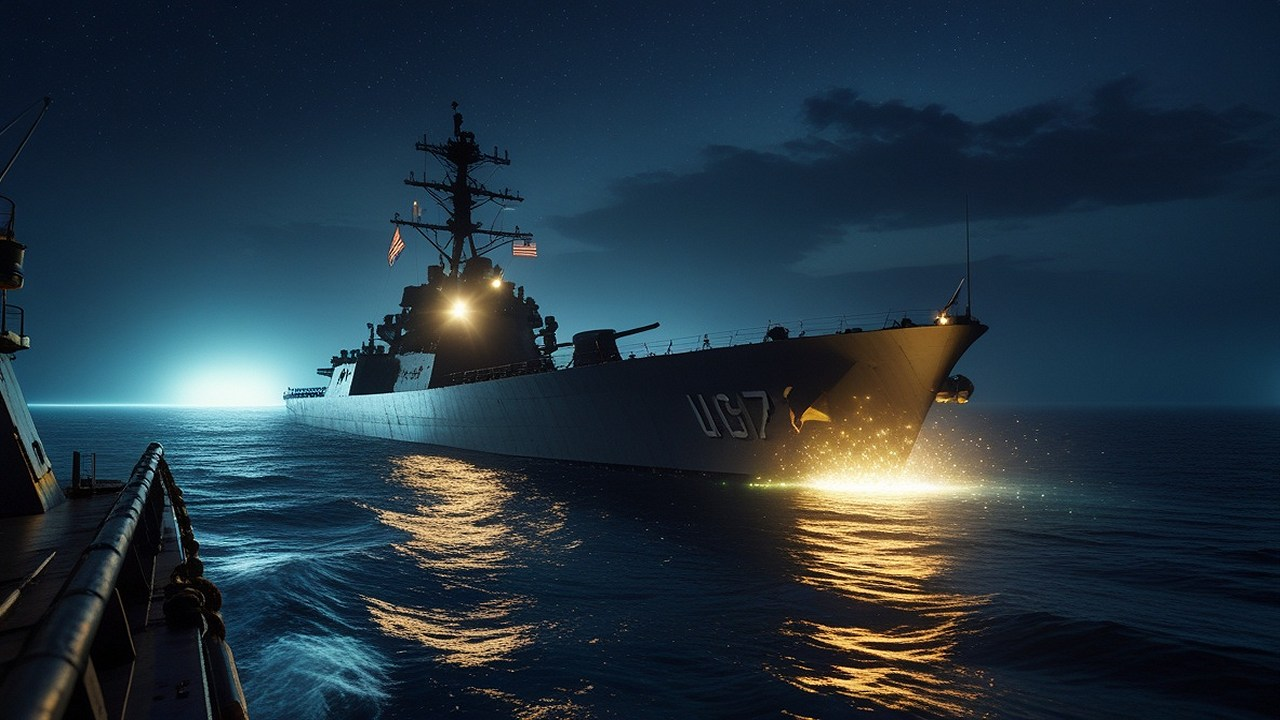
In 1977, amid the steady rhythm of routine naval operations off the coast of Southern California, Lieutenant Commander George F. Wheeler of the United States Navy later disclosed encounters that quietly challenged conventional assumptions about what moved beneath American coastal waters. Operating in the Catalina Channel, a stretch of ocean separating the California mainland from Santa Catalina Island, Wheeler and his crews reportedly encountered unknown submerged objects during standard patrol activities. These were not singular, fleeting incidents but recurring anomalies that appeared on sensors, behaved in unexpected ways, and occasionally manifested visually at the surface. According to Wheeler’s later testimony, some of these objects surfaced briefly, emitted light, and then accelerated away at speeds that defied known naval or aerospace capabilities. Despite the seriousness of the observations, official reports reportedly categorized the incidents as “anomalies” or “submarine errors,” effectively closing the matter without deeper explanation.
This is the story of the 1977 Catalina Channel encounters — a quiet but significant chapter in the history of unexplained underwater phenomena. Welcome to the channel. Today we examine this account from a U.S. Navy Lieutenant Commander in full detail, staying faithful to the historical record and highlighting its place within the broader mystery of USOs and UAP.
The Catalina Channel itself provides an important setting for understanding the gravity of these encounters. It is a well-traveled and strategically monitored area, used for naval exercises, commercial shipping, fishing, and recreational boating. The waters are deep, with steep underwater drop-offs and complex seabed terrain that create challenging acoustic conditions. For decades, the region has hosted extensive naval activity, including anti-submarine warfare training and patrols designed to maintain coastal security. As a result, naval personnel operating in the channel are highly familiar with sonar behavior, false contacts, and the quirks of underwater acoustics. This familiarity lends context to Wheeler’s assertions, as it suggests that the anomalies he described stood out precisely because they did not conform to expected patterns.
According to Wheeler’s disclosures, the encounters occurred during routine patrols rather than heightened alert conditions. Sonar operators detected contacts that exhibited unusual movement, rapid acceleration, and abrupt changes in direction. In some cases, the objects reportedly moved from depth toward the surface, briefly revealing themselves visually as luminous forms before departing at extreme speed. Wheeler emphasized that these were not typical submarine signatures. Known submarines of the era, whether American or foreign, were constrained by hydrodynamic limits, noise profiles, and operational doctrines that emphasized stealth over dramatic maneuvering. The reported behavior of these objects, particularly their acceleration and apparent disregard for such constraints, placed them outside the realm of standard naval expectations.
One of the more striking aspects of Wheeler’s account was the description of light. When objects surfaced or neared the surface, they reportedly emitted visible illumination, sometimes described as glowing or radiant. This light was not associated with navigation lamps, signal flares, or known maritime equipment. Its presence suggested either a byproduct of propulsion or a deliberate emission, though Wheeler did not speculate publicly on its purpose. The combination of underwater detection, surface manifestation, and rapid departure formed a pattern that repeated often enough to be noticed, discussed internally, and recorded, even if only briefly, in official logs.
The official response to these encounters, as described by Wheeler, followed a familiar pattern within military institutions. Reports were written, reviewed, and then categorized in a manner that minimized their significance. Labels such as “anomalous contact” or “sensor error” served as administrative endpoints, allowing operations to continue without escalation. From an institutional perspective, this approach maintained order and avoided speculation. From Wheeler’s later viewpoint, however, it represented a failure to grapple with data that did not fit established frameworks. He suggested that the language used in reports functioned less as an explanation and more as a mechanism for containment, ensuring that unexplained events did not ripple outward into broader concern or inquiry.
The effect of such encounters on naval personnel was complex. For sonar operators and officers trained to trust their instruments and procedures, repeated unexplained contacts could be unsettling. On one hand, they were expected to maintain professionalism and adhere to official interpretations. On the other, they were witnessing behavior that contradicted their training and experience. This tension between observation and explanation created a cognitive dissonance that many reportedly resolved through compartmentalization. They did their jobs, followed protocol, and accepted the official language, even if privately unconvinced. Over time, this dynamic fostered a quiet culture of knowing silence, where extraordinary observations were acknowledged informally but rarely pursued formally.
At a societal level, the immediate impact of Wheeler’s encounters was minimal, largely because they were not publicly disclosed at the time. The late 1970s were marked by geopolitical tension, technological competition, and public skepticism toward institutions. Naval operations, particularly those involving coastal security, were shrouded in classification. As a result, incidents like those in the Catalina Channel remained invisible to the broader public. Yet this invisibility did not equate to irrelevance. Instead, it meant that the encounters became part of a hidden historical layer, influencing internal perceptions while leaving no trace in public discourse.
When Wheeler later spoke about these events, his testimony contributed to a gradual reexamination of past naval encounters with unexplained phenomena. His rank and experience lent credibility to his account, distinguishing it from casual or civilian reports. As a Lieutenant Commander, Wheeler occupied a position that balanced operational responsibility with technical understanding. He was not a junior sailor prone to misinterpretation, nor was he removed from day-to-day operations. This middle-ground perspective allowed him to appreciate both the limitations of equipment and the significance of consistent anomalies. His willingness to speak later in life suggested a desire to ensure that these experiences were not forgotten or dismissed outright.
The impact of Wheeler’s disclosures today lies largely in how they align with other, more recent acknowledgments of unexplained phenomena encountered by military personnel. In recent years, there has been a noticeable shift toward greater openness regarding unidentified objects observed in air and sea. While official statements remain cautious, there is now an acknowledgment that not all anomalies can be readily explained. In this context, Wheeler’s 1977 encounters appear less isolated and more like early instances of a pattern that has persisted across decades. His account provides historical continuity, demonstrating that such phenomena were being observed long before contemporary discussions brought them into the public eye.
The Catalina Channel encounters also highlight the ocean as a critical and often underappreciated domain of mystery. Much public attention has historically focused on the sky, yet the sea covers the majority of the planet and remains largely unexplored. Objects capable of operating underwater and transitioning to the surface blur the distinction between aerial and maritime phenomena. Wheeler’s descriptions of submerged objects that surfaced, emitted light, and departed at extreme speed underscore this blurred boundary. They suggest that any comprehensive understanding of unexplained phenomena must account for both environments simultaneously.
Notable individuals connected to the case beyond Wheeler himself remain largely unnamed, reflecting the classified and collective nature of naval operations. Sonar operators, watch officers, and crew members all played roles in detecting and tracking the objects, yet their identities were subsumed within the institution. This anonymity has shaped the narrative, emphasizing the phenomenon over personal drama. It also mirrors a broader pattern in military encounters with unexplained phenomena, where experiences are shared among crews but rarely attributed to individuals in public records.
The classification of the incidents as “submarine errors” invites further reflection on how language shapes perception. By framing the encounters as technical issues rather than unknowns, reports effectively neutralized their disruptive potential. This approach may have been practical, but it also limited opportunities for interdisciplinary analysis or long-term study. In hindsight, such labeling appears less like an explanation and more like a placeholder, acknowledging the anomaly without addressing its cause. Wheeler’s later testimony challenges readers to reconsider whether such placeholders should be revisited with fresh perspectives and improved analytical tools.
For the public, the gradual emergence of stories like Wheeler’s contributes to a broader reevaluation of what has been known, suspected, or quietly recorded over the years. The realization that unexplained underwater objects were encountered during routine patrols near the U.S. coastline challenges assumptions about control and awareness. It suggests that even heavily monitored regions can host phenomena that evade detection or defy classification. This realization has implications not only for discussions of unexplained phenomena but also for how societies think about security, knowledge, and uncertainty.
The psychological impact of such encounters extends beyond those directly involved. When credible figures describe experiences that fall outside accepted explanations, they invite a reassessment of boundaries between the known and unknown. Wheeler’s account does not demand a specific conclusion, but it does encourage openness to the possibility that existing frameworks are incomplete. This openness, in turn, fosters a more nuanced public conversation, one that balances skepticism with curiosity rather than default dismissal.
In reflecting on the 1977 Catalina Channel encounters, it becomes clear that their significance lies less in definitive answers and more in the questions they raise. What were these submerged objects, and how did they achieve such performance? Why were they encountered repeatedly, yet explained away administratively? And how many similar incidents remain buried in archives, labeled as errors rather than investigated as opportunities for discovery? Wheeler’s testimony does not resolve these questions, but it ensures they remain part of the historical record.
The 1977 Catalina Channel encounters represent a quiet but powerful reminder that the mystery of unexplained phenomena extends beneath the waves as well as above them. Lieutenant Commander George F. Wheeler’s account, drawn from routine naval patrols in a heavily monitored area, highlights behavior that defied known capabilities of the era and continues to challenge our understanding today. Whether viewed through the lens of advanced technology, unknown natural processes, or something beyond current frameworks, these encounters underscore the importance of keeping an open and rigorous mind when confronted with data that does not fit existing categories.
For those who served alongside Wheeler and for the broader community of researchers who study these phenomena, the Catalina Channel incidents stand as part of a longer lineage of observations that refuse to be neatly explained away. They invite continued inquiry, better documentation, and a willingness to revisit past cases with new tools and perspectives. In an age where the boundaries between air, sea, and space are increasingly blurred, stories like this one remind us that the ocean may hold as many secrets as the sky above it.
In 1977, amid the steady rhythm of routine naval operations off the coast of Southern California, Lieutenant Commander George F. Wheeler of the United States Navy later disclosed encounters that quietly challenged conventional assumptions about what moved beneath American coastal waters. Operating in the Catalina Channel, a stretch of ocean separating the California mainland from Santa Catalina Island, Wheeler and his crews reportedly encountered unknown submerged objects during standard patrol activities. These were not singular, fleeting incidents but recurring anomalies that appeared on sensors, behaved in unexpected ways, and occasionally manifested visually at the surface. According to Wheeler’s later testimony, some of these objects surfaced briefly, emitted light, and then accelerated away at speeds that defied known naval or aerospace capabilities. Despite the seriousness of the observations, official reports reportedly categorized the incidents as “anomalies” or “submarine errors,” effectively closing the matter without deeper explanation.
This is the story of the 1977 Catalina Channel encounters — a quiet but significant chapter in the history of unexplained underwater phenomena. Welcome to the channel. Today we examine this account from a U.S. Navy Lieutenant Commander in full detail, staying faithful to the historical record and highlighting its place within the broader mystery of USOs and UAP.
The Catalina Channel itself provides an important setting for understanding the gravity of these encounters. It is a well-traveled and strategically monitored area, used for naval exercises, commercial shipping, fishing, and recreational boating. The waters are deep, with steep underwater drop-offs and complex seabed terrain that create challenging acoustic conditions. For decades, the region has hosted extensive naval activity, including anti-submarine warfare training and patrols designed to maintain coastal security. As a result, naval personnel operating in the channel are highly familiar with sonar behavior, false contacts, and the quirks of underwater acoustics. This familiarity lends context to Wheeler’s assertions, as it suggests that the anomalies he described stood out precisely because they did not conform to expected patterns.
According to Wheeler’s disclosures, the encounters occurred during routine patrols rather than heightened alert conditions. Sonar operators detected contacts that exhibited unusual movement, rapid acceleration, and abrupt changes in direction. In some cases, the objects reportedly moved from depth toward the surface, briefly revealing themselves visually as luminous forms before departing at extreme speed. Wheeler emphasized that these were not typical submarine signatures. Known submarines of the era, whether American or foreign, were constrained by hydrodynamic limits, noise profiles, and operational doctrines that emphasized stealth over dramatic maneuvering. The reported behavior of these objects, particularly their acceleration and apparent disregard for such constraints, placed them outside the realm of standard naval expectations.
One of the more striking aspects of Wheeler’s account was the description of light. When objects surfaced or neared the surface, they reportedly emitted visible illumination, sometimes described as glowing or radiant. This light was not associated with navigation lamps, signal flares, or known maritime equipment. Its presence suggested either a byproduct of propulsion or a deliberate emission, though Wheeler did not speculate publicly on its purpose. The combination of underwater detection, surface manifestation, and rapid departure formed a pattern that repeated often enough to be noticed, discussed internally, and recorded, even if only briefly, in official logs.
The official response to these encounters, as described by Wheeler, followed a familiar pattern within military institutions. Reports were written, reviewed, and then categorized in a manner that minimized their significance. Labels such as “anomalous contact” or “sensor error” served as administrative endpoints, allowing operations to continue without escalation. From an institutional perspective, this approach maintained order and avoided speculation. From Wheeler’s later viewpoint, however, it represented a failure to grapple with data that did not fit established frameworks. He suggested that the language used in reports functioned less as an explanation and more as a mechanism for containment, ensuring that unexplained events did not ripple outward into broader concern or inquiry.
The effect of such encounters on naval personnel was complex. For sonar operators and officers trained to trust their instruments and procedures, repeated unexplained contacts could be unsettling. On one hand, they were expected to maintain professionalism and adhere to official interpretations. On the other, they were witnessing behavior that contradicted their training and experience. This tension between observation and explanation created a cognitive dissonance that many reportedly resolved through compartmentalization. They did their jobs, followed protocol, and accepted the official language, even if privately unconvinced. Over time, this dynamic fostered a quiet culture of knowing silence, where extraordinary observations were acknowledged informally but rarely pursued formally.
At a societal level, the immediate impact of Wheeler’s encounters was minimal, largely because they were not publicly disclosed at the time. The late 1970s were marked by geopolitical tension, technological competition, and public skepticism toward institutions. Naval operations, particularly those involving coastal security, were shrouded in classification. As a result, incidents like those in the Catalina Channel remained invisible to the broader public. Yet this invisibility did not equate to irrelevance. Instead, it meant that the encounters became part of a hidden historical layer, influencing internal perceptions while leaving no trace in public discourse.
When Wheeler later spoke about these events, his testimony contributed to a gradual reexamination of past naval encounters with unexplained phenomena. His rank and experience lent credibility to his account, distinguishing it from casual or civilian reports. As a Lieutenant Commander, Wheeler occupied a position that balanced operational responsibility with technical understanding. He was not a junior sailor prone to misinterpretation, nor was he removed from day-to-day operations. This middle-ground perspective allowed him to appreciate both the limitations of equipment and the significance of consistent anomalies. His willingness to speak later in life suggested a desire to ensure that these experiences were not forgotten or dismissed outright.
The impact of Wheeler’s disclosures today lies largely in how they align with other, more recent acknowledgments of unexplained phenomena encountered by military personnel. In recent years, there has been a noticeable shift toward greater openness regarding unidentified objects observed in air and sea. While official statements remain cautious, there is now an acknowledgment that not all anomalies can be readily explained. In this context, Wheeler’s 1977 encounters appear less isolated and more like early instances of a pattern that has persisted across decades. His account provides historical continuity, demonstrating that such phenomena were being observed long before contemporary discussions brought them into the public eye.
The Catalina Channel encounters also highlight the ocean as a critical and often underappreciated domain of mystery. Much public attention has historically focused on the sky, yet the sea covers the majority of the planet and remains largely unexplored. Objects capable of operating underwater and transitioning to the surface blur the distinction between aerial and maritime phenomena. Wheeler’s descriptions of submerged objects that surfaced, emitted light, and departed at extreme speed underscore this blurred boundary. They suggest that any comprehensive understanding of unexplained phenomena must account for both environments simultaneously.
Notable individuals connected to the case beyond Wheeler himself remain largely unnamed, reflecting the classified and collective nature of naval operations. Sonar operators, watch officers, and crew members all played roles in detecting and tracking the objects, yet their identities were subsumed within the institution. This anonymity has shaped the narrative, emphasizing the phenomenon over personal drama. It also mirrors a broader pattern in military encounters with unexplained phenomena, where experiences are shared among crews but rarely attributed to individuals in public records.
The classification of the incidents as “submarine errors” invites further reflection on how language shapes perception. By framing the encounters as technical issues rather than unknowns, reports effectively neutralized their disruptive potential. This approach may have been practical, but it also limited opportunities for interdisciplinary analysis or long-term study. In hindsight, such labeling appears less like an explanation and more like a placeholder, acknowledging the anomaly without addressing its cause. Wheeler’s later testimony challenges readers to reconsider whether such placeholders should be revisited with fresh perspectives and improved analytical tools.
For the public, the gradual emergence of stories like Wheeler’s contributes to a broader reevaluation of what has been known, suspected, or quietly recorded over the years. The realization that unexplained underwater objects were encountered during routine patrols near the U.S. coastline challenges assumptions about control and awareness. It suggests that even heavily monitored regions can host phenomena that evade detection or defy classification. This realization has implications not only for discussions of unexplained phenomena but also for how societies think about security, knowledge, and uncertainty.
The psychological impact of such encounters extends beyond those directly involved. When credible figures describe experiences that fall outside accepted explanations, they invite a reassessment of boundaries between the known and unknown. Wheeler’s account does not demand a specific conclusion, but it does encourage openness to the possibility that existing frameworks are incomplete. This openness, in turn, fosters a more nuanced public conversation, one that balances skepticism with curiosity rather than default dismissal.
In reflecting on the 1977 Catalina Channel encounters, it becomes clear that their significance lies less in definitive answers and more in the questions they raise. What were these submerged objects, and how did they achieve such performance? Why were they encountered repeatedly, yet explained away administratively? And how many similar incidents remain buried in archives, labeled as errors rather than investigated as opportunities for discovery? Wheeler’s testimony does not resolve these questions, but it ensures they remain part of the historical record.
The 1977 Catalina Channel encounters represent a quiet but powerful reminder that the mystery of unexplained phenomena extends beneath the waves as well as above them. Lieutenant Commander George F. Wheeler’s account, drawn from routine naval patrols in a heavily monitored area, highlights behavior that defied known capabilities of the era and continues to challenge our understanding today. Whether viewed through the lens of advanced technology, unknown natural processes, or something beyond current frameworks, these encounters underscore the importance of keeping an open and rigorous mind when confronted with data that does not fit existing categories.
For those who served alongside Wheeler and for the broader community of researchers who study these phenomena, the Catalina Channel incidents stand as part of a longer lineage of observations that refuse to be neatly explained away. They invite continued inquiry, better documentation, and a willingness to revisit past cases with new tools and perspectives. In an age where the boundaries between air, sea, and space are increasingly blurred, stories like this one remind us that the ocean may hold as many secrets as the sky above it.