


Blog Categories
- African Incidents
- Atlantis Incidents
- Australian Incidents
- Belgian Incidents
- Bermuda Triangle Incidents
- Brazilian Incidents
- Canadian Incidents
- Chinese Incidents
- European Incidents
- France Incidents
- Ghosts
- Giants
- Italy Incidents
- Japanese Incidents
- Middle East Incidents
- Portugal Incidents
- Project Serpo
- Puerto Rico Incidents
- Russian Incidents
- Sasquatch
- Scandinavia Incidents
- Spanish Incidents
- UFOs
- United Kingdom Incidents
- United States Incidents
1977: Shag Harbour Incident
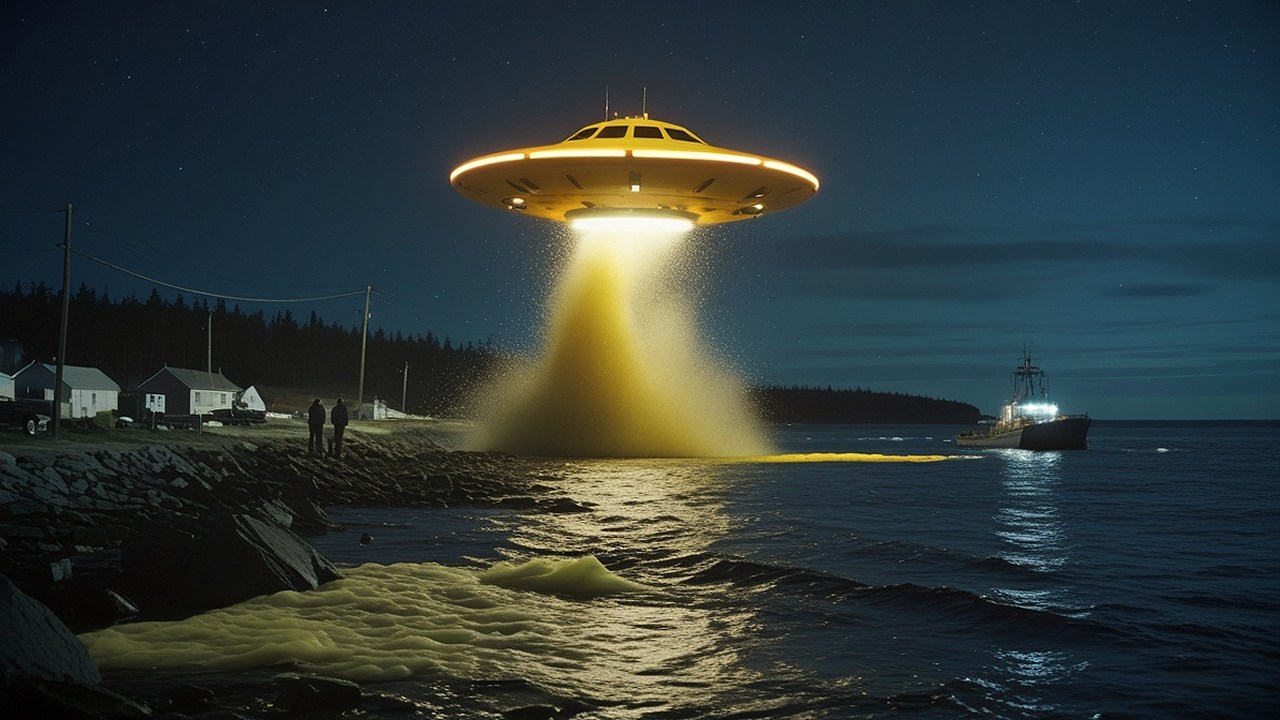
A fishing village on the southern tip of Nova Scotia. Rough water. Cold night. People who know what a plane crash looks like, and what a boat in trouble looks like.
Shortly before 11:30 p.m., a bright object comes in low. Yellow-orange. About the size of a bus. Flying steady, not wild.
It tilts down—witnesses put the angle between forty-five and sixty degrees—and it hits the Atlantic roughly five hundred meters offshore.
Muted splash. No fireball. No wreckage raining down. No burning fuel on the waves.
What is left on the surface is a wide patch of yellow foam.
Then a light moves under the water.
That is Shag Harbour. Not a rumor passed through a tavern. A night that pulled in the RCMP, the Canadian Coast Guard, and the Navy. A night that ended with a conclusion official enough to still matter: whatever went in was not a conventional aircraft.
Shag Harbour was used to emergencies at sea. It was not used to watching a glowing structure come out of the sky, strike the ocean, and remain under observation while it sank.
This case does not live on a single frightened voice. It unfolded in real time. Civilians, police, and military authorities were in the same story before midnight was over. Search crews went to work as if people might be dying in the water. They found foam. They did not find a plane.
That gap is the whole file.
Residents along the coast saw the object first: low, bright, yellow-orange, bus-sized, moving with a steady flight path. Several people did the reasonable thing. They assumed an aircraft in distress. Emergency landing. Mechanical failure. The kind of night a coastal village has trained for.
The descent did not look like a random fall. The object kept its light as it came down on that steep tilt and met the water.
The splash was muted. The foam was large and yellow. There was no explosion, no debris field, and no fire. Those three absences are why fishermen and officers could not file it as a normal ditching and go home.
Locals did what coastal people do. They called.
The Royal Canadian Mounted Police treated the reports as real and sent officers. Constable Ron Pond arrived quickly and saw the glowing foam himself. He later reported a light moving beneath the surface, traveling horizontally at a steady pace.
That sentence is the hinge of the case.
A crashed airliner sinks. Wreckage spreads. Fuel slicks. This object, if Pond and the fishermen are right, did not only sink. It moved. Deliberately. Underwater.
Multiple fishermen described unusual surface residue and lights under the waves before the glow faded into dark water.
The Canadian Coast Guard sent the cutter Cape Augy. Crew reached the scene after midnight and confirmed a wide patch of yellow foam. No wreckage. No oil slick that matched an aircraft fuel spill. No survivors.
Even so, the incident was classified as a possible aircraft crash. Search and rescue protocols started. That classification is one of the strangest parts of the paper trail, because aviation checks found no missing aircraft in the region—civilian or military.
You do not often get that combination: emergency response as if a plane went down, and a roster that says no plane is missing.
The search did not stay civilian. The Canadian military came in. HMCS Granby, equipped for underwater work, was deployed. Divers went into cold, dark water over an uneven seabed cut with deep trenches.
They reported no wreckage. They noted an unusual absence of debris.
According to later accounts in this record, sonar suggested something had moved along the ocean floor and then left the harbour toward deeper water.
Read that slowly. Not “we never found the Cessna.” Something entered, was hunted, appeared to travel on the bottom, and departed the search box.
Shag Harbour is not a two-second streak. It is hours of coordinated response. Law enforcement. Coast Guard. Navy. Civilian witnesses. Internal communications among Canadian agencies, later public, show confusion and a consistent admission that something unusual had happened.
The sharpest official line is also the simplest. Whatever entered the water was not an airplane.
Cold War logic was available. Foreign submarine. Experimental craft. Nobody produced evidence that matched a known hostile or even a known experimental hull. The range of possibilities widened in silence. Formal reports did not have to print the word “unknown craft” for the absence of a plane to do that work.
Shag Harbour did not ask for cameras. Reporters came anyway. Speculation grew. Vulnerability and wonder sat together on the same shore.
Fishermen who read lights and weather for a living said the night did not match maritime or aviation patterns they knew. That shared certainty is not proof of origin. It is proof that the people best qualified to name a ditching refused the name.
Constable Pond stayed consistent for decades: he saw what he saw, and the response that night was serious. Coast Guard voices and fishermen sit beside him as the spine of later reconstructions. Researchers and historians went back to documents and interviews so the case would not dissolve into a ghost story with extra foam.
Before this night, public attention lived mostly in the air. Lights. Discs. Radar tracks over land.
Shag Harbour forced the other half of the problem into view. An object can leave the sky and keep operating in the ocean. That is the unidentified submerged object problem, decades before the phrase became fashionable.
Modern talk about unexplained sonar contacts and underwater tracking keeps walking back to nights like this—nights observed before the sensors we wish we had.
WHAT THE CASE TEACHES WITHOUT SOLVING IT
Authorities here did not have to mock the village to stay respectable. They documented. They searched. They did not produce a wreck. They left the event unresolved.
That combination is why Shag Harbour became a reference point. Multiple credible witnesses. Immediate official action. No missing flight. No debris that explains a crash. A light under the water. A possible track toward deep water.
You can reject every exotic theory and still have to explain those facts.
You can accept that the ocean hides military projects and still have to explain why no aircraft was missing and why the foam and the underwater light do not read like a standard ditching.
The modest official residue—an unidentified object entered the ocean, was briefly in the water column, and was lost—is enough to keep the file open.
Ordinary people on an ordinary coastal night watched a glowing, bus-sized object come in low, tilt, and hit the Atlantic without burning.
Police saw the foam. An officer described a light traveling under the surface. A cutter confirmed the residue and found no wreck. A navy ship put divers on an empty bottom. Sonar, in later tellings of the same operation, pointed toward movement and an exit into deeper water.
No conventional aircraft was found because, as far as the aviation ledger was concerned, no conventional aircraft was there.
That is not a campfire ending. That is why Shag Harbour still sits at the center of maritime UFO and USO research. Air and water were the same event. The village told the truth it had. The search found the absence it could not close.
If you have been told these stories only happen in deserts and on grainy cockpit video, remember a fishing harbour in Nova Scotia, yellow foam on black water, and a light that did not stay on the surface.
Search was cancelled. The question was not.
A fishing village on the southern tip of Nova Scotia. Rough water. Cold night. People who know what a plane crash looks like, and what a boat in trouble looks like.
Shortly before 11:30 p.m., a bright object comes in low. Yellow-orange. About the size of a bus. Flying steady, not wild.
It tilts down—witnesses put the angle between forty-five and sixty degrees—and it hits the Atlantic roughly five hundred meters offshore.
Muted splash. No fireball. No wreckage raining down. No burning fuel on the waves.
What is left on the surface is a wide patch of yellow foam.
Then a light moves under the water.
That is Shag Harbour. Not a rumor passed through a tavern. A night that pulled in the RCMP, the Canadian Coast Guard, and the Navy. A night that ended with a conclusion official enough to still matter: whatever went in was not a conventional aircraft.
Shag Harbour was used to emergencies at sea. It was not used to watching a glowing structure come out of the sky, strike the ocean, and remain under observation while it sank.
This case does not live on a single frightened voice. It unfolded in real time. Civilians, police, and military authorities were in the same story before midnight was over. Search crews went to work as if people might be dying in the water. They found foam. They did not find a plane.
That gap is the whole file.
Residents along the coast saw the object first: low, bright, yellow-orange, bus-sized, moving with a steady flight path. Several people did the reasonable thing. They assumed an aircraft in distress. Emergency landing. Mechanical failure. The kind of night a coastal village has trained for.
The descent did not look like a random fall. The object kept its light as it came down on that steep tilt and met the water.
The splash was muted. The foam was large and yellow. There was no explosion, no debris field, and no fire. Those three absences are why fishermen and officers could not file it as a normal ditching and go home.
Locals did what coastal people do. They called.
The Royal Canadian Mounted Police treated the reports as real and sent officers. Constable Ron Pond arrived quickly and saw the glowing foam himself. He later reported a light moving beneath the surface, traveling horizontally at a steady pace.
That sentence is the hinge of the case.
A crashed airliner sinks. Wreckage spreads. Fuel slicks. This object, if Pond and the fishermen are right, did not only sink. It moved. Deliberately. Underwater.
Multiple fishermen described unusual surface residue and lights under the waves before the glow faded into dark water.
The Canadian Coast Guard sent the cutter Cape Augy. Crew reached the scene after midnight and confirmed a wide patch of yellow foam. No wreckage. No oil slick that matched an aircraft fuel spill. No survivors.
Even so, the incident was classified as a possible aircraft crash. Search and rescue protocols started. That classification is one of the strangest parts of the paper trail, because aviation checks found no missing aircraft in the region—civilian or military.
You do not often get that combination: emergency response as if a plane went down, and a roster that says no plane is missing.
The search did not stay civilian. The Canadian military came in. HMCS Granby, equipped for underwater work, was deployed. Divers went into cold, dark water over an uneven seabed cut with deep trenches.
They reported no wreckage. They noted an unusual absence of debris.
According to later accounts in this record, sonar suggested something had moved along the ocean floor and then left the harbour toward deeper water.
Read that slowly. Not “we never found the Cessna.” Something entered, was hunted, appeared to travel on the bottom, and departed the search box.
Shag Harbour is not a two-second streak. It is hours of coordinated response. Law enforcement. Coast Guard. Navy. Civilian witnesses. Internal communications among Canadian agencies, later public, show confusion and a consistent admission that something unusual had happened.
The sharpest official line is also the simplest. Whatever entered the water was not an airplane.
Cold War logic was available. Foreign submarine. Experimental craft. Nobody produced evidence that matched a known hostile or even a known experimental hull. The range of possibilities widened in silence. Formal reports did not have to print the word “unknown craft” for the absence of a plane to do that work.
Shag Harbour did not ask for cameras. Reporters came anyway. Speculation grew. Vulnerability and wonder sat together on the same shore.
Fishermen who read lights and weather for a living said the night did not match maritime or aviation patterns they knew. That shared certainty is not proof of origin. It is proof that the people best qualified to name a ditching refused the name.
Constable Pond stayed consistent for decades: he saw what he saw, and the response that night was serious. Coast Guard voices and fishermen sit beside him as the spine of later reconstructions. Researchers and historians went back to documents and interviews so the case would not dissolve into a ghost story with extra foam.
Before this night, public attention lived mostly in the air. Lights. Discs. Radar tracks over land.
Shag Harbour forced the other half of the problem into view. An object can leave the sky and keep operating in the ocean. That is the unidentified submerged object problem, decades before the phrase became fashionable.
Modern talk about unexplained sonar contacts and underwater tracking keeps walking back to nights like this—nights observed before the sensors we wish we had.
WHAT THE CASE TEACHES WITHOUT SOLVING IT
Authorities here did not have to mock the village to stay respectable. They documented. They searched. They did not produce a wreck. They left the event unresolved.
That combination is why Shag Harbour became a reference point. Multiple credible witnesses. Immediate official action. No missing flight. No debris that explains a crash. A light under the water. A possible track toward deep water.
You can reject every exotic theory and still have to explain those facts.
You can accept that the ocean hides military projects and still have to explain why no aircraft was missing and why the foam and the underwater light do not read like a standard ditching.
The modest official residue—an unidentified object entered the ocean, was briefly in the water column, and was lost—is enough to keep the file open.
Ordinary people on an ordinary coastal night watched a glowing, bus-sized object come in low, tilt, and hit the Atlantic without burning.
Police saw the foam. An officer described a light traveling under the surface. A cutter confirmed the residue and found no wreck. A navy ship put divers on an empty bottom. Sonar, in later tellings of the same operation, pointed toward movement and an exit into deeper water.
No conventional aircraft was found because, as far as the aviation ledger was concerned, no conventional aircraft was there.
That is not a campfire ending. That is why Shag Harbour still sits at the center of maritime UFO and USO research. Air and water were the same event. The village told the truth it had. The search found the absence it could not close.
If you have been told these stories only happen in deserts and on grainy cockpit video, remember a fishing harbour in Nova Scotia, yellow foam on black water, and a light that did not stay on the surface.
Search was cancelled. The question was not.