


Blog Categories
- African Incidents
- Atlantis Incidents
- Australian Incidents
- Belgian Incidents
- Bermuda Triangle Incidents
- Brazilian Incidents
- Canadian Incidents
- Chinese Incidents
- European Incidents
- France Incidents
- Ghosts
- Giants
- Italy Incidents
- Japanese Incidents
- Middle East Incidents
- Portugal Incidents
- Project Serpo
- Puerto Rico Incidents
- Russian Incidents
- Sasquatch
- Scandinavia Incidents
- Spanish Incidents
- UFOs
- United Kingdom Incidents
- United States Incidents
1978: New Zealand Underwater Luminous Mass
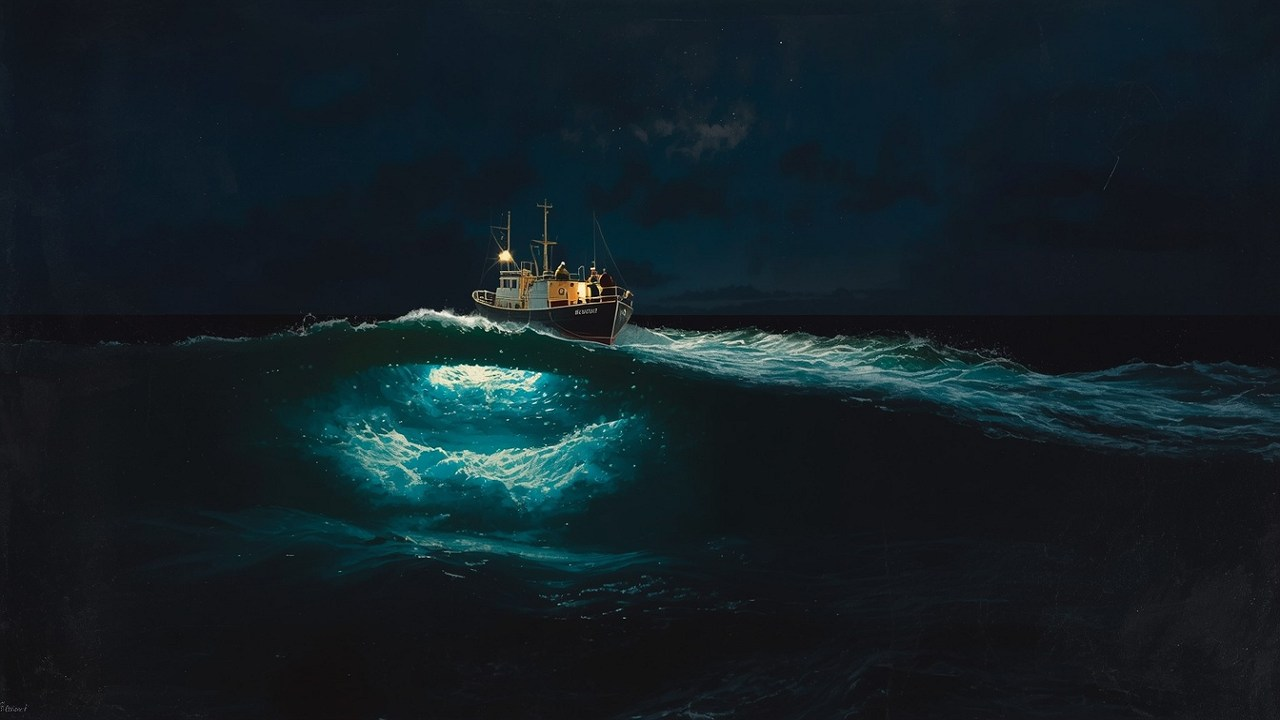
In late 1978, New Zealand found itself unexpectedly drawn into a global conversation about unidentified phenomena, not through rumor or isolated testimony, but through a sequence of events that unfolded along the Kaikoura Coast and quickly captured international attention. The Kaikoura sightings are most often remembered for the dramatic aerial lights recorded on film during a chartered cargo flight, yet beneath that well-known chapter lies a quieter, equally compelling aspect of the story. Fishermen operating off the Kaikoura coastline reported encounters not only in the sky, but in the water itself. These reports described a luminous object moving beneath the surface of the ocean, pacing their vessel with apparent intelligence, before briefly rising above the water and vanishing at extraordinary speed. Taken together, these accounts added a crucial maritime dimension to the Kaikoura events, expanding their significance beyond aerial observation and placing them firmly within the broader mystery of unexplained underwater activity.
The context of the Kaikoura incident is essential to understanding its impact. During the winter of 1978, New Zealand experienced a wave of reports involving strange lights in the sky, many of them concentrated around the South Island. These sightings were initially dismissed by some as misidentified aircraft or natural phenomena, yet their persistence and consistency drew increasing attention. Matters escalated when a television news crew arranged to accompany a cargo flight to document the lights. During that flight, both the crew and radar operators reportedly observed anomalous targets, some of which were captured on film. This combination of visual evidence, radar data, and eyewitness testimony elevated the Kaikoura events from local curiosity to international headline.
Amid this heightened atmosphere, fishermen working the Kaikoura Coast began sharing their own experiences. Unlike the dramatic aerial footage, these accounts emerged from individuals accustomed to navigating dark waters, reading ocean conditions, and distinguishing between natural bioluminescence, marine life, and human activity. Several fishermen reported seeing a bright light beneath the surface of the water, moving parallel to their boat at a steady pace. The object was described as distinctly luminous, not diffused like plankton or reflected moonlight, and its motion appeared controlled rather than drifting with currents. These details immediately set the phenomenon apart from known maritime occurrences.
According to the fishermen, the underwater light maintained its position relative to their vessel, suggesting an awareness of the boat’s movement. This pacing behavior was particularly unsettling, as it implied intent rather than coincidence. The object reportedly followed the boat for several moments before rising toward the surface. Witnesses described it emerging partially or fully from the water, hovering just above the waves for a few seconds. During this brief interval, the light was said to intensify, allowing observers to perceive a more defined shape, though descriptions varied and remained cautious. The object then submerged again and disappeared at remarkable speed, leaving no wake, splash, or disturbance consistent with conventional marine craft.
These reports had an immediate psychological effect on those who experienced them. Fishermen, who often worked long hours in isolation and darkness, were deeply shaken by the encounter. Their accounts were not framed as sensational stories but as earnest attempts to describe something they could not explain. For many, the experience challenged long-held assumptions about the ocean as a known and navigable environment. The sea, already a place of danger and uncertainty, now seemed to harbor possibilities beyond established understanding.
As word of the underwater encounters spread, they intersected with the broader Kaikoura narrative in ways that reshaped public perception. The aerial sightings had already raised questions about the nature of the lights observed on radar and film. The fishermen’s reports introduced a new dimension, suggesting continuity between aerial and underwater phenomena. The idea that a luminous object could transition seamlessly between water and air resonated with other historical accounts worldwide, even if such connections were not explicitly drawn at the time.
The reaction of authorities and investigators to the underwater reports was cautious. Official attention remained largely focused on the aerial sightings, particularly those documented during the cargo flight. Nevertheless, the fishermen’s testimonies were recorded and acknowledged as part of the wider pattern of unusual activity. Importantly, these accounts were not dismissed outright as fabrications or hallucinations. Instead, they were treated as unexplained observations, a distinction that mattered greatly to the witnesses and to the public following the story.
The impact of the Kaikoura underwater sightings on the wider population was subtle but lasting. For New Zealanders, the events unfolded in a country often perceived as geographically isolated and removed from global tensions. The realization that unexplained phenomena were occurring in local skies and waters brought a sense of immediacy to questions that had previously seemed distant or abstract. Conversations about the sightings took place in homes, workplaces, and media outlets, fostering a shared curiosity that crossed generational and cultural lines.
Internationally, the Kaikoura events reinforced the notion that unexplained phenomena were not confined to any one region or political context. The fishermen’s reports, though less publicized than the aerial footage, contributed to a growing body of global testimony involving unknown objects interacting with both air and water. This broader pattern encouraged researchers and enthusiasts to reconsider the scope of such phenomena, moving beyond purely aerial explanations and acknowledging the role of the world’s oceans.
Over time, the Kaikoura underwater encounter has taken on renewed significance as discussions of unidentified submerged objects have gained traction. Advances in oceanographic research and naval technology have highlighted how little of the ocean remains directly observed. In this context, the fishermen’s descriptions from 1978 appear increasingly prescient. Their reports align with later accounts from other parts of the world involving luminous objects moving underwater at speeds and in manners inconsistent with known technology.
Notable individuals associated with the Kaikoura events include the fishermen themselves, whose names are less widely known but whose experiences form a critical part of the historical record. Their willingness to come forward, often at the risk of ridicule, underscored a quiet integrity that lent credibility to their accounts. The pilots, radar operators, and journalists involved in documenting the aerial sightings also played an indirect role, as their work created an environment in which unusual observations were taken seriously enough to be recorded rather than ignored.
The enduring impact of the Kaikoura underwater sightings lies not in definitive answers, but in the questions they continue to raise. They challenge conventional boundaries between air and sea, suggesting a level of mobility and control that defies simple categorization. For the public, these accounts contribute to a growing awareness that unexplained phenomena may operate across multiple environments, inviting a more integrated approach to investigation and understanding.
Today, the Kaikoura Coast remains a place of natural beauty and maritime activity, its waters frequented by fishermen and tourists alike. Yet beneath its surface, the memory of the 1978 encounter lingers. For those who study unexplained phenomena, the incident serves as a reminder that some of the most compelling evidence comes not from dramatic displays, but from quiet, consistent testimony offered by individuals with no agenda beyond telling the truth as they experienced it.