


Blog Categories
- African Incidents
- Atlantis Incidents
- Australian Incidents
- Belgian Incidents
- Bermuda Triangle Incidents
- Brazilian Incidents
- Canadian Incidents
- Chinese Incidents
- European Incidents
- France Incidents
- Ghosts
- Giants
- Italy Incidents
- Japanese Incidents
- Middle East Incidents
- Portugal Incidents
- Project Serpo
- Puerto Rico Incidents
- Russian Incidents
- Sasquatch
- Scandinavia Incidents
- Spanish Incidents
- UFOs
- United Kingdom Incidents
- United States Incidents
1980: The Atlanta Night Sky Incident
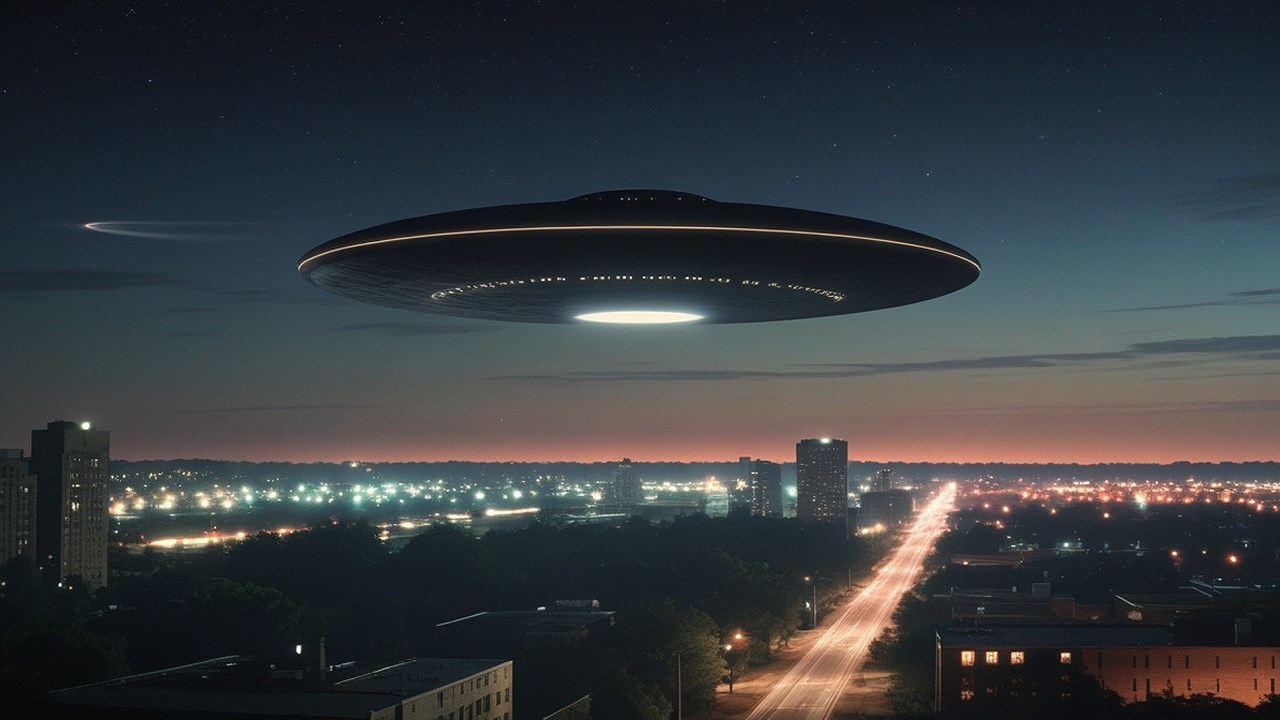
In the waning months of 1980, the city of Atlanta, Georgia, became the stage for a series of unexplained aerial sightings that stood out even amid the broader wave of UFO reports sweeping parts of the United States during that period. Unlike high-profile crash-retrieval stories or close encounters involving military personnel, the Atlanta Night Sky Incident was characterized by its scale, consistency across multiple independent witnesses, and the unusual nature of the object described. Several residents across different neighborhoods and suburbs of Atlanta reported observing a large, slow-moving object traversing the night sky. What made these accounts particularly compelling was the object’s apparent size, its complete lack of sound, and the way some witnesses struggled to classify it as a conventional aircraft, instead describing it more like a “floating structure.”
This is the story of the 1980 Atlanta Night Sky Incident — a mass civilian sighting of something vast, silent, and structurally impressive moving over a major American city. Welcome to the channel. Today we examine this event in full detail, staying faithful to the documented accounts.
The sightings occurred against the backdrop of a rapidly growing metropolitan area. By 1980, Atlanta was emerging as a major economic and transportation hub in the Southeast. Hartsfield International Airport (now Hartsfield-Jackson Atlanta International Airport) was already one of the busiest in the world, with constant commercial and private air traffic. Military installations in Georgia, including Robins Air Force Base to the south, contributed to a busy airspace. In such an environment, most unusual lights or objects could reasonably be attributed to aircraft, helicopters, advertising blimps, or astronomical phenomena. Yet the reports from that night suggested something that did not fit neatly into any of those categories.
Witnesses consistently noted the object’s large size. Many emphasized that it appeared significantly larger than a typical commercial airliner, even when viewed at what seemed to be a considerable altitude. Its movement was described as deliberate and unhurried — a slow, steady progression across the sky rather than the rapid transit associated with jets or the erratic motion of small planes. Perhaps most striking was the complete absence of engine noise or any audible disturbance. In a city where distant aircraft rumble is often part of the nocturnal soundscape, the silence accompanying this object struck many observers as profoundly unnatural.
Some who watched the phenomenon longer or from clearer vantage points moved beyond describing it simply as a light or craft. They referred to it as a “floating structure,” implying a sense of substantial mass and complexity. This phrasing suggests witnesses perceived not just points of light but an actual three-dimensional form with discernible boundaries — something solid and architectural in scale rather than a luminous orb or distant aircraft lights. The widespread nature of the reports indicated the object was visible over a broad geographic area, spanning multiple Atlanta neighborhoods. Such distribution rules out localized phenomena like lanterns, drones (which did not exist in consumer form at the time), or small-scale illusions.
The timing of the incident, occurring at night, naturally limited some details. Darkness obscured finer structural features, leading witnesses to focus on silhouette, lighting patterns (if any), and overall behavior. While specific dates and exact times within 1980 are not extensively documented in public records, the collective memory of these sightings persisted in local UFO research circles and among those who experienced them. The event did not generate immediate statewide media frenzy, possibly due to its relatively benign character — no landings, no close approaches, and no reported physical effects. Instead, it registered as a mass visual anomaly: a large unknown presence moving silently through Atlanta’s skies.
Placing this incident in broader historical context illuminates its significance. The year 1980 was a notable period for UFO activity in the United States and internationally. In December of that same year, the Rendlesham Forest incident unfolded near RAF Woodbridge in England, involving U.S. Air Force personnel and multiple nights of unexplained lights and structured objects. Closer to home, the Cash-Landrum incident occurred in Texas on December 29, 1980, where witnesses reported a diamond-shaped object and subsequent physical symptoms. While the Atlanta sightings lacked the dramatic close-encounter elements of those cases, they shared the theme of large, unconventional aerial objects observed by credible civilian witnesses.
Georgia itself has a long history of aerial anomalies. The state’s mix of rural landscapes, military bases, and growing urban centers has made it a recurring location for UFO reports. Atlanta, in particular, sits at the intersection of major flight corridors, yet also benefits from surrounding areas with darker skies that facilitate clear observation of high-altitude or slow-moving phenomena. The 1980 incident fits into a pattern of reports from the late 1970s and early 1980s in which witnesses described objects that defied conventional explanation, often emphasizing size, silence, and deliberate movement.
From a research perspective, the strength of the Atlanta Night Sky Incident lies in its multiplicity. When numerous independent observers in different locations report the same basic characteristics — large size, slow motion, silence, and a structured appearance — the likelihood of mass misidentification decreases. Possible conventional explanations have been considered over the years. Some researchers have speculated about experimental aircraft, dirigibles, or even unusual atmospheric effects. However, the era’s known lighter-than-air craft, such as advertising blimps, typically carried bright markings, made some noise from engines or wind, and followed predictable paths tied to advertising contracts. The object described in Atlanta reportedly lacked such identifiers.
The “floating structure” descriptor is particularly intriguing. It evokes comparisons to other historical cases involving large, slow-moving platforms or city-sized objects, though on a smaller scale. Witnesses appeared to sense an engineered quality — something massive yet capable of controlled, silent flight. In the pre-drone, pre-stealth technology era of 1980, such performance would have been remarkable even for classified military programs. The U.S. Air Force and other branches were actively developing advanced aircraft, but public knowledge of programs like the F-117 Nighthawk (still years from official acknowledgment) did not include silent, massive, slow-moving platforms.
The psychological and sociological dimensions of the incident also merit consideration. Atlanta in 1980 was a city in transition — vibrant, expanding, yet still connected to its Southern roots. Residents from diverse backgrounds reported the same event, suggesting it transcended social or economic lines. For many, witnessing something so large and inexplicable in the skies above their homes provoked a mix of awe and unease. The lack of official acknowledgment or explanation likely contributed to the event fading from public memory relatively quickly. Unlike cases involving radar confirmation or military intervention, the Atlanta sightings remained primarily in the realm of civilian testimony.
In the decades since 1980, UFO research methodologies have evolved. Organizations like the Mutual UFO Network (MUFON) and the National UFO Reporting Center (NUFORC) have cataloged thousands of cases, allowing patterns to emerge. The Atlanta incident shares traits with other “large silent object” reports: slow transit, minimal lighting, and a sense of immense scale. Such cases challenge conventional aviation understanding and raise questions about propulsion, lift, and control mechanisms unknown to public science at the time.
While the absence of detailed individual witness statements or official documentation limits deeper analysis, the core elements remain consistent. The event exemplifies a category of UFO report often termed “nocturnal lights” or “distant encounters,” yet elevated by the reported size and structured appearance. It did not involve dramatic maneuvers or interactions, but its sheer presence — a massive floating form crossing a major American city — carries weight.
The Atlanta Night Sky Incident also highlights challenges in UFO documentation during that era. Without widespread video cameras or smartphones, records depended on verbal descriptions, occasional sketches, and newspaper submissions. Many witnesses likely chose not to report formally, fearing ridicule or disbelief. Those who did share their experiences contributed to a quiet but persistent undercurrent of anomalous activity in the Southeast.
Reflecting on this case today, it serves as a reminder of the enduring mystery surrounding certain aerial phenomena. In an age of advanced satellite imagery, commercial drones, and ubiquitous recording devices, similar events still occur and often remain unexplained. The 1980 Atlanta sightings predate the modern drone revolution and the declassification of various stealth programs, adding to their historical value. They suggest that even in well-monitored airspace near a major international airport, large unknowns could appear and depart without clear resolution.
For students of the phenomenon, the incident underscores the importance of collecting and preserving multiple witness accounts promptly. The widespread visibility implies that additional undocumented observations may have occurred. Future researchers examining declassified FAA or military records from the Atlanta area in 1980 might uncover supporting data, such as unusual radar returns or pilot reports, though none have been prominently associated with the event to date.
Ultimately, the 1980 Atlanta Night Sky Incident occupies a distinctive place in Georgia’s UFO history. It was not defined by confrontation or physical evidence but by collective visual testimony of something vast, silent, and structurally impressive moving through the night. In a state with numerous military installations and a rich tradition of anomalous reports, it stands as a reminder that the skies above even familiar urban landscapes can still produce the extraordinary.
The event invites continued contemplation: What was the true nature of the large floating structure seen by multiple Atlanta residents? Was it an early test of classified technology, an atmospheric anomaly, or something belonging to a category we have yet to fully understand? Without definitive answers, it remains part of the broader tapestry of unidentified aerial phenomena — a quiet but thought-provoking chapter in the ongoing story of humanity’s encounters with the unknown in our skies.
In the waning months of 1980, the city of Atlanta, Georgia, became the stage for a series of unexplained aerial sightings that stood out even amid the broader wave of UFO reports sweeping parts of the United States during that period. Unlike high-profile crash-retrieval stories or close encounters involving military personnel, the Atlanta Night Sky Incident was characterized by its scale, consistency across multiple independent witnesses, and the unusual nature of the object described. Several residents across different neighborhoods and suburbs of Atlanta reported observing a large, slow-moving object traversing the night sky. What made these accounts particularly compelling was the object’s apparent size, its complete lack of sound, and the way some witnesses struggled to classify it as a conventional aircraft, instead describing it more like a “floating structure.”
This is the story of the 1980 Atlanta Night Sky Incident — a mass civilian sighting of something vast, silent, and structurally impressive moving over a major American city. Welcome to the channel. Today we examine this event in full detail, staying faithful to the documented accounts.
The sightings occurred against the backdrop of a rapidly growing metropolitan area. By 1980, Atlanta was emerging as a major economic and transportation hub in the Southeast. Hartsfield International Airport (now Hartsfield-Jackson Atlanta International Airport) was already one of the busiest in the world, with constant commercial and private air traffic. Military installations in Georgia, including Robins Air Force Base to the south, contributed to a busy airspace. In such an environment, most unusual lights or objects could reasonably be attributed to aircraft, helicopters, advertising blimps, or astronomical phenomena. Yet the reports from that night suggested something that did not fit neatly into any of those categories.
Witnesses consistently noted the object’s large size. Many emphasized that it appeared significantly larger than a typical commercial airliner, even when viewed at what seemed to be a considerable altitude. Its movement was described as deliberate and unhurried — a slow, steady progression across the sky rather than the rapid transit associated with jets or the erratic motion of small planes. Perhaps most striking was the complete absence of engine noise or any audible disturbance. In a city where distant aircraft rumble is often part of the nocturnal soundscape, the silence accompanying this object struck many observers as profoundly unnatural.
Some who watched the phenomenon longer or from clearer vantage points moved beyond describing it simply as a light or craft. They referred to it as a “floating structure,” implying a sense of substantial mass and complexity. This phrasing suggests witnesses perceived not just points of light but an actual three-dimensional form with discernible boundaries — something solid and architectural in scale rather than a luminous orb or distant aircraft lights. The widespread nature of the reports indicated the object was visible over a broad geographic area, spanning multiple Atlanta neighborhoods. Such distribution rules out localized phenomena like lanterns, drones (which did not exist in consumer form at the time), or small-scale illusions.
The timing of the incident, occurring at night, naturally limited some details. Darkness obscured finer structural features, leading witnesses to focus on silhouette, lighting patterns (if any), and overall behavior. While specific dates and exact times within 1980 are not extensively documented in public records, the collective memory of these sightings persisted in local UFO research circles and among those who experienced them. The event did not generate immediate statewide media frenzy, possibly due to its relatively benign character — no landings, no close approaches, and no reported physical effects. Instead, it registered as a mass visual anomaly: a large unknown presence moving silently through Atlanta’s skies.
Placing this incident in broader historical context illuminates its significance. The year 1980 was a notable period for UFO activity in the United States and internationally. In December of that same year, the Rendlesham Forest incident unfolded near RAF Woodbridge in England, involving U.S. Air Force personnel and multiple nights of unexplained lights and structured objects. Closer to home, the Cash-Landrum incident occurred in Texas on December 29, 1980, where witnesses reported a diamond-shaped object and subsequent physical symptoms. While the Atlanta sightings lacked the dramatic close-encounter elements of those cases, they shared the theme of large, unconventional aerial objects observed by credible civilian witnesses.
Georgia itself has a long history of aerial anomalies. The state’s mix of rural landscapes, military bases, and growing urban centers has made it a recurring location for UFO reports. Atlanta, in particular, sits at the intersection of major flight corridors, yet also benefits from surrounding areas with darker skies that facilitate clear observation of high-altitude or slow-moving phenomena. The 1980 incident fits into a pattern of reports from the late 1970s and early 1980s in which witnesses described objects that defied conventional explanation, often emphasizing size, silence, and deliberate movement.
From a research perspective, the strength of the Atlanta Night Sky Incident lies in its multiplicity. When numerous independent observers in different locations report the same basic characteristics — large size, slow motion, silence, and a structured appearance — the likelihood of mass misidentification decreases. Possible conventional explanations have been considered over the years. Some researchers have speculated about experimental aircraft, dirigibles, or even unusual atmospheric effects. However, the era’s known lighter-than-air craft, such as advertising blimps, typically carried bright markings, made some noise from engines or wind, and followed predictable paths tied to advertising contracts. The object described in Atlanta reportedly lacked such identifiers.
The “floating structure” descriptor is particularly intriguing. It evokes comparisons to other historical cases involving large, slow-moving platforms or city-sized objects, though on a smaller scale. Witnesses appeared to sense an engineered quality — something massive yet capable of controlled, silent flight. In the pre-drone, pre-stealth technology era of 1980, such performance would have been remarkable even for classified military programs. The U.S. Air Force and other branches were actively developing advanced aircraft, but public knowledge of programs like the F-117 Nighthawk (still years from official acknowledgment) did not include silent, massive, slow-moving platforms.
The psychological and sociological dimensions of the incident also merit consideration. Atlanta in 1980 was a city in transition — vibrant, expanding, yet still connected to its Southern roots. Residents from diverse backgrounds reported the same event, suggesting it transcended social or economic lines. For many, witnessing something so large and inexplicable in the skies above their homes provoked a mix of awe and unease. The lack of official acknowledgment or explanation likely contributed to the event fading from public memory relatively quickly. Unlike cases involving radar confirmation or military intervention, the Atlanta sightings remained primarily in the realm of civilian testimony.
In the decades since 1980, UFO research methodologies have evolved. Organizations like the Mutual UFO Network (MUFON) and the National UFO Reporting Center (NUFORC) have cataloged thousands of cases, allowing patterns to emerge. The Atlanta incident shares traits with other “large silent object” reports: slow transit, minimal lighting, and a sense of immense scale. Such cases challenge conventional aviation understanding and raise questions about propulsion, lift, and control mechanisms unknown to public science at the time.
While the absence of detailed individual witness statements or official documentation limits deeper analysis, the core elements remain consistent. The event exemplifies a category of UFO report often termed “nocturnal lights” or “distant encounters,” yet elevated by the reported size and structured appearance. It did not involve dramatic maneuvers or interactions, but its sheer presence — a massive floating form crossing a major American city — carries weight.
The Atlanta Night Sky Incident also highlights challenges in UFO documentation during that era. Without widespread video cameras or smartphones, records depended on verbal descriptions, occasional sketches, and newspaper submissions. Many witnesses likely chose not to report formally, fearing ridicule or disbelief. Those who did share their experiences contributed to a quiet but persistent undercurrent of anomalous activity in the Southeast.
Reflecting on this case today, it serves as a reminder of the enduring mystery surrounding certain aerial phenomena. In an age of advanced satellite imagery, commercial drones, and ubiquitous recording devices, similar events still occur and often remain unexplained. The 1980 Atlanta sightings predate the modern drone revolution and the declassification of various stealth programs, adding to their historical value. They suggest that even in well-monitored airspace near a major international airport, large unknowns could appear and depart without clear resolution.
For students of the phenomenon, the incident underscores the importance of collecting and preserving multiple witness accounts promptly. The widespread visibility implies that additional undocumented observations may have occurred. Future researchers examining declassified FAA or military records from the Atlanta area in 1980 might uncover supporting data, such as unusual radar returns or pilot reports, though none have been prominently associated with the event to date.
Ultimately, the 1980 Atlanta Night Sky Incident occupies a distinctive place in Georgia’s UFO history. It was not defined by confrontation or physical evidence but by collective visual testimony of something vast, silent, and structurally impressive moving through the night. In a state with numerous military installations and a rich tradition of anomalous reports, it stands as a reminder that the skies above even familiar urban landscapes can still produce the extraordinary.
The event invites continued contemplation: What was the true nature of the large floating structure seen by multiple Atlanta residents? Was it an early test of classified technology, an atmospheric anomaly, or something belonging to a category we have yet to fully understand? Without definitive answers, it remains part of the broader tapestry of unidentified aerial phenomena — a quiet but thought-provoking chapter in the ongoing story of humanity’s encounters with the unknown in our skies.