


Blog Categories
- African Incidents
- Atlantis Incidents
- Australian Incidents
- Belgian Incidents
- Bermuda Triangle Incidents
- Brazilian Incidents
- Canadian Incidents
- Chinese Incidents
- European Incidents
- France Incidents
- Ghosts
- Giants
- Italy Incidents
- Japanese Incidents
- Middle East Incidents
- Portugal Incidents
- Project Serpo
- Puerto Rico Incidents
- Russian Incidents
- Sasquatch
- Scandinavia Incidents
- Spanish Incidents
- UFOs
- United Kingdom Incidents
- United States Incidents
1983 Georgia UFO: The Dalton Radar-Visual Case
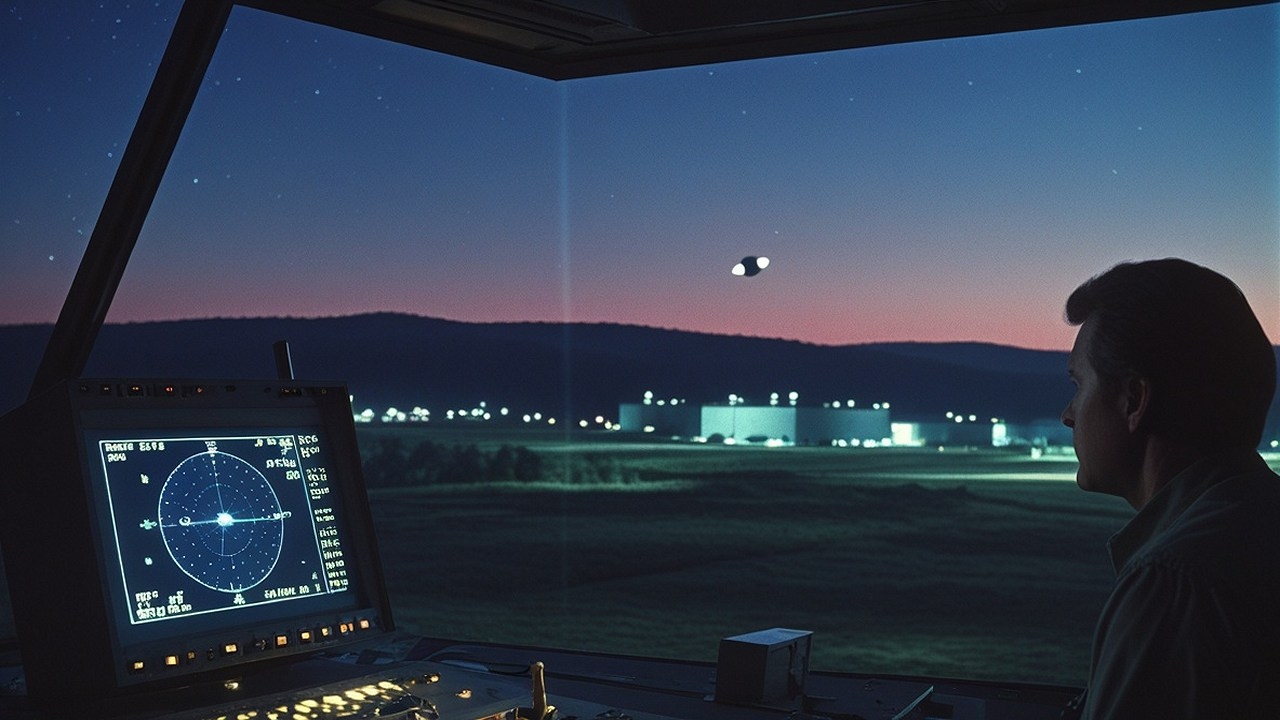
In 1983 the small city of Dalton in northwest Georgia became the setting for one of the more compelling unidentified aerial phenomena reports of the decade. Located in Whitfield County near the Tennessee border, Dalton is known primarily for its carpet manufacturing industry and carries the nickname Carpet Capital of the World. On one particular occasion that year the attention of local residents, and possibly aviation or military observers, turned skyward.
The Dalton Radar-Visual Case stands out because it belongs to a select category of sightings known as radar-visual encounters. In these incidents an object is observed with the naked eye by credible witnesses and is simultaneously detected and tracked by radar systems. This dual confirmation—human testimony paired with electronic instrumentation—elevates such cases above purely visual reports in the estimation of many researchers. The 1983 Dalton event reportedly featured a strange object that was tracked on radar while also being seen visually. The object exhibited erratic movement, changing speed and direction in ways that defied the performance capabilities of conventional aircraft known at the time.
Radar-visual cases have long been prized in UFO research precisely because they offer a form of corroboration that is difficult to dismiss. Human observers can be influenced by expectation, misperception, or optical illusions, especially at night or under stressful conditions. Radar operates according to physical principles, recording the presence, distance, speed, and trajectory of objects that reflect electromagnetic waves. When both forms of evidence align, the likelihood of a prosaic explanation decreases significantly. The Dalton case is therefore considered stronger evidence than many other sightings from the same period that relied solely on eyewitness accounts.
Dalton’s location in northwest Georgia places it within a region that has produced numerous UFO reports over the decades. Proximity to major highways, including Interstate 75, as well as its position near the Tennessee River Valley and mountainous terrain to the north, creates a varied landscape that can both facilitate observation and complicate identification. The area also lies within broader flight corridors used by civilian and military aircraft, meaning any anomalous object would have been operating in monitored airspace. This setting makes the reported erratic behavior particularly noteworthy, as deviations from established flight paths and performance envelopes would typically trigger air-traffic-control attention.
The object in the Dalton case was described as moving in a manner inconsistent with conventional aviation. Witnesses reportedly observed it executing abrupt changes in speed and direction—maneuvers that would have been impossible for jet aircraft, propeller planes, or helicopters of the early 1980s. Such performance characteristics echo those reported in other notable radar-visual cases, including the 1952 Washington, D.C. flap and the 1976 Tehran incident, where objects demonstrated instantaneous acceleration, hovering capability, and right-angle turns without deceleration. In the Dalton event the combination of visual confirmation and radar tracking suggested the presence of a solid, physical object rather than a weather anomaly, temperature inversion, or electronic glitch.
The significance of radar-visual cases extends beyond any single incident. They represent a bridge between subjective human experience and objective technological measurement. During the 1980s radar systems had become highly sophisticated, especially around civilian airports and military installations. The fact that an object could be detected by radar while displaying non-aerodynamic flight characteristics raises important questions about propulsion, materials, and control systems. Conventional aircraft of the period were bound by aerodynamic principles: they required forward motion to generate lift, produced sonic signatures, and followed predictable trajectories limited by physics and engineering constraints. An object that could change direction and speed erratically while remaining visible and trackable challenged those established limits.
Georgia’s broader UFO history provides important context for the 1983 Dalton sighting. The state has documented hundreds of reports spanning decades, with notable clusters near military facilities and along transportation corridors. Earlier cases, such as the 1973 wave of sightings across the Southeast and Jimmy Carter’s well-known 1969 sighting in Leary, Georgia, demonstrate a recurring pattern of anomalous aerial activity in the region. The 1980s, in particular, saw continued interest in UFO phenomena even as official government investigations had officially ended with the closure of Project Blue Book in 1969. Civilian organizations like the Mutual UFO Network continued to collect and investigate reports, often identifying cases that warranted deeper scrutiny due to multiple witnesses or instrument corroboration.
The Dalton case occurred during a period when public and scientific attention to UFOs was evolving. While many sightings could be attributed to misidentified aircraft, planets, or experimental military technology, radar-visual encounters resisted easy classification. Skeptics have occasionally proposed explanations such as stealth-aircraft testing or atmospheric phenomena, but these often fail to account for the full range of observed characteristics. In 1983 the most advanced publicly known aircraft, such as the F-15 Eagle or early stealth prototypes, did not possess the combination of silent or low-signature operation, extreme maneuverability, and hovering capability sometimes reported in these incidents. The Dalton object’s erratic movement, as described, would have placed it well outside the performance envelope of any known technology.
From a methodological standpoint, radar-visual cases offer researchers a valuable dataset. Radar provides quantitative information—altitude, speed, heading, and duration of tracking—while visual witnesses supply qualitative details about shape, lighting, and behavior. When these two streams of data converge, the case gains evidentiary strength. The Dalton incident is therefore highlighted as one of the more compelling reports from Georgia during the 1980s, precisely because it combined these elements. Although detailed public documentation remains limited, the core features—radar detection paired with visual observation of anomalous flight—have kept it in regional UFO literature.
The human dimension of such sightings should not be overlooked. Residents of Dalton going about their daily lives—whether driving, working night shifts in the carpet industry, or simply enjoying an evening outdoors—suddenly found themselves confronted with something that defied ordinary explanation. The psychological impact of witnessing an object that moves in ways no known aircraft can must have been significant. For trained observers, such as pilots or air-traffic controllers potentially involved, the event would have been even more unsettling, as it challenged their professional understanding of aviation and airspace management.
In the larger framework of unidentified aerial phenomena research, cases like Dalton contribute to a growing body of evidence suggesting that some objects exhibit technology or capabilities beyond current human knowledge. The erratic changes in speed and direction imply either a propulsion system that negates or manipulates inertia and gravity in ways we do not understand or an entirely different paradigm of flight. Such performance has been noted repeatedly in both historical and contemporary reports, strengthening the argument that these are not isolated anomalies but part of a persistent pattern.
The 1983 Dalton Radar-Visual Case also highlights ongoing challenges in UFO investigation. Many reports from this era suffer from limited follow-up documentation, potential classification of radar data, and reluctance of witnesses to come forward publicly due to concerns about credibility or career repercussions. Despite these obstacles, the case’s reputation as one of the stronger entries from the period endures because of its dual-evidence nature. Radar-visual incidents force serious consideration: if an object is both seen and electronically detected behaving in extraordinary ways, explanations must rise to the same level of rigor.
Reflecting on this event decades later, it fits into a continuum of Georgia UFO activity that spans from the 1940s through the present day. The state’s combination of rural areas, urban centers, military installations, and busy airways creates conditions where anomalous objects can be observed and, occasionally, recorded by instruments. The Dalton sighting serves as a reminder that even in relatively ordinary locations, extraordinary events can occur—events that merit careful documentation and analysis rather than immediate dismissal.
As research into unidentified aerial phenomena has advanced, with increased government acknowledgment through programs like the Advanced Aerospace Threat Identification Program and the All-domain Anomaly Resolution Office, historical cases like Dalton gain renewed relevance. They demonstrate that the phenomenon has been present for decades, witnessed by civilians and potentially tracked by military and civilian radar systems alike. The erratic flight characteristics reported in 1983 parallel descriptions in more recent military encounters, suggesting continuity rather than a fleeting or localized occurrence.
Ultimately, the Dalton Radar-Visual Case occupies an important place in Georgia’s UFO chronology. It exemplifies the value of multi-modal evidence in studying unidentified aerial phenomena and underscores the limitations of conventional explanations when faced with well-corroborated reports. While many questions about the exact details, witnesses, and radar specifics remain, the core elements—visual sighting combined with radar tracking of an object displaying impossible maneuverability—continue to intrigue researchers and challenge assumptions about what operates in our skies.
The incident invites ongoing contemplation about the nature of these objects. Are they advanced human technology operating under extreme secrecy? Natural phenomena not yet fully understood? Or something originating from beyond current human civilization? Whatever the interpretation, the 1983 Dalton case stands as a compelling example of why radar-visual encounters deserve special attention in the broader study of anomalous aerial phenomena. In the quiet northwest Georgia city known for its carpets, something far more mysterious may have passed overhead—one of the stronger documented moments in a state with a rich history of unexplained sightings.