


Blog Categories
- African Incidents
- Atlantis Incidents
- Australian Incidents
- Belgian Incidents
- Bermuda Triangle Incidents
- Brazilian Incidents
- Canadian Incidents
- Chinese Incidents
- European Incidents
- France Incidents
- Ghosts
- Giants
- Italy Incidents
- Japanese Incidents
- Middle East Incidents
- Portugal Incidents
- Project Serpo
- Puerto Rico Incidents
- Russian Incidents
- Sasquatch
- Scandinavia Incidents
- Spanish Incidents
- UFOs
- United Kingdom Incidents
- United States Incidents
1990: Eglin Air Force Base Incident
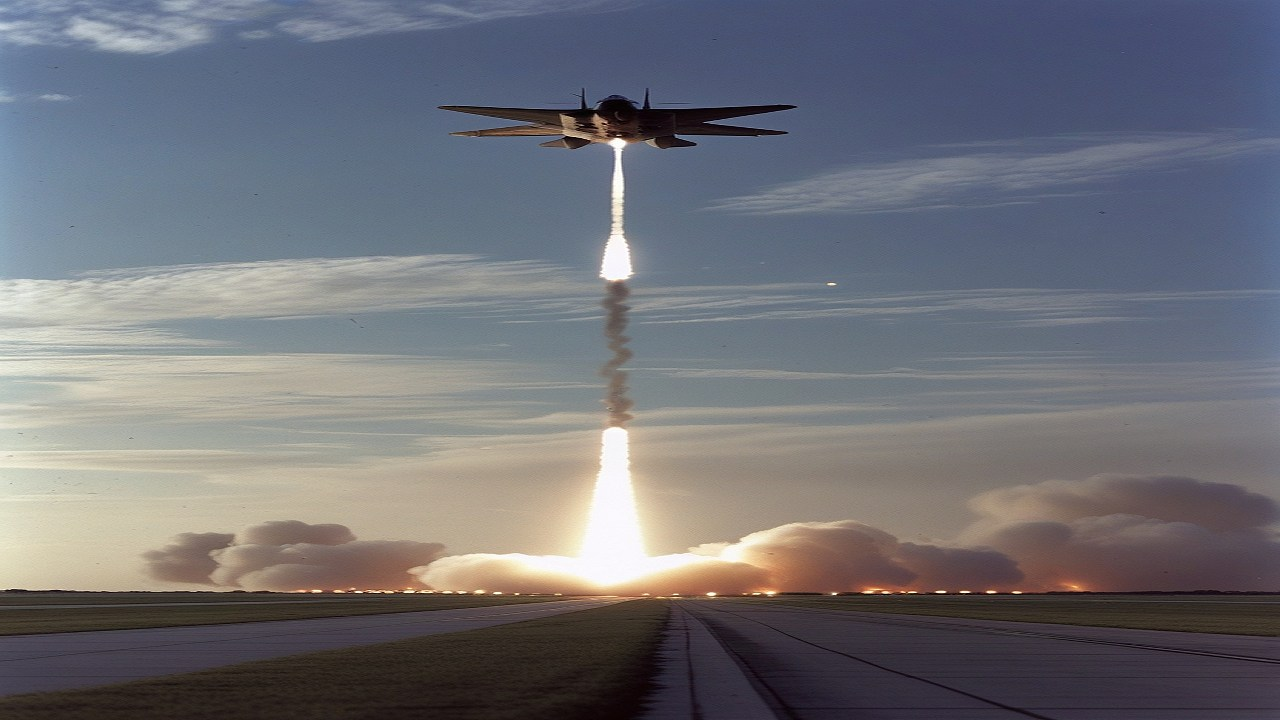
In the spring of 1990, northwest Florida once again found itself at the center of one of the most intriguing UFO-related military encounters on record. Eglin Air Force Base, a sprawling installation known for weapons testing and advanced radar operations, became the site of an extraordinary radar and visual event that remains partially classified to this day. Occurring only three years after the initial Gulf Breeze photographs taken by Ed Walters and amid ongoing sightings across the Panhandle, the April 1990 Eglin incident reinforced suspicions that something unusual—and potentially technological—was operating within the restricted airspace of the Gulf of Mexico.
The story begins shortly after dusk on a mild April evening, when radar operators in one of Eglin’s coastal monitoring facilities detected an unidentified target approaching from the southwest over the Gulf. The object was initially noted for its extreme speed and erratic movement, characteristics that did not correspond to any known aircraft or atmospheric phenomenon. The radar blip appeared to decelerate abruptly as it neared the base’s outer airspace, hovering or pacing along the coastline in a way that suggested control and deliberate motion.
Eglin’s radar systems were, at the time, among the most advanced in the country, capable of tracking both civilian and military aircraft across vast regions of the Gulf. Operators familiar with radar “ghosts” and anomalous weather returns immediately ruled out equipment error. The return was strong, consistent, and carried a defined shape—indicative of a solid object. Following standard procedure for unidentified intrusions, the watch commander ordered confirmation and cross-checks from secondary radar systems. Both confirmed the presence of the unknown.
Within minutes, two F-15 Eagle interceptors were scrambled from Eglin’s flight line to investigate.
These jets, designed for rapid response and air superiority missions, were capable of intercepting intruders within minutes. Pilots were briefed on a fast-moving, low-altitude contact heading northeast along the coast. As they closed in, they reported visual contact with a bright, structured light at roughly ten thousand feet, hovering above the Gulf.
Both pilots would later describe the object as “brilliant” yet sharply defined, with a central body emitting white light and two smaller red or amber points visible along its sides. The formation appeared to be a single craft until, during their observation, the central light “split” into two separate sources. The pilots, maintaining a parallel course at a safe distance, watched as the lights ascended sharply in unison—executing what one described as an “impossible” vertical climb that exceeded the F 15s’ capabilities. Within seconds, the targets vanished from both visual sight and radar coverage.
Back at the control center, operators tracked the event in real time. Recordings of radar data reportedly captured the object’s unusual acceleration, showing it moving from near-hover to extreme velocity before disappearing from the radar scope entirely. Communication logs between the pilots and base command described the incident as “unexplained aerial motion,” a phrase later cited in leaked summaries by retired personnel familiar with the case.
Officially, Eglin Air Force Base never released a public statement. The event was quietly logged as an unidentified target, and any subsequent investigation was handled internally. For decades, the Air Force maintained silence regarding the details.
Yet in the years that followed, several retired servicemen confirmed in interviews with UFO researchers and journalists that the incident did occur, describing it as one of the more baffling events of their careers. Their recollections, though limited by confidentiality agreements, consistently matched early reports from radar personnel and pilots.
At the time, the event fed directly into the atmosphere of heightened interest surrounding the Gulf Breeze phenomenon. By 1990, sightings of unidentified craft along the Florida Panhandle had continued for nearly three years, and public belief in something extraordinary operating over the region was at an all-time high. The Eglin event differed from most Gulf Breeze cases in one critical way: it involved military equipment, trained observers, and documented radar contact. To many, this provided an element of validation that civilian sightings alone could not offer.
For ufologists, the Eglin Air Force Base incident represented the long sought connection between public reports and official acknowledgment. It demonstrated that the U.S. military, despite its official policy of non engagement with unidentified flying objects since the termination of Project Blue Book in 1969, continued to encounter—and occasionally pursue—unidentified aerial intrusions over sensitive installations. The timing, location, and nature of the 1990 encounter led many to speculate that it might be related to the ongoing Gulf Breeze sightings, suggesting that whatever intelligence or technology was responsible had expanded its area of operation.
Local reaction to rumors of the event spread quickly. By early summer, whispers of “something big at Eglin” circulated among residents and military families stationed in the area. Though base officials refused to comment, several accounts from nearby communities reported hearing the F-15s scrambling that night, corroborating the timing of the event. Civilian observers along the coast also reported seeing bright lights over the Gulf around the same time, describing motions similar to those recorded by the radar team.
The human impact of the 1990 Eglin incident extended beyond mere curiosity. For residents of the Panhandle, the ongoing pattern of sightings fostered both excitement and unease. On one hand, many took pride in living near what had become one of the most discussed UFO regions in the world. On the other, the apparent involvement of the military—and the lack of any public explanation—led to growing speculation that something secretive was occurring off Florida’s shores.
Some suspected that Eglin or nearby Hurlburt Field was engaged in testing exotic aircraft. Others believed that the Air Force’s silence reflected the presence of something it could not control or explain.
Within military and aviation circles, the incident contributed to a quiet acknowledgment that not all aerial phenomena could be easily categorized. Several former pilots stationed at Eglin in the late 1980s and early 1990s later recounted experiences with “unidentifieds” during night training flights over the Gulf, describing lights that moved unpredictably or vanished instantaneously from view. These accounts, while anecdotal, reinforced the notion that the 1990 encounter was not an isolated occurrence.
From a research standpoint, the Eglin Air Force Base incident added to the growing list of radar-visual cases—events in which unidentified aerial objects were simultaneously tracked by radar and observed visually by credible witnesses. Such cases are considered especially significant because they involve objective, instrument-based evidence alongside human testimony. The combination makes hoaxes, misidentifications, or natural explanations far less likely.
While skeptics have occasionally suggested that the Eglin object could have been a classified U.S. craft under test, this explanation faces obstacles. In 1990, the most advanced operational aircraft in the region— the F-117 Nighthawk stealth fighter and the B-2 Spirit bomber—were both highly secret but did not possess the kind of performance or luminous characteristics described by the pilots.
Moreover, both aircraft emitted distinct radar profiles that would have been immediately recognized by Eglin operators. The notion of an unknown test craft intruding into Eglin’s radar coverage without coordination seems implausible given the base’s strategic importance and strict flight corridors.
The psychological dimension of the incident also warrants attention. The pilots involved, though their names were never publicly confirmed, were said to have been deeply affected by the encounter. According to one retired serviceman familiar with the post-mission debriefing, the pilots were “visibly shaken” and frustrated that their sophisticated aircraft and tracking systems were unable to pursue or analyze the target. In an environment built on precision, control, and technological mastery, facing an object that defied both identification and interception challenged the very foundation of military certainty.
Publicly, however, the Air Force maintained silence. Requests for information under the Freedom of Information Act returned only vague references to “unexplained radar returns.” No mention of intercept missions appeared in the released logs, though researchers have long suspected that relevant portions remain classified. The case became one of several Gulf Coast incidents quietly acknowledged but never officially explained, adding to a broader pattern of military encounters that continued into the 1990s and beyond.
In later years, the Eglin event was often discussed in connection with reports of U.S. Navy encounters off the same coastline in the early 2000s and 2010s, including the now-famous “Tic Tac” and “Gimbal” videos. The similarities were striking: glowing objects capable of extreme acceleration, silent flight, and radar visibility that occasionally defied conventional explanations. Some researchers have even proposed that the 1990 Eglin case represented an early manifestation of the same phenomena now officially categorized as UAP (Unidentified Aerial Phenomena) by the Department of Defense.
Culturally, the Eglin Air Force Base incident helped sustain public interest in the Gulf Breeze wave, which by 1990 was beginning to lose media attention. The suggestion that the Air Force itself had pursued a UFO added legitimacy to the accounts circulating in the region. It also reignited debate over government secrecy and public disclosure. Many Floridians believed that if the military could not explain what it was encountering— or worse, refused to admit it—then the public deserved transparency.
The event also encouraged further academic study of radar-visual UFO cases. Analysts and researchers revisited decades-old Air Force files, comparing them to the Eglin data to look for patterns in object behavior, flight characteristics, and regional geography. They discovered that Florida’s Gulf Coast had been a recurring location for radar anomalies since at least the early 1960s, suggesting a long-term pattern of unexplained aerial activity over the Gulf of Mexico.
As with many military UFO incidents, the legacy of the 1990 Eglin Air Force Base case lies as much in its unanswered questions as in its documented facts. It demonstrated that unidentified aerial intrusions into restricted airspace could and did occur, even in one of the most heavily monitored regions of the United States. It also showed that, despite decades of official denial, such incidents continued to challenge the capabilities of modern radar and jet aircraft.
For the public, the case reinforced the idea that the Gulf Breeze and Panhandle sightings were not mere civilian fabrications but part of a broader, possibly coordinated phenomenon. For the military, it served as a humbling reminder that advanced technology does not guarantee omniscience—that there remain forces or entities, natural or otherwise, capable of operating beyond the limits of human understanding.
More than three decades later, the 1990 Eglin incident remains one of Florida’s most significant and least explained UFO encounters. Its mixture of credible witnesses, instrument verification, and lasting secrecy ensures its place among the cornerstone cases of modern aerial mystery. Whether interpreted as an advanced human technology or a manifestation of something entirely unknown, the event stands as a testament to the persistence of the unexplained within even the most controlled environments.
In the spring of 1990, northwest Florida once again found itself at the center of one of the most intriguing UFO-related military encounters on record. Eglin Air Force Base, a sprawling installation known for weapons testing and advanced radar operations, became the site of an extraordinary radar and visual event that remains partially classified to this day. Occurring only three years after the initial Gulf Breeze photographs taken by Ed Walters and amid ongoing sightings across the Panhandle, the April 1990 Eglin incident reinforced suspicions that something unusual—and potentially technological—was operating within the restricted airspace of the Gulf of Mexico.
The story begins shortly after dusk on a mild April evening, when radar operators in one of Eglin’s coastal monitoring facilities detected an unidentified target approaching from the southwest over the Gulf. The object was initially noted for its extreme speed and erratic movement, characteristics that did not correspond to any known aircraft or atmospheric phenomenon. The radar blip appeared to decelerate abruptly as it neared the base’s outer airspace, hovering or pacing along the coastline in a way that suggested control and deliberate motion.
Eglin’s radar systems were, at the time, among the most advanced in the country, capable of tracking both civilian and military aircraft across vast regions of the Gulf. Operators familiar with radar “ghosts” and anomalous weather returns immediately ruled out equipment error. The return was strong, consistent, and carried a defined shape—indicative of a solid object. Following standard procedure for unidentified intrusions, the watch commander ordered confirmation and cross-checks from secondary radar systems. Both confirmed the presence of the unknown.
Within minutes, two F-15 Eagle interceptors were scrambled from Eglin’s flight line to investigate.
These jets, designed for rapid response and air superiority missions, were capable of intercepting intruders within minutes. Pilots were briefed on a fast-moving, low-altitude contact heading northeast along the coast. As they closed in, they reported visual contact with a bright, structured light at roughly ten thousand feet, hovering above the Gulf.
Both pilots would later describe the object as “brilliant” yet sharply defined, with a central body emitting white light and two smaller red or amber points visible along its sides. The formation appeared to be a single craft until, during their observation, the central light “split” into two separate sources. The pilots, maintaining a parallel course at a safe distance, watched as the lights ascended sharply in unison—executing what one described as an “impossible” vertical climb that exceeded the F 15s’ capabilities. Within seconds, the targets vanished from both visual sight and radar coverage.
Back at the control center, operators tracked the event in real time. Recordings of radar data reportedly captured the object’s unusual acceleration, showing it moving from near-hover to extreme velocity before disappearing from the radar scope entirely. Communication logs between the pilots and base command described the incident as “unexplained aerial motion,” a phrase later cited in leaked summaries by retired personnel familiar with the case.
Officially, Eglin Air Force Base never released a public statement. The event was quietly logged as an unidentified target, and any subsequent investigation was handled internally. For decades, the Air Force maintained silence regarding the details.
Yet in the years that followed, several retired servicemen confirmed in interviews with UFO researchers and journalists that the incident did occur, describing it as one of the more baffling events of their careers. Their recollections, though limited by confidentiality agreements, consistently matched early reports from radar personnel and pilots.
At the time, the event fed directly into the atmosphere of heightened interest surrounding the Gulf Breeze phenomenon. By 1990, sightings of unidentified craft along the Florida Panhandle had continued for nearly three years, and public belief in something extraordinary operating over the region was at an all-time high. The Eglin event differed from most Gulf Breeze cases in one critical way: it involved military equipment, trained observers, and documented radar contact. To many, this provided an element of validation that civilian sightings alone could not offer.
For ufologists, the Eglin Air Force Base incident represented the long sought connection between public reports and official acknowledgment. It demonstrated that the U.S. military, despite its official policy of non engagement with unidentified flying objects since the termination of Project Blue Book in 1969, continued to encounter—and occasionally pursue—unidentified aerial intrusions over sensitive installations. The timing, location, and nature of the 1990 encounter led many to speculate that it might be related to the ongoing Gulf Breeze sightings, suggesting that whatever intelligence or technology was responsible had expanded its area of operation.
Local reaction to rumors of the event spread quickly. By early summer, whispers of “something big at Eglin” circulated among residents and military families stationed in the area. Though base officials refused to comment, several accounts from nearby communities reported hearing the F-15s scrambling that night, corroborating the timing of the event. Civilian observers along the coast also reported seeing bright lights over the Gulf around the same time, describing motions similar to those recorded by the radar team.
The human impact of the 1990 Eglin incident extended beyond mere curiosity. For residents of the Panhandle, the ongoing pattern of sightings fostered both excitement and unease. On one hand, many took pride in living near what had become one of the most discussed UFO regions in the world. On the other, the apparent involvement of the military—and the lack of any public explanation—led to growing speculation that something secretive was occurring off Florida’s shores.
Some suspected that Eglin or nearby Hurlburt Field was engaged in testing exotic aircraft. Others believed that the Air Force’s silence reflected the presence of something it could not control or explain.
Within military and aviation circles, the incident contributed to a quiet acknowledgment that not all aerial phenomena could be easily categorized. Several former pilots stationed at Eglin in the late 1980s and early 1990s later recounted experiences with “unidentifieds” during night training flights over the Gulf, describing lights that moved unpredictably or vanished instantaneously from view. These accounts, while anecdotal, reinforced the notion that the 1990 encounter was not an isolated occurrence.
From a research standpoint, the Eglin Air Force Base incident added to the growing list of radar-visual cases—events in which unidentified aerial objects were simultaneously tracked by radar and observed visually by credible witnesses. Such cases are considered especially significant because they involve objective, instrument-based evidence alongside human testimony. The combination makes hoaxes, misidentifications, or natural explanations far less likely.
While skeptics have occasionally suggested that the Eglin object could have been a classified U.S. craft under test, this explanation faces obstacles. In 1990, the most advanced operational aircraft in the region— the F-117 Nighthawk stealth fighter and the B-2 Spirit bomber—were both highly secret but did not possess the kind of performance or luminous characteristics described by the pilots.
Moreover, both aircraft emitted distinct radar profiles that would have been immediately recognized by Eglin operators. The notion of an unknown test craft intruding into Eglin’s radar coverage without coordination seems implausible given the base’s strategic importance and strict flight corridors.
The psychological dimension of the incident also warrants attention. The pilots involved, though their names were never publicly confirmed, were said to have been deeply affected by the encounter. According to one retired serviceman familiar with the post-mission debriefing, the pilots were “visibly shaken” and frustrated that their sophisticated aircraft and tracking systems were unable to pursue or analyze the target. In an environment built on precision, control, and technological mastery, facing an object that defied both identification and interception challenged the very foundation of military certainty.
Publicly, however, the Air Force maintained silence. Requests for information under the Freedom of Information Act returned only vague references to “unexplained radar returns.” No mention of intercept missions appeared in the released logs, though researchers have long suspected that relevant portions remain classified. The case became one of several Gulf Coast incidents quietly acknowledged but never officially explained, adding to a broader pattern of military encounters that continued into the 1990s and beyond.
In later years, the Eglin event was often discussed in connection with reports of U.S. Navy encounters off the same coastline in the early 2000s and 2010s, including the now-famous “Tic Tac” and “Gimbal” videos. The similarities were striking: glowing objects capable of extreme acceleration, silent flight, and radar visibility that occasionally defied conventional explanations. Some researchers have even proposed that the 1990 Eglin case represented an early manifestation of the same phenomena now officially categorized as UAP (Unidentified Aerial Phenomena) by the Department of Defense.
Culturally, the Eglin Air Force Base incident helped sustain public interest in the Gulf Breeze wave, which by 1990 was beginning to lose media attention. The suggestion that the Air Force itself had pursued a UFO added legitimacy to the accounts circulating in the region. It also reignited debate over government secrecy and public disclosure. Many Floridians believed that if the military could not explain what it was encountering— or worse, refused to admit it—then the public deserved transparency.
The event also encouraged further academic study of radar-visual UFO cases. Analysts and researchers revisited decades-old Air Force files, comparing them to the Eglin data to look for patterns in object behavior, flight characteristics, and regional geography. They discovered that Florida’s Gulf Coast had been a recurring location for radar anomalies since at least the early 1960s, suggesting a long-term pattern of unexplained aerial activity over the Gulf of Mexico.
As with many military UFO incidents, the legacy of the 1990 Eglin Air Force Base case lies as much in its unanswered questions as in its documented facts. It demonstrated that unidentified aerial intrusions into restricted airspace could and did occur, even in one of the most heavily monitored regions of the United States. It also showed that, despite decades of official denial, such incidents continued to challenge the capabilities of modern radar and jet aircraft.
For the public, the case reinforced the idea that the Gulf Breeze and Panhandle sightings were not mere civilian fabrications but part of a broader, possibly coordinated phenomenon. For the military, it served as a humbling reminder that advanced technology does not guarantee omniscience—that there remain forces or entities, natural or otherwise, capable of operating beyond the limits of human understanding.
More than three decades later, the 1990 Eglin incident remains one of Florida’s most significant and least explained UFO encounters. Its mixture of credible witnesses, instrument verification, and lasting secrecy ensures its place among the cornerstone cases of modern aerial mystery. Whether interpreted as an advanced human technology or a manifestation of something entirely unknown, the event stands as a testament to the persistence of the unexplained within even the most controlled environments.