


Blog Categories
- African Incidents
- Atlantis Incidents
- Australian Incidents
- Belgian Incidents
- Bermuda Triangle Incidents
- Brazilian Incidents
- Canadian Incidents
- Chinese Incidents
- European Incidents
- France Incidents
- Ghosts
- Giants
- Italy Incidents
- Japanese Incidents
- Middle East Incidents
- Portugal Incidents
- Project Serpo
- Puerto Rico Incidents
- Russian Incidents
- Sasquatch
- Scandinavia Incidents
- Spanish Incidents
- UFOs
- United Kingdom Incidents
- United States Incidents
1993: Cocoa Beach Naval Trident Encounter
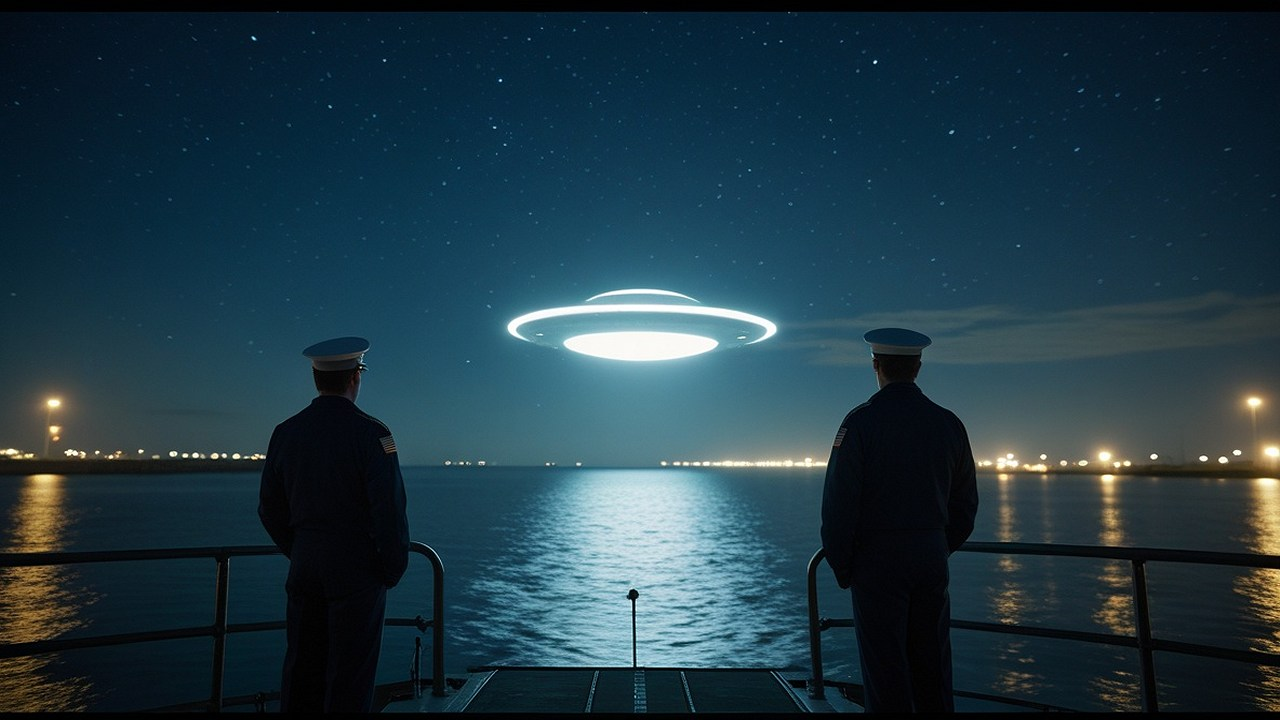
The January 1993 Cocoa Beach Naval Trident Encounter stands as one of the more compelling maritime-aerospace UFO cases documented along Florida’s Space Coast. The account, centered on two Navy officers stationed at Port Canaveral, involves an unidentified glowing sphere rising from the Atlantic Ocean, hovering in complete silence, and ascending vertically at extreme speed. Its proximity to Naval Trident operations at Port Canaveral and to the Kennedy Space Center added layers of tension and speculation. Although the event was included in a routine naval log, the officers later stated they were instructed by superiors not to discuss it. The incident became a quiet point of interest among researchers tracking water-related unidentified aerial phenomena, and it contributed to emerging theories about objects entering and exiting the ocean with performance beyond publicly known propulsion.
The available information is limited. That limitation is part of the case. What survives is a two-witness military observation, a clinical log entry, a later private statement about silence, and a geography that already concentrated trained eyes on the line between open ocean and restricted aerospace. The Cocoa Beach encounter fits a larger pattern of sightings that blur oceanic and aerial domains. It does not arrive with radar plots, photographs, or a named public inquiry. It arrives with professional description and an official hush.
Cocoa Beach and Port Canaveral form one of the most strategically sensitive stretches on the East Coast of the United States. The area hosts Navy activity associated with Trident submarine operations, Coast Guard patrols, commercial port traffic, and close proximity to the Kennedy Space Center. In the early 1990s, Port Canaveral was growing. The Navy was active in missile-test operations. Restricted zones dotted the region. Advanced military assets sat beside expansive open water. That combination has long made the Space Coast a place where unusual lights are both more likely to be noticed and more likely to be absorbed into the ordinary language of tests, launches, and security.
January nights on this coast are typically clear and dry. The ocean remains active with offshore vessel traffic and maritime patrols. It was during one such night, shortly after dusk in early January 1993, that two Navy officers conducting routine observation duties near naval facilities at Port Canaveral saw a glowing sphere come up from the Atlantic.
According to their account, a bright spherical object emerged from the ocean’s surface approximately one mile offshore. The sphere glowed white with a faint bluish halo, a luminescence the officers compared to high-intensity plasma or ionized air. They estimated its size at roughly that of a small aircraft, somewhere between twenty and thirty feet in diameter. The ascent was smooth and deliberate. There was no associated sound, no violent splash, no turbulence of the kind a surfacing hull or a crashing body would throw. The surface showed only a gentle disturbance, as if displaced but not torn open.
Once above the water, the object remained completely stationary. It hovered at an altitude of approximately two hundred feet. The glow was constant. There was no flickering, no visible seam, no wing, no window, no exhaust port. After several seconds of motionless hovering, the object ascended vertically at a velocity far exceeding that of any known aircraft then operating in the area. Within moments it disappeared into the upper atmosphere. It left no vapor trail and no sound.
The officers noted that neither aircraft nor missile tests were scheduled at that time. The object did not match the profile of flares, helicopters, or naval drones. Those negatives matter as much as the positives. Trained observers do not only describe what they saw. They subtract what the object failed to be.
The encounter was logged in a routine naval operations report and described simply as an unidentified aerial object observed rising from the water. The language was neutral, clinical, and free from speculation. According to later statements made privately to investigators, the officers were instructed not to discuss the sighting beyond the chain of command. No official follow-up investigation has been publicly acknowledged. The names of the two officers have not been released, in keeping with their statements that they were told not to disclose details. Their decision to speak privately, and anonymously, is the only reason the case moved from a line in a log to a durable research note.
Port Canaveral and the surrounding waters belong to a larger operational zone used for submarine activity, missile tests, and classified aerospace work. The presence of Trident-related operations in the region has historically contributed to an atmosphere of secrecy. Many activities are shielded from public observation by design. That fact cuts two ways. It makes a classified-test explanation easy to propose. It also makes the officers’ own subtraction important. They were clear that the object’s behavior did not resemble any known missile, drone, or naval craft of the evening. Missile launches produce flame, noise, and exhaust. Drones and helicopters produce rotor wash, vibration, or audible signature. Conventional aircraft do not leave the water in a smooth, silent rise, hang motionless at two hundred feet with no structure visible, and then climb out of the atmosphere without a trail.
The possibility that the object was part of classified military testing has often been raised. There is no available evidence supporting that explanation in the public record of this case. The officers stated that missile tests and experimental flights were not underway that evening, and that the object demonstrated characteristics inconsistent with any known military platform of the time. A chapter that treats “secret test” as a default ending treats the witnesses as less informed about their own range than they claimed to be. A chapter that treats “non-human craft” as a default ending goes beyond what the officers themselves assigned. They did not report fear as the center of the story. They did not attempt to fix an extraterrestrial origin. They described an object that exceeded the capabilities of known aerospace technology in 1993.
In cases involving military witnesses, credibility is a method, not a slogan. The two officers at Port Canaveral were trained observers, familiar with aircraft, maritime operations, and aerospace activity. Their descriptions were consistent with one another and delivered at the level of detail expected of people tasked with watching ocean approaches and port security. Military personnel tend to avoid embellishment when an event may travel up a chain of command. The officers’ statements stayed measured and descriptive. Their later private conversations with researchers suggest the experience left a mark. The tone remained professional.
Their claim that they were told not to discuss the sighting is not unusual in military UFO encounters. Such restrictions typically arise from concerns about operational security, public speculation, and misinterpretation. The instruction does not prove the object was extraordinary. It does prove that the institution preferred the event not become a public story. That preference is itself part of Florida’s Space Coast history: launches are spectacles; anomalies at the waterline are paperwork.
Because the encounter was not announced at the time, awareness spread quietly. A handful of researchers learned of the event through private channels. The incident did not receive the widespread publicity of Gulf Coast sightings earlier in the decade. Those who investigated the region noted similarities between this sighting and other reports of objects entering or leaving the ocean. Rumors circulated among some residents and fishermen that unusual lights had been seen offshore. Those reports were never formally linked to the officers’ sighting. The event became one of the whispered stories in local boating communities, among people already aware that the waters off Cocoa Beach have long been associated with unusual activity. Rumor is not corroboration. It is the social weather around a suppressed official note.
The object’s water-to-air transition is the feature that keeps the case in transmedium discussion. Sightings of objects emerging from the sea have been reported internationally for decades, often near naval installations. Those reports have fed theories that unidentified aerial phenomena may operate in both air and water. The 1993 encounter added a Florida military example to that pattern. No publicly known human technology in 1993 could transition so seamlessly from underwater to atmospheric flight and then accelerate silently at extreme speed. That statement is a comparison to the public inventory of 1993, not a laboratory proof. It is why researchers kept the file.
The sighting challenges the assumption that all unidentified objects are atmospheric or spaceborne in origin. It introduces oceanic presence as a live possibility—an idea long speculated upon and rarely supported by named, on-duty naval testimony. Here the testimony is anonymous but occupationally specific: two officers, Port Canaveral, after dusk, one mile offshore, sphere, hover, vertical departure. The ocean is not a backdrop. It is the first medium.
The encounter did not become a national headline. It still influenced the local narrative on a coast that already mixed aerospace ambition, military operations, and public fascination with the unknown. Space shuttle launches, missile tests, and classified projects had created an environment in which the extraordinary was partly normalized. The 1993 sighting added mystery beneath the surface. It suggested that not all unexplained activity occurred in the skies above the Kennedy Space Center. For residents who heard about the event, it reinforced the idea that the Space Coast was not only a site of human technological display but a focal point for phenomena that did not file flight plans.
In later decades, as interest in transmedium unidentified aerial phenomena grew, the Cocoa Beach incident became more relevant rather than less. Researchers studying objects emerging from oceans, lakes, or other bodies of water have referenced the event as an early example of credible military testimony involving a water-to-air transition. The case also fed discussion about the placement of naval and aerospace installations. Some speculate that if unidentified phenomena are active in a region, they may be drawn to advanced technology, surveillance systems, and military presence. Others argue that such installations merely increase the number of trained observers capable of noticing unusual events. Both readings can be held at once. A dense sensor environment produces more reports. It does not automatically produce more inventions.
No high-profile public figure became attached to the case. The officers remain unnamed. The encounter has periodically resurfaced in discussions focused on naval sightings, underwater anomalies, and the connection between Florida’s coastline and larger national-security questions. Thirty years on, it continues to draw attention because it stands at the intersection of three domains: ocean, air, and military operations. It resists easy categorization. Rather than distant lights or ambiguous shapes, the case centers on a clearly observed object performing precise maneuvers that the witnesses would not assign to the inventory they knew.
The encounter remains unresolved. No official explanation has been offered. No aircraft or drone has been identified in the public record that matches the object’s characteristics. The case exemplifies the quiet persistence of unexplained events on the periphery of high-security military and space operations. Its importance lies not in sensationalism but in the consistency, professionalism, and clarity of the officers’ statements: a structured, glowing spherical object; a seamless water-to-air transition; a silent vertical ascent; a routine log; an instruction not to discuss the incident.
Though lesser known than other Florida sightings, the Cocoa Beach Naval Trident Encounter endures as a compact example of unexplained performance at the boundary between human observation and inaccessible secrecy. It remains part of the effort to understand unidentified aerial phenomena and their possible relationship to the environments, technologies, and operations along America’s East Coast. A sphere rose from the Atlantic one mile off Port Canaveral, hung in silence at two hundred feet, and left the atmosphere without a sound. The officers wrote it down. Then they were told to stop talking. The ocean kept the rest.
The January 1993 Cocoa Beach Naval Trident Encounter stands as one of the more compelling maritime-aerospace UFO cases documented along Florida’s Space Coast. The account, centered on two Navy officers stationed at Port Canaveral, involves an unidentified glowing sphere rising from the Atlantic Ocean, hovering in complete silence, and ascending vertically at extreme speed. Its proximity to Naval Trident operations at Port Canaveral and to the Kennedy Space Center added layers of tension and speculation. Although the event was included in a routine naval log, the officers later stated they were instructed by superiors not to discuss it. The incident became a quiet point of interest among researchers tracking water-related unidentified aerial phenomena, and it contributed to emerging theories about objects entering and exiting the ocean with performance beyond publicly known propulsion.
The available information is limited. That limitation is part of the case. What survives is a two-witness military observation, a clinical log entry, a later private statement about silence, and a geography that already concentrated trained eyes on the line between open ocean and restricted aerospace. The Cocoa Beach encounter fits a larger pattern of sightings that blur oceanic and aerial domains. It does not arrive with radar plots, photographs, or a named public inquiry. It arrives with professional description and an official hush.
Cocoa Beach and Port Canaveral form one of the most strategically sensitive stretches on the East Coast of the United States. The area hosts Navy activity associated with Trident submarine operations, Coast Guard patrols, commercial port traffic, and close proximity to the Kennedy Space Center. In the early 1990s, Port Canaveral was growing. The Navy was active in missile-test operations. Restricted zones dotted the region. Advanced military assets sat beside expansive open water. That combination has long made the Space Coast a place where unusual lights are both more likely to be noticed and more likely to be absorbed into the ordinary language of tests, launches, and security.
January nights on this coast are typically clear and dry. The ocean remains active with offshore vessel traffic and maritime patrols. It was during one such night, shortly after dusk in early January 1993, that two Navy officers conducting routine observation duties near naval facilities at Port Canaveral saw a glowing sphere come up from the Atlantic.
According to their account, a bright spherical object emerged from the ocean’s surface approximately one mile offshore. The sphere glowed white with a faint bluish halo, a luminescence the officers compared to high-intensity plasma or ionized air. They estimated its size at roughly that of a small aircraft, somewhere between twenty and thirty feet in diameter. The ascent was smooth and deliberate. There was no associated sound, no violent splash, no turbulence of the kind a surfacing hull or a crashing body would throw. The surface showed only a gentle disturbance, as if displaced but not torn open.
Once above the water, the object remained completely stationary. It hovered at an altitude of approximately two hundred feet. The glow was constant. There was no flickering, no visible seam, no wing, no window, no exhaust port. After several seconds of motionless hovering, the object ascended vertically at a velocity far exceeding that of any known aircraft then operating in the area. Within moments it disappeared into the upper atmosphere. It left no vapor trail and no sound.
The officers noted that neither aircraft nor missile tests were scheduled at that time. The object did not match the profile of flares, helicopters, or naval drones. Those negatives matter as much as the positives. Trained observers do not only describe what they saw. They subtract what the object failed to be.
The encounter was logged in a routine naval operations report and described simply as an unidentified aerial object observed rising from the water. The language was neutral, clinical, and free from speculation. According to later statements made privately to investigators, the officers were instructed not to discuss the sighting beyond the chain of command. No official follow-up investigation has been publicly acknowledged. The names of the two officers have not been released, in keeping with their statements that they were told not to disclose details. Their decision to speak privately, and anonymously, is the only reason the case moved from a line in a log to a durable research note.
Port Canaveral and the surrounding waters belong to a larger operational zone used for submarine activity, missile tests, and classified aerospace work. The presence of Trident-related operations in the region has historically contributed to an atmosphere of secrecy. Many activities are shielded from public observation by design. That fact cuts two ways. It makes a classified-test explanation easy to propose. It also makes the officers’ own subtraction important. They were clear that the object’s behavior did not resemble any known missile, drone, or naval craft of the evening. Missile launches produce flame, noise, and exhaust. Drones and helicopters produce rotor wash, vibration, or audible signature. Conventional aircraft do not leave the water in a smooth, silent rise, hang motionless at two hundred feet with no structure visible, and then climb out of the atmosphere without a trail.
The possibility that the object was part of classified military testing has often been raised. There is no available evidence supporting that explanation in the public record of this case. The officers stated that missile tests and experimental flights were not underway that evening, and that the object demonstrated characteristics inconsistent with any known military platform of the time. A chapter that treats “secret test” as a default ending treats the witnesses as less informed about their own range than they claimed to be. A chapter that treats “non-human craft” as a default ending goes beyond what the officers themselves assigned. They did not report fear as the center of the story. They did not attempt to fix an extraterrestrial origin. They described an object that exceeded the capabilities of known aerospace technology in 1993.
In cases involving military witnesses, credibility is a method, not a slogan. The two officers at Port Canaveral were trained observers, familiar with aircraft, maritime operations, and aerospace activity. Their descriptions were consistent with one another and delivered at the level of detail expected of people tasked with watching ocean approaches and port security. Military personnel tend to avoid embellishment when an event may travel up a chain of command. The officers’ statements stayed measured and descriptive. Their later private conversations with researchers suggest the experience left a mark. The tone remained professional.
Their claim that they were told not to discuss the sighting is not unusual in military UFO encounters. Such restrictions typically arise from concerns about operational security, public speculation, and misinterpretation. The instruction does not prove the object was extraordinary. It does prove that the institution preferred the event not become a public story. That preference is itself part of Florida’s Space Coast history: launches are spectacles; anomalies at the waterline are paperwork.
Because the encounter was not announced at the time, awareness spread quietly. A handful of researchers learned of the event through private channels. The incident did not receive the widespread publicity of Gulf Coast sightings earlier in the decade. Those who investigated the region noted similarities between this sighting and other reports of objects entering or leaving the ocean. Rumors circulated among some residents and fishermen that unusual lights had been seen offshore. Those reports were never formally linked to the officers’ sighting. The event became one of the whispered stories in local boating communities, among people already aware that the waters off Cocoa Beach have long been associated with unusual activity. Rumor is not corroboration. It is the social weather around a suppressed official note.
The object’s water-to-air transition is the feature that keeps the case in transmedium discussion. Sightings of objects emerging from the sea have been reported internationally for decades, often near naval installations. Those reports have fed theories that unidentified aerial phenomena may operate in both air and water. The 1993 encounter added a Florida military example to that pattern. No publicly known human technology in 1993 could transition so seamlessly from underwater to atmospheric flight and then accelerate silently at extreme speed. That statement is a comparison to the public inventory of 1993, not a laboratory proof. It is why researchers kept the file.
The sighting challenges the assumption that all unidentified objects are atmospheric or spaceborne in origin. It introduces oceanic presence as a live possibility—an idea long speculated upon and rarely supported by named, on-duty naval testimony. Here the testimony is anonymous but occupationally specific: two officers, Port Canaveral, after dusk, one mile offshore, sphere, hover, vertical departure. The ocean is not a backdrop. It is the first medium.
The encounter did not become a national headline. It still influenced the local narrative on a coast that already mixed aerospace ambition, military operations, and public fascination with the unknown. Space shuttle launches, missile tests, and classified projects had created an environment in which the extraordinary was partly normalized. The 1993 sighting added mystery beneath the surface. It suggested that not all unexplained activity occurred in the skies above the Kennedy Space Center. For residents who heard about the event, it reinforced the idea that the Space Coast was not only a site of human technological display but a focal point for phenomena that did not file flight plans.
In later decades, as interest in transmedium unidentified aerial phenomena grew, the Cocoa Beach incident became more relevant rather than less. Researchers studying objects emerging from oceans, lakes, or other bodies of water have referenced the event as an early example of credible military testimony involving a water-to-air transition. The case also fed discussion about the placement of naval and aerospace installations. Some speculate that if unidentified phenomena are active in a region, they may be drawn to advanced technology, surveillance systems, and military presence. Others argue that such installations merely increase the number of trained observers capable of noticing unusual events. Both readings can be held at once. A dense sensor environment produces more reports. It does not automatically produce more inventions.
No high-profile public figure became attached to the case. The officers remain unnamed. The encounter has periodically resurfaced in discussions focused on naval sightings, underwater anomalies, and the connection between Florida’s coastline and larger national-security questions. Thirty years on, it continues to draw attention because it stands at the intersection of three domains: ocean, air, and military operations. It resists easy categorization. Rather than distant lights or ambiguous shapes, the case centers on a clearly observed object performing precise maneuvers that the witnesses would not assign to the inventory they knew.
The encounter remains unresolved. No official explanation has been offered. No aircraft or drone has been identified in the public record that matches the object’s characteristics. The case exemplifies the quiet persistence of unexplained events on the periphery of high-security military and space operations. Its importance lies not in sensationalism but in the consistency, professionalism, and clarity of the officers’ statements: a structured, glowing spherical object; a seamless water-to-air transition; a silent vertical ascent; a routine log; an instruction not to discuss the incident.
Though lesser known than other Florida sightings, the Cocoa Beach Naval Trident Encounter endures as a compact example of unexplained performance at the boundary between human observation and inaccessible secrecy. It remains part of the effort to understand unidentified aerial phenomena and their possible relationship to the environments, technologies, and operations along America’s East Coast. A sphere rose from the Atlantic one mile off Port Canaveral, hung in silence at two hundred feet, and left the atmosphere without a sound. The officers wrote it down. Then they were told to stop talking. The ocean kept the rest.