

Blog Categories
- African Incidents
- Atlantis Incidents
- Australian Incidents
- Belgian Incidents
- Bermuda Triangle Incidents
- Brazilian Incidents
- Canadian Incidents
- Chinese Incidents
- European Incidents
- France Incidents
- Ghosts
- Giants
- Italy Incidents
- Japanese Incidents
- Middle East Incidents
- Portugal Incidents
- Project Serpo
- Puerto Rico Incidents
- Russian Incidents
- Sasquatch
- Scandinavia Incidents
- Spanish Incidents
- UFOs
- United Kingdom Incidents
- United States Incidents
Alien Species - The Anunnaki
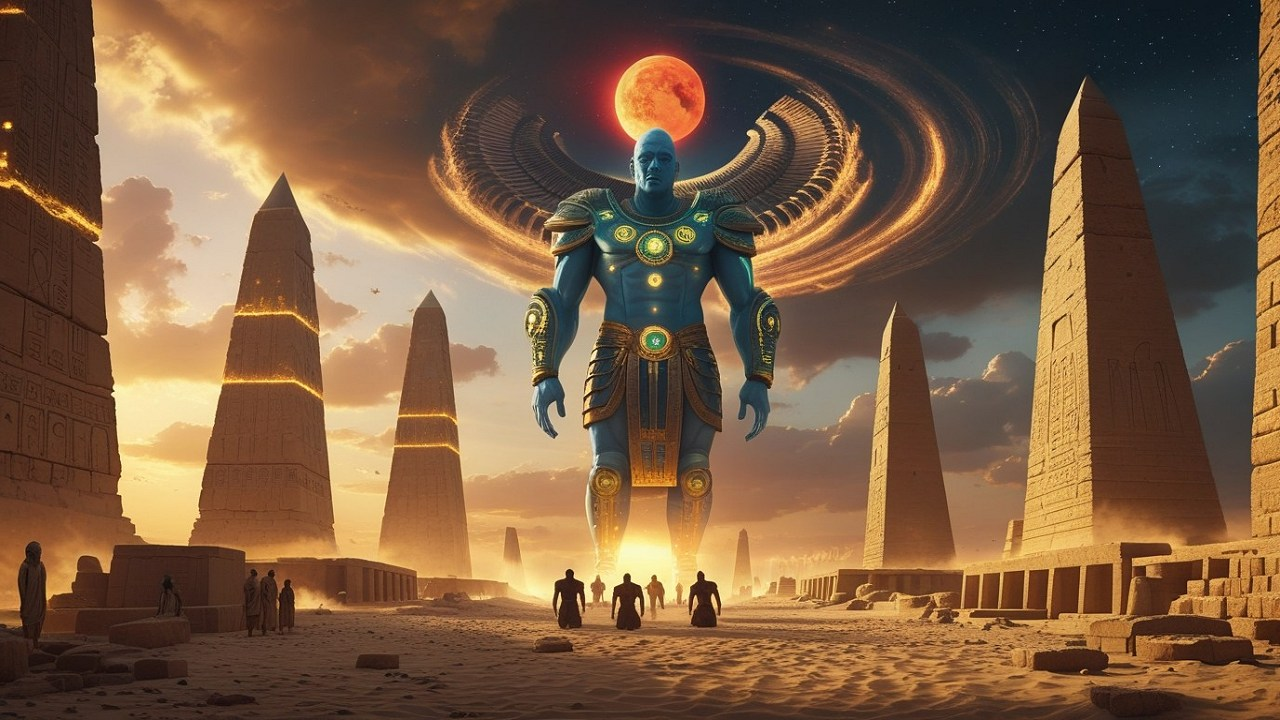
The Anunnaki (sometimes spelled Annunaki or Anunna) are among the most famous and controversial entities in modern alternative history, ancient-astronaut theory, and certain strands of UFO/conspiracy literature. The name originates from ancient Mesopotamian (Sumerian, Akkadian, Babylonian, Assyrian) mythology, where it refers to a group of deities—primarily the offspring of An (sky god) and Ki (earth goddess). In the oldest Sumerian texts, the Anunnaki are high gods who decree fates, judge the dead, and play central roles in creation myths. Over time, their portrayal evolved, and in later Babylonian versions (especially the Enuma Elish), some Anunnaki were assigned to the underworld as judges while others remained celestial.
The modern interpretation of the Anunnaki as extraterrestrial beings who visited Earth, genetically engineered humanity, and ruled as god-kings stems almost entirely from the work of Zecharia Sitchin (1920–2010), a self-taught Azerbaijani-American author and researcher. Sitchin’s 12-book “Earth Chronicles” series (beginning with The 12th Planet in 1976) argues that the Anunnaki were not mythological gods but a race of advanced extraterrestrials from a hypothetical planet called Nibiru (which he placed on a 3,600-year elliptical orbit around the Sun). According to Sitchin, the Anunnaki arrived on Earth around 450,000 years ago to mine gold for their planet’s atmosphere. When their labor force tired, they genetically engineered Homo sapiens as a slave species by mixing their own DNA with Homo erectus.
Sitchin’s core claims include:
-Nibiru (Planet X) enters the inner solar system every 3,600 years, causing cataclysms on Earth.
-The Anunnaki established bases in Mesopotamia (Sumer), Africa (gold mines in modern South Africa/Zimbabwe), and elsewhere.
-Major Sumerian gods (Enki/Ea, Enlil, Ninhursag, Marduk, Inanna/Ishtar) were Anunnaki individuals with distinct personalities and rivalries.
-The Great Flood (Noah/Utnapishtim story) was caused by Nibiru’s gravitational pull and was deliberately allowed by Enlil but mitigated by Enki, who warned a human survivor.
-Humanity’s creation was a deliberate act of genetic engineering (mixing Anunnaki DNA with ape-man) to produce a worker race.
-The Tower of Babel was an attempt to reach the Anunnaki spaceport or prevent unified human rebellion.
-Many ancient structures (pyramids, ziggurats) were built with Anunnaki technology or under their direction.
Sitchin based his translations on Sumerian cuneiform tablets (especially the Enuma Elish, Atrahasis Epic, Epic of Gilgamesh, and king lists). He claimed to read Akkadian and Sumerian independently of mainstream scholars, though he had no formal academic credentials in Assyriology.
Mainstream Academic Response
Professional Assyriologists and Sumerologists (Samuel Noah Kramer, Thorkild Jacobsen, Jean Bottéro, Michael Heiser, and others) have overwhelmingly rejected Sitchin’s translations and interpretations. Key criticisms include:
-No Sumerian or Akkadian text mentions Nibiru as a planet on a 3,600-year orbit. Nibiru in cuneiform texts is a name for Jupiter or a point in the sky, not a rogue planet.
-The Anunnaki are never described as extraterrestrials, gold miners, or genetic engineers. They are deities who decree fates, control natural forces, and judge the dead.
-The idea of humans created as gold-mining slaves is absent from the texts. The Atrahasis Epic says humans were created to relieve lesser gods (Igigi) of manual labor (digging canals), not mining gold.
-Gold is barely mentioned in Sumerian creation myths; it is symbolically important but not the reason for human creation.
-Sitchin’s translations contain numerous errors (e.g., misreading terms, ignoring context, inventing words like “Nibiru = planet of crossing”).
Michael Heiser (Ph.D. in Hebrew Bible and Semitic languages) has produced the most detailed line-by-line refutations, showing that Sitchin’s readings do not match known cuneiform meanings.
Other Sources & Variations
Outside Sitchin, Sirian/Anunnaki overlap appears in some modern channeling:
-Some starseed literature (e.g., Swerdlow’s Blue Blood, True Blood) conflates Sirians with Anunnaki as genetic engineers or reptilian-influenced rulers.
-David Icke and related conspiracy circles link Anunnaki to reptilian overlords (Draco/Orion), a view not present in Sumerian texts or Sitchin.
-Some Pleiadian/Arcturian channelers (Marciniak, Miller) mention “Anunnaki” as a regressive group that interfered with Earth, contrasting them with benevolent Sirians/Pleiadians.
No primary Sumerian text supports extraterrestrial Anunnaki. The term “Anunnaki” means “offspring of An” (princely seed) and refers to major gods (Enlil, Enki, Ninhursag, etc.) and later to underworld judges.
Physical Descriptions in Modern LoreSitchin:
-Tall (7–9+ ft), humanoid, long-lived, advanced technology (no detailed skin/hair/eye descriptions).
-Conspiracy variants (Icke etc.): Reptilian features hidden behind human illusion, or hybrid human-reptilian.
-Starseed/channeling: Sometimes blue-skinned or golden-tan humanoids (blending with Sirian traits).
Significance & Legacy
The Anunnaki as extraterrestrial gold miners and human creators are a 20th-century invention—primarily Sitchin’s. The original Sumerian Anunnaki are mythological deities, not aliens. Despite academic rejection, Sitchin’s narrative has had massive cultural impact:
-Popularized ancient-astronaut theory in mainstream media.
-Inspired TV shows (Ancient Aliens), books, and conspiracy communities.
-Fueled debates about Sumerian texts, Nibiru/Planet X, and human origins.
In summary, the historical Anunnaki are Sumerian gods who decree fates and judge the dead. The extraterrestrial Anunnaki are a modern reinterpretation with no support in cuneiform sources. They remain one of the most enduring and polarizing ideas in alternative history and UFO lore—believed fervently by some, dismissed categorically by mainstream scholars.
Zecharia Sitchin’s The 12th Planet (1976)
When Zecharia Sitchin published The 12th Planet in 1976, he did more than write a book—he launched an entirely new paradigm in alternative history and ancient-astronaut theory. The work, the first in his eventual 12-book Earth Chronicles series, presented a radical reinterpretation of Sumerian cuneiform texts, arguing that the gods of ancient Mesopotamia—the Anunnaki—were not mythological deities but flesh-and-blood extraterrestrials from a rogue planet called Nibiru. Sitchin claimed this planet follows a 3,600-year elliptical orbit that brings it into the inner solar system periodically, and that the Anunnaki arrived on Earth approximately 450,000 years ago to mine gold for their planet’s deteriorating atmosphere.
Sitchin based his thesis on his own translations and interpretations of key Sumerian and Akkadian tablets, primarily the Enuma Elish (Babylonian creation epic), the Atrahasis Epic, the Epic of Gilgamesh, and various Sumerian king lists and administrative texts. He argued that conventional Assyriologists had misunderstood or deliberately downplayed the literal meaning of these texts. In his reading, the Sumerians were not inventing gods—they were recording historical events involving advanced visitors from another world.
The central narrative of The 12th Planet unfolds as follows:
Around 450,000 years ago, the Anunnaki—tall, long-lived humanoids from Nibiru—faced an environmental crisis on their planet. Their atmosphere was thinning, and gold particles suspended in the upper layers could reflect heat and stabilize climate. Mining gold on Nibiru was difficult, so a mission was sent to Earth, rich in gold deposits. The Anunnaki established bases in Mesopotamia (Eridu, Nippur, Uruk) and southern Africa (where the richest gold fields were located).
For hundreds of thousands of years, lesser Anunnaki (the Igigi) performed the labor. Eventually they rebelled, refusing to continue the backbreaking work of mining. Faced with a crisis, Enki (chief scientist and geneticist, son of Anu the sky ruler) proposed a solution: create a primitive worker race. Working with Ninhursag (chief medical officer, also called Ninti or “Lady of Life”), Enki took DNA from a young Anunnaki male, mixed it with the genetic material of Homo erectus (the most advanced hominid on Earth at the time), and used an “essence” (interpreted by Sitchin as DNA) from a sacrificed god (We-ilu or similar figure) to produce the first Homo sapiens—Adamu, the “one who is like Earth’s clay.”
The new species was designed to be intelligent enough to follow orders but not so intelligent as to challenge their creators. Sitchin pointed to Sumerian cylinder seals and texts showing gods “forming” humans from clay as evidence of this genetic engineering process. The Anunnaki then mass-produced workers using a “mold” or cloning process (the “bit shimitu” or “house of fashioning life”).
The experiment succeeded, but over time humans multiplied and became noisy, disturbing Enlil (Enki’s half-brother, ruler of the air and enforcer of order). Around 10,900 BCE, Nibiru’s close passage caused massive flooding (the Great Flood of biblical and Sumerian tradition). Enlil saw the deluge as an opportunity to wipe out the troublesome humans; Enki, however, secretly warned a human survivor (Atrahasis/Ziusudra/Noah) to build a boat and preserve life.
After the flood, the Anunnaki granted humans longer lifespans and civilization (kingship descended from heaven), but maintained control. Sitchin argued that many later Sumerian myths (Tower of Babel, destruction of Sodom and Gomorrah) were records of Anunnaki conflicts, nuclear events, and attempts to limit human independence.
Primary Source
The foundational text is Zecharia Sitchin’s The 12th Planet (1976), the first volume of the Earth Chronicles series. Sitchin claimed to read Sumerian and Akkadian independently (though he had no formal academic credentials in Assyriology). He based his translations on published cuneiform tablets (e.g., British Museum collections, Enuma Elish, Atrahasis Epic) and argued that mainstream scholars missed the literal meaning due to religious bias or academic conservatism.
Significance
The 12th Planet is the foundational modern claim that transformed the mythological Anunnaki into extraterrestrial visitors who created humanity as a slave race to mine gold. It launched the entire ancient-astronaut genre and remains the single most referenced “event” in Anunnaki lore. The book popularized:
-Nibiru/Planet X as a doomsday planet.
-Anunnaki as gold-mining aliens.
-Humans as genetically engineered slaves.
-The Great Flood as a Nibiru-induced cataclysm.
The work inspired countless TV shows (Ancient Aliens), books, documentaries, and conspiracy theories. It also sparked intense academic backlash: mainstream Assyriologists (Samuel Noah Kramer, Thorkild Jacobsen, Michael Heiser, etc.) have rejected Sitchin’s translations as inaccurate, anachronistic, and unsupported by the cuneiform record. Critics point out that:
-No Sumerian text mentions Nibiru as a 3,600-year-orbit planet.
-Gold mining is not the reason for human creation in any known tablet.
-The Anunnaki are gods who decree fates, not aliens who mine gold.
Despite this, Sitchin’s narrative has had enormous cultural impact, shaping how millions view ancient history, human origins, and the possibility of extraterrestrial intervention.
The Creation of Humanity in the Atrahasis Epic
The Atrahasis Epic is one of the oldest and most complete surviving Mesopotamian accounts of human origins and the Great Flood. Composed in Akkadian around 1800 BCE (with Sumerian precursors likely older), the epic was rediscovered in the 19th century among the clay tablets excavated from the library of Ashurbanipal in Nineveh. The standard modern translation and reconstruction was published by W.G. Lambert and A.R. Millard in 1969 (Atra-?asis: The Babylonian Story of the Flood), providing the scholarly baseline that Zecharia Sitchin would later reinterpret in his 1976 book The 12th Planet.
In the original Atrahasis Epic, the story begins in a time before humans existed. The lesser gods, called the Igigi, are forced to perform hard manual labor—digging canals, maintaining irrigation systems, and shaping the land to support the higher gods (the Anunnaki). After thousands of years, the Igigi rebel against this endless toil. They burn their tools and surround Enlil’s great house in Nippur, demanding relief. The senior gods convene, and Enki (Ea in Akkadian), the god of wisdom and fresh water, proposes a solution: create a new creature to take over the labor. The gods agree.
Enki instructs Nintu (also called Mami or Ninhursag, the birth goddess) to mix clay with the blood and flesh of a slain god—We-ilu or Geshtu-e, a minor deity who volunteers or is chosen for sacrifice. The text states:
“Let them slaughter one god, and let the gods be cleansed by immersion. With his flesh and blood let Nintu mix clay, that god and man may be thoroughly mixed in the clay.”
Nintu shapes fourteen pieces of clay (seven male, seven female) and uses a “birth brick” ritual to gestate them. The result is the first humans—created to bear the workload of the gods. The Igigi are freed, and humanity begins its role as servant to the divine order.
Sitchin’s reinterpretation in The 12th Planet (1976) transforms this mythological account into a literal historical and scientific event. He argues that the “gods” were not supernatural beings but extraterrestrial visitors—the Anunnaki—from a planet called Nibiru. The Igigi rebellion was a labor strike by rank-and-file Anunnaki miners. Enki, portrayed as a chief scientist and geneticist, proposed bioengineering a slave species. The “clay” in the text, Sitchin claims, is a Sumerian metaphor for the basic genetic material of early hominids (Homo erectus or similar). The “blood and flesh” of the slain god represents Anunnaki DNA, extracted and spliced into the hominid genome.
Sitchin points to the phrase “let god and man be thoroughly mixed in the clay” as evidence of deliberate genetic hybridization. He interprets the “birth brick” ritual as a description of artificial wombs or cloning vats used to gestate the first batch of Homo sapiens workers. The resulting humans were designed to be intelligent enough to follow orders and perform mining tasks but not intelligent enough to challenge their creators. Sitchin ties this to Sumerian king lists and cylinder seals depicting gods “fashioning” humans from clay, arguing that these were not myths but memories of genetic engineering laboratories.
He further claims the gold-mining purpose was literal: Nibiru’s atmosphere needed gold particles to reflect solar radiation and prevent collapse. When the Anunnaki’s own workforce rebelled, humans were created as a cheaper, more compliant labor force. The Great Flood (later in the epic) was caused by Nibiru’s gravitational pull during a close orbital pass, and Enki’s warning to Atrahasis (the Sumerian Noah) was an act of defiance against Enlil’s decision to let the new workers be destroyed.
Primary Sources
Original ancient text: The Atrahasis Epic tablets (Old Babylonian version, c. 1800 BCE), translated and reconstructed by W.G. Lambert and A.R. Millard in Atra-?asis: The Babylonian Story of the Flood (1969). The key creation passage is Tablet I, lines 208–239.
Sitchin’s reinterpretation: Zecharia Sitchin’s The 12th Planet (1976), especially chapters 6–9, where he translates and analyzes the creation and flood sections of Atrahasis. Sitchin cites the 1969 Lambert/Millard edition as his primary textual source.
Significance
This reinterpretation is arguably the single most famous “event” Sitchin used to argue that the Anunnaki created humans as a slave species. It is repeated endlessly in Ancient Aliens episodes, conspiracy videos, and alternative-history forums. The idea that humanity was engineered as a labor force to mine gold for extraterrestrials has become a cornerstone of modern Anunnaki lore—far more influential than the original mythological purpose (relieving lesser gods of canal-digging labor).
Mainstream Assyriologists reject Sitchin’s reading as a complete fabrication. The Atrahasis Epic contains no mention of gold mining, Nibiru, or DNA. The “clay” and “blood” are standard Mesopotamian mythological motifs for creation from earth and divine essence—not genetic engineering. The slain god’s blood symbolizes life force, not DNA. No cuneiform text supports Sitchin’s claim that humans were created to mine gold.
Enki’s Warning of the Great Flood – The Atrahasis/Noah Parallel
The story of a great deluge sent to destroy humanity, with one righteous man warned by a god to build a boat and preserve life, is one of the most widespread and ancient flood myths on record. In Mesopotamia, this narrative appears in its fullest and oldest form in the Atrahasis Epic (c. 1800 BCE, Old Babylonian version) and is later adapted into the Epic of Gilgamesh (Standard Babylonian version, c. 1200–1000 BCE). The tale is central to Zecharia Sitchin’s reinterpretation in The 12th Planet (1976), where he transforms a mythological flood into a literal cosmic event caused by the planet Nibiru and frames the gods Enlil and Enki as rival extraterrestrials with opposing agendas for humanity.
In the original Atrahasis Epic, the story begins after humans are created to relieve the lesser gods (Igigi) of hard labor. Over time, humanity multiplies and becomes “noisy,” disturbing Enlil, the chief god of earth and air who rules from Nippur. Enlil’s sleep is disrupted by the clamor, so he decides to reduce the human population. He first sends plague, famine, and drought, but Enki (Ea), god of wisdom and fresh water, secretly undermines each attempt by advising Atrahasis (the wise human leader) how to appease the gods and end the afflictions. Frustrated, Enlil finally decrees a total deluge to wipe out humankind entirely.
Enki, however, defies Enlil’s command. He appears to Atrahasis in a dream (or through a reed screen in some versions) and warns him of the coming flood. Enki instructs Atrahasis to tear down his house, build a large boat, cover it with bitumen, load it with his family, animals, and provisions, and seal the door when the storm begins. The flood lasts seven days and seven nights. When the waters recede, Atrahasis offers sacrifice. The gods, deprived of human offerings during the deluge, gather “like flies” around the food. Enlil is furious to discover survivors, but Enki defends his actions, arguing that total annihilation was unjust. The gods compromise: humans will continue, but with shorter lifespans and new controls (infertility, infant mortality) to limit population.
The Epic of Gilgamesh (Tablet XI) retells this story with Utnapishtim as the flood hero. Utnapishtim recounts to Gilgamesh how Ea (Enki) spoke through the wall of his reed house:
“Destroy your house and build a boat… Abandon possessions and look for life… Board the boat and take the seed of all living things.”
The gods send a storm; Utnapishtim survives; after the flood he offers sacrifice and is granted immortality by the gods.
Sitchin’s reinterpretation in The 12th Planet (1976) reframes this as literal history involving extraterrestrials. He claims the flood was caused by Nibiru’s close orbital pass around 10,900 BCE, whose gravitational pull triggered massive tidal waves and tectonic upheaval. Enlil, portrayed as a strict military commander, saw the deluge as a convenient way to eliminate the noisy, overpopulated human slaves. Enki, the compassionate scientist and geneticist who created humanity, secretly defied Enlil by warning a human survivor (Atrahasis/Utnapishtim/Noah) to build a boat and preserve life. Sitchin argued this act of mercy preserved the Anunnaki’s labor force against Enlil’s will, showing internal politics among the extraterrestrials.
Sitchin tied the biblical Noah story directly to Atrahasis/Utnapishtim, claiming the Hebrew version was a later retelling of the Sumerian original. He pointed to linguistic parallels (Atrahasis = “exceedingly wise”; Noah = “rest” or “comfort”) and argued the flood was not divine punishment for sin (as in Genesis) but a natural catastrophe exploited by Enlil.
Primary Sources
Original ancient texts:
-Atrahasis Epic (Old Babylonian version, c. 1800 BCE), translated by W.G. Lambert and A.R. Millard (1969). Core flood warning in Tablet III.
-Epic of Gilgamesh, Tablet XI (Standard Babylonian version, c. 1200–1000 BCE), Utnapishtim’s flood account.
Sitchin’s reinterpretation: Zecharia Sitchin’s The 12th Planet (1976), especially chapters 10–12, where he analyzes the flood narrative, Nibiru’s orbit, and Enki vs. Enlil conflict.
Significance
This reinterpretation is one of the most famous and enduring elements of Sitchin’s work. By tying the biblical flood to Anunnaki politics—making Enki a savior figure who preserved humanity against Enlil’s genocidal intent—Sitchin transformed a mythological story into a literal extraterrestrial drama. The idea that the flood was caused by Nibiru’s gravitational pull, and that Enki secretly saved a survivor to maintain the labor force, is repeated endlessly in Ancient Aliens episodes, conspiracy videos, forums, and alternative-history books.
The Anunnaki in the Enuma Elish – Marduk’s Rise
The Enuma Elish—often called the Babylonian Epic of Creation—is one of the oldest and most important surviving religious texts from ancient Mesopotamia. Composed in Akkadian between approximately 1800 and 1100 BCE, it was recited during the Babylonian New Year festival (Akitu) to reaffirm the supremacy of Marduk, the patron god of Babylon. The epic describes a cosmic battle among the gods, culminating in Marduk’s victory over the chaos goddess Tiamat and the creation of the world from her dismembered body. For Zecharia Sitchin, this was not mythology but a veiled historical record of a solar-system catastrophe involving the Anunnaki and their planet Nibiru. His reinterpretation in The 12th Planet (1976) turns the Enuma Elish into one of his most dramatic and widely repeated claims.
In the original text, the story begins with the primordial couple Apsu (fresh water) and Tiamat (salt water), who give birth to the younger gods. Their noise disturbs Apsu, who plots to destroy them. Ea (Enki) kills Apsu and takes his place. Tiamat, enraged, creates an army of monsters led by Kingu and wages war against the younger gods. The gods are afraid until Marduk, a young storm god and son of Ea, volunteers to fight Tiamat in exchange for supreme authority. Armed with winds, arrows, a net, and a magical mace, Marduk confronts Tiamat, fills her with wind so she cannot close her jaws, shoots an arrow into her heart, and splits her body in two. From her upper half he forms the heavens; from her lower half, the earth. He then uses Kingu’s blood to create humanity (in some versions) and establishes Babylon as the center of the cosmos. The gods bestow fifty names on Marduk, affirming his kingship.
Sitchin’s reinterpretation reframes this entire narrative as a literal astronomical event:
-Tiamat is not a goddess but a planet orbiting between Mars and Jupiter.
-Apsu is the Sun (or a primordial solar body).
-The younger gods are the planets of the inner solar system.
-Nibiru (the Anunnaki’s home world) enters the solar system on its 3,600-year orbit and collides with Tiamat.
-Marduk is either Nibiru itself or an Anunnaki leader commanding the mission.
-The battle is the gravitational and physical collision: Nibiru’s orbit fragments Tiamat, creating the asteroid belt from her remains and knocking off a large piece that becomes Earth.
-The “winds” Marduk uses are the gravitational forces and atmospheric drag of Nibiru.
-The splitting of Tiamat’s body forms the current Earth and the asteroid belt (“the firmament” separating waters above and below).
-Humanity’s creation from Kingu’s blood symbolizes the Anunnaki later engineering Homo sapiens from existing hominids.
Sitchin argued that the Enuma Elish was not myth but a Sumerian/Babylonian memory of a real cosmic catastrophe witnessed by the Anunnaki and later passed to humans. He pointed to the epic’s astronomical details—the orbit of Marduk/Nibiru, the creation of the “firmament,” the number 50 (Marduk’s rank and the number of Anunnaki who came to Earth)—as evidence of advanced knowledge. He claimed the text was a coded record of Nibiru’s passage and the Anunnaki’s role in shaping the solar system.
Primary Sources
-Original ancient text: The Enuma Elish (seven tablets, Standard Babylonian version c. 1200–600 BCE, with earlier fragments). Most complete copies come from Ashurbanipal’s library in Nineveh. Standard scholarly translation: L.W. King (1902), R. Labat (1935), and Stephanie Dalley (Myths from Mesopotamia, 1989).
-Sitchin’s reinterpretation: Zecharia Sitchin’s The 12th Planet (1976), especially chapters 6–8, where he analyzes the Enuma Elish line-by-line and equates Marduk with Nibiru or an Anunnaki leader.
Significance
This is one of Sitchin’s most dramatic and visually striking claims: turning a creation myth recited in Babylonian temples into a literal solar-system catastrophe involving planetary collision, the birth of Earth, and the formation of the asteroid belt. The idea that Marduk/Nibiru “split Tiamat in two” to create Earth has been repeated endlessly in Ancient Aliens episodes, YouTube videos, conspiracy documentaries, and alternative-history forums. It gives the Anunnaki a god-like role not just in human creation but in the very formation of the planet itself.
The Dogon & Nommo / Sirian-Anunnaki Overlap (1976 onward)
One of the most persistent and debated intersections in modern alternative history and extraterrestrial lore is the proposed connection between the ancient Dogon people of Mali and the Sirian/Anunnaki narrative. The story begins not with Zecharia Sitchin but with French anthropologists Marcel Griaule and Germaine Dieterlen, whose fieldwork in the 1930s–1950s among the Dogon produced some of the most intriguing claims in 20th-century anthropology. These claims were later amplified and reinterpreted by Robert K.G. Temple in The Sirius Mystery (1976), and in the decades since, conspiracy circles—particularly followers of Sitchin, David Icke, and broader ancient-astronaut communities—have merged the Nommo beings with the Anunnaki, creating a hybrid Sirian-Anunnaki archetype of aquatic genetic engineers and ancient teachers.
Marcel Griaule’s Fieldwork (1930s–1950s)
Marcel Griaule began intensive ethnographic study of the Dogon in 1931, spending decades living among them in the Bandiagara Escarpment region of Mali. His most famous publication on their cosmology is Conversations with Ogotemmêli (1948, English translation 1965), a record of extended discussions with a blind elder and priest named Ogotemmêli in 1931. Ogotemmêli described a complex creation myth centered on the Nommo—amphibious, hermaphroditic beings sent from the star Sirius (called “Sigi Tolo” by the Dogon) to bring civilization.
The Dogon said the Nommo arrived in an ark that spun and descended into water. They were fish-like or serpent-like, with human upper bodies and lower parts resembling fish tails or reptilian scales. The primary Nommo (Nommo Die) sacrificed himself to bring order, his body parts scattered to create life. The Nommo taught the Dogon agriculture, weaving, blacksmithing, astronomy, and moral law. Crucially, the Dogon claimed knowledge of Sirius B—a white-dwarf companion star invisible to the naked eye. They called it “Po Tolo” (the heaviest star), described it as small, dense, white, orbiting Sirius A every 50 years, and said it was the “digitaria star” (referring to a tiny seed). They also mentioned a third star, “Emme Ya” (sorghum female).
Griaule and Dieterlen documented this in Le Renard pâle (1965, posthumous for Griaule) and other papers. The knowledge was extraordinary because Sirius B was not visually confirmed by Western astronomers until 1862 (Alvan Clark) and its density/white-dwarf nature was not understood until the 1920s–1930s. The 50-year orbit was calculated in the early 20th century. The Dogon had no telescopes, raising the question: how did they know?
Robert K.G. Temple’s The Sirius Mystery (1976)
Temple, a linguist and ancient-astronaut theorist, argued in The Sirius Mystery that the Dogon could not have acquired this knowledge from European contact (missionaries or anthropologists) because the specific details (density, orbit, color) were not widely known before Griaule’s arrival. He hypothesized that the Nommo were real extraterrestrial visitors from the Sirius system—amphibious beings adapted to water—who taught the Dogon directly. Temple linked the Nommo to global myths: Oannes (Babylonian fish-man teacher), Dagon (Philistine fish-god), and other aquatic civilizers. Physical description from Dogon tradition: fish-like or mermaid-like, with human upper bodies, reptilian/fish lower bodies, scales or fins, large eyes, telepathic communication.
Temple’s book became a cornerstone of the ancient-astronaut genre, though it faced heavy criticism. Anthropologists (e.g., Walter van Beek, 1991) argued cultural contamination: European visitors discussed Sirius B before Griaule; Dogon cosmology was reinterpreted through Griaule’s lens; some details may have been added post-contact.
Later Conflation with Sitchin/Anunnaki Claims (1980s–present)
After Sitchin’s The 12th Planet (1976), conspiracy communities began merging Temple’s aquatic Nommo with Sitchin’s Anunnaki. David Icke and followers claimed Sirians/Anunnaki were the same or allied—genetic engineers who created humanity. Some portrayals blended the two:
-Sirians/Anunnaki as aquatic-reptilian hybrids (blue skin, scales, fish-like features).
-Nommo as an early wave of Anunnaki teachers.
-Genetic seeding in Africa/Egypt tied to both groups.
This overlap became common in forums, YouTube videos, and books (e.g., Stewart Swerdlow’s Blue Blood, True Blood, 2002), blurring lines between Sirian (water healers) and Anunnaki (genetic engineers/rulers).
Primary Sources
-Marcel Griaule: Conversations with Ogotemmêli (1948, English 1965) — foundational Dogon cosmology.
-Griaule & Dieterlen: Le Renard pâle (1965) — expanded Sirius details.
-Robert K.G. Temple: The Sirius Mystery (1976, revised 1998) — the book that popularized the extraterrestrial hypothesis.
Significance
The Sirius Mystery and its later conflation with Sitchin helped blur lines between Sirians and Anunnaki in modern lore. Temple’s aquatic Nommo (fish/serpent/mermaid-like teachers from Sirius) merged with Sitchin’s Anunnaki (genetic engineers from Nibiru) to create a hybrid archetype: ancient aquatic geneticists who seeded humanity and taught civilization. The idea that Sirians/Anunnaki were amphibious visitors who brought astronomy and DNA modification persists in conspiracy circles, Ancient Aliens episodes, and starseed communities. Though heavily criticized (cultural contamination, mistranslation), the Dogon-Nommo/Sirian-Anunnaki overlap remains one of the most enduring links between African oral tradition and extraterrestrial origin theories.
The Anunnaki (sometimes spelled Annunaki or Anunna) are among the most famous and controversial entities in modern alternative history, ancient-astronaut theory, and certain strands of UFO/conspiracy literature. The name originates from ancient Mesopotamian (Sumerian, Akkadian, Babylonian, Assyrian) mythology, where it refers to a group of deities—primarily the offspring of An (sky god) and Ki (earth goddess). In the oldest Sumerian texts, the Anunnaki are high gods who decree fates, judge the dead, and play central roles in creation myths. Over time, their portrayal evolved, and in later Babylonian versions (especially the Enuma Elish), some Anunnaki were assigned to the underworld as judges while others remained celestial.
The modern interpretation of the Anunnaki as extraterrestrial beings who visited Earth, genetically engineered humanity, and ruled as god-kings stems almost entirely from the work of Zecharia Sitchin (1920–2010), a self-taught Azerbaijani-American author and researcher. Sitchin’s 12-book “Earth Chronicles” series (beginning with The 12th Planet in 1976) argues that the Anunnaki were not mythological gods but a race of advanced extraterrestrials from a hypothetical planet called Nibiru (which he placed on a 3,600-year elliptical orbit around the Sun). According to Sitchin, the Anunnaki arrived on Earth around 450,000 years ago to mine gold for their planet’s atmosphere. When their labor force tired, they genetically engineered Homo sapiens as a slave species by mixing their own DNA with Homo erectus.
Sitchin’s core claims include:
-Nibiru (Planet X) enters the inner solar system every 3,600 years, causing cataclysms on Earth.
-The Anunnaki established bases in Mesopotamia (Sumer), Africa (gold mines in modern South Africa/Zimbabwe), and elsewhere.
-Major Sumerian gods (Enki/Ea, Enlil, Ninhursag, Marduk, Inanna/Ishtar) were Anunnaki individuals with distinct personalities and rivalries.
-The Great Flood (Noah/Utnapishtim story) was caused by Nibiru’s gravitational pull and was deliberately allowed by Enlil but mitigated by Enki, who warned a human survivor.
-Humanity’s creation was a deliberate act of genetic engineering (mixing Anunnaki DNA with ape-man) to produce a worker race.
-The Tower of Babel was an attempt to reach the Anunnaki spaceport or prevent unified human rebellion.
-Many ancient structures (pyramids, ziggurats) were built with Anunnaki technology or under their direction.
Sitchin based his translations on Sumerian cuneiform tablets (especially the Enuma Elish, Atrahasis Epic, Epic of Gilgamesh, and king lists). He claimed to read Akkadian and Sumerian independently of mainstream scholars, though he had no formal academic credentials in Assyriology.
Mainstream Academic Response
Professional Assyriologists and Sumerologists (Samuel Noah Kramer, Thorkild Jacobsen, Jean Bottéro, Michael Heiser, and others) have overwhelmingly rejected Sitchin’s translations and interpretations. Key criticisms include:
-No Sumerian or Akkadian text mentions Nibiru as a planet on a 3,600-year orbit. Nibiru in cuneiform texts is a name for Jupiter or a point in the sky, not a rogue planet.
-The Anunnaki are never described as extraterrestrials, gold miners, or genetic engineers. They are deities who decree fates, control natural forces, and judge the dead.
-The idea of humans created as gold-mining slaves is absent from the texts. The Atrahasis Epic says humans were created to relieve lesser gods (Igigi) of manual labor (digging canals), not mining gold.
-Gold is barely mentioned in Sumerian creation myths; it is symbolically important but not the reason for human creation.
-Sitchin’s translations contain numerous errors (e.g., misreading terms, ignoring context, inventing words like “Nibiru = planet of crossing”).
Michael Heiser (Ph.D. in Hebrew Bible and Semitic languages) has produced the most detailed line-by-line refutations, showing that Sitchin’s readings do not match known cuneiform meanings.
Other Sources & Variations
Outside Sitchin, Sirian/Anunnaki overlap appears in some modern channeling:
-Some starseed literature (e.g., Swerdlow’s Blue Blood, True Blood) conflates Sirians with Anunnaki as genetic engineers or reptilian-influenced rulers.
-David Icke and related conspiracy circles link Anunnaki to reptilian overlords (Draco/Orion), a view not present in Sumerian texts or Sitchin.
-Some Pleiadian/Arcturian channelers (Marciniak, Miller) mention “Anunnaki” as a regressive group that interfered with Earth, contrasting them with benevolent Sirians/Pleiadians.
No primary Sumerian text supports extraterrestrial Anunnaki. The term “Anunnaki” means “offspring of An” (princely seed) and refers to major gods (Enlil, Enki, Ninhursag, etc.) and later to underworld judges.
Physical Descriptions in Modern LoreSitchin:
-Tall (7–9+ ft), humanoid, long-lived, advanced technology (no detailed skin/hair/eye descriptions).
-Conspiracy variants (Icke etc.): Reptilian features hidden behind human illusion, or hybrid human-reptilian.
-Starseed/channeling: Sometimes blue-skinned or golden-tan humanoids (blending with Sirian traits).
Significance & Legacy
The Anunnaki as extraterrestrial gold miners and human creators are a 20th-century invention—primarily Sitchin’s. The original Sumerian Anunnaki are mythological deities, not aliens. Despite academic rejection, Sitchin’s narrative has had massive cultural impact:
-Popularized ancient-astronaut theory in mainstream media.
-Inspired TV shows (Ancient Aliens), books, and conspiracy communities.
-Fueled debates about Sumerian texts, Nibiru/Planet X, and human origins.
In summary, the historical Anunnaki are Sumerian gods who decree fates and judge the dead. The extraterrestrial Anunnaki are a modern reinterpretation with no support in cuneiform sources. They remain one of the most enduring and polarizing ideas in alternative history and UFO lore—believed fervently by some, dismissed categorically by mainstream scholars.
Zecharia Sitchin’s The 12th Planet (1976)
When Zecharia Sitchin published The 12th Planet in 1976, he did more than write a book—he launched an entirely new paradigm in alternative history and ancient-astronaut theory. The work, the first in his eventual 12-book Earth Chronicles series, presented a radical reinterpretation of Sumerian cuneiform texts, arguing that the gods of ancient Mesopotamia—the Anunnaki—were not mythological deities but flesh-and-blood extraterrestrials from a rogue planet called Nibiru. Sitchin claimed this planet follows a 3,600-year elliptical orbit that brings it into the inner solar system periodically, and that the Anunnaki arrived on Earth approximately 450,000 years ago to mine gold for their planet’s deteriorating atmosphere.
Sitchin based his thesis on his own translations and interpretations of key Sumerian and Akkadian tablets, primarily the Enuma Elish (Babylonian creation epic), the Atrahasis Epic, the Epic of Gilgamesh, and various Sumerian king lists and administrative texts. He argued that conventional Assyriologists had misunderstood or deliberately downplayed the literal meaning of these texts. In his reading, the Sumerians were not inventing gods—they were recording historical events involving advanced visitors from another world.
The central narrative of The 12th Planet unfolds as follows:
Around 450,000 years ago, the Anunnaki—tall, long-lived humanoids from Nibiru—faced an environmental crisis on their planet. Their atmosphere was thinning, and gold particles suspended in the upper layers could reflect heat and stabilize climate. Mining gold on Nibiru was difficult, so a mission was sent to Earth, rich in gold deposits. The Anunnaki established bases in Mesopotamia (Eridu, Nippur, Uruk) and southern Africa (where the richest gold fields were located).
For hundreds of thousands of years, lesser Anunnaki (the Igigi) performed the labor. Eventually they rebelled, refusing to continue the backbreaking work of mining. Faced with a crisis, Enki (chief scientist and geneticist, son of Anu the sky ruler) proposed a solution: create a primitive worker race. Working with Ninhursag (chief medical officer, also called Ninti or “Lady of Life”), Enki took DNA from a young Anunnaki male, mixed it with the genetic material of Homo erectus (the most advanced hominid on Earth at the time), and used an “essence” (interpreted by Sitchin as DNA) from a sacrificed god (We-ilu or similar figure) to produce the first Homo sapiens—Adamu, the “one who is like Earth’s clay.”
The new species was designed to be intelligent enough to follow orders but not so intelligent as to challenge their creators. Sitchin pointed to Sumerian cylinder seals and texts showing gods “forming” humans from clay as evidence of this genetic engineering process. The Anunnaki then mass-produced workers using a “mold” or cloning process (the “bit shimitu” or “house of fashioning life”).
The experiment succeeded, but over time humans multiplied and became noisy, disturbing Enlil (Enki’s half-brother, ruler of the air and enforcer of order). Around 10,900 BCE, Nibiru’s close passage caused massive flooding (the Great Flood of biblical and Sumerian tradition). Enlil saw the deluge as an opportunity to wipe out the troublesome humans; Enki, however, secretly warned a human survivor (Atrahasis/Ziusudra/Noah) to build a boat and preserve life.
After the flood, the Anunnaki granted humans longer lifespans and civilization (kingship descended from heaven), but maintained control. Sitchin argued that many later Sumerian myths (Tower of Babel, destruction of Sodom and Gomorrah) were records of Anunnaki conflicts, nuclear events, and attempts to limit human independence.
Primary Source
The foundational text is Zecharia Sitchin’s The 12th Planet (1976), the first volume of the Earth Chronicles series. Sitchin claimed to read Sumerian and Akkadian independently (though he had no formal academic credentials in Assyriology). He based his translations on published cuneiform tablets (e.g., British Museum collections, Enuma Elish, Atrahasis Epic) and argued that mainstream scholars missed the literal meaning due to religious bias or academic conservatism.
Significance
The 12th Planet is the foundational modern claim that transformed the mythological Anunnaki into extraterrestrial visitors who created humanity as a slave race to mine gold. It launched the entire ancient-astronaut genre and remains the single most referenced “event” in Anunnaki lore. The book popularized:
-Nibiru/Planet X as a doomsday planet.
-Anunnaki as gold-mining aliens.
-Humans as genetically engineered slaves.
-The Great Flood as a Nibiru-induced cataclysm.
The work inspired countless TV shows (Ancient Aliens), books, documentaries, and conspiracy theories. It also sparked intense academic backlash: mainstream Assyriologists (Samuel Noah Kramer, Thorkild Jacobsen, Michael Heiser, etc.) have rejected Sitchin’s translations as inaccurate, anachronistic, and unsupported by the cuneiform record. Critics point out that:
-No Sumerian text mentions Nibiru as a 3,600-year-orbit planet.
-Gold mining is not the reason for human creation in any known tablet.
-The Anunnaki are gods who decree fates, not aliens who mine gold.
Despite this, Sitchin’s narrative has had enormous cultural impact, shaping how millions view ancient history, human origins, and the possibility of extraterrestrial intervention.
The Creation of Humanity in the Atrahasis Epic
The Atrahasis Epic is one of the oldest and most complete surviving Mesopotamian accounts of human origins and the Great Flood. Composed in Akkadian around 1800 BCE (with Sumerian precursors likely older), the epic was rediscovered in the 19th century among the clay tablets excavated from the library of Ashurbanipal in Nineveh. The standard modern translation and reconstruction was published by W.G. Lambert and A.R. Millard in 1969 (Atra-?asis: The Babylonian Story of the Flood), providing the scholarly baseline that Zecharia Sitchin would later reinterpret in his 1976 book The 12th Planet.
In the original Atrahasis Epic, the story begins in a time before humans existed. The lesser gods, called the Igigi, are forced to perform hard manual labor—digging canals, maintaining irrigation systems, and shaping the land to support the higher gods (the Anunnaki). After thousands of years, the Igigi rebel against this endless toil. They burn their tools and surround Enlil’s great house in Nippur, demanding relief. The senior gods convene, and Enki (Ea in Akkadian), the god of wisdom and fresh water, proposes a solution: create a new creature to take over the labor. The gods agree.
Enki instructs Nintu (also called Mami or Ninhursag, the birth goddess) to mix clay with the blood and flesh of a slain god—We-ilu or Geshtu-e, a minor deity who volunteers or is chosen for sacrifice. The text states:
“Let them slaughter one god, and let the gods be cleansed by immersion. With his flesh and blood let Nintu mix clay, that god and man may be thoroughly mixed in the clay.”
Nintu shapes fourteen pieces of clay (seven male, seven female) and uses a “birth brick” ritual to gestate them. The result is the first humans—created to bear the workload of the gods. The Igigi are freed, and humanity begins its role as servant to the divine order.
Sitchin’s reinterpretation in The 12th Planet (1976) transforms this mythological account into a literal historical and scientific event. He argues that the “gods” were not supernatural beings but extraterrestrial visitors—the Anunnaki—from a planet called Nibiru. The Igigi rebellion was a labor strike by rank-and-file Anunnaki miners. Enki, portrayed as a chief scientist and geneticist, proposed bioengineering a slave species. The “clay” in the text, Sitchin claims, is a Sumerian metaphor for the basic genetic material of early hominids (Homo erectus or similar). The “blood and flesh” of the slain god represents Anunnaki DNA, extracted and spliced into the hominid genome.
Sitchin points to the phrase “let god and man be thoroughly mixed in the clay” as evidence of deliberate genetic hybridization. He interprets the “birth brick” ritual as a description of artificial wombs or cloning vats used to gestate the first batch of Homo sapiens workers. The resulting humans were designed to be intelligent enough to follow orders and perform mining tasks but not intelligent enough to challenge their creators. Sitchin ties this to Sumerian king lists and cylinder seals depicting gods “fashioning” humans from clay, arguing that these were not myths but memories of genetic engineering laboratories.
He further claims the gold-mining purpose was literal: Nibiru’s atmosphere needed gold particles to reflect solar radiation and prevent collapse. When the Anunnaki’s own workforce rebelled, humans were created as a cheaper, more compliant labor force. The Great Flood (later in the epic) was caused by Nibiru’s gravitational pull during a close orbital pass, and Enki’s warning to Atrahasis (the Sumerian Noah) was an act of defiance against Enlil’s decision to let the new workers be destroyed.
Primary Sources
Original ancient text: The Atrahasis Epic tablets (Old Babylonian version, c. 1800 BCE), translated and reconstructed by W.G. Lambert and A.R. Millard in Atra-?asis: The Babylonian Story of the Flood (1969). The key creation passage is Tablet I, lines 208–239.
Sitchin’s reinterpretation: Zecharia Sitchin’s The 12th Planet (1976), especially chapters 6–9, where he translates and analyzes the creation and flood sections of Atrahasis. Sitchin cites the 1969 Lambert/Millard edition as his primary textual source.
Significance
This reinterpretation is arguably the single most famous “event” Sitchin used to argue that the Anunnaki created humans as a slave species. It is repeated endlessly in Ancient Aliens episodes, conspiracy videos, and alternative-history forums. The idea that humanity was engineered as a labor force to mine gold for extraterrestrials has become a cornerstone of modern Anunnaki lore—far more influential than the original mythological purpose (relieving lesser gods of canal-digging labor).
Mainstream Assyriologists reject Sitchin’s reading as a complete fabrication. The Atrahasis Epic contains no mention of gold mining, Nibiru, or DNA. The “clay” and “blood” are standard Mesopotamian mythological motifs for creation from earth and divine essence—not genetic engineering. The slain god’s blood symbolizes life force, not DNA. No cuneiform text supports Sitchin’s claim that humans were created to mine gold.
Enki’s Warning of the Great Flood – The Atrahasis/Noah Parallel
The story of a great deluge sent to destroy humanity, with one righteous man warned by a god to build a boat and preserve life, is one of the most widespread and ancient flood myths on record. In Mesopotamia, this narrative appears in its fullest and oldest form in the Atrahasis Epic (c. 1800 BCE, Old Babylonian version) and is later adapted into the Epic of Gilgamesh (Standard Babylonian version, c. 1200–1000 BCE). The tale is central to Zecharia Sitchin’s reinterpretation in The 12th Planet (1976), where he transforms a mythological flood into a literal cosmic event caused by the planet Nibiru and frames the gods Enlil and Enki as rival extraterrestrials with opposing agendas for humanity.
In the original Atrahasis Epic, the story begins after humans are created to relieve the lesser gods (Igigi) of hard labor. Over time, humanity multiplies and becomes “noisy,” disturbing Enlil, the chief god of earth and air who rules from Nippur. Enlil’s sleep is disrupted by the clamor, so he decides to reduce the human population. He first sends plague, famine, and drought, but Enki (Ea), god of wisdom and fresh water, secretly undermines each attempt by advising Atrahasis (the wise human leader) how to appease the gods and end the afflictions. Frustrated, Enlil finally decrees a total deluge to wipe out humankind entirely.
Enki, however, defies Enlil’s command. He appears to Atrahasis in a dream (or through a reed screen in some versions) and warns him of the coming flood. Enki instructs Atrahasis to tear down his house, build a large boat, cover it with bitumen, load it with his family, animals, and provisions, and seal the door when the storm begins. The flood lasts seven days and seven nights. When the waters recede, Atrahasis offers sacrifice. The gods, deprived of human offerings during the deluge, gather “like flies” around the food. Enlil is furious to discover survivors, but Enki defends his actions, arguing that total annihilation was unjust. The gods compromise: humans will continue, but with shorter lifespans and new controls (infertility, infant mortality) to limit population.
The Epic of Gilgamesh (Tablet XI) retells this story with Utnapishtim as the flood hero. Utnapishtim recounts to Gilgamesh how Ea (Enki) spoke through the wall of his reed house:
“Destroy your house and build a boat… Abandon possessions and look for life… Board the boat and take the seed of all living things.”
The gods send a storm; Utnapishtim survives; after the flood he offers sacrifice and is granted immortality by the gods.
Sitchin’s reinterpretation in The 12th Planet (1976) reframes this as literal history involving extraterrestrials. He claims the flood was caused by Nibiru’s close orbital pass around 10,900 BCE, whose gravitational pull triggered massive tidal waves and tectonic upheaval. Enlil, portrayed as a strict military commander, saw the deluge as a convenient way to eliminate the noisy, overpopulated human slaves. Enki, the compassionate scientist and geneticist who created humanity, secretly defied Enlil by warning a human survivor (Atrahasis/Utnapishtim/Noah) to build a boat and preserve life. Sitchin argued this act of mercy preserved the Anunnaki’s labor force against Enlil’s will, showing internal politics among the extraterrestrials.
Sitchin tied the biblical Noah story directly to Atrahasis/Utnapishtim, claiming the Hebrew version was a later retelling of the Sumerian original. He pointed to linguistic parallels (Atrahasis = “exceedingly wise”; Noah = “rest” or “comfort”) and argued the flood was not divine punishment for sin (as in Genesis) but a natural catastrophe exploited by Enlil.
Primary Sources
Original ancient texts:
-Atrahasis Epic (Old Babylonian version, c. 1800 BCE), translated by W.G. Lambert and A.R. Millard (1969). Core flood warning in Tablet III.
-Epic of Gilgamesh, Tablet XI (Standard Babylonian version, c. 1200–1000 BCE), Utnapishtim’s flood account.
Sitchin’s reinterpretation: Zecharia Sitchin’s The 12th Planet (1976), especially chapters 10–12, where he analyzes the flood narrative, Nibiru’s orbit, and Enki vs. Enlil conflict.
Significance
This reinterpretation is one of the most famous and enduring elements of Sitchin’s work. By tying the biblical flood to Anunnaki politics—making Enki a savior figure who preserved humanity against Enlil’s genocidal intent—Sitchin transformed a mythological story into a literal extraterrestrial drama. The idea that the flood was caused by Nibiru’s gravitational pull, and that Enki secretly saved a survivor to maintain the labor force, is repeated endlessly in Ancient Aliens episodes, conspiracy videos, forums, and alternative-history books.
The Anunnaki in the Enuma Elish – Marduk’s Rise
The Enuma Elish—often called the Babylonian Epic of Creation—is one of the oldest and most important surviving religious texts from ancient Mesopotamia. Composed in Akkadian between approximately 1800 and 1100 BCE, it was recited during the Babylonian New Year festival (Akitu) to reaffirm the supremacy of Marduk, the patron god of Babylon. The epic describes a cosmic battle among the gods, culminating in Marduk’s victory over the chaos goddess Tiamat and the creation of the world from her dismembered body. For Zecharia Sitchin, this was not mythology but a veiled historical record of a solar-system catastrophe involving the Anunnaki and their planet Nibiru. His reinterpretation in The 12th Planet (1976) turns the Enuma Elish into one of his most dramatic and widely repeated claims.
In the original text, the story begins with the primordial couple Apsu (fresh water) and Tiamat (salt water), who give birth to the younger gods. Their noise disturbs Apsu, who plots to destroy them. Ea (Enki) kills Apsu and takes his place. Tiamat, enraged, creates an army of monsters led by Kingu and wages war against the younger gods. The gods are afraid until Marduk, a young storm god and son of Ea, volunteers to fight Tiamat in exchange for supreme authority. Armed with winds, arrows, a net, and a magical mace, Marduk confronts Tiamat, fills her with wind so she cannot close her jaws, shoots an arrow into her heart, and splits her body in two. From her upper half he forms the heavens; from her lower half, the earth. He then uses Kingu’s blood to create humanity (in some versions) and establishes Babylon as the center of the cosmos. The gods bestow fifty names on Marduk, affirming his kingship.
Sitchin’s reinterpretation reframes this entire narrative as a literal astronomical event:
-Tiamat is not a goddess but a planet orbiting between Mars and Jupiter.
-Apsu is the Sun (or a primordial solar body).
-The younger gods are the planets of the inner solar system.
-Nibiru (the Anunnaki’s home world) enters the solar system on its 3,600-year orbit and collides with Tiamat.
-Marduk is either Nibiru itself or an Anunnaki leader commanding the mission.
-The battle is the gravitational and physical collision: Nibiru’s orbit fragments Tiamat, creating the asteroid belt from her remains and knocking off a large piece that becomes Earth.
-The “winds” Marduk uses are the gravitational forces and atmospheric drag of Nibiru.
-The splitting of Tiamat’s body forms the current Earth and the asteroid belt (“the firmament” separating waters above and below).
-Humanity’s creation from Kingu’s blood symbolizes the Anunnaki later engineering Homo sapiens from existing hominids.
Sitchin argued that the Enuma Elish was not myth but a Sumerian/Babylonian memory of a real cosmic catastrophe witnessed by the Anunnaki and later passed to humans. He pointed to the epic’s astronomical details—the orbit of Marduk/Nibiru, the creation of the “firmament,” the number 50 (Marduk’s rank and the number of Anunnaki who came to Earth)—as evidence of advanced knowledge. He claimed the text was a coded record of Nibiru’s passage and the Anunnaki’s role in shaping the solar system.
Primary Sources
-Original ancient text: The Enuma Elish (seven tablets, Standard Babylonian version c. 1200–600 BCE, with earlier fragments). Most complete copies come from Ashurbanipal’s library in Nineveh. Standard scholarly translation: L.W. King (1902), R. Labat (1935), and Stephanie Dalley (Myths from Mesopotamia, 1989).
-Sitchin’s reinterpretation: Zecharia Sitchin’s The 12th Planet (1976), especially chapters 6–8, where he analyzes the Enuma Elish line-by-line and equates Marduk with Nibiru or an Anunnaki leader.
Significance
This is one of Sitchin’s most dramatic and visually striking claims: turning a creation myth recited in Babylonian temples into a literal solar-system catastrophe involving planetary collision, the birth of Earth, and the formation of the asteroid belt. The idea that Marduk/Nibiru “split Tiamat in two” to create Earth has been repeated endlessly in Ancient Aliens episodes, YouTube videos, conspiracy documentaries, and alternative-history forums. It gives the Anunnaki a god-like role not just in human creation but in the very formation of the planet itself.
The Dogon & Nommo / Sirian-Anunnaki Overlap (1976 onward)
One of the most persistent and debated intersections in modern alternative history and extraterrestrial lore is the proposed connection between the ancient Dogon people of Mali and the Sirian/Anunnaki narrative. The story begins not with Zecharia Sitchin but with French anthropologists Marcel Griaule and Germaine Dieterlen, whose fieldwork in the 1930s–1950s among the Dogon produced some of the most intriguing claims in 20th-century anthropology. These claims were later amplified and reinterpreted by Robert K.G. Temple in The Sirius Mystery (1976), and in the decades since, conspiracy circles—particularly followers of Sitchin, David Icke, and broader ancient-astronaut communities—have merged the Nommo beings with the Anunnaki, creating a hybrid Sirian-Anunnaki archetype of aquatic genetic engineers and ancient teachers.
Marcel Griaule’s Fieldwork (1930s–1950s)
Marcel Griaule began intensive ethnographic study of the Dogon in 1931, spending decades living among them in the Bandiagara Escarpment region of Mali. His most famous publication on their cosmology is Conversations with Ogotemmêli (1948, English translation 1965), a record of extended discussions with a blind elder and priest named Ogotemmêli in 1931. Ogotemmêli described a complex creation myth centered on the Nommo—amphibious, hermaphroditic beings sent from the star Sirius (called “Sigi Tolo” by the Dogon) to bring civilization.
The Dogon said the Nommo arrived in an ark that spun and descended into water. They were fish-like or serpent-like, with human upper bodies and lower parts resembling fish tails or reptilian scales. The primary Nommo (Nommo Die) sacrificed himself to bring order, his body parts scattered to create life. The Nommo taught the Dogon agriculture, weaving, blacksmithing, astronomy, and moral law. Crucially, the Dogon claimed knowledge of Sirius B—a white-dwarf companion star invisible to the naked eye. They called it “Po Tolo” (the heaviest star), described it as small, dense, white, orbiting Sirius A every 50 years, and said it was the “digitaria star” (referring to a tiny seed). They also mentioned a third star, “Emme Ya” (sorghum female).
Griaule and Dieterlen documented this in Le Renard pâle (1965, posthumous for Griaule) and other papers. The knowledge was extraordinary because Sirius B was not visually confirmed by Western astronomers until 1862 (Alvan Clark) and its density/white-dwarf nature was not understood until the 1920s–1930s. The 50-year orbit was calculated in the early 20th century. The Dogon had no telescopes, raising the question: how did they know?
Robert K.G. Temple’s The Sirius Mystery (1976)
Temple, a linguist and ancient-astronaut theorist, argued in The Sirius Mystery that the Dogon could not have acquired this knowledge from European contact (missionaries or anthropologists) because the specific details (density, orbit, color) were not widely known before Griaule’s arrival. He hypothesized that the Nommo were real extraterrestrial visitors from the Sirius system—amphibious beings adapted to water—who taught the Dogon directly. Temple linked the Nommo to global myths: Oannes (Babylonian fish-man teacher), Dagon (Philistine fish-god), and other aquatic civilizers. Physical description from Dogon tradition: fish-like or mermaid-like, with human upper bodies, reptilian/fish lower bodies, scales or fins, large eyes, telepathic communication.
Temple’s book became a cornerstone of the ancient-astronaut genre, though it faced heavy criticism. Anthropologists (e.g., Walter van Beek, 1991) argued cultural contamination: European visitors discussed Sirius B before Griaule; Dogon cosmology was reinterpreted through Griaule’s lens; some details may have been added post-contact.
Later Conflation with Sitchin/Anunnaki Claims (1980s–present)
After Sitchin’s The 12th Planet (1976), conspiracy communities began merging Temple’s aquatic Nommo with Sitchin’s Anunnaki. David Icke and followers claimed Sirians/Anunnaki were the same or allied—genetic engineers who created humanity. Some portrayals blended the two:
-Sirians/Anunnaki as aquatic-reptilian hybrids (blue skin, scales, fish-like features).
-Nommo as an early wave of Anunnaki teachers.
-Genetic seeding in Africa/Egypt tied to both groups.
This overlap became common in forums, YouTube videos, and books (e.g., Stewart Swerdlow’s Blue Blood, True Blood, 2002), blurring lines between Sirian (water healers) and Anunnaki (genetic engineers/rulers).
Primary Sources
-Marcel Griaule: Conversations with Ogotemmêli (1948, English 1965) — foundational Dogon cosmology.
-Griaule & Dieterlen: Le Renard pâle (1965) — expanded Sirius details.
-Robert K.G. Temple: The Sirius Mystery (1976, revised 1998) — the book that popularized the extraterrestrial hypothesis.
Significance
The Sirius Mystery and its later conflation with Sitchin helped blur lines between Sirians and Anunnaki in modern lore. Temple’s aquatic Nommo (fish/serpent/mermaid-like teachers from Sirius) merged with Sitchin’s Anunnaki (genetic engineers from Nibiru) to create a hybrid archetype: ancient aquatic geneticists who seeded humanity and taught civilization. The idea that Sirians/Anunnaki were amphibious visitors who brought astronomy and DNA modification persists in conspiracy circles, Ancient Aliens episodes, and starseed communities. Though heavily criticized (cultural contamination, mistranslation), the Dogon-Nommo/Sirian-Anunnaki overlap remains one of the most enduring links between African oral tradition and extraterrestrial origin theories.