


Blog Categories
- African Incidents
- Atlantis Incidents
- Australian Incidents
- Belgian Incidents
- Bermuda Triangle Incidents
- Brazilian Incidents
- Canadian Incidents
- Chinese Incidents
- European Incidents
- France Incidents
- Ghosts
- Giants
- Italy Incidents
- Japanese Incidents
- Middle East Incidents
- Portugal Incidents
- Project Serpo
- Puerto Rico Incidents
- Russian Incidents
- Sasquatch
- Scandinavia Incidents
- Spanish Incidents
- UFOs
- United Kingdom Incidents
- United States Incidents
Alien Species - The Draconians
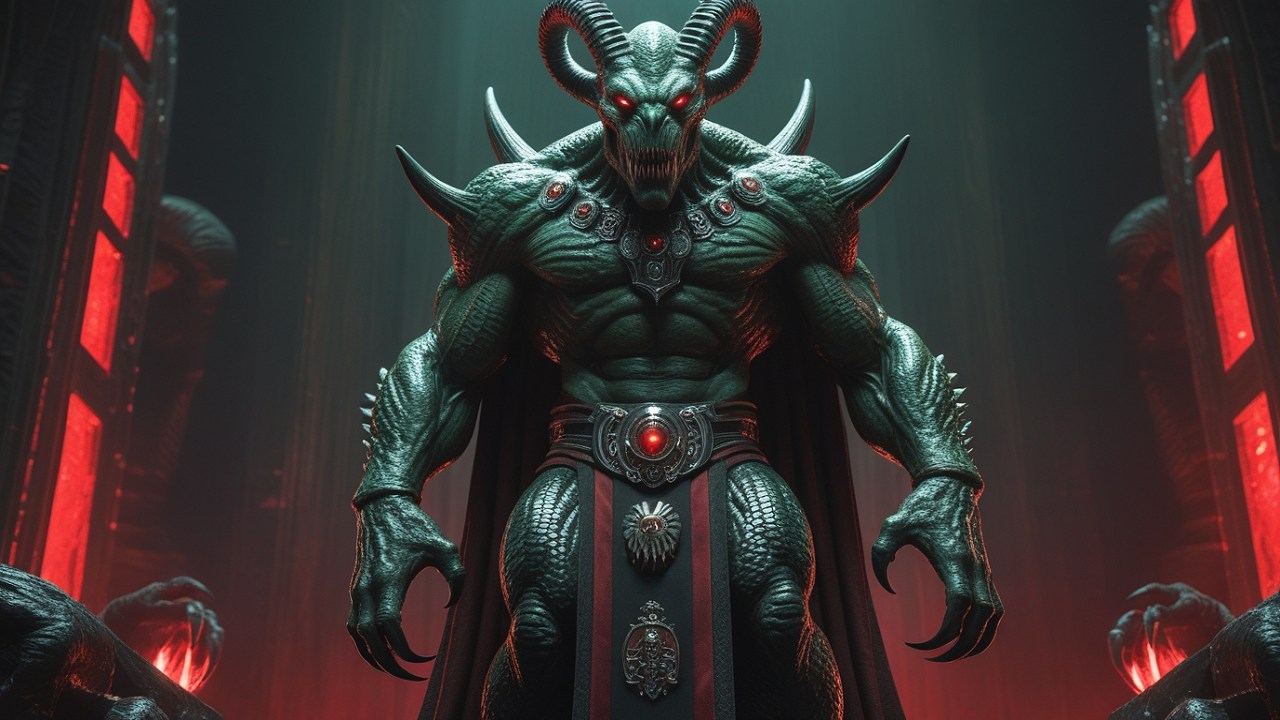
The Draconians, often called the Alpha Draconian Empire or simply Draconians, are one of the most powerful, ancient, and feared extraterrestrial races in modern UFO, conspiracy, and galactic lore. They are primarily associated with the Draco constellation, particularly the star Thuban (Alpha Draconis), which was the pole star around 3000 BCE. They are frequently described as the original or dominant force behind what is known as the Reptilian hierarchy, and they are often portrayed as the apex of the regressive extraterrestrial power structure in this sector of the galaxy.
Physical Description
Draconians are typically depicted as significantly larger and more imposing than other Reptilian variants. Common descriptions include:
-Height: 7 to 15 feet tall or more, with the ruling class or “royals” often described as the tallest and most physically dominant.
-Build: Extremely muscular and powerful, with a broad chest and strong limbs. They have a distinctly reptilian appearance, with thick, scaly skin ranging from dark green to brownish-grey, black, or reddish tones. The scales are often described as tough and armored.
-Head and Face: Elongated head with prominent bony ridges, horns, or crests. Eyes are large with vertical slit pupils, frequently glowing red, yellow, or gold, conveying cold intelligence and predatory awareness. The mouth is wide with sharp teeth or fangs, and the overall facial structure appears fierce and commanding.
-Hands and Feet: Clawed hands and feet with powerful digits, sometimes featuring opposable thumbs.
-Other Features: Some accounts mention wings (especially in royal or warrior castes), a tail, and a strong, intimidating presence that radiates dominance and authority.
They are often contrasted with the shorter worker or soldier Reptilians and with the more humanoid “Reptilian hybrids” said to operate among human elites. The ruling Draconians are portrayed as regal yet terrifying, embodying the archetype of an ancient apex predator species.
Origins and the Alpha Draconian Empire
The Draconians are described as originating from the Alpha Draconis (Thuban) system or the broader Draco constellation. Their civilization is portrayed as extremely ancient — potentially millions of years old — and highly evolved in terms of technology, warfare, and hierarchical organization. Many sources claim they were among the first space-faring races to achieve dominance in this part of the galaxy.
The Alpha Draconian Empire is depicted as a vast, expansionist civilization built on conquest, genetic manipulation, and strict hierarchical control. It is often described as a feudal or caste-based empire, with royal bloodlines at the top, followed by warrior, administrator, and worker classes. Loyalty to the empire and the ruling bloodlines is emphasized as a core value. Over eons, the Draconians are said to have expanded their influence through military force, strategic alliances, and subtle infiltration of other civilizations.
A recurring narrative is that the Draconians have a long history of conflict with other major races, particularly Lyran-derived humanoid groups and positive extraterrestrial alliances. These conflicts allegedly resulted in refugee migrations, destroyed worlds, and ongoing galactic power struggles. The Draconians are frequently portrayed as the driving force behind many regressive alliances, including partnerships with certain Grey factions and other service-to-self oriented groups.
Society, Technology, and Agenda
Draconian society is almost universally described as rigidly hierarchical and authoritarian. The ruling class (often called the “Royal” or “Elite” Draconians) holds absolute power, with lower castes bred or engineered for specific roles. Discipline, obedience, and dominance are core cultural values. Their technology is highly advanced, with a strong focus on military applications, genetic engineering, consciousness control, and energy weapons. Spacecraft are typically large, black triangular or cigar-shaped vessels, often equipped with cloaking and advanced propulsion systems.
Their agenda on Earth is a central topic in Reptilian/Draconian lore. In most accounts, the Draconians (or their proxies and hybrids) are said to seek long-term strategic control over humanity. Common claims include:
-Influence over global elites, bloodlines, and institutions through hybridization and subtle manipulation.
-Participation in underground bases and black-budget projects involving genetic experiments and technology exchanges.
-Use of fear, division, and energetic harvesting (loosh) to maintain control and feed their own energetic needs.
-Long-term goal of establishing a New World Order or global control system aligned with their hierarchical model.
Some sources distinguish between different Draconian factions, with the most aggressive “Alpha Draconians” representing the imperial core, while smaller or renegade groups may operate with different agendas. However, the dominant narrative frames the Draconian Empire as a primary regressive force in galactic affairs.
Key Sources and References in UFO Lore
The Draconians feature prominently in several key areas:
-David Icke’s work: Strongly associated with shape-shifting Reptilian elites and global control, often linking them to Draconian bloodlines.
-Alex Collier’s contactee accounts: Provided early detailed descriptions of Draconian hierarchies, alliances with Greys, and influence on Earth.
-Elena Danaan and related galactic compilations: Explicitly name the Ciakahrr as a major Draconian empire with a history of conquest and genetic programs.
-Law of One / Ra Material: Describes service-to-self forces from the Orion/Draco region as major players in galactic conquest and mind control.
-Whistleblower and underground base lore: Including Phil Schneider’s Dulce Base allegations, which describe violent encounters with Reptilians.
-Starseed and conspiracy communities: Many identify as having Draconian/Reptilian soul aspects or bloodlines, often describing intense power dynamics and the challenge of integrating shadow traits.
There is no single dominant, well-verified physical event that anchors the Draconians. Their presence is largely ideological and interpretive, used to explain patterns of power, secrecy, and control in human society.
Credibility and Limitations
The Draconians face the same evidentiary challenges as other major races in this field. Virtually no physical evidence exists — no crashed craft, implants, mass sightings, or authenticated documents have been independently verified as Draconian in origin. The material relies heavily on channeled information, contactee testimony, whistleblower claims, and symbolic interpretations.
Skeptics view the Draconian Empire narrative as a modern myth that combines ancient dragon/serpent symbolism, Gnostic dualism, and contemporary fears about hidden global elites. The shape-shifting hybrid concept is often criticized as unfalsifiable.
Supporters argue that the consistency of descriptions across independent sources and their explanatory power regarding global power structures suggest a genuine underlying phenomenon.
Current Status
The Draconians remain one of the most discussed and feared races in UFO, conspiracy, and starseed circles. They appear regularly in videos about galactic hierarchies, ancient aliens, underground bases, and global control theories. Interest tends to come from those exploring themes of hidden power, duality, spiritual warfare, and humanity’s struggle for sovereignty.
In summary, the Draconians (Alpha Draconian Empire) are portrayed as an ancient, powerful, hierarchically organized civilization from the Draco constellation with significant influence in galactic affairs and alleged long-term involvement in Earth’s power structures. They are often depicted with advanced technology, strategic intelligence, and a focus on control and domination. Information about them is drawn primarily from channeled material, contactee accounts, and interpretive conspiracy lore, with no independent physical corroboration.
They represent a major archetypal force in modern UFO mythology — embodying themes of empire, hierarchy, conquest, and the shadow side of power. Whether viewed as literal extraterrestrial players, symbolic representations of control systems, or a blend of both, the Draconians continue to fascinate and provoke those seeking to understand humanity’s cosmic context and hidden influences.
Ancient Galactic Conflicts with Lyran Civilizations
One of the earliest and most foundational events repeatedly mentioned in Draconian lore is a series of long-standing galactic conflicts between Draconian forces and ancient Lyran humanoid civilizations. These wars are described as occurring over vast timescales — from hundreds of thousands of years ago to several thousand years ago — and are portrayed as major turning points in galactic history that shaped the current distribution of races and power structures in this sector of the galaxy.
According to multiple sources, the Draconians (often referred to as the Ciakahrr or Alpha Draconian Empire) acted as aggressors driven by a desire for expansion, resources, and dominance. They are said to have launched military campaigns against Lyran worlds, which at the time were home to some of the earliest and most advanced humanoid civilizations in the galaxy. These conflicts allegedly involved large-scale space battles, planetary invasions, and the use of advanced weaponry that resulted in the destruction or severe damage of entire star systems.
The wars are frequently described as having caused massive refugee migrations. Large numbers of Lyran survivors are said to have fled their original systems and resettled in safer regions, including the Pleiades (which became a major refuge for Lyran descendants), Vega, Sirius, and other nearby systems. These migrations are credited with seeding many of the humanoid races that later interacted with Earth, including certain Pleiadian, Vegan, and Sirian lineages. The scattering of Lyran populations is often presented as a defining moment that dispersed advanced humanoid genetics and cultures across the galaxy.
In these accounts, the Draconians are characterized as highly organized, hierarchical, and strategically ruthless. Their military and technological superiority allowed them to dominate many conflicts, leading to the establishment or expansion of what is commonly called the Draconian Empire. The wars are said to have reinforced their cultural emphasis on conquest, control, and survival-of-the-fittest principles. Some sources describe the Draconians as viewing Lyran civilizations as threats due to their independent, freedom-oriented societies, which contrasted with the Draconian model of strict hierarchy and centralized power.
The conflicts are not presented as a single war with a clear beginning and end, but rather as a prolonged series of campaigns, skirmishes, and power struggles spanning many millennia. Some accounts suggest that these wars eventually reached a stalemate or were limited by the intervention of other galactic forces, including positive alliances that sought to protect free will and prevent total domination. The outcome is often described as a partial victory for the Draconians in terms of territorial gains and influence, but at the cost of creating long-term enemies and refugee populations that continued to resist their expansion.
This ancient galactic conflict period is considered foundational in Draconian lore because it explains the deep-seated rivalries and migratory patterns that still influence modern galactic dynamics. It provides the historical backdrop for why many Lyran-descended races (including some Pleiadians and Vegans) are said to view Draconians with caution or outright opposition. It also sets the stage for later narratives about Draconian alliances with Grey factions and their alleged influence on Earth, framing these activities as continuations of an ancient expansionist agenda.
Primary sources for these claims include Alex Collier’s Andromedan contact accounts from the 1990s–2000s, Elena Danaan’s material and related galactic history compilations, and broader interpretive works that draw from channeled and contactee traditions. These sources describe the wars from the perspective of Lyran refugees or neutral observers, portraying the Draconians as the primary aggressors.
It is important to note that these events remain entirely within the realm of interpretive galactic lore. There is no physical evidence — no artifacts, crash debris, or independently verified records — to corroborate the existence of these ancient wars. The accounts rely on channeled information, contactee testimony, and retrospective interpretations of galactic history. Skeptics view them as mythological constructs or symbolic narratives that project human themes of conquest and migration onto a cosmic scale. Supporters argue that the consistency of the basic storyline across independent sources suggests a genuine underlying historical pattern, even if the specific details are impossible to verify with current evidence.
In the context of Reptilian/Draconian studies, this ancient conflict period serves as the deep historical root of the Draconian archetype. It explains their reputation as conquerors and empire-builders and provides a cosmic explanation for the scattering of humanoid races and the resulting rivalries that are said to persist today. The narrative also introduces the theme of duality that runs through much Draconian lore: aggressive expansion versus resistance and the struggle for freedom and sovereignty.
By establishing the Draconians as long-term aggressors in galactic history, this foundational event helps frame their alleged later involvement with Earth — including underground bases, genetic programs, and influence over human power structures — as part of a much older pattern rather than a recent development. It gives the Draconian presence a sense of deep time and strategic continuity that few other races match in the literature.
Establishment of the Draconian Empire and Alliances
The formation and expansion of the Alpha Draconian Empire is one of the central and most frequently referenced narratives in Draconian lore. According to multiple sources, the Draconians (also called Ciakahrr or Draconians from the Alpha Draconis/Thuban system) gradually built a vast, hierarchical interstellar empire through a combination of military conquest, strategic colonization, and calculated alliances. This empire is portrayed as one of the oldest and most influential power structures in this sector of the galaxy, with roots stretching back hundreds of thousands to millions of years.
A key element in the empire’s growth was the establishment of strategic alliances with certain Grey collectives, including subgroups of Zeta Reticulans and other Grey factions. These partnerships are described as pragmatic and mutually beneficial in the short term, though the Draconians are consistently positioned as the dominant strategic and military power within them. The alliances reportedly focused on three main areas: genetic programs, technology exchanges, and coordinated control over developing worlds.
In the genetic domain, the Draconians and their Grey allies are said to have collaborated on large-scale hybridization and modification projects. These programs allegedly aimed to create more efficient worker or hybrid beings, strengthen bloodlines for control purposes, and develop new strains better suited for specific environments or tasks. Some accounts claim these joint efforts extended to Earth, where genetic material from humans was incorporated into experiments designed to produce controllable hybrids or to influence human evolution in directions favorable to the alliance.
Technology exchange formed another pillar of the relationship. The Draconians are portrayed as possessing superior military and propulsion technology, while certain Grey groups contributed advanced biological, consciousness-manipulation, and surveillance systems. Through these exchanges, both sides reportedly enhanced their capabilities, allowing for more effective expansion and enforcement of control over target planets. The resulting combined technology is often described as formidable, enabling rapid deployment, cloaking, and subtle influence operations.
The third focus was coordinated control over developing worlds. The alliance is said to have developed sophisticated strategies for infiltrating and influencing emerging civilizations without triggering full-scale resistance or violating certain cosmic quarantine rules. This included the cultivation of proxy elites, the seeding of hierarchical social structures, and the use of fear-based and energetic manipulation to maintain long-term dominance. Earth is frequently cited as one of the planets targeted by these coordinated efforts, with the Draconians providing overarching strategy and the Grey allies handling more operational or hands-on aspects.
In the Law of One (Ra Material), service-to-self forces from the Orion/Draco region are described as forming alliances aimed at conquest and enslavement. While the material does not always use the exact term “Draconian Empire,” later interpretations and expansions by researchers and contactees frequently map these descriptions onto the Draconian/Grey alliances. Ra emphasizes that such alliances succeed by finding resonance with existing service-to-self tendencies in a population rather than through overt force alone.
Alex Collier’s Andromedan contact accounts from the 1990s–2000s provide some of the most detailed early descriptions of these alliances. Collier claimed his Andromedan sources warned about Draconian hierarchies working in partnership with certain Grey factions to exert influence over Earth’s elite and institutions. He described the Draconians as the strategic and military backbone of the alliance, while Greys often served in technical, logistical, or biological roles.
Elena Danaan-inspired compilations and related galactic history materials further elaborate on the empire’s structure and alliances. They portray the Alpha Draconian Empire as a feudal-like hierarchy with royal bloodlines at the apex. The alliances with Grey collectives are presented as long-standing and ongoing, focused on maintaining control over key star systems and developing planets. These sources often emphasize the Draconians’ dominance within the partnership, with Grey groups acting more as operatives or specialists.
The establishment and expansion of the Draconian Empire through these alliances is described as an ancient and ongoing process. Some accounts suggest the empire’s foundations were laid hundreds of thousands of years ago, with periodic expansions and consolidations occurring over vast timescales. The alliances with Grey factions are portrayed as evolving but persistent, adapting to new galactic realities while maintaining core objectives of control and resource acquisition.
This narrative is important because it positions the Draconians as a central organizing force in regressive galactic politics rather than isolated actors. It explains how a single empire could exert widespread influence across multiple star systems and why certain Grey activities on Earth are often linked back to Draconian strategy. The alliance framework also accounts for the observed coordination between different extraterrestrial groups in abduction, hybridization, and control-related reports.
As with nearly all material in this field, these claims remain entirely within the realm of interpretive lore. Primary sources include the Law of One sessions (particularly references to service-to-self Orion/Draco forces), Alex Collier’s Andromedan briefings, and Elena Danaan-inspired galactic compilations. There is no independent physical evidence — no authenticated documents, crash debris, or verified witnesses — to confirm the existence of a Draconian Empire or its specific alliances with Grey collectives. The entire narrative rests on channeled information, contactee testimony, and retrospective galactic history interpretations.
Nevertheless, the concept of the Draconian Empire and its Grey alliances has become a cornerstone of modern Reptilian/Draconian studies. It provides a coherent explanatory model for the perceived coordination behind many negative extraterrestrial activities reported on Earth. By framing the Draconians as the dominant strategic power in these partnerships, the lore gives them a central role in the broader narrative of galactic influence and control.
Influence on Ancient Earth Civilizations and “Gods”
One of the most persistent and culturally widespread threads in Draconian/Reptilian lore is the claim that these beings — or closely related entities — interacted with early human civilizations and were remembered in mythology as powerful serpent or dragon “gods.” This narrative links Draconian or Reptilian visitors to ancient cultures across the globe, suggesting they appeared as rulers, teachers, or divine figures who helped shape hierarchical social structures, kingship systems, religious institutions, and early technologies.
In Mesoamerica, serpent deities such as Quetzalcoatl (the Feathered Serpent) and Kukulkan are frequently interpreted in ancient-astronaut and conspiracy literature as memories of Reptilian or Draconian beings. These figures are described in legends as civilizing heroes who brought knowledge of agriculture, astronomy, architecture, and governance to the people. Some accounts claim they established ruling dynasties and introduced systems of authority and ritual that became foundational to those societies.
In India and Southeast Asia, the Naga — serpent-like beings often depicted as powerful, semi-divine entities living underground or in watery realms — are similarly linked to Reptilian influence. Ancient texts describe the Naga as possessing advanced knowledge, guarding secrets, and sometimes ruling or intermarrying with human lineages. They are portrayed as both protectors and formidable forces that demanded respect or tribute, reinforcing hierarchical and ritualistic traditions.
Chinese mythology features the Dragon Kings and imperial dragons as symbols of divine authority and cosmic power. The dragon was closely associated with the emperor, who was said to rule with the “Mandate of Heaven” and often claimed descent from dragon lineage. Ancient-astronaut interpretations suggest these dragons represent memories of Draconian or Reptilian teachers or rulers who guided the development of Chinese civilization, astronomy, and imperial governance.
In ancient Egypt and Sumer, certain deities with serpent or reptilian attributes — such as aspects of Sobek, Apep, or Sumerian serpent gods — are sometimes reinterpreted as Draconian influences. Some accounts claim that powerful beings appeared as gods, taught the arts of writing, law, architecture (including pyramid construction), and established the institution of divine kingship. The idea is that these entities helped create centralized, hierarchical societies ruled by god-kings or priestly classes, embedding long-term control structures.
David Icke’s works, particularly from The Biggest Secret (1999) onward, have been highly influential in popularizing this narrative. Icke argues that Reptilian bloodlines and shape-shifting hybrids have occupied positions of power since ancient times, using religion, monarchy, and ritual to maintain control. He connects global serpent and dragon symbolism to a hidden Reptilian elite that has manipulated human development for millennia.
Various contactee and channeling materials expand on these ideas. Some describe Draconian or Reptilian beings as having directly intervened in early human history, appearing as gods to establish order, teach technologies, or enforce obedience. These accounts often portray the interactions as a mix of guidance and domination, with the beings using their superior knowledge and presence to create systems of worship and hierarchy that would endure for thousands of years.
Ancient-astronaut interpretations frequently cite architectural and symbolic evidence — such as serpent motifs in temples, dragon imagery in royal regalia, and alignments with Draco constellation stars — as supporting the idea of historical Reptilian contact. The recurring global presence of serpent/dragon “gods” who bring civilization, law, and power structures is presented as a consistent pattern too widespread to be coincidental.
This ancient influence thread is important because it provides the deep historical foundation for modern Reptilian conspiracy narratives. It suggests that the Draconians did not suddenly arrive in the 20th century but have been shaping human society for thousands of years through the establishment of hierarchical systems, religious authority, and ruling bloodlines. It offers an explanatory framework for why many ancient civilizations developed similar patterns of god-kings, priestly classes, ritual sacrifice, and centralized power — patterns that, according to these accounts, continue to echo in modern institutions.
The primary sources for these claims are interpretive. Ancient-astronaut literature, David Icke’s books and lectures, and various contactee and channeling materials form the core references. These sources draw on global mythology, symbolic analysis, and alleged contactee testimonies rather than archaeological artifacts or contemporary records. No physical evidence — such as Reptilian artifacts, DNA, or unambiguous inscriptions — has been independently verified to support direct Draconian intervention in ancient civilizations.
Skeptics argue that serpent and dragon myths are universal human archetypes arising from observations of real snakes, psychological projections, or cultural diffusion, not evidence of extraterrestrial contact. They view the ancient-astronaut reinterpretation as speculative and lacking empirical support. Supporters counter that the remarkable consistency of serpent/dragon “god” motifs across disconnected cultures, combined with their association with advanced knowledge and hierarchical rule, suggests a common external influence.
In the broader context of Draconian lore, this ancient influence period serves as the historical root that connects galactic origins to terrestrial power structures. It frames the Draconians as long-term architects of human civilization rather than recent visitors, providing a cosmic explanation for recurring themes of elite control, religious authority, and social stratification. It also sets up the duality often present in Reptilian narratives: beings who brought knowledge and order but at the cost of freedom and sovereignty.
Dulce Base Allegations and Underground Facilities
One of the most enduring and frequently referenced modern events in Draconian/Reptilian lore is the set of allegations concerning a joint human-Draconian underground facility at Dulce, New Mexico. These claims, which first surfaced in whistleblower-style accounts during the 1980s and gained significant public attention in the 1990s, describe a vast, multi-level subterranean complex where human military and scientific personnel allegedly worked in collaboration with extraterrestrial beings, primarily Draconians/Reptilians and certain Grey factions.
The most prominent individual associated with these allegations is Phil Schneider, a self-described geologist, structural engineer, and former government contractor. In a series of public lectures and interviews during the mid-1990s, Schneider claimed he had been directly involved in the construction and maintenance of deep underground military bases (DUMBs) across the United States. He specifically asserted that Dulce Base was a seven-level facility located deep beneath the Archuleta Mesa near the Colorado-New Mexico border.
According to Schneider, the upper levels (particularly Level 1) handled human administrative, support, and security functions. Deeper levels were dedicated to more sensitive operations. He alleged that lower levels housed genetic experimentation laboratories, biological research facilities, and joint human-alien technology development projects. Schneider claimed that Draconian/Reptilian beings and Greys were physically present and working alongside human scientists and military personnel. He described the extraterrestrials as dominant partners in these operations, with Greys often fulfilling technical or support roles.
Schneider recounted violent confrontations between humans and Reptilians at the base. He stated that a major incident occurred in the late 1970s in which armed conflict broke out, resulting in significant casualties on both sides. Schneider claimed he was personally involved in one such encounter and sustained serious injuries, including the loss of several fingers and other wounds that he displayed during his lectures. He described the Reptilians as aggressive and hierarchical, asserting that tensions arose over control of the facility, technology, and experimental subjects.
The allegations extended to claims of enormous underground infrastructure. Schneider and other accounts from the period described high-speed maglev trains connecting Dulce to other secret bases across the country, vast storage areas for advanced technology, and specialized laboratories conducting genetic hybridization and mind-control experiments. The base was portrayed as a hub for black-budget projects that operated with minimal oversight, blending human and extraterrestrial resources.
These claims were popularized through Schneider’s public lectures in the 1990s. Audio and video recordings of his presentations circulated widely in alternative research communities. Schneider maintained that he had come forward after becoming disillusioned with the moral implications and extreme secrecy surrounding the projects. He linked Dulce Base to a larger network of underground facilities and suggested that Reptilian influence extended into high levels of the U.S. government and military.
The Dulce Base allegations quickly became a cornerstone of Draconian/Reptilian conspiracy lore in the 1990s. They provided a specific, named location and a set of dramatic events that seemed to ground more abstract concepts of extraterrestrial control in a tangible, contemporary setting. The combination of underground bases, joint human-alien operations, genetic experiments, and violent conflict resonated strongly with audiences already exploring government secrecy and alien contact.
Other whistleblower-style accounts from the 1980s and 1990s added supporting details. Some described similar multi-level facilities with Reptilian involvement, while others focused on anomalous activity in the Four Corners region, including cattle mutilations and unexplained disappearances. These stories often overlapped, reinforcing the idea of a hidden network of underground installations where Draconians and Greys operated in partnership with human elements.
The significance of the Dulce allegations lies in their role as a bridge between general Reptilian/Draconian conspiracy theories and a concrete, localized narrative. They offered researchers and enthusiasts a focal point for “harder” evidence of Reptilian presence on Earth. The claims of joint operations, genetic experiments, and underground infrastructure provided a framework that could explain a wide range of anomalous phenomena reported in UFO and conspiracy communities during that era.
As with most whistleblower accounts in this field, the Dulce allegations have faced substantial skepticism and criticism. No independent verification of the base’s existence or of Schneider’s specific claims has ever been produced. Questions have been raised about Schneider’s personal background, the consistency of his story over time, and the complete absence of physical evidence such as documents, photographs, or corroborating witnesses. Mainstream sources and many within the UFO research community classify the Dulce narrative as unproven conspiracy lore rather than established fact.
Nevertheless, the Dulce Base story remains one of the most referenced and persistent events in Draconian/Reptilian-related literature. It helped solidify the image of Reptilians as active, dominant participants in secret human-alien programs rather than distant observers. The allegations continue to be discussed in books, documentaries, online forums, and videos decades after they first surfaced. They serve as a foundational narrative for those exploring themes of underground bases, government-alien collusion, genetic experimentation, and Reptilian influence on Earth.
In the broader context of Draconian lore, the Dulce allegations represent a key modern chapter that localized and dramatized claims of extraterrestrial control. They shifted the discussion from purely ancient galactic history or symbolic mythology to specific, contemporary operations allegedly occurring beneath the surface of the United States. This grounding in a named location and a set of dramatic events gave the Draconian narrative a sense of immediacy and tangibility that many other claims lacked, helping it endure as a central pillar of Reptilian conspiracy culture.
The Draconians, often called the Alpha Draconian Empire or simply Draconians, are one of the most powerful, ancient, and feared extraterrestrial races in modern UFO, conspiracy, and galactic lore. They are primarily associated with the Draco constellation, particularly the star Thuban (Alpha Draconis), which was the pole star around 3000 BCE. They are frequently described as the original or dominant force behind what is known as the Reptilian hierarchy, and they are often portrayed as the apex of the regressive extraterrestrial power structure in this sector of the galaxy.
Physical Description
Draconians are typically depicted as significantly larger and more imposing than other Reptilian variants. Common descriptions include:
-Height: 7 to 15 feet tall or more, with the ruling class or “royals” often described as the tallest and most physically dominant.
-Build: Extremely muscular and powerful, with a broad chest and strong limbs. They have a distinctly reptilian appearance, with thick, scaly skin ranging from dark green to brownish-grey, black, or reddish tones. The scales are often described as tough and armored.
-Head and Face: Elongated head with prominent bony ridges, horns, or crests. Eyes are large with vertical slit pupils, frequently glowing red, yellow, or gold, conveying cold intelligence and predatory awareness. The mouth is wide with sharp teeth or fangs, and the overall facial structure appears fierce and commanding.
-Hands and Feet: Clawed hands and feet with powerful digits, sometimes featuring opposable thumbs.
-Other Features: Some accounts mention wings (especially in royal or warrior castes), a tail, and a strong, intimidating presence that radiates dominance and authority.
They are often contrasted with the shorter worker or soldier Reptilians and with the more humanoid “Reptilian hybrids” said to operate among human elites. The ruling Draconians are portrayed as regal yet terrifying, embodying the archetype of an ancient apex predator species.
Origins and the Alpha Draconian Empire
The Draconians are described as originating from the Alpha Draconis (Thuban) system or the broader Draco constellation. Their civilization is portrayed as extremely ancient — potentially millions of years old — and highly evolved in terms of technology, warfare, and hierarchical organization. Many sources claim they were among the first space-faring races to achieve dominance in this part of the galaxy.
The Alpha Draconian Empire is depicted as a vast, expansionist civilization built on conquest, genetic manipulation, and strict hierarchical control. It is often described as a feudal or caste-based empire, with royal bloodlines at the top, followed by warrior, administrator, and worker classes. Loyalty to the empire and the ruling bloodlines is emphasized as a core value. Over eons, the Draconians are said to have expanded their influence through military force, strategic alliances, and subtle infiltration of other civilizations.
A recurring narrative is that the Draconians have a long history of conflict with other major races, particularly Lyran-derived humanoid groups and positive extraterrestrial alliances. These conflicts allegedly resulted in refugee migrations, destroyed worlds, and ongoing galactic power struggles. The Draconians are frequently portrayed as the driving force behind many regressive alliances, including partnerships with certain Grey factions and other service-to-self oriented groups.
Society, Technology, and Agenda
Draconian society is almost universally described as rigidly hierarchical and authoritarian. The ruling class (often called the “Royal” or “Elite” Draconians) holds absolute power, with lower castes bred or engineered for specific roles. Discipline, obedience, and dominance are core cultural values. Their technology is highly advanced, with a strong focus on military applications, genetic engineering, consciousness control, and energy weapons. Spacecraft are typically large, black triangular or cigar-shaped vessels, often equipped with cloaking and advanced propulsion systems.
Their agenda on Earth is a central topic in Reptilian/Draconian lore. In most accounts, the Draconians (or their proxies and hybrids) are said to seek long-term strategic control over humanity. Common claims include:
-Influence over global elites, bloodlines, and institutions through hybridization and subtle manipulation.
-Participation in underground bases and black-budget projects involving genetic experiments and technology exchanges.
-Use of fear, division, and energetic harvesting (loosh) to maintain control and feed their own energetic needs.
-Long-term goal of establishing a New World Order or global control system aligned with their hierarchical model.
Some sources distinguish between different Draconian factions, with the most aggressive “Alpha Draconians” representing the imperial core, while smaller or renegade groups may operate with different agendas. However, the dominant narrative frames the Draconian Empire as a primary regressive force in galactic affairs.
Key Sources and References in UFO Lore
The Draconians feature prominently in several key areas:
-David Icke’s work: Strongly associated with shape-shifting Reptilian elites and global control, often linking them to Draconian bloodlines.
-Alex Collier’s contactee accounts: Provided early detailed descriptions of Draconian hierarchies, alliances with Greys, and influence on Earth.
-Elena Danaan and related galactic compilations: Explicitly name the Ciakahrr as a major Draconian empire with a history of conquest and genetic programs.
-Law of One / Ra Material: Describes service-to-self forces from the Orion/Draco region as major players in galactic conquest and mind control.
-Whistleblower and underground base lore: Including Phil Schneider’s Dulce Base allegations, which describe violent encounters with Reptilians.
-Starseed and conspiracy communities: Many identify as having Draconian/Reptilian soul aspects or bloodlines, often describing intense power dynamics and the challenge of integrating shadow traits.
There is no single dominant, well-verified physical event that anchors the Draconians. Their presence is largely ideological and interpretive, used to explain patterns of power, secrecy, and control in human society.
Credibility and Limitations
The Draconians face the same evidentiary challenges as other major races in this field. Virtually no physical evidence exists — no crashed craft, implants, mass sightings, or authenticated documents have been independently verified as Draconian in origin. The material relies heavily on channeled information, contactee testimony, whistleblower claims, and symbolic interpretations.
Skeptics view the Draconian Empire narrative as a modern myth that combines ancient dragon/serpent symbolism, Gnostic dualism, and contemporary fears about hidden global elites. The shape-shifting hybrid concept is often criticized as unfalsifiable.
Supporters argue that the consistency of descriptions across independent sources and their explanatory power regarding global power structures suggest a genuine underlying phenomenon.
Current Status
The Draconians remain one of the most discussed and feared races in UFO, conspiracy, and starseed circles. They appear regularly in videos about galactic hierarchies, ancient aliens, underground bases, and global control theories. Interest tends to come from those exploring themes of hidden power, duality, spiritual warfare, and humanity’s struggle for sovereignty.
In summary, the Draconians (Alpha Draconian Empire) are portrayed as an ancient, powerful, hierarchically organized civilization from the Draco constellation with significant influence in galactic affairs and alleged long-term involvement in Earth’s power structures. They are often depicted with advanced technology, strategic intelligence, and a focus on control and domination. Information about them is drawn primarily from channeled material, contactee accounts, and interpretive conspiracy lore, with no independent physical corroboration.
They represent a major archetypal force in modern UFO mythology — embodying themes of empire, hierarchy, conquest, and the shadow side of power. Whether viewed as literal extraterrestrial players, symbolic representations of control systems, or a blend of both, the Draconians continue to fascinate and provoke those seeking to understand humanity’s cosmic context and hidden influences.
Ancient Galactic Conflicts with Lyran Civilizations
One of the earliest and most foundational events repeatedly mentioned in Draconian lore is a series of long-standing galactic conflicts between Draconian forces and ancient Lyran humanoid civilizations. These wars are described as occurring over vast timescales — from hundreds of thousands of years ago to several thousand years ago — and are portrayed as major turning points in galactic history that shaped the current distribution of races and power structures in this sector of the galaxy.
According to multiple sources, the Draconians (often referred to as the Ciakahrr or Alpha Draconian Empire) acted as aggressors driven by a desire for expansion, resources, and dominance. They are said to have launched military campaigns against Lyran worlds, which at the time were home to some of the earliest and most advanced humanoid civilizations in the galaxy. These conflicts allegedly involved large-scale space battles, planetary invasions, and the use of advanced weaponry that resulted in the destruction or severe damage of entire star systems.
The wars are frequently described as having caused massive refugee migrations. Large numbers of Lyran survivors are said to have fled their original systems and resettled in safer regions, including the Pleiades (which became a major refuge for Lyran descendants), Vega, Sirius, and other nearby systems. These migrations are credited with seeding many of the humanoid races that later interacted with Earth, including certain Pleiadian, Vegan, and Sirian lineages. The scattering of Lyran populations is often presented as a defining moment that dispersed advanced humanoid genetics and cultures across the galaxy.
In these accounts, the Draconians are characterized as highly organized, hierarchical, and strategically ruthless. Their military and technological superiority allowed them to dominate many conflicts, leading to the establishment or expansion of what is commonly called the Draconian Empire. The wars are said to have reinforced their cultural emphasis on conquest, control, and survival-of-the-fittest principles. Some sources describe the Draconians as viewing Lyran civilizations as threats due to their independent, freedom-oriented societies, which contrasted with the Draconian model of strict hierarchy and centralized power.
The conflicts are not presented as a single war with a clear beginning and end, but rather as a prolonged series of campaigns, skirmishes, and power struggles spanning many millennia. Some accounts suggest that these wars eventually reached a stalemate or were limited by the intervention of other galactic forces, including positive alliances that sought to protect free will and prevent total domination. The outcome is often described as a partial victory for the Draconians in terms of territorial gains and influence, but at the cost of creating long-term enemies and refugee populations that continued to resist their expansion.
This ancient galactic conflict period is considered foundational in Draconian lore because it explains the deep-seated rivalries and migratory patterns that still influence modern galactic dynamics. It provides the historical backdrop for why many Lyran-descended races (including some Pleiadians and Vegans) are said to view Draconians with caution or outright opposition. It also sets the stage for later narratives about Draconian alliances with Grey factions and their alleged influence on Earth, framing these activities as continuations of an ancient expansionist agenda.
Primary sources for these claims include Alex Collier’s Andromedan contact accounts from the 1990s–2000s, Elena Danaan’s material and related galactic history compilations, and broader interpretive works that draw from channeled and contactee traditions. These sources describe the wars from the perspective of Lyran refugees or neutral observers, portraying the Draconians as the primary aggressors.
It is important to note that these events remain entirely within the realm of interpretive galactic lore. There is no physical evidence — no artifacts, crash debris, or independently verified records — to corroborate the existence of these ancient wars. The accounts rely on channeled information, contactee testimony, and retrospective interpretations of galactic history. Skeptics view them as mythological constructs or symbolic narratives that project human themes of conquest and migration onto a cosmic scale. Supporters argue that the consistency of the basic storyline across independent sources suggests a genuine underlying historical pattern, even if the specific details are impossible to verify with current evidence.
In the context of Reptilian/Draconian studies, this ancient conflict period serves as the deep historical root of the Draconian archetype. It explains their reputation as conquerors and empire-builders and provides a cosmic explanation for the scattering of humanoid races and the resulting rivalries that are said to persist today. The narrative also introduces the theme of duality that runs through much Draconian lore: aggressive expansion versus resistance and the struggle for freedom and sovereignty.
By establishing the Draconians as long-term aggressors in galactic history, this foundational event helps frame their alleged later involvement with Earth — including underground bases, genetic programs, and influence over human power structures — as part of a much older pattern rather than a recent development. It gives the Draconian presence a sense of deep time and strategic continuity that few other races match in the literature.
Establishment of the Draconian Empire and Alliances
The formation and expansion of the Alpha Draconian Empire is one of the central and most frequently referenced narratives in Draconian lore. According to multiple sources, the Draconians (also called Ciakahrr or Draconians from the Alpha Draconis/Thuban system) gradually built a vast, hierarchical interstellar empire through a combination of military conquest, strategic colonization, and calculated alliances. This empire is portrayed as one of the oldest and most influential power structures in this sector of the galaxy, with roots stretching back hundreds of thousands to millions of years.
A key element in the empire’s growth was the establishment of strategic alliances with certain Grey collectives, including subgroups of Zeta Reticulans and other Grey factions. These partnerships are described as pragmatic and mutually beneficial in the short term, though the Draconians are consistently positioned as the dominant strategic and military power within them. The alliances reportedly focused on three main areas: genetic programs, technology exchanges, and coordinated control over developing worlds.
In the genetic domain, the Draconians and their Grey allies are said to have collaborated on large-scale hybridization and modification projects. These programs allegedly aimed to create more efficient worker or hybrid beings, strengthen bloodlines for control purposes, and develop new strains better suited for specific environments or tasks. Some accounts claim these joint efforts extended to Earth, where genetic material from humans was incorporated into experiments designed to produce controllable hybrids or to influence human evolution in directions favorable to the alliance.
Technology exchange formed another pillar of the relationship. The Draconians are portrayed as possessing superior military and propulsion technology, while certain Grey groups contributed advanced biological, consciousness-manipulation, and surveillance systems. Through these exchanges, both sides reportedly enhanced their capabilities, allowing for more effective expansion and enforcement of control over target planets. The resulting combined technology is often described as formidable, enabling rapid deployment, cloaking, and subtle influence operations.
The third focus was coordinated control over developing worlds. The alliance is said to have developed sophisticated strategies for infiltrating and influencing emerging civilizations without triggering full-scale resistance or violating certain cosmic quarantine rules. This included the cultivation of proxy elites, the seeding of hierarchical social structures, and the use of fear-based and energetic manipulation to maintain long-term dominance. Earth is frequently cited as one of the planets targeted by these coordinated efforts, with the Draconians providing overarching strategy and the Grey allies handling more operational or hands-on aspects.
In the Law of One (Ra Material), service-to-self forces from the Orion/Draco region are described as forming alliances aimed at conquest and enslavement. While the material does not always use the exact term “Draconian Empire,” later interpretations and expansions by researchers and contactees frequently map these descriptions onto the Draconian/Grey alliances. Ra emphasizes that such alliances succeed by finding resonance with existing service-to-self tendencies in a population rather than through overt force alone.
Alex Collier’s Andromedan contact accounts from the 1990s–2000s provide some of the most detailed early descriptions of these alliances. Collier claimed his Andromedan sources warned about Draconian hierarchies working in partnership with certain Grey factions to exert influence over Earth’s elite and institutions. He described the Draconians as the strategic and military backbone of the alliance, while Greys often served in technical, logistical, or biological roles.
Elena Danaan-inspired compilations and related galactic history materials further elaborate on the empire’s structure and alliances. They portray the Alpha Draconian Empire as a feudal-like hierarchy with royal bloodlines at the apex. The alliances with Grey collectives are presented as long-standing and ongoing, focused on maintaining control over key star systems and developing planets. These sources often emphasize the Draconians’ dominance within the partnership, with Grey groups acting more as operatives or specialists.
The establishment and expansion of the Draconian Empire through these alliances is described as an ancient and ongoing process. Some accounts suggest the empire’s foundations were laid hundreds of thousands of years ago, with periodic expansions and consolidations occurring over vast timescales. The alliances with Grey factions are portrayed as evolving but persistent, adapting to new galactic realities while maintaining core objectives of control and resource acquisition.
This narrative is important because it positions the Draconians as a central organizing force in regressive galactic politics rather than isolated actors. It explains how a single empire could exert widespread influence across multiple star systems and why certain Grey activities on Earth are often linked back to Draconian strategy. The alliance framework also accounts for the observed coordination between different extraterrestrial groups in abduction, hybridization, and control-related reports.
As with nearly all material in this field, these claims remain entirely within the realm of interpretive lore. Primary sources include the Law of One sessions (particularly references to service-to-self Orion/Draco forces), Alex Collier’s Andromedan briefings, and Elena Danaan-inspired galactic compilations. There is no independent physical evidence — no authenticated documents, crash debris, or verified witnesses — to confirm the existence of a Draconian Empire or its specific alliances with Grey collectives. The entire narrative rests on channeled information, contactee testimony, and retrospective galactic history interpretations.
Nevertheless, the concept of the Draconian Empire and its Grey alliances has become a cornerstone of modern Reptilian/Draconian studies. It provides a coherent explanatory model for the perceived coordination behind many negative extraterrestrial activities reported on Earth. By framing the Draconians as the dominant strategic power in these partnerships, the lore gives them a central role in the broader narrative of galactic influence and control.
Influence on Ancient Earth Civilizations and “Gods”
One of the most persistent and culturally widespread threads in Draconian/Reptilian lore is the claim that these beings — or closely related entities — interacted with early human civilizations and were remembered in mythology as powerful serpent or dragon “gods.” This narrative links Draconian or Reptilian visitors to ancient cultures across the globe, suggesting they appeared as rulers, teachers, or divine figures who helped shape hierarchical social structures, kingship systems, religious institutions, and early technologies.
In Mesoamerica, serpent deities such as Quetzalcoatl (the Feathered Serpent) and Kukulkan are frequently interpreted in ancient-astronaut and conspiracy literature as memories of Reptilian or Draconian beings. These figures are described in legends as civilizing heroes who brought knowledge of agriculture, astronomy, architecture, and governance to the people. Some accounts claim they established ruling dynasties and introduced systems of authority and ritual that became foundational to those societies.
In India and Southeast Asia, the Naga — serpent-like beings often depicted as powerful, semi-divine entities living underground or in watery realms — are similarly linked to Reptilian influence. Ancient texts describe the Naga as possessing advanced knowledge, guarding secrets, and sometimes ruling or intermarrying with human lineages. They are portrayed as both protectors and formidable forces that demanded respect or tribute, reinforcing hierarchical and ritualistic traditions.
Chinese mythology features the Dragon Kings and imperial dragons as symbols of divine authority and cosmic power. The dragon was closely associated with the emperor, who was said to rule with the “Mandate of Heaven” and often claimed descent from dragon lineage. Ancient-astronaut interpretations suggest these dragons represent memories of Draconian or Reptilian teachers or rulers who guided the development of Chinese civilization, astronomy, and imperial governance.
In ancient Egypt and Sumer, certain deities with serpent or reptilian attributes — such as aspects of Sobek, Apep, or Sumerian serpent gods — are sometimes reinterpreted as Draconian influences. Some accounts claim that powerful beings appeared as gods, taught the arts of writing, law, architecture (including pyramid construction), and established the institution of divine kingship. The idea is that these entities helped create centralized, hierarchical societies ruled by god-kings or priestly classes, embedding long-term control structures.
David Icke’s works, particularly from The Biggest Secret (1999) onward, have been highly influential in popularizing this narrative. Icke argues that Reptilian bloodlines and shape-shifting hybrids have occupied positions of power since ancient times, using religion, monarchy, and ritual to maintain control. He connects global serpent and dragon symbolism to a hidden Reptilian elite that has manipulated human development for millennia.
Various contactee and channeling materials expand on these ideas. Some describe Draconian or Reptilian beings as having directly intervened in early human history, appearing as gods to establish order, teach technologies, or enforce obedience. These accounts often portray the interactions as a mix of guidance and domination, with the beings using their superior knowledge and presence to create systems of worship and hierarchy that would endure for thousands of years.
Ancient-astronaut interpretations frequently cite architectural and symbolic evidence — such as serpent motifs in temples, dragon imagery in royal regalia, and alignments with Draco constellation stars — as supporting the idea of historical Reptilian contact. The recurring global presence of serpent/dragon “gods” who bring civilization, law, and power structures is presented as a consistent pattern too widespread to be coincidental.
This ancient influence thread is important because it provides the deep historical foundation for modern Reptilian conspiracy narratives. It suggests that the Draconians did not suddenly arrive in the 20th century but have been shaping human society for thousands of years through the establishment of hierarchical systems, religious authority, and ruling bloodlines. It offers an explanatory framework for why many ancient civilizations developed similar patterns of god-kings, priestly classes, ritual sacrifice, and centralized power — patterns that, according to these accounts, continue to echo in modern institutions.
The primary sources for these claims are interpretive. Ancient-astronaut literature, David Icke’s books and lectures, and various contactee and channeling materials form the core references. These sources draw on global mythology, symbolic analysis, and alleged contactee testimonies rather than archaeological artifacts or contemporary records. No physical evidence — such as Reptilian artifacts, DNA, or unambiguous inscriptions — has been independently verified to support direct Draconian intervention in ancient civilizations.
Skeptics argue that serpent and dragon myths are universal human archetypes arising from observations of real snakes, psychological projections, or cultural diffusion, not evidence of extraterrestrial contact. They view the ancient-astronaut reinterpretation as speculative and lacking empirical support. Supporters counter that the remarkable consistency of serpent/dragon “god” motifs across disconnected cultures, combined with their association with advanced knowledge and hierarchical rule, suggests a common external influence.
In the broader context of Draconian lore, this ancient influence period serves as the historical root that connects galactic origins to terrestrial power structures. It frames the Draconians as long-term architects of human civilization rather than recent visitors, providing a cosmic explanation for recurring themes of elite control, religious authority, and social stratification. It also sets up the duality often present in Reptilian narratives: beings who brought knowledge and order but at the cost of freedom and sovereignty.
Dulce Base Allegations and Underground Facilities
One of the most enduring and frequently referenced modern events in Draconian/Reptilian lore is the set of allegations concerning a joint human-Draconian underground facility at Dulce, New Mexico. These claims, which first surfaced in whistleblower-style accounts during the 1980s and gained significant public attention in the 1990s, describe a vast, multi-level subterranean complex where human military and scientific personnel allegedly worked in collaboration with extraterrestrial beings, primarily Draconians/Reptilians and certain Grey factions.
The most prominent individual associated with these allegations is Phil Schneider, a self-described geologist, structural engineer, and former government contractor. In a series of public lectures and interviews during the mid-1990s, Schneider claimed he had been directly involved in the construction and maintenance of deep underground military bases (DUMBs) across the United States. He specifically asserted that Dulce Base was a seven-level facility located deep beneath the Archuleta Mesa near the Colorado-New Mexico border.
According to Schneider, the upper levels (particularly Level 1) handled human administrative, support, and security functions. Deeper levels were dedicated to more sensitive operations. He alleged that lower levels housed genetic experimentation laboratories, biological research facilities, and joint human-alien technology development projects. Schneider claimed that Draconian/Reptilian beings and Greys were physically present and working alongside human scientists and military personnel. He described the extraterrestrials as dominant partners in these operations, with Greys often fulfilling technical or support roles.
Schneider recounted violent confrontations between humans and Reptilians at the base. He stated that a major incident occurred in the late 1970s in which armed conflict broke out, resulting in significant casualties on both sides. Schneider claimed he was personally involved in one such encounter and sustained serious injuries, including the loss of several fingers and other wounds that he displayed during his lectures. He described the Reptilians as aggressive and hierarchical, asserting that tensions arose over control of the facility, technology, and experimental subjects.
The allegations extended to claims of enormous underground infrastructure. Schneider and other accounts from the period described high-speed maglev trains connecting Dulce to other secret bases across the country, vast storage areas for advanced technology, and specialized laboratories conducting genetic hybridization and mind-control experiments. The base was portrayed as a hub for black-budget projects that operated with minimal oversight, blending human and extraterrestrial resources.
These claims were popularized through Schneider’s public lectures in the 1990s. Audio and video recordings of his presentations circulated widely in alternative research communities. Schneider maintained that he had come forward after becoming disillusioned with the moral implications and extreme secrecy surrounding the projects. He linked Dulce Base to a larger network of underground facilities and suggested that Reptilian influence extended into high levels of the U.S. government and military.
The Dulce Base allegations quickly became a cornerstone of Draconian/Reptilian conspiracy lore in the 1990s. They provided a specific, named location and a set of dramatic events that seemed to ground more abstract concepts of extraterrestrial control in a tangible, contemporary setting. The combination of underground bases, joint human-alien operations, genetic experiments, and violent conflict resonated strongly with audiences already exploring government secrecy and alien contact.
Other whistleblower-style accounts from the 1980s and 1990s added supporting details. Some described similar multi-level facilities with Reptilian involvement, while others focused on anomalous activity in the Four Corners region, including cattle mutilations and unexplained disappearances. These stories often overlapped, reinforcing the idea of a hidden network of underground installations where Draconians and Greys operated in partnership with human elements.
The significance of the Dulce allegations lies in their role as a bridge between general Reptilian/Draconian conspiracy theories and a concrete, localized narrative. They offered researchers and enthusiasts a focal point for “harder” evidence of Reptilian presence on Earth. The claims of joint operations, genetic experiments, and underground infrastructure provided a framework that could explain a wide range of anomalous phenomena reported in UFO and conspiracy communities during that era.
As with most whistleblower accounts in this field, the Dulce allegations have faced substantial skepticism and criticism. No independent verification of the base’s existence or of Schneider’s specific claims has ever been produced. Questions have been raised about Schneider’s personal background, the consistency of his story over time, and the complete absence of physical evidence such as documents, photographs, or corroborating witnesses. Mainstream sources and many within the UFO research community classify the Dulce narrative as unproven conspiracy lore rather than established fact.
Nevertheless, the Dulce Base story remains one of the most referenced and persistent events in Draconian/Reptilian-related literature. It helped solidify the image of Reptilians as active, dominant participants in secret human-alien programs rather than distant observers. The allegations continue to be discussed in books, documentaries, online forums, and videos decades after they first surfaced. They serve as a foundational narrative for those exploring themes of underground bases, government-alien collusion, genetic experimentation, and Reptilian influence on Earth.
In the broader context of Draconian lore, the Dulce allegations represent a key modern chapter that localized and dramatized claims of extraterrestrial control. They shifted the discussion from purely ancient galactic history or symbolic mythology to specific, contemporary operations allegedly occurring beneath the surface of the United States. This grounding in a named location and a set of dramatic events gave the Draconian narrative a sense of immediacy and tangibility that many other claims lacked, helping it endure as a central pillar of Reptilian conspiracy culture.