


Blog Categories
- African Incidents
- Atlantis Incidents
- Australian Incidents
- Belgian Incidents
- Bermuda Triangle Incidents
- Brazilian Incidents
- Canadian Incidents
- Chinese Incidents
- European Incidents
- France Incidents
- Ghosts
- Giants
- Italy Incidents
- Japanese Incidents
- Middle East Incidents
- Portugal Incidents
- Project Serpo
- Puerto Rico Incidents
- Russian Incidents
- Sasquatch
- Scandinavia Incidents
- Spanish Incidents
- UFOs
- United Kingdom Incidents
- United States Incidents
April 1897: near Homan (Miller County)
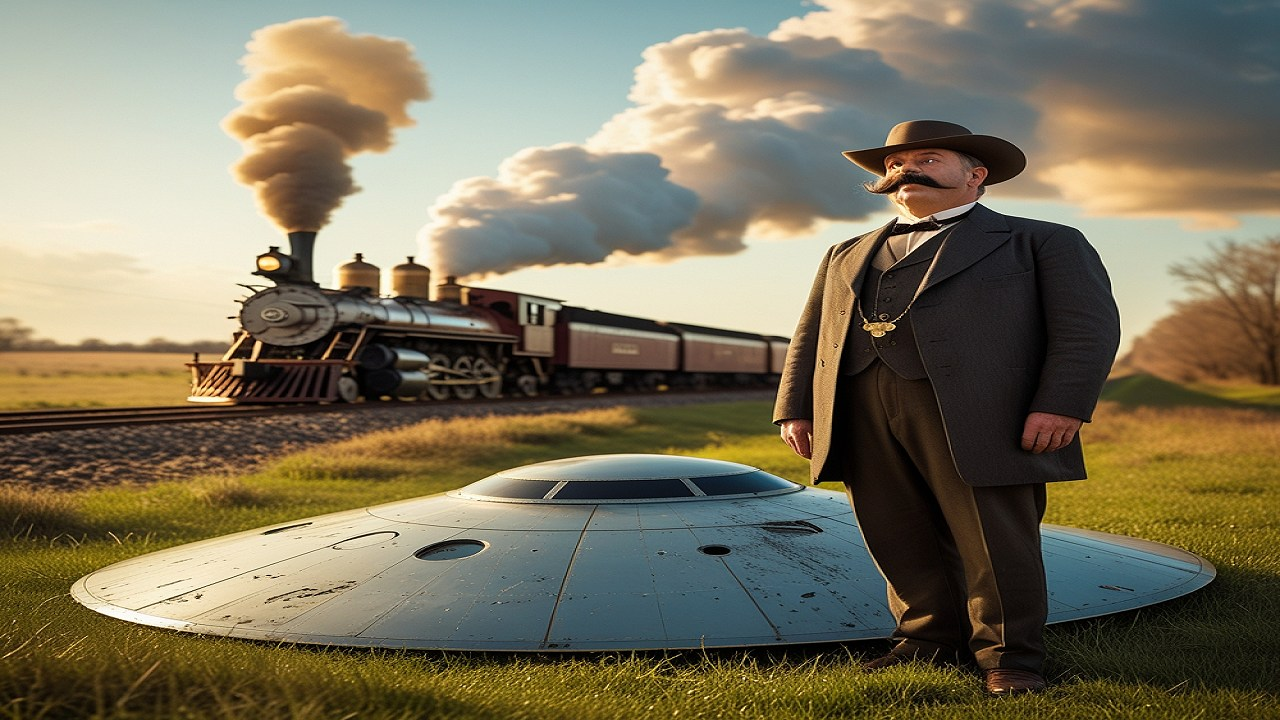
On the evening of April 20, 1897, in the rural woodlands near Homan, Arkansas, Captain Jim Hooton—an experienced railroad conductor— experienced an extraordinary event that would become one of the most compelling and detailed entries in the annals of the 1897 airship wave.
This encounter, recounted in the Arkansas Gazette, featured a grounded metallic craft, a mysterious pilot, and a moment of communication that blurred the line between fact and folklore. Over a century later, the incident still captures public fascination, shedding light on community belief, journalistic responsibility, and our collective yearning to understand the unknown.
The Witness and His Account
Captain Jim Hooton was no fringe character in the Arkansas backcountry. A respected railroad conductor, he possessed a keen sense of observation and a commitment to accuracy. That evening, Hooton was traversing the wilderness near Homan when he discovered something even more unexpected than mechanical tracks: a grounded airship, nestled in a clearing and radiating faint luminous energy.
According to his own detailed sketch—later published in the Arkansas Gazette—the craft bore the shape of a cigar or cylinder, tapering at both ends. Metallic panels were visible on its surface, and supporting fins or stabilizers jutted out in symmetrical fashion. What set the account apart, however, was Hooton’s claim of having encountered a pilot.
Reportedly, a single individual—sporting smoked glasses—disembarked from the craft. Unable to speak English, the man communicated through hand gestures and pantomime. The two men exchanged gestures. Hooton offered a handshake, and the stranger seemingly reciprocated before returning to the airship and taking off.
Hooton’s professionalism during the incident, and the fact that he documented his encounter through a sketch, imbues the report with credibility. He did not claim supernatural phenomena or futuristic gadgetry; he provided a measured, observational narrative, rich with detail and seemingly free of sensational exaggeration. His integrity as a railroad man gave weight to the story.
Community Response and Broader Effects
News of the encounter spread swiftly. The Arkansas Gazette carried the report at a time when sensational stories of airships—gleaming in the night sky and piloted by otherworldly beings—were appearing across rural America. In some places, these reports sparked frenzied excitement; in others, ridicule. In Arkansas, the tone was somewhere in between.
Locals were intrigued but cautious. Farmers and their families likely gathered after supper to discuss whether “Captain Hooton’s airship” had crashed—or landed—nearby. Rural Arkansans were accustomed to mechanical innovations; railroads, telegraph lines, and the whisperings of the automobile age had begun to seep into daily life. While some dismissed it as a trick of light or a reflection, others were open to the possibility that more advanced human or alien technology had briefly touched their frontier.
Rather than igniting mass hysteria, the report likely fostered curiosity. People may have scoured the woods the next day, hoping to find remains of the craft. Children may have re-enacted it at the schoolhouse. Pilgrims —both scientists and amateur loggers—might have trodden the area, seeking scraps of metal or conversation with Captain Hooton himself. In the wider nineteenth-century sense, the incident contributed to a growing sense that unexplained aerial phenomena could not be dismissed as myth or rumor.
Notable Individuals in the Homan Incident
Chief among the figures linked to the Homan sighting is Captain Jim Hooton himself. As a man of reliability—charged with ensuring train schedules and the safety of cargo—his word held weight. Even decades later, researchers singled out his name as a pillar of credibility during the 1897 airship wave.
The mysterious pilot, meanwhile, remains unnamed and enigmatic. His refusal or inability to speak, his visual appearance (obscured by smoked glasses), and his calm, almost formal conduct only deepen the mystique. He wasn’t depicted as avian or alien; rather mysterious, but humanlike— an echo of our own image.
The Arkansas Gazette also plays a notable role. As one of Arkansas’s primary newspapers, its publication of Hooton’s sketch and account demonstrates a thread of responsibility. They did not sensationalize; they simply relayed a strange tale. In many ways, they set a precedent for community reporting, showing how newspapers could responsibly handle UFO-like reports without inciting panic.
The Incident’s Cultural and Legacy Impact
In the century since, the Homan sighting has been cited as one of the most credible airship reports from 1897. It offers a template for how rural UFO cases can blend detail, restraint, and believability. Among researchers who study early aerial mysteries, Hooton’s account remains a touchstone.
In Arkansas, the event contributes to a regional identity shaped in part by wonder. Long before Roswell and modern UFO conspiracies, Arkansans were communities interacting with the unknown. Stories like Homan’s incident feed local lore, kept alive through oral tradition, local history books, and even tourism. Some speculate that trails—especially hiking paths and unpaved roads—may trace back to where the airship landed. While these remain speculative, they underscore the event’s lingering imprint.
Moreover, the interaction—however brief—between Hooton and the pilot prompts reflection on human openness. They communicated, peacefully, across an assumed linguistic divide. Viewed through contemporary lenses, the Homan incident resonates with themes of empathy and intercultural dialogue. What if similar openness were adopted today toward unidentified pilots or visitors? The historical anecdote may guide modern conversations on how humanity might respond to actual extraterrestrial contact.
Continuing Relevance in the Twenty-First Century
Nearly 130 years later, the Homan sighting continues to capture attention. It highlights a foundational truth: UFO history extends well beyond modern technological developments. From the mere observation of a mysterious craft to its grounded, interpersonal encounter, it plants early seeds for belief, skepticism, and exploration.
In recent years, some have loosely drawn parallels between Hooton’s pilot and modern whistleblowers or government contacts. The calm, non hostile interaction hints at a kind of foundational peace gesture, even if unstated. Moreover, the careful documentation—by both Hooton and the newspaper—underscores the importance of record-keeping in unexplained phenomena.
In pop culture, Homan’s narrative is sometimes celebrated as a nod to a time when UFO reports didn’t immediately conjure government conspiracies or sinister autopsies. Instead, the encounter remains a simple, human moment: stranger meets stranger, armed with curiosity and civility. It reminds modern society that an alien encounter need not be hostile, apocalyptic, or weaponized—but can be a quiet meeting under the stars.
Conclusion: Timeless Witness, Quiet Wonder
The April 20, 1897 incident near Homan, Arkansas, remains an intriguing and credible cornerstone in American UFO history. Joel Hooton was not a disreputable dreamer; he was a railroad man offering a detailed observation of a grounded, illuminated craft—and a foreign pilot.
His careful recounting and the newspaper’s measured coverage allowed the story to enter the cultural consciousness without hysteria. Over generations, the tale fused with local folklore, scientific questioning, and a broader fascination with skies unexplained by contemporary knowledge.
Though no metal fragments were ever publicly recovered and follow-up studies were limited, the clarity of Hooton’s narrative has granted this case enduring respect. In today’s world, it continues to inspire questions: What if it was a human-built prototype, perhaps pre-dating mainstream aviation?
Or something more outside our realm of understanding? Regardless, it furnishes a lesson: even in rural Arkansas in the 1890s, ordinary people could encounter the extraordinary—and respond with human dignity.
In this way, the Homan incident remains relevant—prompting us to consider how we greet unknown visitors, what we choose to document, and how we balance wonder with reason. Long after the rails of Captain Hooton’s world gave way to highways and satellites, his sighting reminds us that some mysteries thrive in quiet clearings—and in our willingness to keep watching the skies.
On the evening of April 20, 1897, in the rural woodlands near Homan, Arkansas, Captain Jim Hooton—an experienced railroad conductor— experienced an extraordinary event that would become one of the most compelling and detailed entries in the annals of the 1897 airship wave.
This encounter, recounted in the Arkansas Gazette, featured a grounded metallic craft, a mysterious pilot, and a moment of communication that blurred the line between fact and folklore. Over a century later, the incident still captures public fascination, shedding light on community belief, journalistic responsibility, and our collective yearning to understand the unknown.
The Witness and His Account
Captain Jim Hooton was no fringe character in the Arkansas backcountry. A respected railroad conductor, he possessed a keen sense of observation and a commitment to accuracy. That evening, Hooton was traversing the wilderness near Homan when he discovered something even more unexpected than mechanical tracks: a grounded airship, nestled in a clearing and radiating faint luminous energy.
According to his own detailed sketch—later published in the Arkansas Gazette—the craft bore the shape of a cigar or cylinder, tapering at both ends. Metallic panels were visible on its surface, and supporting fins or stabilizers jutted out in symmetrical fashion. What set the account apart, however, was Hooton’s claim of having encountered a pilot.
Reportedly, a single individual—sporting smoked glasses—disembarked from the craft. Unable to speak English, the man communicated through hand gestures and pantomime. The two men exchanged gestures. Hooton offered a handshake, and the stranger seemingly reciprocated before returning to the airship and taking off.
Hooton’s professionalism during the incident, and the fact that he documented his encounter through a sketch, imbues the report with credibility. He did not claim supernatural phenomena or futuristic gadgetry; he provided a measured, observational narrative, rich with detail and seemingly free of sensational exaggeration. His integrity as a railroad man gave weight to the story.
Community Response and Broader Effects
News of the encounter spread swiftly. The Arkansas Gazette carried the report at a time when sensational stories of airships—gleaming in the night sky and piloted by otherworldly beings—were appearing across rural America. In some places, these reports sparked frenzied excitement; in others, ridicule. In Arkansas, the tone was somewhere in between.
Locals were intrigued but cautious. Farmers and their families likely gathered after supper to discuss whether “Captain Hooton’s airship” had crashed—or landed—nearby. Rural Arkansans were accustomed to mechanical innovations; railroads, telegraph lines, and the whisperings of the automobile age had begun to seep into daily life. While some dismissed it as a trick of light or a reflection, others were open to the possibility that more advanced human or alien technology had briefly touched their frontier.
Rather than igniting mass hysteria, the report likely fostered curiosity. People may have scoured the woods the next day, hoping to find remains of the craft. Children may have re-enacted it at the schoolhouse. Pilgrims —both scientists and amateur loggers—might have trodden the area, seeking scraps of metal or conversation with Captain Hooton himself. In the wider nineteenth-century sense, the incident contributed to a growing sense that unexplained aerial phenomena could not be dismissed as myth or rumor.
Notable Individuals in the Homan Incident
Chief among the figures linked to the Homan sighting is Captain Jim Hooton himself. As a man of reliability—charged with ensuring train schedules and the safety of cargo—his word held weight. Even decades later, researchers singled out his name as a pillar of credibility during the 1897 airship wave.
The mysterious pilot, meanwhile, remains unnamed and enigmatic. His refusal or inability to speak, his visual appearance (obscured by smoked glasses), and his calm, almost formal conduct only deepen the mystique. He wasn’t depicted as avian or alien; rather mysterious, but humanlike— an echo of our own image.
The Arkansas Gazette also plays a notable role. As one of Arkansas’s primary newspapers, its publication of Hooton’s sketch and account demonstrates a thread of responsibility. They did not sensationalize; they simply relayed a strange tale. In many ways, they set a precedent for community reporting, showing how newspapers could responsibly handle UFO-like reports without inciting panic.
The Incident’s Cultural and Legacy Impact
In the century since, the Homan sighting has been cited as one of the most credible airship reports from 1897. It offers a template for how rural UFO cases can blend detail, restraint, and believability. Among researchers who study early aerial mysteries, Hooton’s account remains a touchstone.
In Arkansas, the event contributes to a regional identity shaped in part by wonder. Long before Roswell and modern UFO conspiracies, Arkansans were communities interacting with the unknown. Stories like Homan’s incident feed local lore, kept alive through oral tradition, local history books, and even tourism. Some speculate that trails—especially hiking paths and unpaved roads—may trace back to where the airship landed. While these remain speculative, they underscore the event’s lingering imprint.
Moreover, the interaction—however brief—between Hooton and the pilot prompts reflection on human openness. They communicated, peacefully, across an assumed linguistic divide. Viewed through contemporary lenses, the Homan incident resonates with themes of empathy and intercultural dialogue. What if similar openness were adopted today toward unidentified pilots or visitors? The historical anecdote may guide modern conversations on how humanity might respond to actual extraterrestrial contact.
Continuing Relevance in the Twenty-First Century
Nearly 130 years later, the Homan sighting continues to capture attention. It highlights a foundational truth: UFO history extends well beyond modern technological developments. From the mere observation of a mysterious craft to its grounded, interpersonal encounter, it plants early seeds for belief, skepticism, and exploration.
In recent years, some have loosely drawn parallels between Hooton’s pilot and modern whistleblowers or government contacts. The calm, non hostile interaction hints at a kind of foundational peace gesture, even if unstated. Moreover, the careful documentation—by both Hooton and the newspaper—underscores the importance of record-keeping in unexplained phenomena.
In pop culture, Homan’s narrative is sometimes celebrated as a nod to a time when UFO reports didn’t immediately conjure government conspiracies or sinister autopsies. Instead, the encounter remains a simple, human moment: stranger meets stranger, armed with curiosity and civility. It reminds modern society that an alien encounter need not be hostile, apocalyptic, or weaponized—but can be a quiet meeting under the stars.
Conclusion: Timeless Witness, Quiet Wonder
The April 20, 1897 incident near Homan, Arkansas, remains an intriguing and credible cornerstone in American UFO history. Joel Hooton was not a disreputable dreamer; he was a railroad man offering a detailed observation of a grounded, illuminated craft—and a foreign pilot.
His careful recounting and the newspaper’s measured coverage allowed the story to enter the cultural consciousness without hysteria. Over generations, the tale fused with local folklore, scientific questioning, and a broader fascination with skies unexplained by contemporary knowledge.
Though no metal fragments were ever publicly recovered and follow-up studies were limited, the clarity of Hooton’s narrative has granted this case enduring respect. In today’s world, it continues to inspire questions: What if it was a human-built prototype, perhaps pre-dating mainstream aviation?
Or something more outside our realm of understanding? Regardless, it furnishes a lesson: even in rural Arkansas in the 1890s, ordinary people could encounter the extraordinary—and respond with human dignity.
In this way, the Homan incident remains relevant—prompting us to consider how we greet unknown visitors, what we choose to document, and how we balance wonder with reason. Long after the rails of Captain Hooton’s world gave way to highways and satellites, his sighting reminds us that some mysteries thrive in quiet clearings—and in our willingness to keep watching the skies.