


Blog Categories
- African Incidents
- Atlantis Incidents
- Australian Incidents
- Belgian Incidents
- Bermuda Triangle Incidents
- Brazilian Incidents
- Canadian Incidents
- Chinese Incidents
- European Incidents
- France Incidents
- Ghosts
- Giants
- Italy Incidents
- Japanese Incidents
- Middle East Incidents
- Portugal Incidents
- Project Serpo
- Puerto Rico Incidents
- Russian Incidents
- Sasquatch
- Scandinavia Incidents
- Spanish Incidents
- UFOs
- United Kingdom Incidents
- United States Incidents
April 1966: Sacramento UFO Incident
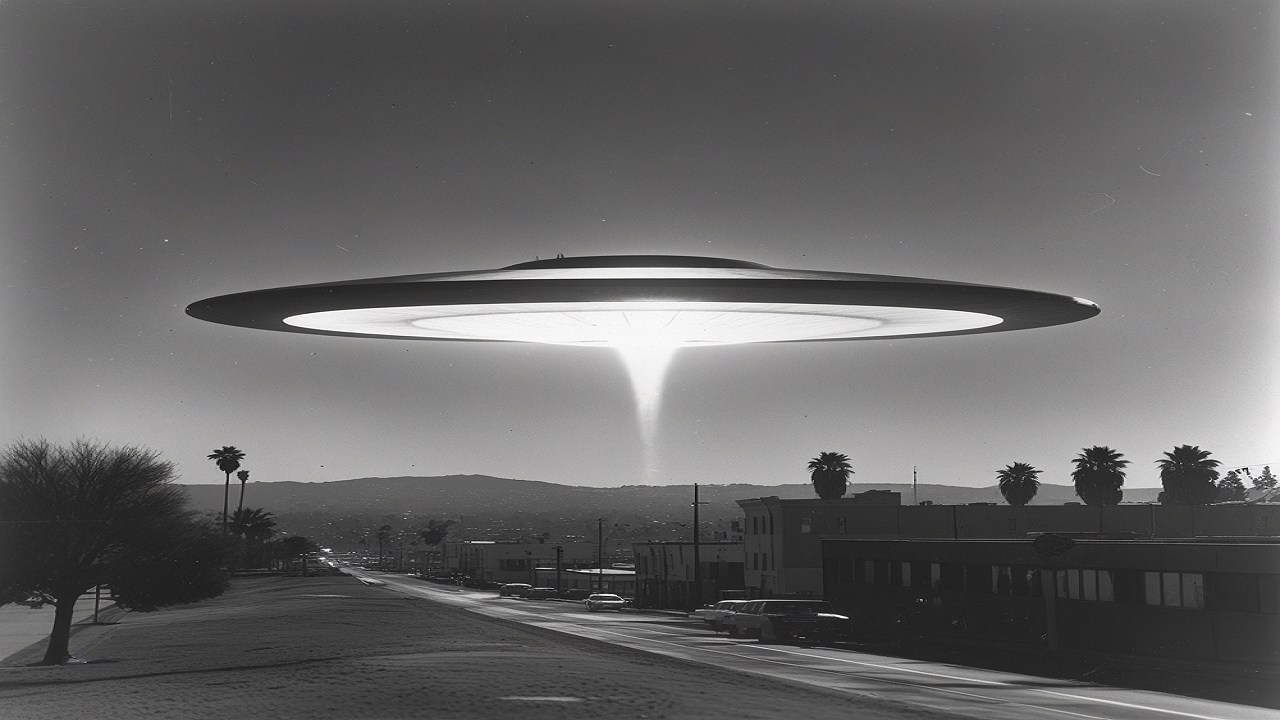
The mid-1960s marked a period of renewed public interest and official concern over unidentified flying objects in the United States. This was a time when the Cold War kept anxieties high, television news was growing in influence, and public trust in official explanations was beginning to waver. Against this backdrop, the April 22, 1966 UFO sighting over Sacramento, California stands out as a case that blended eyewitness testimony, physical evidence in the form of motion picture footage, and the sudden disappearance of that evidence from public view. While the event never reached the fame of some better-known sightings, it continues to intrigue researchers because of its combination of credible witnesses and vanishing documentation.
The Sighting
In the early evening of April 22, 1966, residents of Sacramento looked up to see an unusual, glowing disc slowly moving over the city. The object was described as circular in shape, with a soft but intense luminosity that shifted slightly in hue. Unlike conventional aircraft, it emitted no engine noise, no vapor trail, and did not display the standard navigation lights required by aviation regulations.
Among those who witnessed the event was a television news cameraman —an important detail that makes this case particularly compelling. Working for a local station, he had professional-grade film equipment readily at hand and was able to record the object as it hovered over the skyline. Witnesses claimed the disc remained nearly stationary for about 15 seconds, then suddenly accelerated at an extraordinary speed, disappearing into the distance in a manner inconsistent with known aircraft capabilities of the time.
The Broadcast That Disappeared
The footage reportedly aired once on local television within a day of the sighting.
Viewers who saw the broadcast recall a brief segment during the news, in which the glowing disc was visible against the darkening sky. According to accounts from those who managed to catch the segment, the footage showed the object holding position for several seconds before darting away—a movement that defied the smooth arcs typical of airplanes or helicopters.
After that single airing, however, the footage was never shown again. When curious citizens contacted the station to request a re-broadcast, they were told various reasons—ranging from “technical issues” to “archival problems.” Over time, the film appeared to vanish entirely from the station’s archives. Whether it was misplaced, intentionally removed, or transferred to another party remains unknown.
Witness Testimonies
Beyond the cameraman, multiple independent witnesses observed the event from different locations around the city. Their descriptions were remarkably consistent:
Shape: Disc-like, with clearly defined edges.
Sound: Completely silent, even when passing directly overhead.
Light: A diffuse, white glow with occasional bluish or amber tinges.
Movement: Initially slow and steady, followed by instantaneous acceleration at what appeared to be a sharp upward angle.
Notably, no witnesses reported visible wings, tail structures, or rotor assemblies, which ruled out conventional fixed-wing aircraft or helicopters. The object’s ability to hover silently also challenged the helicopter hypothesis, given the noisy rotor technology of the 1960s.
The Official Silence
Unlike some other sightings of the era, the April 1966 Sacramento event did not prompt a public statement from the Air Force or the Federal Aviation Administration.
Project Blue Book, the Air Force’s official UFO investigation program active at the time, contains no known publicly released file on the incident. This absence is significant because Blue Book did catalogue many West Coast sightings during the mid-1960s, including cases with far less supporting evidence.
This silence led to speculation among researchers. Some theorized that the film may have been quietly handed over to government authorities, explaining its disappearance from the TV station’s control. Others suggested it may have been dismissed as inconclusive by skeptical editors, with the original film later discarded during routine archival cleanouts.
Cultural and Public Impact
The sighting occurred during a decade when UFO reports were surging nationwide. Just two months earlier, in March 1966, a high-profile wave of sightings in Michigan had made national headlines, leading to an infamous explanation of “swamp gas” by Air Force consultant J. Allen Hynek. Public reaction to the Sacramento incident reflected a growing frustration: citizens were beginning to suspect that evidence of truly unusual aerial phenomena was being downplayed or hidden.
For Sacramento residents who saw the footage live on television, the event left a lingering sense of mystery. Conversations about “the glowing disc over the city” persisted for weeks, and letters to the editor appeared in local papers urging authorities to comment. However, with the Kennedy assassination still a vivid national memory and the Vietnam War dominating headlines, the story was quickly overshadowed.
Long-Term Effects
The Sacramento case continues to resonate with UFO researchers for several reasons:
The Cameraman Factor – A trained TV news cameraman is a particularly credible witness, accustomed to observing and documenting events with professional detachment. His role in filming the object lends weight to the case.
Vanishing Physical Evidence – Unlike many sightings that rely solely on eyewitness testimony, this one reportedly had visual documentation that was publicly aired. The subsequent disappearance of the footage raises questions about media control and possible external influence.
Pattern of 1960s UFO Behavior – The disc’s ability to hover silently and then accelerate instantaneously matches descriptions from many other mid-century sightings across the United States. Researchers point to these shared characteristics as evidence of a consistent, unknown aerial capability.
The Debate Over the Footage
The most enduring controversy around the Sacramento incident is the fate of the film. Several theories have been put forward:
Government Seizure Theory: Advocates of this explanation suggest that Air Force or other federal officials requested the footage for “analysis” and never returned it, perhaps deeming it sensitive due to its clarity.
Corporate Policy Theory: Some suggest the station itself may have pulled the footage due to concerns over credibility or fear of public ridicule.
Archival Loss Theory: Others take a more mundane view, suggesting the film was simply misplaced or taped over during routine operations.
Without the original film, modern analysis is impossible, and the Sacramento sighting has entered the category of “lost evidence” cases that populate UFO history.
Relevance to Modern UFO Studies
The Sacramento 1966 case underscores a recurring problem in UFO research: the fragility of evidence. Even when multiple witnesses and photographic or film documentation exist, the chain of custody for that evidence is often poorly maintained. In today’s world of smartphones and digital backups, such a disappearance would be harder to imagine. But in the analog era of film reels and station vaults, a single decision—or accident—could permanently erase a visual record.
Furthermore, the case aligns with modern military and government acknowledgments that some aerial phenomena remain unexplained. The hovering, glowing disc described by Sacramento witnesses matches certain behaviors seen in recent Navy pilot encounters with so-called “UAPs” (Unidentified Aerial Phenomena), suggesting a possible continuity over decades.
Conclusion
The April 22, 1966 Sacramento UFO incident remains a tantalizing mystery: credible witnesses, professional footage, and a sudden erasure from the public record. While we may never recover the missing film, the detailed accounts from that evening stand as a reminder that some of the most compelling UFO cases are not those that dominate headlines, but those that briefly surface, hint at extraordinary possibilities, and then vanish—much like the object itself.
The disappearance of the Sacramento footage also serves as a cautionary tale for future encounters: without immediate duplication, secure archiving, and public transparency, even the clearest visual evidence can be lost to history. For researchers and enthusiasts alike, it represents not just a sighting, but a lesson in the importance of protecting and preserving our records of the unexplained.
The mid-1960s marked a period of renewed public interest and official concern over unidentified flying objects in the United States. This was a time when the Cold War kept anxieties high, television news was growing in influence, and public trust in official explanations was beginning to waver. Against this backdrop, the April 22, 1966 UFO sighting over Sacramento, California stands out as a case that blended eyewitness testimony, physical evidence in the form of motion picture footage, and the sudden disappearance of that evidence from public view. While the event never reached the fame of some better-known sightings, it continues to intrigue researchers because of its combination of credible witnesses and vanishing documentation.
The Sighting
In the early evening of April 22, 1966, residents of Sacramento looked up to see an unusual, glowing disc slowly moving over the city. The object was described as circular in shape, with a soft but intense luminosity that shifted slightly in hue. Unlike conventional aircraft, it emitted no engine noise, no vapor trail, and did not display the standard navigation lights required by aviation regulations.
Among those who witnessed the event was a television news cameraman —an important detail that makes this case particularly compelling. Working for a local station, he had professional-grade film equipment readily at hand and was able to record the object as it hovered over the skyline. Witnesses claimed the disc remained nearly stationary for about 15 seconds, then suddenly accelerated at an extraordinary speed, disappearing into the distance in a manner inconsistent with known aircraft capabilities of the time.
The Broadcast That Disappeared
The footage reportedly aired once on local television within a day of the sighting.
Viewers who saw the broadcast recall a brief segment during the news, in which the glowing disc was visible against the darkening sky. According to accounts from those who managed to catch the segment, the footage showed the object holding position for several seconds before darting away—a movement that defied the smooth arcs typical of airplanes or helicopters.
After that single airing, however, the footage was never shown again. When curious citizens contacted the station to request a re-broadcast, they were told various reasons—ranging from “technical issues” to “archival problems.” Over time, the film appeared to vanish entirely from the station’s archives. Whether it was misplaced, intentionally removed, or transferred to another party remains unknown.
Witness Testimonies
Beyond the cameraman, multiple independent witnesses observed the event from different locations around the city. Their descriptions were remarkably consistent:
Shape: Disc-like, with clearly defined edges.
Sound: Completely silent, even when passing directly overhead.
Light: A diffuse, white glow with occasional bluish or amber tinges.
Movement: Initially slow and steady, followed by instantaneous acceleration at what appeared to be a sharp upward angle.
Notably, no witnesses reported visible wings, tail structures, or rotor assemblies, which ruled out conventional fixed-wing aircraft or helicopters. The object’s ability to hover silently also challenged the helicopter hypothesis, given the noisy rotor technology of the 1960s.
The Official Silence
Unlike some other sightings of the era, the April 1966 Sacramento event did not prompt a public statement from the Air Force or the Federal Aviation Administration.
Project Blue Book, the Air Force’s official UFO investigation program active at the time, contains no known publicly released file on the incident. This absence is significant because Blue Book did catalogue many West Coast sightings during the mid-1960s, including cases with far less supporting evidence.
This silence led to speculation among researchers. Some theorized that the film may have been quietly handed over to government authorities, explaining its disappearance from the TV station’s control. Others suggested it may have been dismissed as inconclusive by skeptical editors, with the original film later discarded during routine archival cleanouts.
Cultural and Public Impact
The sighting occurred during a decade when UFO reports were surging nationwide. Just two months earlier, in March 1966, a high-profile wave of sightings in Michigan had made national headlines, leading to an infamous explanation of “swamp gas” by Air Force consultant J. Allen Hynek. Public reaction to the Sacramento incident reflected a growing frustration: citizens were beginning to suspect that evidence of truly unusual aerial phenomena was being downplayed or hidden.
For Sacramento residents who saw the footage live on television, the event left a lingering sense of mystery. Conversations about “the glowing disc over the city” persisted for weeks, and letters to the editor appeared in local papers urging authorities to comment. However, with the Kennedy assassination still a vivid national memory and the Vietnam War dominating headlines, the story was quickly overshadowed.
Long-Term Effects
The Sacramento case continues to resonate with UFO researchers for several reasons:
The Cameraman Factor – A trained TV news cameraman is a particularly credible witness, accustomed to observing and documenting events with professional detachment. His role in filming the object lends weight to the case.
Vanishing Physical Evidence – Unlike many sightings that rely solely on eyewitness testimony, this one reportedly had visual documentation that was publicly aired. The subsequent disappearance of the footage raises questions about media control and possible external influence.
Pattern of 1960s UFO Behavior – The disc’s ability to hover silently and then accelerate instantaneously matches descriptions from many other mid-century sightings across the United States. Researchers point to these shared characteristics as evidence of a consistent, unknown aerial capability.
The Debate Over the Footage
The most enduring controversy around the Sacramento incident is the fate of the film. Several theories have been put forward:
Government Seizure Theory: Advocates of this explanation suggest that Air Force or other federal officials requested the footage for “analysis” and never returned it, perhaps deeming it sensitive due to its clarity.
Corporate Policy Theory: Some suggest the station itself may have pulled the footage due to concerns over credibility or fear of public ridicule.
Archival Loss Theory: Others take a more mundane view, suggesting the film was simply misplaced or taped over during routine operations.
Without the original film, modern analysis is impossible, and the Sacramento sighting has entered the category of “lost evidence” cases that populate UFO history.
Relevance to Modern UFO Studies
The Sacramento 1966 case underscores a recurring problem in UFO research: the fragility of evidence. Even when multiple witnesses and photographic or film documentation exist, the chain of custody for that evidence is often poorly maintained. In today’s world of smartphones and digital backups, such a disappearance would be harder to imagine. But in the analog era of film reels and station vaults, a single decision—or accident—could permanently erase a visual record.
Furthermore, the case aligns with modern military and government acknowledgments that some aerial phenomena remain unexplained. The hovering, glowing disc described by Sacramento witnesses matches certain behaviors seen in recent Navy pilot encounters with so-called “UAPs” (Unidentified Aerial Phenomena), suggesting a possible continuity over decades.
Conclusion
The April 22, 1966 Sacramento UFO incident remains a tantalizing mystery: credible witnesses, professional footage, and a sudden erasure from the public record. While we may never recover the missing film, the detailed accounts from that evening stand as a reminder that some of the most compelling UFO cases are not those that dominate headlines, but those that briefly surface, hint at extraordinary possibilities, and then vanish—much like the object itself.
The disappearance of the Sacramento footage also serves as a cautionary tale for future encounters: without immediate duplication, secure archiving, and public transparency, even the clearest visual evidence can be lost to history. For researchers and enthusiasts alike, it represents not just a sighting, but a lesson in the importance of protecting and preserving our records of the unexplained.