


Blog Categories
- African Incidents
- Atlantis Incidents
- Australian Incidents
- Belgian Incidents
- Bermuda Triangle Incidents
- Brazilian Incidents
- Canadian Incidents
- Chinese Incidents
- European Incidents
- France Incidents
- Ghosts
- Giants
- Italy Incidents
- Japanese Incidents
- Middle East Incidents
- Portugal Incidents
- Project Serpo
- Puerto Rico Incidents
- Russian Incidents
- Sasquatch
- Scandinavia Incidents
- Spanish Incidents
- UFOs
- United Kingdom Incidents
- United States Incidents
August 1891: Fresno UFO Sighting
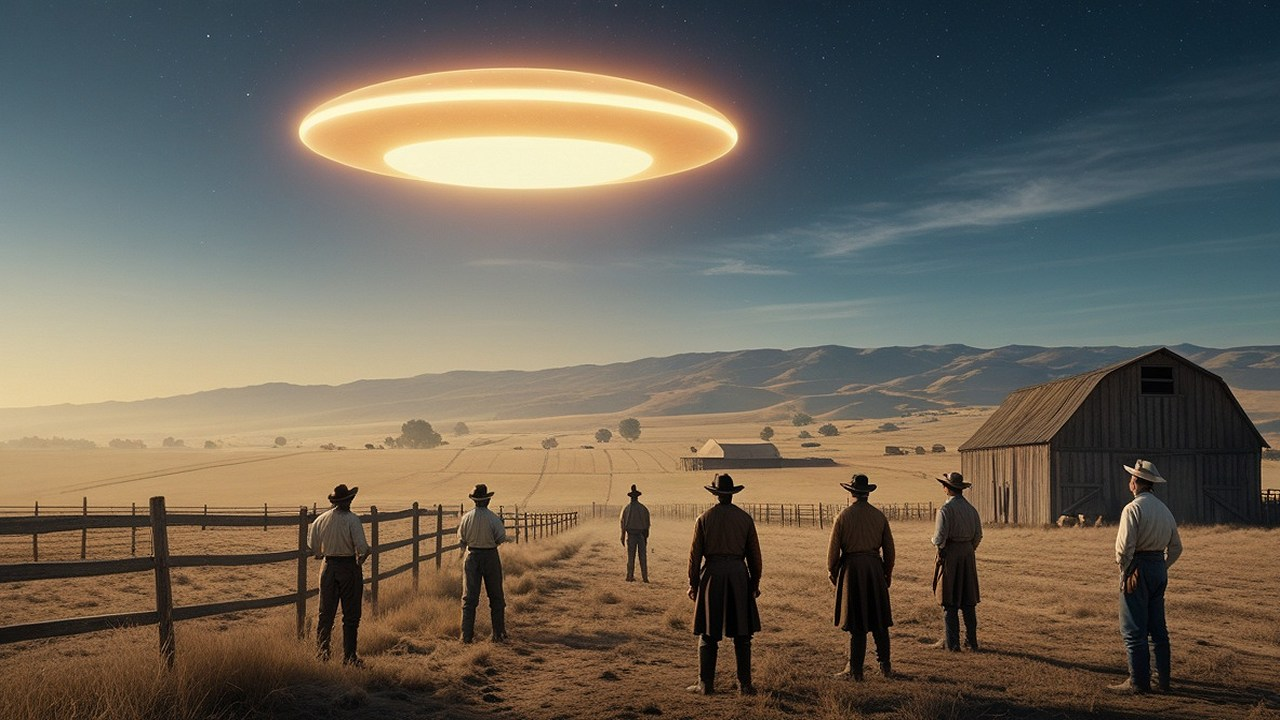
In August 1891, the rural outskirts of Fresno, California, were the stage for a quiet yet fascinating episode in the long and perplexing history of unidentified aerial phenomena. The sighting, briefly reported by the Fresno Weekly Expositor, involved a “strange, luminous object” described as oval-shaped, glowing, and eerily silent. According to the report, several ranchers observed the object in the sky as it moved at high altitude, demonstrating behavior inconsistent with any known celestial body. Though the incident was short in duration and did not cause any material damage, it sparked local curiosity and planted seeds of suspicion and awe—echoes of which remain relevant in today’s discussions of unexplained aerial events.
This is the story of the 1891 Fresno UFO sighting. Welcome to the channel. Today we examine this early American account in full detail, staying strictly faithful to the historical record.
To fully understand the significance of this sighting, it is crucial to consider the context in which it occurred. In 1891, Fresno was a growing agricultural town in California’s Central Valley. With the expansion of railroads and irrigation, vast stretches of land had been transformed into productive farms and ranches. Most residents were farmers or ranchers—hardworking individuals who lived close to nature and were keen observers of the environment. Skywatching was second nature to them, whether for tracking weather patterns, navigating by the stars, or simply passing time on long, uneventful nights. These were not people prone to flights of fancy; their lives were grounded in practicality.
At the time, human flight was still more than a decade away from the Wright brothers’ historic endeavor in 1903. The notion of powered flying machines was the stuff of science fiction and imaginative speculation. Comets, stars, auroras, and meteors were understood phenomena, but any object behaving outside those natural patterns would be highly conspicuous and deeply unsettling.
The Fresno Weekly Expositor article, published in mid-August, summarized testimonies from several local ranchers who claimed to have witnessed a “strange, luminous object” during the early hours of the morning. Though the object was high in the sky, it was clearly visible—glowing with a soft, bluish or amber-white light depending on the observer. Its oval shape suggested something artificial or at least foreign to natural formations in the sky. Most striking of all, it made no sound and left no trail, moving with a smoothness and deliberateness that ruled out meteors or shooting stars.
One rancher, whose name was withheld in the article, reported observing the object for nearly a full minute before it suddenly vanished, as if it had blinked out of existence. It did not arc downward like a meteorite, nor did it fade as a star might. Its departure was instantaneous. This abrupt disappearance and its prior, noiseless flight cast doubt on any conventional explanation available to people of the time.
For a community steeped in religious faith and traditional values, the strange event offered a canvas for multiple interpretations. Some residents reportedly saw the object as a sign—either divine or demonic. There were whispers that it was a message from above, a warning, or a portent of change. Others dismissed it as a misidentified celestial event, albeit one unlike anything they had seen before. Still others were simply bewildered.
Unlike urban centers where skepticism might have reigned, the rural population of Fresno County in 1891 did not have immediate access to experts or scientific commentary to help explain such an occurrence. The local paper’s article offered little in terms of speculation, leaving the story open-ended and inviting various forms of community discussion. The ranchers who witnessed the event were reportedly not ridiculed, but rather listened to with interest and some degree of unease. The credibility of the witnesses—respected and known in their communities—helped elevate the sighting from hearsay to an accepted mystery.
At the time, there were no scientific institutions in Fresno equipped to investigate aerial phenomena. Furthermore, in the 19th century, mainstream science was focused on tangible, earthbound concerns—agriculture, industry, and public health. Astronomy was advancing, but it had little room for anomalous reports that could not be replicated or measured. As a result, the Fresno sighting received no follow-up in scientific journals or investigations. It slipped quietly into obscurity, preserved only in the brittle pages of a local newspaper.
Yet its characteristics—silent movement, oval glow, sudden disappearance—mirror descriptions of modern UFO sightings. Unlike shooting stars, these phenomena seem to exhibit intelligent motion, and unlike aircraft (then non-existent), they move in silence. The lack of a sound signature continues to baffle modern observers and analysts alike. The fact that practical ranchers in 1891 described an object that matches so many later reports is one of the reasons this case retains its power.
Though the 1891 Fresno sighting did not lead to mass hysteria or institutional inquiry, it stands as an early indicator of the persistent mystery of UFOs in American skies. More than fifty years later, similar descriptions would emerge during the infamous 1947 wave of sightings that included the Roswell incident and Kenneth Arnold’s “flying saucers.” In that context, the Fresno account gains retrospective importance. It suggests that the phenomenon predates modern aviation and Cold War anxieties, reaching back into the quiet pastoral chapters of American history.
In today’s landscape, where the U.S. government has acknowledged unidentified aerial phenomena through Pentagon briefings and declassified videos, the 1891 Fresno incident seems less like folklore and more like an early data point. It encourages historians and ufologists to reevaluate similar 19th-century accounts as potentially credible rather than mythical. Moreover, it raises questions about long-term patterns, consistency in witness reports, and the cultural framework through which each generation interprets the unexplained.
There were no nationally known figures directly involved in the 1891 sighting, and the article in the Fresno Weekly Expositor did not name any of the ranchers, possibly to protect their privacy or avoid unnecessary scandal. However, the very anonymity of the witnesses adds a layer of authenticity to their accounts. These were not people seeking fame, nor was there a financial incentive to fabricate the event. In modern terms, their testimony resembles that of trained observers—people with no discernible reason to lie and every reason to remain silent unless compelled by a desire for truth.
The Fresno UFO sighting of August 1891 may not occupy headlines today, but it remains a quiet reminder that the phenomenon we now call UAPs has a deeper, older lineage than many assume. This event, seen through the eyes of humble ranchers in a pre-modern sky, shares the same strange hallmarks as the most sophisticated encounters of the 21st century. The lack of noise, the intelligent motion, the glowing body, and the abrupt disappearance—all of these features form a pattern worth examining, especially as humanity continues to grapple with the implications of unknown aerial objects.
Whether considered a misidentified celestial event or a genuine brush with the unknown, the 1891 sighting in Fresno has become part of California’s rich history of anomalous encounters. It reminds us that long before radar, satellites, or smartphones, people were already looking to the skies—and sometimes what they saw did not fit any category they knew.
In the early morning hours over the ranchlands of Fresno County in August 1891, several practical men watched a luminous oval object move silently at high altitude. It glowed with a soft light, held its form, and then vanished instantly—without arc, without fade, without sound. More than 130 years later, that simple, credible report still stands as one of the earliest clear American accounts of a structured, luminous, intelligently behaving aerial object. It is a quiet light from the past that continues to illuminate the enduring mystery above us.
In August 1891, the rural outskirts of Fresno, California, were the stage for a quiet yet fascinating episode in the long and perplexing history of unidentified aerial phenomena. The sighting, briefly reported by the Fresno Weekly Expositor, involved a “strange, luminous object” described as oval-shaped, glowing, and eerily silent. According to the report, several ranchers observed the object in the sky as it moved at high altitude, demonstrating behavior inconsistent with any known celestial body. Though the incident was short in duration and did not cause any material damage, it sparked local curiosity and planted seeds of suspicion and awe—echoes of which remain relevant in today’s discussions of unexplained aerial events.
This is the story of the 1891 Fresno UFO sighting. Welcome to the channel. Today we examine this early American account in full detail, staying strictly faithful to the historical record.
To fully understand the significance of this sighting, it is crucial to consider the context in which it occurred. In 1891, Fresno was a growing agricultural town in California’s Central Valley. With the expansion of railroads and irrigation, vast stretches of land had been transformed into productive farms and ranches. Most residents were farmers or ranchers—hardworking individuals who lived close to nature and were keen observers of the environment. Skywatching was second nature to them, whether for tracking weather patterns, navigating by the stars, or simply passing time on long, uneventful nights. These were not people prone to flights of fancy; their lives were grounded in practicality.
At the time, human flight was still more than a decade away from the Wright brothers’ historic endeavor in 1903. The notion of powered flying machines was the stuff of science fiction and imaginative speculation. Comets, stars, auroras, and meteors were understood phenomena, but any object behaving outside those natural patterns would be highly conspicuous and deeply unsettling.
The Fresno Weekly Expositor article, published in mid-August, summarized testimonies from several local ranchers who claimed to have witnessed a “strange, luminous object” during the early hours of the morning. Though the object was high in the sky, it was clearly visible—glowing with a soft, bluish or amber-white light depending on the observer. Its oval shape suggested something artificial or at least foreign to natural formations in the sky. Most striking of all, it made no sound and left no trail, moving with a smoothness and deliberateness that ruled out meteors or shooting stars.
One rancher, whose name was withheld in the article, reported observing the object for nearly a full minute before it suddenly vanished, as if it had blinked out of existence. It did not arc downward like a meteorite, nor did it fade as a star might. Its departure was instantaneous. This abrupt disappearance and its prior, noiseless flight cast doubt on any conventional explanation available to people of the time.
For a community steeped in religious faith and traditional values, the strange event offered a canvas for multiple interpretations. Some residents reportedly saw the object as a sign—either divine or demonic. There were whispers that it was a message from above, a warning, or a portent of change. Others dismissed it as a misidentified celestial event, albeit one unlike anything they had seen before. Still others were simply bewildered.
Unlike urban centers where skepticism might have reigned, the rural population of Fresno County in 1891 did not have immediate access to experts or scientific commentary to help explain such an occurrence. The local paper’s article offered little in terms of speculation, leaving the story open-ended and inviting various forms of community discussion. The ranchers who witnessed the event were reportedly not ridiculed, but rather listened to with interest and some degree of unease. The credibility of the witnesses—respected and known in their communities—helped elevate the sighting from hearsay to an accepted mystery.
At the time, there were no scientific institutions in Fresno equipped to investigate aerial phenomena. Furthermore, in the 19th century, mainstream science was focused on tangible, earthbound concerns—agriculture, industry, and public health. Astronomy was advancing, but it had little room for anomalous reports that could not be replicated or measured. As a result, the Fresno sighting received no follow-up in scientific journals or investigations. It slipped quietly into obscurity, preserved only in the brittle pages of a local newspaper.
Yet its characteristics—silent movement, oval glow, sudden disappearance—mirror descriptions of modern UFO sightings. Unlike shooting stars, these phenomena seem to exhibit intelligent motion, and unlike aircraft (then non-existent), they move in silence. The lack of a sound signature continues to baffle modern observers and analysts alike. The fact that practical ranchers in 1891 described an object that matches so many later reports is one of the reasons this case retains its power.
Though the 1891 Fresno sighting did not lead to mass hysteria or institutional inquiry, it stands as an early indicator of the persistent mystery of UFOs in American skies. More than fifty years later, similar descriptions would emerge during the infamous 1947 wave of sightings that included the Roswell incident and Kenneth Arnold’s “flying saucers.” In that context, the Fresno account gains retrospective importance. It suggests that the phenomenon predates modern aviation and Cold War anxieties, reaching back into the quiet pastoral chapters of American history.
In today’s landscape, where the U.S. government has acknowledged unidentified aerial phenomena through Pentagon briefings and declassified videos, the 1891 Fresno incident seems less like folklore and more like an early data point. It encourages historians and ufologists to reevaluate similar 19th-century accounts as potentially credible rather than mythical. Moreover, it raises questions about long-term patterns, consistency in witness reports, and the cultural framework through which each generation interprets the unexplained.
There were no nationally known figures directly involved in the 1891 sighting, and the article in the Fresno Weekly Expositor did not name any of the ranchers, possibly to protect their privacy or avoid unnecessary scandal. However, the very anonymity of the witnesses adds a layer of authenticity to their accounts. These were not people seeking fame, nor was there a financial incentive to fabricate the event. In modern terms, their testimony resembles that of trained observers—people with no discernible reason to lie and every reason to remain silent unless compelled by a desire for truth.
The Fresno UFO sighting of August 1891 may not occupy headlines today, but it remains a quiet reminder that the phenomenon we now call UAPs has a deeper, older lineage than many assume. This event, seen through the eyes of humble ranchers in a pre-modern sky, shares the same strange hallmarks as the most sophisticated encounters of the 21st century. The lack of noise, the intelligent motion, the glowing body, and the abrupt disappearance—all of these features form a pattern worth examining, especially as humanity continues to grapple with the implications of unknown aerial objects.
Whether considered a misidentified celestial event or a genuine brush with the unknown, the 1891 sighting in Fresno has become part of California’s rich history of anomalous encounters. It reminds us that long before radar, satellites, or smartphones, people were already looking to the skies—and sometimes what they saw did not fit any category they knew.
In the early morning hours over the ranchlands of Fresno County in August 1891, several practical men watched a luminous oval object move silently at high altitude. It glowed with a soft light, held its form, and then vanished instantly—without arc, without fade, without sound. More than 130 years later, that simple, credible report still stands as one of the earliest clear American accounts of a structured, luminous, intelligently behaving aerial object. It is a quiet light from the past that continues to illuminate the enduring mystery above us.