


Blog Categories
- African Incidents
- Atlantis Incidents
- Australian Incidents
- Belgian Incidents
- Bermuda Triangle Incidents
- Brazilian Incidents
- Canadian Incidents
- Chinese Incidents
- European Incidents
- France Incidents
- Ghosts
- Giants
- Italy Incidents
- Japanese Incidents
- Middle East Incidents
- Portugal Incidents
- Project Serpo
- Puerto Rico Incidents
- Russian Incidents
- Sasquatch
- Scandinavia Incidents
- Spanish Incidents
- UFOs
- United Kingdom Incidents
- United States Incidents
August 1965: Red Bluff UFO Encounter
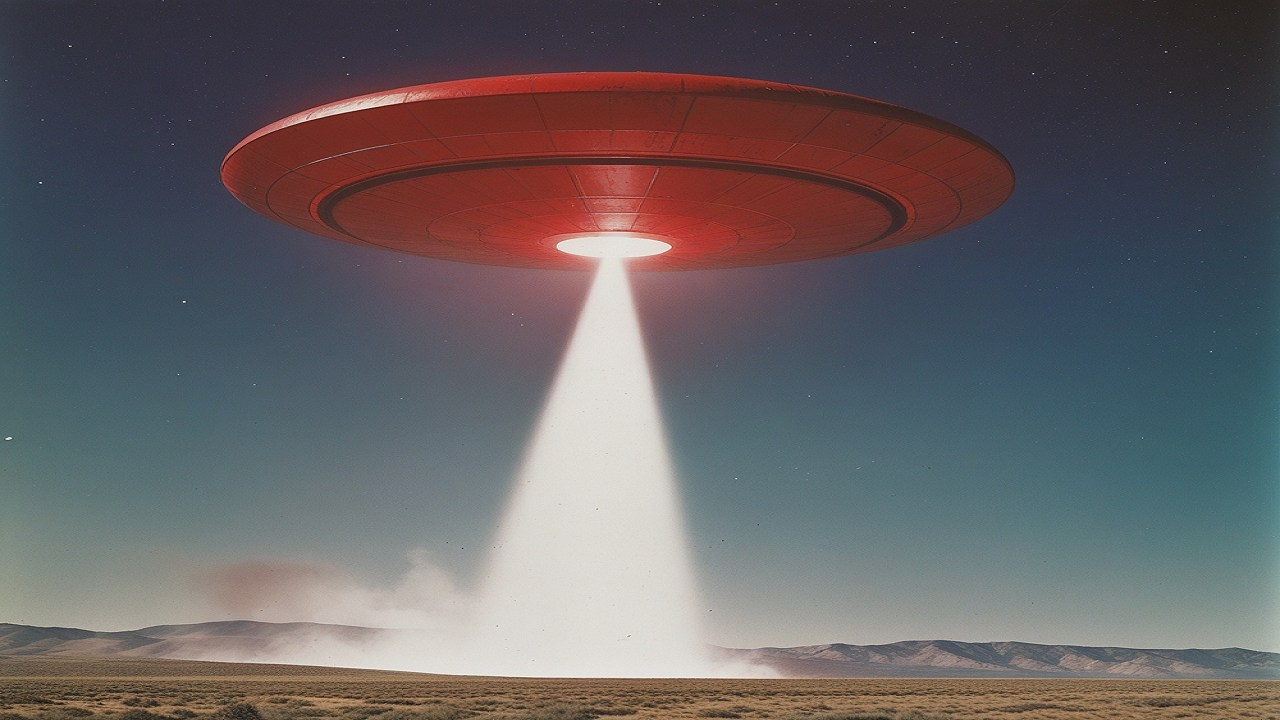
On the night of August 13, 1960, California Highway Patrol Officers Charles A. Carson and Stanley E. Scott were patrolling Hoag Road, east of Corning in Tehama County—just south of Red Bluff—when they witnessed something extraordinary. As described in their official teletype report and later documented by UFO researchers:
“At 11:50 p.m., we saw what at first appeared to be a huge airliner dropping from the sky. The object was very low and directly in front of us… there was an absolute silence… [then] suddenly reversed completely, at high speed and gained approximately 500 ft altitude.”— Officer Charles A. Carson.
Illuminated by a glow, the object appeared as an oblong or elliptical shape, with definite red lights at each extremity, occasionally joined by five white lights between them.
Aerial Acrobacy and Radio Interference
The object performed maneuvers that two veteran patrol officers found unbelievable: hovering, sharp turns, vertical accelerations, and reversals at high speeds. On two occasions, the object approached their vehicle, sweeping the area with a huge red beam, only to retreat when Officer Scott shone his patrol car’s beam at it.
The officers chased the object eastward to the Vina Plains Fire Station, where they encountered another similar object approaching from the south. Both objects hovered nearby before disappearing over the eastern horizon. Throughout the incident—continuing for over two hours—radio interference plagued their communications.
Corroborating Witnesses and Media Coverage
Back at the Tehama County Sheriff’s Office, several deputies—including the jailer—corroborated the sighting, describing nearly identical behavior in the sky.
The following day, the Red Bluff Daily News ran a UPI wire story that reached regional newspapers. Headlines read: “Two California highway patrolmen… reported sighting—and then racing—a mysterious flying football-shaped object which gave off a mysterious red glow”.
An Air Force official, Major M. J. LeRoy, stated that no radar returns were detected—and warned that radar personnel were not permitted to release any details.
Scientific Consideration and Blue Book Skepticism
The Air Force’s Project Blue Book—tasked with investigating UFO reports—eventually issued a standard explanation: temperature inversion, suggesting that atmospheric refraction caused misidentification of celestial bodies like Mars, Aldebaran, or Betelgeuse. As psychologist–astronomer James E. McDonald later noted, none of these objects were even visible in the California sky that night, and none could account for the maneuvers reported by trained officers.
Community Impact and Public Memory
Set amidst the backdrop of mid-20th-century California, the sighting made enough local impact to merit press coverage—but it was soon sidelined by national issues of the era. Despite this, the testimony from blur sections of the rural police force made an impression on UFO historians and became a touchstone in law-enforcement–witnessed UFO lore.
Legacy and Continuing Importance
Multiple credible witnesses: Four law officers provided initially confidential—but consistent—reports.
Physical phenomena reported: Descriptions of colored lights, silent flight, agile motion, and radio interference align with features found in many high-strangeness UFO cases.
Enduring researcher interest: McDonald’s scientific scrutiny and the inclusion in NICAP’s records preserved the case’s importance in UFO historiography.
Blue Book’s flawed conclusions: Widely regarded as implausible, the official explanation adds weight to viewpoints that U.S. agencies often defaulted to mundane causes, regardless of witness credibility.
Why It Still Matters
More than half a century later, the Red Bluff incident remains one of California’s most compelling UFO cases. It exemplifies several critical elements of the phenomenon:
Credibility: Experienced officers reporting something utterly outside their frame of reference.
Physical consistency: High-speed maneuvers, light emissions, and tangible effects (radio interference) not easily dismissed.
Institutional tension: The gap between witness testimony and official dismissal reflects broader skeptical tendencies of the Cold War U.S. government.
In sum, this was not a fleeting flash or a simple misperception—it was a sustained, perplexing event witnessed by multiple law enforcement professionals under stark conditions.
The fact that it remains officially unresolved suggests that whatever these officers saw—if genuine—was something profoundly beyond the normal boundaries of mid-century aviation.
On the night of August 13, 1960, California Highway Patrol Officers Charles A. Carson and Stanley E. Scott were patrolling Hoag Road, east of Corning in Tehama County—just south of Red Bluff—when they witnessed something extraordinary. As described in their official teletype report and later documented by UFO researchers:
“At 11:50 p.m., we saw what at first appeared to be a huge airliner dropping from the sky. The object was very low and directly in front of us… there was an absolute silence… [then] suddenly reversed completely, at high speed and gained approximately 500 ft altitude.”— Officer Charles A. Carson.
Illuminated by a glow, the object appeared as an oblong or elliptical shape, with definite red lights at each extremity, occasionally joined by five white lights between them.
Aerial Acrobacy and Radio Interference
The object performed maneuvers that two veteran patrol officers found unbelievable: hovering, sharp turns, vertical accelerations, and reversals at high speeds. On two occasions, the object approached their vehicle, sweeping the area with a huge red beam, only to retreat when Officer Scott shone his patrol car’s beam at it.
The officers chased the object eastward to the Vina Plains Fire Station, where they encountered another similar object approaching from the south. Both objects hovered nearby before disappearing over the eastern horizon. Throughout the incident—continuing for over two hours—radio interference plagued their communications.
Corroborating Witnesses and Media Coverage
Back at the Tehama County Sheriff’s Office, several deputies—including the jailer—corroborated the sighting, describing nearly identical behavior in the sky.
The following day, the Red Bluff Daily News ran a UPI wire story that reached regional newspapers. Headlines read: “Two California highway patrolmen… reported sighting—and then racing—a mysterious flying football-shaped object which gave off a mysterious red glow”.
An Air Force official, Major M. J. LeRoy, stated that no radar returns were detected—and warned that radar personnel were not permitted to release any details.
Scientific Consideration and Blue Book Skepticism
The Air Force’s Project Blue Book—tasked with investigating UFO reports—eventually issued a standard explanation: temperature inversion, suggesting that atmospheric refraction caused misidentification of celestial bodies like Mars, Aldebaran, or Betelgeuse. As psychologist–astronomer James E. McDonald later noted, none of these objects were even visible in the California sky that night, and none could account for the maneuvers reported by trained officers.
Community Impact and Public Memory
Set amidst the backdrop of mid-20th-century California, the sighting made enough local impact to merit press coverage—but it was soon sidelined by national issues of the era. Despite this, the testimony from blur sections of the rural police force made an impression on UFO historians and became a touchstone in law-enforcement–witnessed UFO lore.
Legacy and Continuing Importance
Multiple credible witnesses: Four law officers provided initially confidential—but consistent—reports.
Physical phenomena reported: Descriptions of colored lights, silent flight, agile motion, and radio interference align with features found in many high-strangeness UFO cases.
Enduring researcher interest: McDonald’s scientific scrutiny and the inclusion in NICAP’s records preserved the case’s importance in UFO historiography.
Blue Book’s flawed conclusions: Widely regarded as implausible, the official explanation adds weight to viewpoints that U.S. agencies often defaulted to mundane causes, regardless of witness credibility.
Why It Still Matters
More than half a century later, the Red Bluff incident remains one of California’s most compelling UFO cases. It exemplifies several critical elements of the phenomenon:
Credibility: Experienced officers reporting something utterly outside their frame of reference.
Physical consistency: High-speed maneuvers, light emissions, and tangible effects (radio interference) not easily dismissed.
Institutional tension: The gap between witness testimony and official dismissal reflects broader skeptical tendencies of the Cold War U.S. government.
In sum, this was not a fleeting flash or a simple misperception—it was a sustained, perplexing event witnessed by multiple law enforcement professionals under stark conditions.
The fact that it remains officially unresolved suggests that whatever these officers saw—if genuine—was something profoundly beyond the normal boundaries of mid-century aviation.