


Blog Categories
- African Incidents
- Atlantis Incidents
- Australian Incidents
- Belgian Incidents
- Bermuda Triangle Incidents
- Brazilian Incidents
- Canadian Incidents
- Chinese Incidents
- European Incidents
- France Incidents
- Ghosts
- Giants
- Italy Incidents
- Japanese Incidents
- Middle East Incidents
- Portugal Incidents
- Project Serpo
- Puerto Rico Incidents
- Russian Incidents
- Sasquatch
- Scandinavia Incidents
- Spanish Incidents
- UFOs
- United Kingdom Incidents
- United States Incidents
August 1967: Mojave Desert UFO Encounter
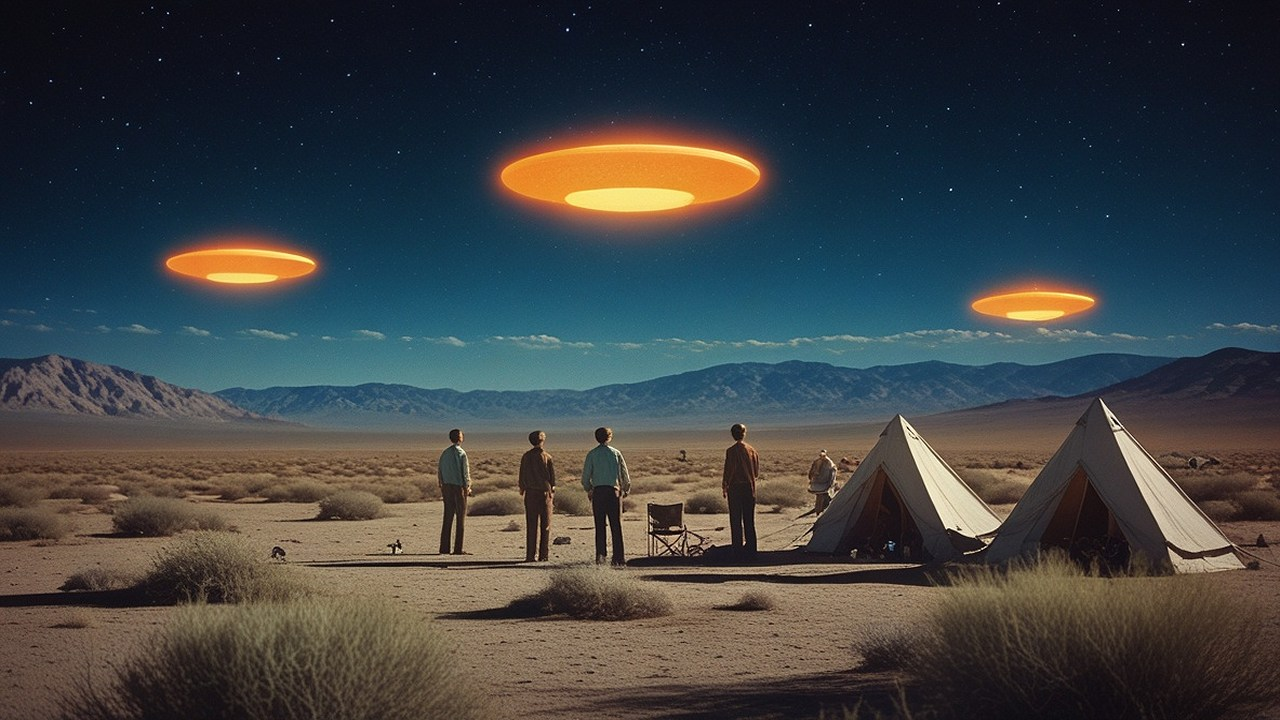
In the summer of 1967, in one of the most remote and unforgiving landscapes in America, a group of campers witnessed something that still challenges explanation today.
Three glowing orange orbs moved in perfect formation across the Mojave Desert sky. They slowly converged, merged into a single bright mass, hovered briefly… and then shot straight upward at tremendous speed, disappearing into the night.
What makes this case especially compelling is not just the visual drama. A nearby U.S. Air Force radar station reportedly tracked an unidentified target at the exact same time and location. This is the story of the August 11, 1967 Mojave Desert UFO Encounter — a classic radar-visual case from the height of the 1960s UFO wave.
Welcome to the channel. Today we’re examining one of the strongest and most intriguing sightings from the Golden Age of UFO reports — a case preserved by credible witnesses and civilian investigators that continues to hold up more than five decades later.
Let’s go back to that warm August night in 1967.
The Mojave Desert in Southern California is a vast, arid expanse of scrubland, dry lake beds, and rugged mountains. In the 1960s, it was already a hub for military testing, rocket development, and secret aviation projects. Barstow, a modest desert community along Route 66, served as a stopping point for travelers and a base for those working in the surrounding military ranges.
A small group of friends and relatives had set up camp a few miles outside of Barstow. It was a typical desert camping trip — conversation, stargazing, and enjoying the clear, star-filled skies far from city lights. The evening had been peaceful until shortly after 10:00 p.m., when one of the campers noticed a bright orange light low on the horizon.
What happened next would turn an ordinary camping trip into a lifelong memory.
Two more orange lights appeared, spaced evenly apart. The three luminous orbs moved in perfect formation — maintaining their relative positions while gliding silently across the sky. Witnesses emphasized that the lights did not blink or display standard aviation patterns. They glowed with a steady, intense orange hue.
The group watched in amazement as the three orbs began to converge. Slowly but deliberately, they drew closer together until they appeared to touch. In a remarkable display, the three separate lights merged into a single, brighter glowing mass. This unified orb hovered for a few seconds — witnesses estimated three to five seconds — before it suddenly accelerated straight upward at extraordinary speed.
Within moments, it had vanished into the night sky. There was no sound. No sonic boom. No visible exhaust or trail. Just silent, controlled movement and a dramatic vertical departure.
The campers were left stunned. This was not a meteor. Meteors do not fly in formation, merge, hover, and then shoot straight up. It was not a flare or balloon. The precision, the merging phenomenon, and the final high-speed ascent defied every conventional explanation available in 1967.
What elevates this case beyond many other visual sightings is the reported radar corroboration. According to accounts gathered by civilian investigators, a nearby U.S. Air Force radar station detected an unidentified return that same night. The timing and location matched the campers’ sighting closely. While specific radar data was never publicly released, the existence of this instrumental confirmation makes the Mojave Desert case particularly strong. Radar-visual cases — where both human eyes and electronic systems detect the same anomaly — are considered among the most reliable in UFO research.
The witnesses were not sensationalists or UFO enthusiasts. They were ordinary people on a camping trip. Their decision to report the event to civilian investigators, including those affiliated with NICAP (the National Investigations Committee on Aerial Phenomena), helped preserve the case for future study. NICAP was one of the most respected civilian UFO organizations of the era, known for its methodical approach and focus on credible witnesses.
When investigators interviewed the group, they found the accounts consistent and sincere. Cross-checking between individuals revealed no major discrepancies. The witnesses described the same sequence: three orange orbs in formation, merging into one, brief hover, and rapid vertical departure. The radar connection, though second-hand, added an objective layer that many purely visual cases lack.
The 1967 Mojave Desert encounter occurred during one of the most active periods in UFO history. The mid-to-late 1960s saw waves of sightings across the United States, including the famous Michigan swamp gas flap and numerous reports near military installations. The Mojave Desert, with its proximity to Edwards Air Force Base, China Lake Naval Weapons Center, and other sensitive facilities, was a hotspot for both experimental aircraft and unexplained phenomena. The fact that this sighting happened in such a strategically important region makes it even more intriguing.
Public reaction at the time was relatively muted. Unlike some high-profile cases that made national headlines, this sighting remained mostly local. However, within the growing UFO research community, it was recognized as a strong example of intelligent, structured activity. The merging of three objects into one is a relatively rare but documented motif in UAP literature, appearing in cases from various decades and locations.
Today, the 1967 Mojave Desert case continues to be studied for several reasons. First, the radar-visual element provides a rare combination of human testimony and instrumental data. Second, the merging phenomenon suggests either modular technology or some form of energy-based interaction that challenges conventional understanding. Third, the silent operation and rapid vertical acceleration mirror performance characteristics reported in modern military UAP encounters, including the Tic Tac incidents.
When we compare this 1967 sighting to contemporary reports, the parallels are striking. Objects that can fly in formation, merge, hover, and accelerate vertically at extreme speeds continue to be documented by military pilots and radar systems. The Mojave Desert case demonstrates that these capabilities have been observed for decades — long before the technological explanations we might reach for today were available.
The credibility of the witnesses and the preservation of the case by NICAP researchers give it enduring value. In an era when many UFO reports were dismissed or sensationalized, this one was handled with professionalism and restraint. It stands as a model for how anomalous events can be documented without exaggeration.
As we continue our modern pursuit of UAP transparency through government programs, congressional hearings, and scientific study, historical cases like the 1967 Mojave Desert encounter provide crucial context. They show that the phenomenon is not new. It has been appearing in American skies for well over half a century, often near areas of military or technological significance.
The three orange orbs that merged and shot skyward over the Mojave Desert in 1967 may have disappeared long ago, but their place in UFO history remains secure. They remind us that the mystery did not begin with modern Navy videos or Pentagon reports. It has been unfolding for generations, leaving behind accounts that continue to challenge our understanding of what shares the skies with us.
The campers who witnessed this event on that quiet desert night in 1967 probably never imagined their story would still be discussed more than five decades later. But their calm, detailed testimony helped preserve one of the stronger radar-visual cases from the classic era of UFO research — a case that continues to intrigue and inspire new generations of researchers and sky watchers.
In the summer of 1967, in one of the most remote and unforgiving landscapes in America, a group of campers witnessed something that still challenges explanation today.
Three glowing orange orbs moved in perfect formation across the Mojave Desert sky. They slowly converged, merged into a single bright mass, hovered briefly… and then shot straight upward at tremendous speed, disappearing into the night.
What makes this case especially compelling is not just the visual drama. A nearby U.S. Air Force radar station reportedly tracked an unidentified target at the exact same time and location. This is the story of the August 11, 1967 Mojave Desert UFO Encounter — a classic radar-visual case from the height of the 1960s UFO wave.
Welcome to the channel. Today we’re examining one of the strongest and most intriguing sightings from the Golden Age of UFO reports — a case preserved by credible witnesses and civilian investigators that continues to hold up more than five decades later.
Let’s go back to that warm August night in 1967.
The Mojave Desert in Southern California is a vast, arid expanse of scrubland, dry lake beds, and rugged mountains. In the 1960s, it was already a hub for military testing, rocket development, and secret aviation projects. Barstow, a modest desert community along Route 66, served as a stopping point for travelers and a base for those working in the surrounding military ranges.
A small group of friends and relatives had set up camp a few miles outside of Barstow. It was a typical desert camping trip — conversation, stargazing, and enjoying the clear, star-filled skies far from city lights. The evening had been peaceful until shortly after 10:00 p.m., when one of the campers noticed a bright orange light low on the horizon.
What happened next would turn an ordinary camping trip into a lifelong memory.
Two more orange lights appeared, spaced evenly apart. The three luminous orbs moved in perfect formation — maintaining their relative positions while gliding silently across the sky. Witnesses emphasized that the lights did not blink or display standard aviation patterns. They glowed with a steady, intense orange hue.
The group watched in amazement as the three orbs began to converge. Slowly but deliberately, they drew closer together until they appeared to touch. In a remarkable display, the three separate lights merged into a single, brighter glowing mass. This unified orb hovered for a few seconds — witnesses estimated three to five seconds — before it suddenly accelerated straight upward at extraordinary speed.
Within moments, it had vanished into the night sky. There was no sound. No sonic boom. No visible exhaust or trail. Just silent, controlled movement and a dramatic vertical departure.
The campers were left stunned. This was not a meteor. Meteors do not fly in formation, merge, hover, and then shoot straight up. It was not a flare or balloon. The precision, the merging phenomenon, and the final high-speed ascent defied every conventional explanation available in 1967.
What elevates this case beyond many other visual sightings is the reported radar corroboration. According to accounts gathered by civilian investigators, a nearby U.S. Air Force radar station detected an unidentified return that same night. The timing and location matched the campers’ sighting closely. While specific radar data was never publicly released, the existence of this instrumental confirmation makes the Mojave Desert case particularly strong. Radar-visual cases — where both human eyes and electronic systems detect the same anomaly — are considered among the most reliable in UFO research.
The witnesses were not sensationalists or UFO enthusiasts. They were ordinary people on a camping trip. Their decision to report the event to civilian investigators, including those affiliated with NICAP (the National Investigations Committee on Aerial Phenomena), helped preserve the case for future study. NICAP was one of the most respected civilian UFO organizations of the era, known for its methodical approach and focus on credible witnesses.
When investigators interviewed the group, they found the accounts consistent and sincere. Cross-checking between individuals revealed no major discrepancies. The witnesses described the same sequence: three orange orbs in formation, merging into one, brief hover, and rapid vertical departure. The radar connection, though second-hand, added an objective layer that many purely visual cases lack.
The 1967 Mojave Desert encounter occurred during one of the most active periods in UFO history. The mid-to-late 1960s saw waves of sightings across the United States, including the famous Michigan swamp gas flap and numerous reports near military installations. The Mojave Desert, with its proximity to Edwards Air Force Base, China Lake Naval Weapons Center, and other sensitive facilities, was a hotspot for both experimental aircraft and unexplained phenomena. The fact that this sighting happened in such a strategically important region makes it even more intriguing.
Public reaction at the time was relatively muted. Unlike some high-profile cases that made national headlines, this sighting remained mostly local. However, within the growing UFO research community, it was recognized as a strong example of intelligent, structured activity. The merging of three objects into one is a relatively rare but documented motif in UAP literature, appearing in cases from various decades and locations.
Today, the 1967 Mojave Desert case continues to be studied for several reasons. First, the radar-visual element provides a rare combination of human testimony and instrumental data. Second, the merging phenomenon suggests either modular technology or some form of energy-based interaction that challenges conventional understanding. Third, the silent operation and rapid vertical acceleration mirror performance characteristics reported in modern military UAP encounters, including the Tic Tac incidents.
When we compare this 1967 sighting to contemporary reports, the parallels are striking. Objects that can fly in formation, merge, hover, and accelerate vertically at extreme speeds continue to be documented by military pilots and radar systems. The Mojave Desert case demonstrates that these capabilities have been observed for decades — long before the technological explanations we might reach for today were available.
The credibility of the witnesses and the preservation of the case by NICAP researchers give it enduring value. In an era when many UFO reports were dismissed or sensationalized, this one was handled with professionalism and restraint. It stands as a model for how anomalous events can be documented without exaggeration.
As we continue our modern pursuit of UAP transparency through government programs, congressional hearings, and scientific study, historical cases like the 1967 Mojave Desert encounter provide crucial context. They show that the phenomenon is not new. It has been appearing in American skies for well over half a century, often near areas of military or technological significance.
The three orange orbs that merged and shot skyward over the Mojave Desert in 1967 may have disappeared long ago, but their place in UFO history remains secure. They remind us that the mystery did not begin with modern Navy videos or Pentagon reports. It has been unfolding for generations, leaving behind accounts that continue to challenge our understanding of what shares the skies with us.
The campers who witnessed this event on that quiet desert night in 1967 probably never imagined their story would still be discussed more than five decades later. But their calm, detailed testimony helped preserve one of the stronger radar-visual cases from the classic era of UFO research — a case that continues to intrigue and inspire new generations of researchers and sky watchers.