


Blog Categories
- African Incidents
- Atlantis Incidents
- Australian Incidents
- Belgian Incidents
- Bermuda Triangle Incidents
- Brazilian Incidents
- Canadian Incidents
- Chinese Incidents
- European Incidents
- France Incidents
- Ghosts
- Giants
- Italy Incidents
- Japanese Incidents
- Middle East Incidents
- Portugal Incidents
- Project Serpo
- Puerto Rico Incidents
- Russian Incidents
- Sasquatch
- Scandinavia Incidents
- Spanish Incidents
- UFOs
- United Kingdom Incidents
- United States Incidents
August 4 1965: Arkansas UFO Wave
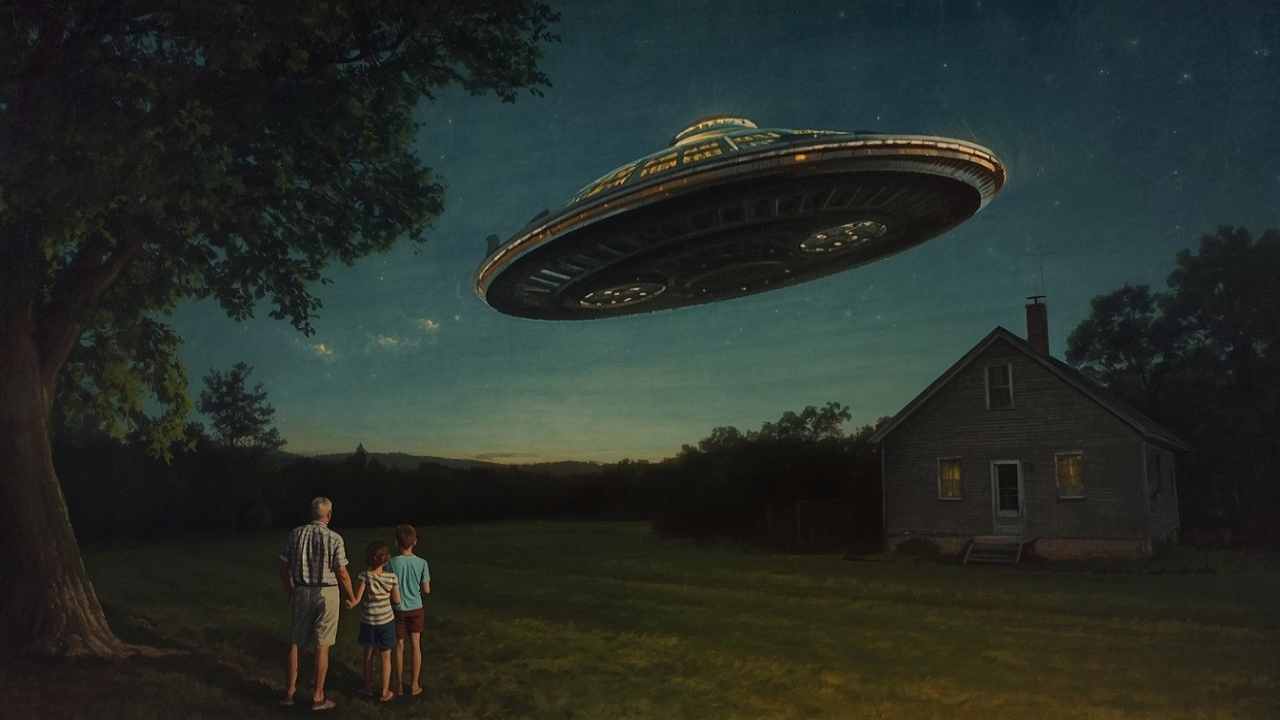
On August 4, 1965, Arkansas experienced a remarkable escalation in aerial mystery, as multiple towns reported unidentified flying objects across the state. The ripple began in the rural town of Viney Grove, spread through Fayetteville and Blytheville, and culminated in a massive sighting over Fort Smith involving hundreds of eyewitnesses. Among the most detailed accounts was that of Bill Estep, an Arkansas resident whose first-hand narration brought specificity to the wave of curious reports. Even the U.S. Air Force’s formal UFO investigation unit, known as Project Blue Book, took note of the Fort Smith incident, underlining its significance. This event remains one of the most comprehensive and community-oriented UFO occurrences in Arkansas’s modern history.
Bill Estep’s Encounter in Viney Grove
The evening of August 4 found Bill Estep and his family at home near Viney Grove, in Washington County. Around 10 p.m., they noticed a bright light flashing in the sky. Upon stepping outside, they observed an elongated, metallic object hovering at treetop height, reportedly the size of a car. The craft bore illuminated windows and a revolving light atop it—a striking and deliberate feature meant to convey presence or navigation. Several witnesses confirmed seeing the object just above the trees. Though police were unable to locate the craft after the sighting, the Prairie Grove Police Department’s investigation validated that Estep’s report was given credibility. This local police endorsement elevated the sighting beyond mere anecdote and affirmed it as a matter of communal interest.
Spread to Fayetteville
Shortly after Estep’s sighting, similar reports surfaced in Fayetteville, roughly ten miles south. Multiple individuals described strange lights in the sky—though accounts did not always match Estep’s detailed description, they confirmed unusual aerial activity within the same general time window. The concurrence of these reports, spanning different towns and observers, added weight to the possibility that the phenomenon was neither random nor localized.
Blytheville: A Landing Report
A few days later, on August 6, two women claimed to have seen a strange aircraft land in a field near Blytheville, a town in Mississippi County. Though smaller in scale than Viney Grove or Fort Smith, this account intensified the pattern—this event suggested not only passive observation but physical interaction with the ground. Such reports, arguably more evocative, carried both intrigue and a sense of proximity to something beyond the everyday.
The Fort Smith Mass Sighting and Project Blue Book’s Involvement
The crescendo of sightings occurred over Fort Smith, Sebastian County. Local residents reported bright lights and aerial objects, prompting Project Blue Book, the Air Force’s UFO investigative initiative, to take special notice. Official documents recorded that as many as 1,500 people witnessed the phenomenon—an unusually high number for any UFO sighting. Though Blue Book’s final report concluded “no threats to national security,” it acknowledged the event as “unidentified” and worthy of official documentation. Blue Book investigators conducted inquiries, analyzed local radar records when available, interviewed witnesses, and cross-referenced reports. They ultimately failed to identify a conventional explanation, leaving the event open to interpretation. The large number of independent witnesses enhanced validity, setting the sighting apart from isolated or questionable anecdotes.
Community Effects and Public Discourse
The collective impact of the 1965 sightings on Arkansas’s communities was profound. The overlapping reports served to validate one another, allowing individuals from diverse backgrounds—farmers, homemakers, professionals—to share experiences without fear of ridicule. Their consistency turned what could have been fringe rumor into a communal event. People spoke openly about the evening sky; social gatherings pivoted around recounting experiences, analyzing possible causes, and debating what could explain so many simultaneous sightings. In Viney Grove and Fayetteville, Estep’s detailed description energized local police and media. Citizen curiosity gave rise to occasional skywatch outings, where neighbors scanned the horizon for further signs. In Fort Smith, the sheer volume of witnesses left lasting impressions. News outlets covered the sightings objectively, and the Project Blue Book involvement offered an official imprimatur that prevented the narrative from being dismissed outright.
Notable Individuals and Their Influence
Bill Estep’s articulate account, accompanied by supplemental witnesses, became the focal point of local media coverage. His measured statements helped shape public perception and grounded the story in credibility. Project Blue Book investigators, although uncredited by name, elevated the status of the Fort Smith events through their acknowledgement—despite inconclusive results.
Echoes Through Time
The 1965 wave left a legacy in Arkansas’s cultural memory. UFO organizations formed in the wake, including local chapters of MUFON and NICAP, which aimed to document ongoing sightings and preserve collective testimony. The Fort Smith incident, in particular, became a staple in regional UFO symposiums and events like the Ozark Mountain UFO Conference in Eureka Springs. In the 21st century, researchers have reanalyzed the 1965 sightings. Some suggest earthly explanations—military flares, experimental aircraft, or optical illusions. Others point to the possibility of early-season meteor showers or atmospheric phenomena matched to the timeframe. Importantly, the 1965 events are frequently referenced in studies of mass sightings and phenomena involving hundreds of witnesses—categories that carry particular weight in UFO research. Arkansas continues to receive UFO sighting reports, but local identity still draws partially on the 1965 events. Annual skywatch programs and historical displays periodically reference the Fort Smith wave. The concept of community witness validation from 1965 still informs local reporting conventions and civic openness to anomalous events.
Conclusion: A Shared Moment in Time
The August 4, 1965 wave of UFO sightings in Arkansas serves as a compelling example of collective wonder. From Bill Estep’s evocative single-family encounter to the multi-jurisdictional surge of reports culminating in Fort Smith, this event transcended rumor to become communal testimony acknowledged by both citizens and federal bodies. For a night—or two—Arkansas looked skyward in unison, collectively experiencing the unexplained. In doing so, communities engaged in critical observation, open dialogue, and media scrutiny, forging a rare moment of mutual curiosity. The impact resonates today in historical accounts, continued research, and the quiet dignity of eyewitnesses who chose to speak up. Fort Smith’s 1,500 witnesses may never know what they observed. But for those who shared the view—side by side in starlit fields—the memory remains a reminder that the heavens, even in the age of satellites, can still surprise us. And when they do, it matters that we look together.