


Blog Categories
- African Incidents
- Atlantis Incidents
- Australian Incidents
- Belgian Incidents
- Bermuda Triangle Incidents
- Brazilian Incidents
- Canadian Incidents
- Chinese Incidents
- European Incidents
- France Incidents
- Ghosts
- Giants
- Italy Incidents
- Japanese Incidents
- Middle East Incidents
- Portugal Incidents
- Project Serpo
- Puerto Rico Incidents
- Russian Incidents
- Sasquatch
- Scandinavia Incidents
- Spanish Incidents
- UFOs
- United Kingdom Incidents
- United States Incidents
Connecticut in the 1947 UFO Wave
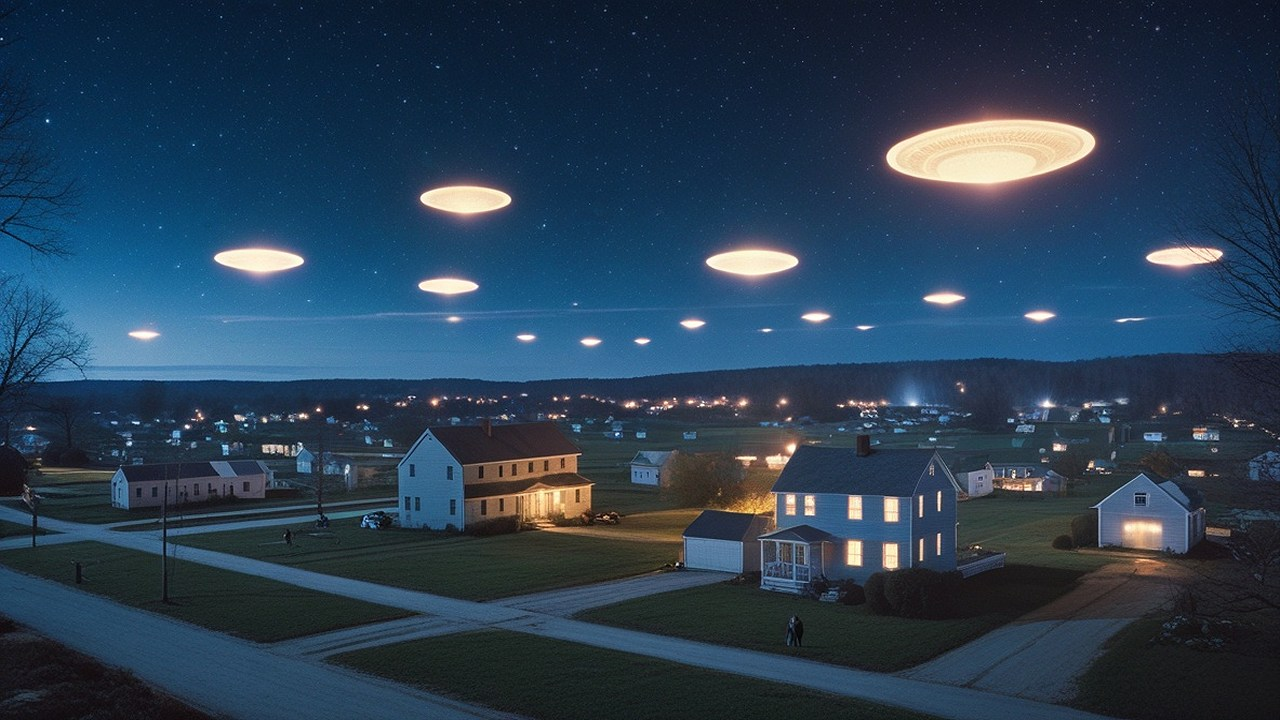
In the summer of 1947, the United States experienced what many consider the birth of the modern UFO phenomenon. It started with pilot Kenneth Arnold’s famous sighting of nine gleaming objects near Mount Rainier on June 24. The term “flying saucer” entered the public vocabulary almost overnight, and newspapers across the country were flooded with reports of strange objects in the sky.
While the most famous cases came from the West and Midwest, the wave reached all the way to the East Coast — including Connecticut. Although Connecticut did not produce a single blockbuster crash or mass sighting that summer, the state was very much part of the national conversation. Residents, local newspapers, and aviation enthusiasts reported lights, objects, and formations that did not match known aircraft. This is the story of Connecticut’s place in the 1947 UFO wave — a quieter but important chapter in the birth of America’s enduring fascination with the unknown in our skies.
Let’s go back to that pivotal summer.
By mid-1947, America was still recovering from World War II. Aviation technology had advanced dramatically during the war, with jets, radar, and long-range bombers becoming part of everyday awareness. People were primed to notice anything unusual in the sky. When Kenneth Arnold’s story hit the wires, it triggered a nationwide surge in sightings. Suddenly, ordinary citizens, pilots, and even law enforcement officers were looking up — and many were seeing things they couldn’t explain.
Connecticut, with its industrial base, aviation history, and dense population centers, was no exception. Local newspapers began receiving calls from residents who had seen strange lights, slow-moving objects, or formations that didn’t match commercial or military aircraft. While few of these reports received national attention, they were significant locally. Connecticut residents were participating in the same national phenomenon that was gripping the rest of the country.
The state’s newspapers played a key role in shaping public perception. Articles and letters to the editor discussed the “flying disc” reports, with some writers expressing excitement about possible new technology, while others speculated about secret military projects or even visitors from elsewhere. In a state with a strong manufacturing and aviation heritage, the idea that these objects might be advanced human inventions was particularly resonant. At the same time, the sheer volume of reports made it difficult for authorities to dismiss everything as misidentification or imagination.
One of the important aspects of Connecticut’s involvement in 1947 is how it helped normalize the act of reporting unusual aerial sightings. Before that summer, strange lights in the sky were often attributed to stars, planets, weather balloons, or hoaxes. After 1947, a new framework emerged: the possibility of unidentified flying objects as a legitimate category of observation. Connecticut residents, like people across the country, began to view the sky not just as empty space or familiar aviation routes, but as a realm where the unknown could appear.
The cultural shift was subtle but real. In small towns and suburban neighborhoods, people started talking about what they had seen. Aviation clubs and amateur observers exchanged notes. Local journalists covered the stories with a mix of curiosity and restraint. The wave helped lay the groundwork for future UFO interest in the state. When later waves hit Connecticut — particularly the major Hudson Valley activity in the 1980s — the public and media already had a frame of reference. The 1947 reports had planted the seed that Connecticut skies could host mysteries.
Although detailed, multi-witness cases with strong corroboration are harder to find in Connecticut from 1947 compared to some other states, the state was clearly part of the national wave. Local press summaries and retrospective articles confirm that Connecticut residents reported objects moving in the sky, often described as strange lights, discs, or formations without known aircraft signatures. These reports, even if brief, helped contribute to the overall tapestry of the 1947 phenomenon.
The absence of dramatic crash or landing cases in Connecticut does not diminish the importance of its participation. The 1947 wave was primarily a sighting wave — thousands of people across the country seeing lights and objects that defied easy explanation. Connecticut’s contribution fits this pattern. It shows that the phenomenon was national in scope, reaching even relatively small states in the Northeast.
When we look at the broader historical significance, Connecticut’s role in 1947 helps us understand how the UFO phenomenon became embedded in American culture. The wave marked a turning point: the moment when “flying saucers” moved from fringe curiosity to mainstream topic. In Connecticut, as in other states, ordinary people became part of that national conversation. They looked up, they reported what they saw, and they began to wonder what it all meant.
The legacy of the 1947 wave in Connecticut is subtle but enduring. It helped establish a tradition of sky watching and reporting that continued through later decades. When the big Hudson Valley wave hit in the 1980s, Connecticut residents already had a cultural memory of strange objects in the sky. The 1947 reports served as an early foundation for that awareness.
Today, as we examine historical UFO cases with fresh eyes and better tools, Connecticut’s 1947 sightings deserve renewed attention. They remind us that the phenomenon did not begin with modern military videos or congressional hearings. It has been part of American life for generations — observed by everyday people in everyday places, from rural towns to suburban backyards.
The lights and objects seen over Connecticut in 1947 may never be fully explained. But their existence in the historical record shows that the mystery has deep roots in the state. They challenge us to keep looking up — and to keep asking questions about what shares our skies.
As we continue pushing for greater transparency and scientific study of UAP in the 21st century, cases from 1947 like those in Connecticut provide essential context. They show us that this is not a new story. It is a long, ongoing story — one that includes ordinary Americans in all corners of the country who simply looked up and saw something they could not explain.
The summer of 1947 was the dawn of the modern UFO era. And Connecticut was there — quietly but unmistakably — as part of that historic moment.
In the summer of 1947, the United States experienced what many consider the birth of the modern UFO phenomenon. It started with pilot Kenneth Arnold’s famous sighting of nine gleaming objects near Mount Rainier on June 24. The term “flying saucer” entered the public vocabulary almost overnight, and newspapers across the country were flooded with reports of strange objects in the sky.
While the most famous cases came from the West and Midwest, the wave reached all the way to the East Coast — including Connecticut. Although Connecticut did not produce a single blockbuster crash or mass sighting that summer, the state was very much part of the national conversation. Residents, local newspapers, and aviation enthusiasts reported lights, objects, and formations that did not match known aircraft. This is the story of Connecticut’s place in the 1947 UFO wave — a quieter but important chapter in the birth of America’s enduring fascination with the unknown in our skies.
Let’s go back to that pivotal summer.
By mid-1947, America was still recovering from World War II. Aviation technology had advanced dramatically during the war, with jets, radar, and long-range bombers becoming part of everyday awareness. People were primed to notice anything unusual in the sky. When Kenneth Arnold’s story hit the wires, it triggered a nationwide surge in sightings. Suddenly, ordinary citizens, pilots, and even law enforcement officers were looking up — and many were seeing things they couldn’t explain.
Connecticut, with its industrial base, aviation history, and dense population centers, was no exception. Local newspapers began receiving calls from residents who had seen strange lights, slow-moving objects, or formations that didn’t match commercial or military aircraft. While few of these reports received national attention, they were significant locally. Connecticut residents were participating in the same national phenomenon that was gripping the rest of the country.
The state’s newspapers played a key role in shaping public perception. Articles and letters to the editor discussed the “flying disc” reports, with some writers expressing excitement about possible new technology, while others speculated about secret military projects or even visitors from elsewhere. In a state with a strong manufacturing and aviation heritage, the idea that these objects might be advanced human inventions was particularly resonant. At the same time, the sheer volume of reports made it difficult for authorities to dismiss everything as misidentification or imagination.
One of the important aspects of Connecticut’s involvement in 1947 is how it helped normalize the act of reporting unusual aerial sightings. Before that summer, strange lights in the sky were often attributed to stars, planets, weather balloons, or hoaxes. After 1947, a new framework emerged: the possibility of unidentified flying objects as a legitimate category of observation. Connecticut residents, like people across the country, began to view the sky not just as empty space or familiar aviation routes, but as a realm where the unknown could appear.
The cultural shift was subtle but real. In small towns and suburban neighborhoods, people started talking about what they had seen. Aviation clubs and amateur observers exchanged notes. Local journalists covered the stories with a mix of curiosity and restraint. The wave helped lay the groundwork for future UFO interest in the state. When later waves hit Connecticut — particularly the major Hudson Valley activity in the 1980s — the public and media already had a frame of reference. The 1947 reports had planted the seed that Connecticut skies could host mysteries.
Although detailed, multi-witness cases with strong corroboration are harder to find in Connecticut from 1947 compared to some other states, the state was clearly part of the national wave. Local press summaries and retrospective articles confirm that Connecticut residents reported objects moving in the sky, often described as strange lights, discs, or formations without known aircraft signatures. These reports, even if brief, helped contribute to the overall tapestry of the 1947 phenomenon.
The absence of dramatic crash or landing cases in Connecticut does not diminish the importance of its participation. The 1947 wave was primarily a sighting wave — thousands of people across the country seeing lights and objects that defied easy explanation. Connecticut’s contribution fits this pattern. It shows that the phenomenon was national in scope, reaching even relatively small states in the Northeast.
When we look at the broader historical significance, Connecticut’s role in 1947 helps us understand how the UFO phenomenon became embedded in American culture. The wave marked a turning point: the moment when “flying saucers” moved from fringe curiosity to mainstream topic. In Connecticut, as in other states, ordinary people became part of that national conversation. They looked up, they reported what they saw, and they began to wonder what it all meant.
The legacy of the 1947 wave in Connecticut is subtle but enduring. It helped establish a tradition of sky watching and reporting that continued through later decades. When the big Hudson Valley wave hit in the 1980s, Connecticut residents already had a cultural memory of strange objects in the sky. The 1947 reports served as an early foundation for that awareness.
Today, as we examine historical UFO cases with fresh eyes and better tools, Connecticut’s 1947 sightings deserve renewed attention. They remind us that the phenomenon did not begin with modern military videos or congressional hearings. It has been part of American life for generations — observed by everyday people in everyday places, from rural towns to suburban backyards.
The lights and objects seen over Connecticut in 1947 may never be fully explained. But their existence in the historical record shows that the mystery has deep roots in the state. They challenge us to keep looking up — and to keep asking questions about what shares our skies.
As we continue pushing for greater transparency and scientific study of UAP in the 21st century, cases from 1947 like those in Connecticut provide essential context. They show us that this is not a new story. It is a long, ongoing story — one that includes ordinary Americans in all corners of the country who simply looked up and saw something they could not explain.
The summer of 1947 was the dawn of the modern UFO era. And Connecticut was there — quietly but unmistakably — as part of that historic moment.