


Blog Categories
- African Incidents
- Atlantis Incidents
- Australian Incidents
- Belgian Incidents
- Bermuda Triangle Incidents
- Brazilian Incidents
- Canadian Incidents
- Chinese Incidents
- European Incidents
- France Incidents
- Ghosts
- Giants
- Italy Incidents
- Japanese Incidents
- Middle East Incidents
- Portugal Incidents
- Project Serpo
- Puerto Rico Incidents
- Russian Incidents
- Sasquatch
- Scandinavia Incidents
- Spanish Incidents
- UFOs
- United Kingdom Incidents
- United States Incidents
Early 1910 New England Mystery Airship Wave
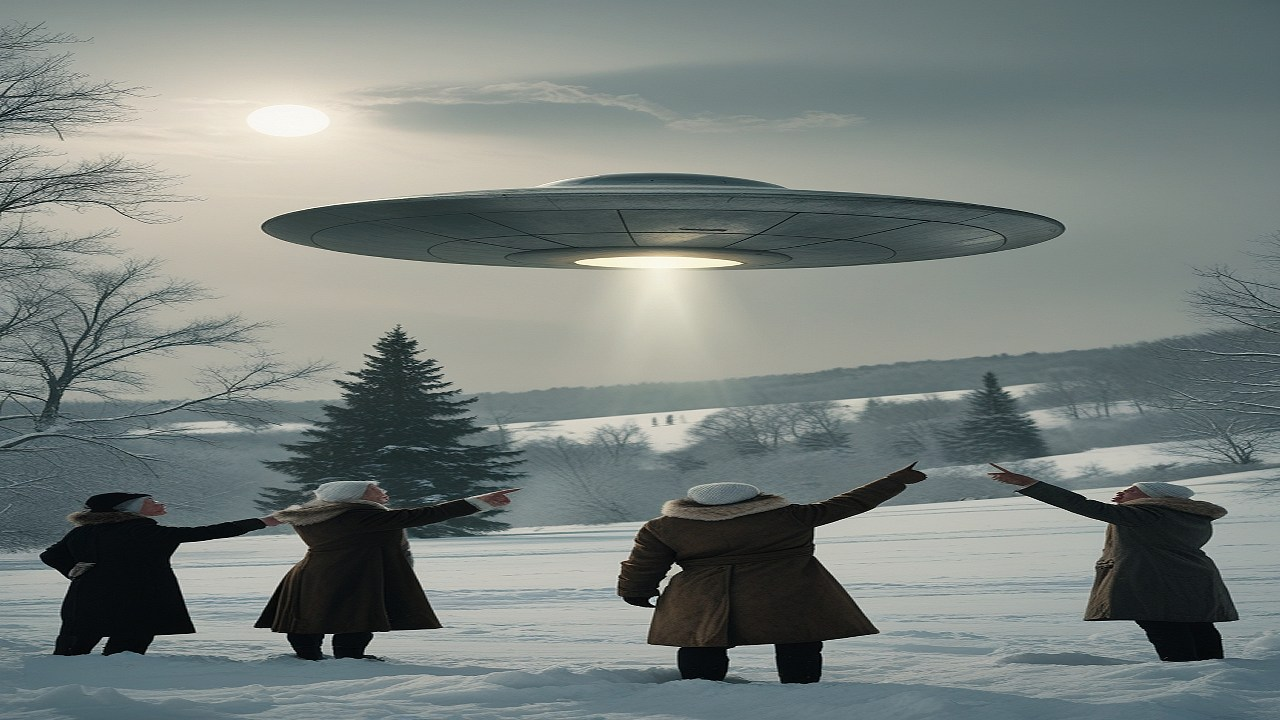
In the winter of 1909–1910, Connecticut found itself swept into one of the most fascinating and perplexing aerial phenomena of the early twentieth century—the so-called “Mystery Airship” wave. This was not an isolated event but part of a widespread outbreak of sightings and reports across New England and the northeastern United States. It began with newspaper stories in late December 1909, especially from Worcester, Massachusetts, describing a mysterious illuminated craft seen moving across the night sky.
Within days, reports multiplied, stretching into Maine, Vermont, Rhode Island, and Connecticut. For many in Connecticut, the notion that a human-made airship could be gliding above them—at a time when powered flight was still in its infancy—was both thrilling and unsettling.
At its core, the 1909–1910 airship wave represented a collision between technological curiosity, public imagination, and the dawning age of flight. The Wright brothers had made their first flight at Kitty Hawk only six years earlier, in 1903, and aviation exhibitions were still rare novelties. Against that backdrop, when citizens of towns like Hartford, New Haven, and Norwich reported seeing strange lights moving deliberately across the heavens, the press eagerly seized upon the story.
Newspapers like The Hartford Courant, The Norwich Bulletin, and The New Haven Register filled their columns with eyewitness accounts, speculation, and letters from readers offering their interpretations. Some swore the lights were the product of a secret inventor’s new airship. Others believed them to be astronomical bodies, lanterns, or hoaxes. But all agreed that something unusual had captured the public’s imagination.
What makes this particular wave so important for Connecticut is its role as a precursor to the modern UFO era. These reports occurred decades before the Roswell incident or the birth of the “flying saucer” in 1947, yet they contained all the hallmarks of later UFO phenomena—mysterious aerial lights, multiple witnesses, newspaper amplification, and social speculation about human or nonhuman intelligence. In many ways, the Connecticut airship reports of 1909 and 1910 represent one of the earliest moments in which the public consciousness began to wrestle with the idea that not everything in the sky could be easily explained.
Accounts from Connecticut newspapers varied widely in detail but shared a consistent theme: witnesses described bright lights, often appearing to move intelligently or hover before gliding away into the distance. In some cases, observers claimed to discern a solid structure—a “machine” or “craft”—behind the illumination. These lights were often described as having a white or yellow hue, occasionally flashing red or green, suggesting navigation lights or lanterns. Reports clustered in December 1909 and January 1910, coinciding with similar sightings throughout New England.
The Hartford Courant published several small items referencing local residents who had seen “a brilliant light moving across the sky” late at night. The Norwich Bulletin reprinted similar stories, sometimes drawing from reports in Massachusetts and Rhode Island, as the idea of a roaming airship spread. Some correspondents suggested the mysterious visitor was the work of a secretive inventor—perhaps someone testing a powered dirigible or heavier-than-air craft under cover of night. Others speculated about astronomical causes, such as Venus or Jupiter appearing unusually bright, or misinterpretations of searchlights reflected off clouds. Still others believed the sightings to be deliberate hoaxes, orchestrated to amuse or bewilder the public.
The 1909–1910 mystery airship wave was not unique to Connecticut, but the state’s participation in it underscores its role within a larger pattern of early UFO-like activity in the United States.
From California in 1896 to New England in 1910, these waves followed similar trajectories: an initial report published in one newspaper spread to others, which encouraged readers to look to the skies and contribute their own accounts. This process of social contagion—what we might today call “viral reporting”—created the appearance of a phenomenon sweeping across the region, even when individual sightings might have unrelated explanations. Yet historians emphasize that it would be a mistake to dismiss these events entirely as mass delusion or sensationalism. The fact that so many ordinary citizens, farmers, policemen, and professionals reported what they saw suggests a genuine public engagement with the question of flight and technology.
The psychological and cultural impact of these sightings was profound. Connecticut in 1909 was a state defined by its industry and innovation— home to inventors, manufacturers, and a well-educated populace attuned to scientific progress. The idea that a mysterious airship might be traversing the night skies fit perfectly within this environment of anticipation. To many, the sightings were evidence that humanity was on the verge of a new age of exploration, in which flight would become commonplace. For others, the lack of concrete evidence invited suspicion that something supernatural or otherworldly might be at play. The debate mirrored anxieties of the era—about progress, secrecy, and the limits of human understanding.
One of the defining features of the 1909–1910 wave was the way it blurred the line between credible observation and imaginative interpretation. Historians today recognize that several explanations likely operated simultaneously. Some sightings may indeed have involved experimental aircraft—small dirigibles or powered balloons privately constructed by early inventors. Others were likely misidentifications of planets, stars, or even railway searchlights reflecting off low clouds. A few were undoubtedly hoaxes, concocted for publicity or entertainment. Yet the persistence and consistency of reports across multiple towns suggest that the “airship” had become more than just an optical phenomenon—it had become a symbol.
For Connecticut residents at the turn of the century, the mystery airship embodied both wonder and uncertainty. It represented the promise of technology—the dream that humanity could master the sky—and the fear of the unknown, the possibility that something beyond human creation might be watching from above. This duality would reappear throughout the twentieth century in UFO waves, from the “foo fighters” of World War II to the flying saucer scares of the 1950s and beyond. In this sense, the 1909–1910 Connecticut reports stand as a direct historical bridge between nineteenth-century airship fascination and the birth of the modern UFO mythos.
The long-term impact of this event extends beyond its immediate journalistic and social ripple. For historians and researchers of aerial phenomena, the 1909–1910 mystery airship wave offers a valuable case study in how technology, media, and public psychology interact. It reveals how quickly a single unexplained event can multiply through communication networks and take on cultural significance. It also demonstrates the readiness of people—even in a scientifically literate region like Connecticut—to interpret ambiguous lights in ways consistent with their hopes, fears, and the zeitgeist of progress.
In modern terms, this wave foreshadowed the mechanisms of contemporary UFO reporting. Just as newspapers in 1909 printed letters from excited readers, so too did radio, television, and later the internet amplify UFO sightings in the twentieth and twenty-first centuries. The Connecticut airship stories of that winter therefore mark the beginning of a new cultural pattern—one where technological expectation and mystery intertwine.
No individual stands out as the definitive “inventor” or perpetrator behind the 1909–1910 airship stories in Connecticut. While some names appeared in the press claiming responsibility for “secret” aircraft, none were ever substantiated. This absence of verifiable source material only deepened the mystery. Yet the true legacy of the event may not lie in the identity of the airship’s pilot, real or imagined, but in the reaction it inspired. Communities came together to scan the night sky.
Children and adults alike stood outside in winter’s chill hoping to glimpse the future. And long after the reports faded from the papers, the memory of that season remained—a time when the people of Connecticut collectively looked upward and wondered.
In conclusion, the Winter 1909–Early 1910 mystery airship wave in Connecticut occupies a pivotal place in the history of aerial phenomena. It was the most significant early-twentieth-century episode of UFO-like reports in the state, bridging the gap between the Victorian fascination with flight and the modern UFO era. The sightings revealed as much about human psychology and culture as they did about the sky itself. They spoke to a society standing at the threshold of technological transformation, eager to believe that the future had already arrived. And though historians today interpret the wave as a blend of misperception, hoax, and hope, its influence endures—in every generation’s enduring impulse to look up and wonder what might be moving among the stars.
In the winter of 1909–1910, Connecticut found itself swept into one of the most fascinating and perplexing aerial phenomena of the early twentieth century—the so-called “Mystery Airship” wave. This was not an isolated event but part of a widespread outbreak of sightings and reports across New England and the northeastern United States. It began with newspaper stories in late December 1909, especially from Worcester, Massachusetts, describing a mysterious illuminated craft seen moving across the night sky.
Within days, reports multiplied, stretching into Maine, Vermont, Rhode Island, and Connecticut. For many in Connecticut, the notion that a human-made airship could be gliding above them—at a time when powered flight was still in its infancy—was both thrilling and unsettling.
At its core, the 1909–1910 airship wave represented a collision between technological curiosity, public imagination, and the dawning age of flight. The Wright brothers had made their first flight at Kitty Hawk only six years earlier, in 1903, and aviation exhibitions were still rare novelties. Against that backdrop, when citizens of towns like Hartford, New Haven, and Norwich reported seeing strange lights moving deliberately across the heavens, the press eagerly seized upon the story.
Newspapers like The Hartford Courant, The Norwich Bulletin, and The New Haven Register filled their columns with eyewitness accounts, speculation, and letters from readers offering their interpretations. Some swore the lights were the product of a secret inventor’s new airship. Others believed them to be astronomical bodies, lanterns, or hoaxes. But all agreed that something unusual had captured the public’s imagination.
What makes this particular wave so important for Connecticut is its role as a precursor to the modern UFO era. These reports occurred decades before the Roswell incident or the birth of the “flying saucer” in 1947, yet they contained all the hallmarks of later UFO phenomena—mysterious aerial lights, multiple witnesses, newspaper amplification, and social speculation about human or nonhuman intelligence. In many ways, the Connecticut airship reports of 1909 and 1910 represent one of the earliest moments in which the public consciousness began to wrestle with the idea that not everything in the sky could be easily explained.
Accounts from Connecticut newspapers varied widely in detail but shared a consistent theme: witnesses described bright lights, often appearing to move intelligently or hover before gliding away into the distance. In some cases, observers claimed to discern a solid structure—a “machine” or “craft”—behind the illumination. These lights were often described as having a white or yellow hue, occasionally flashing red or green, suggesting navigation lights or lanterns. Reports clustered in December 1909 and January 1910, coinciding with similar sightings throughout New England.
The Hartford Courant published several small items referencing local residents who had seen “a brilliant light moving across the sky” late at night. The Norwich Bulletin reprinted similar stories, sometimes drawing from reports in Massachusetts and Rhode Island, as the idea of a roaming airship spread. Some correspondents suggested the mysterious visitor was the work of a secretive inventor—perhaps someone testing a powered dirigible or heavier-than-air craft under cover of night. Others speculated about astronomical causes, such as Venus or Jupiter appearing unusually bright, or misinterpretations of searchlights reflected off clouds. Still others believed the sightings to be deliberate hoaxes, orchestrated to amuse or bewilder the public.
The 1909–1910 mystery airship wave was not unique to Connecticut, but the state’s participation in it underscores its role within a larger pattern of early UFO-like activity in the United States.
From California in 1896 to New England in 1910, these waves followed similar trajectories: an initial report published in one newspaper spread to others, which encouraged readers to look to the skies and contribute their own accounts. This process of social contagion—what we might today call “viral reporting”—created the appearance of a phenomenon sweeping across the region, even when individual sightings might have unrelated explanations. Yet historians emphasize that it would be a mistake to dismiss these events entirely as mass delusion or sensationalism. The fact that so many ordinary citizens, farmers, policemen, and professionals reported what they saw suggests a genuine public engagement with the question of flight and technology.
The psychological and cultural impact of these sightings was profound. Connecticut in 1909 was a state defined by its industry and innovation— home to inventors, manufacturers, and a well-educated populace attuned to scientific progress. The idea that a mysterious airship might be traversing the night skies fit perfectly within this environment of anticipation. To many, the sightings were evidence that humanity was on the verge of a new age of exploration, in which flight would become commonplace. For others, the lack of concrete evidence invited suspicion that something supernatural or otherworldly might be at play. The debate mirrored anxieties of the era—about progress, secrecy, and the limits of human understanding.
One of the defining features of the 1909–1910 wave was the way it blurred the line between credible observation and imaginative interpretation. Historians today recognize that several explanations likely operated simultaneously. Some sightings may indeed have involved experimental aircraft—small dirigibles or powered balloons privately constructed by early inventors. Others were likely misidentifications of planets, stars, or even railway searchlights reflecting off low clouds. A few were undoubtedly hoaxes, concocted for publicity or entertainment. Yet the persistence and consistency of reports across multiple towns suggest that the “airship” had become more than just an optical phenomenon—it had become a symbol.
For Connecticut residents at the turn of the century, the mystery airship embodied both wonder and uncertainty. It represented the promise of technology—the dream that humanity could master the sky—and the fear of the unknown, the possibility that something beyond human creation might be watching from above. This duality would reappear throughout the twentieth century in UFO waves, from the “foo fighters” of World War II to the flying saucer scares of the 1950s and beyond. In this sense, the 1909–1910 Connecticut reports stand as a direct historical bridge between nineteenth-century airship fascination and the birth of the modern UFO mythos.
The long-term impact of this event extends beyond its immediate journalistic and social ripple. For historians and researchers of aerial phenomena, the 1909–1910 mystery airship wave offers a valuable case study in how technology, media, and public psychology interact. It reveals how quickly a single unexplained event can multiply through communication networks and take on cultural significance. It also demonstrates the readiness of people—even in a scientifically literate region like Connecticut—to interpret ambiguous lights in ways consistent with their hopes, fears, and the zeitgeist of progress.
In modern terms, this wave foreshadowed the mechanisms of contemporary UFO reporting. Just as newspapers in 1909 printed letters from excited readers, so too did radio, television, and later the internet amplify UFO sightings in the twentieth and twenty-first centuries. The Connecticut airship stories of that winter therefore mark the beginning of a new cultural pattern—one where technological expectation and mystery intertwine.
No individual stands out as the definitive “inventor” or perpetrator behind the 1909–1910 airship stories in Connecticut. While some names appeared in the press claiming responsibility for “secret” aircraft, none were ever substantiated. This absence of verifiable source material only deepened the mystery. Yet the true legacy of the event may not lie in the identity of the airship’s pilot, real or imagined, but in the reaction it inspired. Communities came together to scan the night sky.
Children and adults alike stood outside in winter’s chill hoping to glimpse the future. And long after the reports faded from the papers, the memory of that season remained—a time when the people of Connecticut collectively looked upward and wondered.
In conclusion, the Winter 1909–Early 1910 mystery airship wave in Connecticut occupies a pivotal place in the history of aerial phenomena. It was the most significant early-twentieth-century episode of UFO-like reports in the state, bridging the gap between the Victorian fascination with flight and the modern UFO era. The sightings revealed as much about human psychology and culture as they did about the sky itself. They spoke to a society standing at the threshold of technological transformation, eager to believe that the future had already arrived. And though historians today interpret the wave as a blend of misperception, hoax, and hope, its influence endures—in every generation’s enduring impulse to look up and wonder what might be moving among the stars.