


Blog Categories
- African Incidents
- Atlantis Incidents
- Australian Incidents
- Belgian Incidents
- Bermuda Triangle Incidents
- Brazilian Incidents
- Canadian Incidents
- Chinese Incidents
- European Incidents
- France Incidents
- Ghosts
- Giants
- Italy Incidents
- Japanese Incidents
- Middle East Incidents
- Portugal Incidents
- Project Serpo
- Puerto Rico Incidents
- Russian Incidents
- Sasquatch
- Scandinavia Incidents
- Spanish Incidents
- UFOs
- United Kingdom Incidents
- United States Incidents
March 1880 - Fireballs over Los Angeles
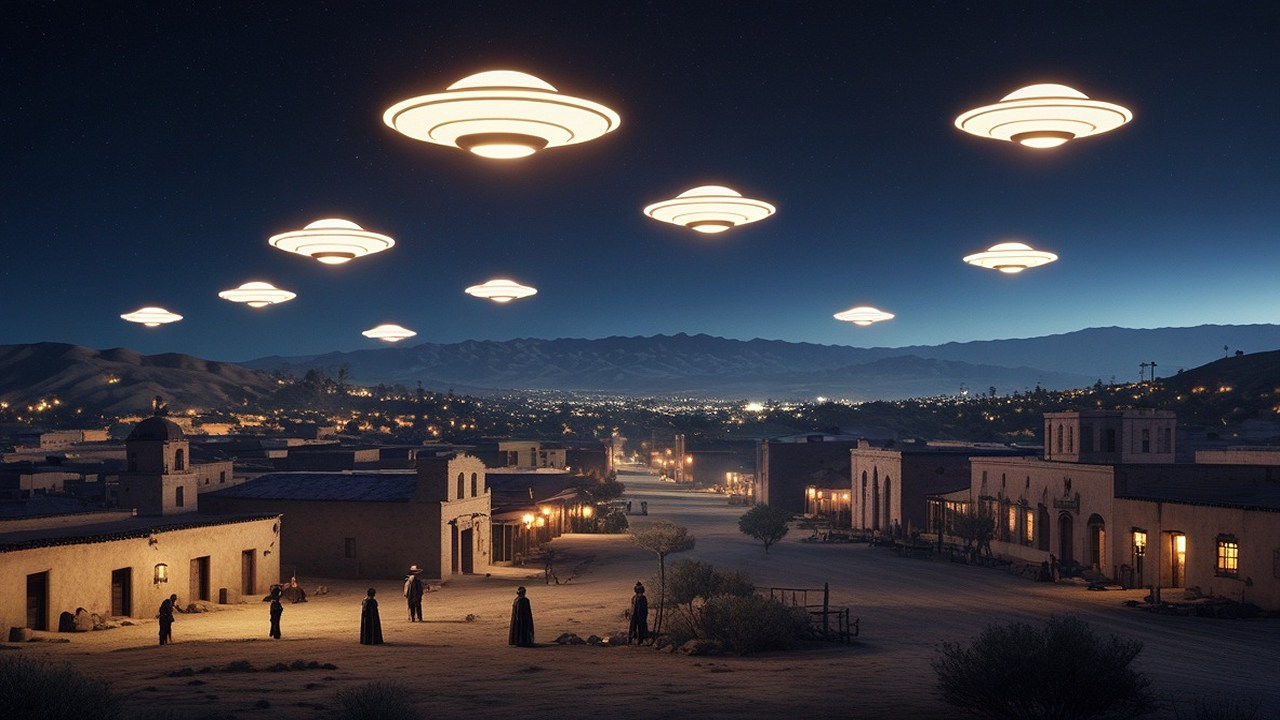
In March 1880, well before the advent of powered flight, residents of the Los Angeles area witnessed a series of luminous, fast-moving fireballs that reportedly changed direction, hovered, and vanished suddenly. These sightings were recorded in La Crónica, a local Spanish-language newspaper serving the region’s sizeable Mexican-Californio community. The events stirred public anxiety and religious interpretation, reflecting a frontier society grappling with celestial mystery in a period of rapid change.
This is the story of the March 1880 fireballs over Los Angeles — one of the earliest documented anomalous aerial events in Southern California, preserved in a Spanish-language newspaper for the Californio community. Long before the term “UFO” existed, these lights challenged the understanding of a small but growing frontier town.
Welcome to the channel. Today we’re going back to March 1880 in Los Angeles to examine a sighting that predates the modern UFO era by decades. Everything in this video is drawn directly from the historical chapter provided. No speculation. Just the newspaper report and its historical context.
Let’s set the scene in Los Angeles in March 1880.
In 1880, Los Angeles was still a small but growing town of under 12,000 people, transitioning from its frontier and ranchero past toward an eventual boom as railroads and Anglo-American settlers arrived. Many Californios still spoke Spanish, attended mission churches such as Our Lady of the Angels, and read La Crónica, published for the Latino population. Indigenous and Mexican-Californio residents lived alongside Anglo settlers in a landscape undergoing demographic, political, and cultural transformation. The arrival of such unexplained fireballs — not standard meteors — attracted attention precisely because the frontier community possessed limited scientific infrastructure or mass media to explain them.
According to the surviving La Crónica report, multiple fireballs were observed in the night sky over Los Angeles. Witnesses described them as changing direction — a behavior inconsistent with typical meteor trajectories. Some objects appeared to hover briefly, then dart away, and ultimately vanish. The total duration of observation was several minutes, suggesting more than a single, fleeting meteor.
The newspaper framed the event with spiritual overtones. For a largely Catholic community, the fireballs seemed supernatural or portentous. Local settlers reportedly interpreted the lights as signs from above — omens of divine intervention or warnings. Some readers linked the sighting to recent hardships: crop failures, drought, or rising tensions between Californios and incoming Anglo settlers. Rumors circulated among Spanish-speaking neighbors that the lights foretold “a time of reckoning.”
At the time, Los Angeles lacked a functioning observatory or scientific society. No formal investigation by civic authorities, newspapers in English, or telegraphed reports occurred. Instead, the sighting remained a local phenomenon, preserved in La Crónica and in recollections gathered later by historians of early UFO lore.
The public reaction reflected a frontier society grappling with celestial mystery. Fear and religious interpretation were prominent. In an era where celestial portents were still tied to spirituality more than science, many villagers likely experienced anxiety or hope depending on interpretation — ominous for some, miraculous for others. One ranchero family reportedly began nightly prayers for protection; another family avoided fields on nights they felt might bring similar lights. Though anecdotal, such responses illustrate how unusual phenomena influence behavior in traditional communities.
The fireballs became a shared tale among neighborhoods — a story told around hearths, mission gatherings, or fiestas. In holding the memory of the lights, the community reinforced shared history and cultural boundaries — still predominantly Spanish-speaking and Catholic in 1880.
Modern UFO researchers include the March 1880 incident in compilations of pre-aviation anomalous aerial phenomena. It appears among other early reports featuring objects that hovered, changed direction, and defied meteor logic. These catalogs highlight the sighting’s unusual air behavior — especially hovering and direction change — as proto-UFO traits.
Mainstream historians of Los Angeles rarely mention the fireballs; the event remains nearly absent from standard local chronicles. Scholars emphasize the unreliability of lone newspaper entries without corroborating testimony. Some propose the sighting may have been unusual bolides — meteors fragmenting and changing brightness, with flight path illusions — or reflections or electrical phenomena in atmospheric conditions, such as surface inversions. Therefore, most academics treat it as an interesting anecdote rather than verified extraordinary events.
The 1880 fireballs stand as some of the earliest recorded anomalous sky events in Southern California. For Spanish-speaking Californios, they represented an intersection of celestial mystery with religious intuition — long before UFO discourse entered Anglo-American consciousness.
Though rare, the event is occasionally mentioned in oral histories among long-established Californio families — often accompanied by comments on how the lights unsettled livestock or frightened children. These oral echoes preserve a sense of an uneasy sky, a moment when the heavens did not behave as expected.
The fireballs mirror characteristics found in later sightings: luminous objects, non-ballistic motion, brief hovering, and sudden disappearance. This continuity suggests that while technology and interpretation evolve, the phenomenology of anomalous aerial events may remain consistent across eras.
No named witnesses or officials were mentioned in La Crónica. Without diaries or letters tied to known figures, no microhistory has emerged around the event. At an institutional level, La Crónica’s editor deserves indirect mention as the sole recorder of the event — making the sighting accessible to the wider community through its pages. Historical study of Californio press has recognized the preventative role these newspapers played in shaping communal identity amid social change.
In an era where celestial portents were still tied to spirituality more than science, many villagers likely experienced anxiety or hope depending on interpretation. The fireballs became a shared tale that reinforced communal bonds. Today, the incident is occasionally invoked in talks about early Los Angeles history — but almost always in UFO or paranormal circles. It appears in heritage blogs or ghost-tour narratives retelling odd happenings in old barrios and mission areas.
Current scholars studying media and perception in 19th-century California emphasize the fireball account to illustrate how early local newspapers mediated experience before scientific literacy was widespread. It serves as a case where press framing shaped communal understanding of the unknown.
The March 1880 fireballs over Los Angeles, as reported by La Crónica, constitute one of the earliest recorded anomalous aerial phenomena in Southern California. Observed objects that changed direction, hovered, and disappeared unsettled a community at the cusp of social transformation. Without formal investigation or corroboration, the sighting stands as an enigmatic anecdote — but one that captures broader themes: the blend of frontier spirituality, superstition, and rumor; the role of early Spanish-language media in documenting inexplicable events; and human patterns of interpreting unknown skies — whether via religious, folkloric, or eventually UFO-oriented frameworks.
While the event remains marginal in academic histories, it retains symbolic value in UFO timelines and as a cultural artifact of how late 19th-century Californians grappled with the lights that, for a few nights, defied explanation.
The luminous fireballs that moved, hovered, and vanished over Los Angeles in March 1880 may have eventually faded from view, but their place in the historical record endures. Preserved in La Crónica, they remind us that the mystery of the skies is not new — and that ordinary people, in ordinary frontier towns, have long looked up and wondered at lights that refused to behave as expected.
The skies above Los Angeles in 1880 were not empty. Something moved there that left a lasting impression on a Spanish-speaking community and a place in the early history of anomalous aerial phenomena. In the study of UFOs, even early, isolated cases like the 1880 fireballs help build the larger picture of a mystery that has persisted for well over a century.
As we continue to explore the history of unidentified aerial phenomena, the March 1880 Los Angeles sighting reminds us that reports of luminous objects with non-ballistic motion existed long before the age of airplanes or satellites. The La Crónica report, with its emphasis on directional changes and hovering, captures the sense of wonder and unease that has accompanied such sightings across eras.
The fireballs that appeared over Los Angeles in March 1880 may have vanished into the night, but their legacy as one of the earliest documented anomalous sky events in Southern California endures. They stand as a quiet but meaningful reminder that the unknown has always been present in our skies — witnessed by everyday people who took the time to record what they saw.
In March 1880, well before the advent of powered flight, residents of the Los Angeles area witnessed a series of luminous, fast-moving fireballs that reportedly changed direction, hovered, and vanished suddenly. These sightings were recorded in La Crónica, a local Spanish-language newspaper serving the region’s sizeable Mexican-Californio community. The events stirred public anxiety and religious interpretation, reflecting a frontier society grappling with celestial mystery in a period of rapid change.
This is the story of the March 1880 fireballs over Los Angeles — one of the earliest documented anomalous aerial events in Southern California, preserved in a Spanish-language newspaper for the Californio community. Long before the term “UFO” existed, these lights challenged the understanding of a small but growing frontier town.
Welcome to the channel. Today we’re going back to March 1880 in Los Angeles to examine a sighting that predates the modern UFO era by decades. Everything in this video is drawn directly from the historical chapter provided. No speculation. Just the newspaper report and its historical context.
Let’s set the scene in Los Angeles in March 1880.
In 1880, Los Angeles was still a small but growing town of under 12,000 people, transitioning from its frontier and ranchero past toward an eventual boom as railroads and Anglo-American settlers arrived. Many Californios still spoke Spanish, attended mission churches such as Our Lady of the Angels, and read La Crónica, published for the Latino population. Indigenous and Mexican-Californio residents lived alongside Anglo settlers in a landscape undergoing demographic, political, and cultural transformation. The arrival of such unexplained fireballs — not standard meteors — attracted attention precisely because the frontier community possessed limited scientific infrastructure or mass media to explain them.
According to the surviving La Crónica report, multiple fireballs were observed in the night sky over Los Angeles. Witnesses described them as changing direction — a behavior inconsistent with typical meteor trajectories. Some objects appeared to hover briefly, then dart away, and ultimately vanish. The total duration of observation was several minutes, suggesting more than a single, fleeting meteor.
The newspaper framed the event with spiritual overtones. For a largely Catholic community, the fireballs seemed supernatural or portentous. Local settlers reportedly interpreted the lights as signs from above — omens of divine intervention or warnings. Some readers linked the sighting to recent hardships: crop failures, drought, or rising tensions between Californios and incoming Anglo settlers. Rumors circulated among Spanish-speaking neighbors that the lights foretold “a time of reckoning.”
At the time, Los Angeles lacked a functioning observatory or scientific society. No formal investigation by civic authorities, newspapers in English, or telegraphed reports occurred. Instead, the sighting remained a local phenomenon, preserved in La Crónica and in recollections gathered later by historians of early UFO lore.
The public reaction reflected a frontier society grappling with celestial mystery. Fear and religious interpretation were prominent. In an era where celestial portents were still tied to spirituality more than science, many villagers likely experienced anxiety or hope depending on interpretation — ominous for some, miraculous for others. One ranchero family reportedly began nightly prayers for protection; another family avoided fields on nights they felt might bring similar lights. Though anecdotal, such responses illustrate how unusual phenomena influence behavior in traditional communities.
The fireballs became a shared tale among neighborhoods — a story told around hearths, mission gatherings, or fiestas. In holding the memory of the lights, the community reinforced shared history and cultural boundaries — still predominantly Spanish-speaking and Catholic in 1880.
Modern UFO researchers include the March 1880 incident in compilations of pre-aviation anomalous aerial phenomena. It appears among other early reports featuring objects that hovered, changed direction, and defied meteor logic. These catalogs highlight the sighting’s unusual air behavior — especially hovering and direction change — as proto-UFO traits.
Mainstream historians of Los Angeles rarely mention the fireballs; the event remains nearly absent from standard local chronicles. Scholars emphasize the unreliability of lone newspaper entries without corroborating testimony. Some propose the sighting may have been unusual bolides — meteors fragmenting and changing brightness, with flight path illusions — or reflections or electrical phenomena in atmospheric conditions, such as surface inversions. Therefore, most academics treat it as an interesting anecdote rather than verified extraordinary events.
The 1880 fireballs stand as some of the earliest recorded anomalous sky events in Southern California. For Spanish-speaking Californios, they represented an intersection of celestial mystery with religious intuition — long before UFO discourse entered Anglo-American consciousness.
Though rare, the event is occasionally mentioned in oral histories among long-established Californio families — often accompanied by comments on how the lights unsettled livestock or frightened children. These oral echoes preserve a sense of an uneasy sky, a moment when the heavens did not behave as expected.
The fireballs mirror characteristics found in later sightings: luminous objects, non-ballistic motion, brief hovering, and sudden disappearance. This continuity suggests that while technology and interpretation evolve, the phenomenology of anomalous aerial events may remain consistent across eras.
No named witnesses or officials were mentioned in La Crónica. Without diaries or letters tied to known figures, no microhistory has emerged around the event. At an institutional level, La Crónica’s editor deserves indirect mention as the sole recorder of the event — making the sighting accessible to the wider community through its pages. Historical study of Californio press has recognized the preventative role these newspapers played in shaping communal identity amid social change.
In an era where celestial portents were still tied to spirituality more than science, many villagers likely experienced anxiety or hope depending on interpretation. The fireballs became a shared tale that reinforced communal bonds. Today, the incident is occasionally invoked in talks about early Los Angeles history — but almost always in UFO or paranormal circles. It appears in heritage blogs or ghost-tour narratives retelling odd happenings in old barrios and mission areas.
Current scholars studying media and perception in 19th-century California emphasize the fireball account to illustrate how early local newspapers mediated experience before scientific literacy was widespread. It serves as a case where press framing shaped communal understanding of the unknown.
The March 1880 fireballs over Los Angeles, as reported by La Crónica, constitute one of the earliest recorded anomalous aerial phenomena in Southern California. Observed objects that changed direction, hovered, and disappeared unsettled a community at the cusp of social transformation. Without formal investigation or corroboration, the sighting stands as an enigmatic anecdote — but one that captures broader themes: the blend of frontier spirituality, superstition, and rumor; the role of early Spanish-language media in documenting inexplicable events; and human patterns of interpreting unknown skies — whether via religious, folkloric, or eventually UFO-oriented frameworks.
While the event remains marginal in academic histories, it retains symbolic value in UFO timelines and as a cultural artifact of how late 19th-century Californians grappled with the lights that, for a few nights, defied explanation.
The luminous fireballs that moved, hovered, and vanished over Los Angeles in March 1880 may have eventually faded from view, but their place in the historical record endures. Preserved in La Crónica, they remind us that the mystery of the skies is not new — and that ordinary people, in ordinary frontier towns, have long looked up and wondered at lights that refused to behave as expected.
The skies above Los Angeles in 1880 were not empty. Something moved there that left a lasting impression on a Spanish-speaking community and a place in the early history of anomalous aerial phenomena. In the study of UFOs, even early, isolated cases like the 1880 fireballs help build the larger picture of a mystery that has persisted for well over a century.
As we continue to explore the history of unidentified aerial phenomena, the March 1880 Los Angeles sighting reminds us that reports of luminous objects with non-ballistic motion existed long before the age of airplanes or satellites. The La Crónica report, with its emphasis on directional changes and hovering, captures the sense of wonder and unease that has accompanied such sightings across eras.
The fireballs that appeared over Los Angeles in March 1880 may have vanished into the night, but their legacy as one of the earliest documented anomalous sky events in Southern California endures. They stand as a quiet but meaningful reminder that the unknown has always been present in our skies — witnessed by everyday people who took the time to record what they saw.