


Blog Categories
- African Incidents
- Atlantis Incidents
- Australian Incidents
- Belgian Incidents
- Bermuda Triangle Incidents
- Brazilian Incidents
- Canadian Incidents
- Chinese Incidents
- European Incidents
- France Incidents
- Ghosts
- Giants
- Italy Incidents
- Japanese Incidents
- Middle East Incidents
- Portugal Incidents
- Project Serpo
- Puerto Rico Incidents
- Russian Incidents
- Sasquatch
- Scandinavia Incidents
- Spanish Incidents
- UFOs
- United Kingdom Incidents
- United States Incidents
October 1910: Delaplane First Flight
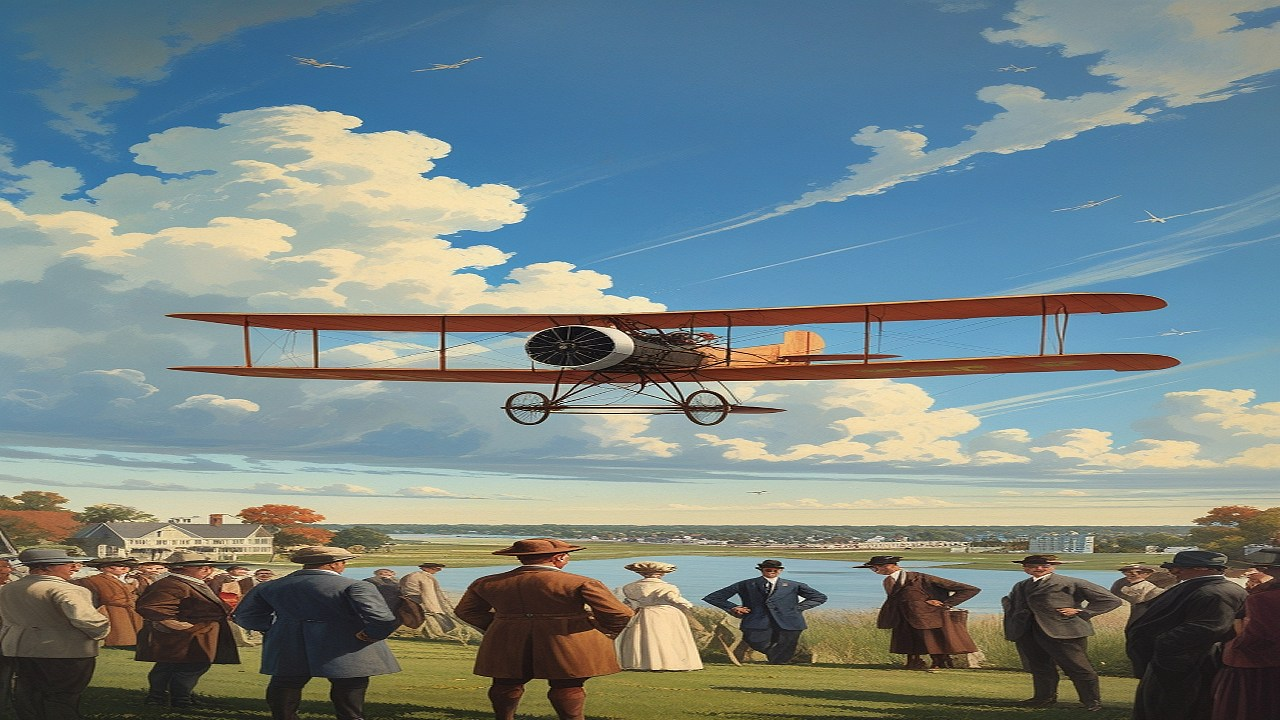
In the early twentieth century, as the dream of human flight was sweeping across the world, Delaware made its own quiet but remarkable contribution to aviation history. On October 21, 1910, just seven years after the Wright brothers’ first flight at Kitty Hawk, the skies over the Wilmington area saw the brief but significant ascent of the Delaplane — the first heavier-than-air aircraft built in the state of Delaware. Though the event lasted only moments and never achieved national fame, it marked an important milestone for Delaware’s technological spirit and stands today as a cornerstone in the state’s early aeronautical record.
The Delaplane’s first flight represents more than a small step in local engineering. It encapsulates the sense of wonder and ambition that defined the early aviation era, a time when inventors and dreamers everywhere were trying to conquer the sky. To understand its significance, one must imagine the atmosphere of that period: the Wrights had demonstrated powered flight, Glenn Curtiss was building early airplanes on Long Island, and across the United States, communities were beginning to see their first aircraft exhibitions. For Delaware, a state that had largely remained industrial and maritime in focus, the construction and flight of a local airplane was a moment of pride and curiosity — a symbolic connection to the modern age.
The Delaplane itself, according to accounts preserved by the Delaware Public Archives, was a locally constructed flying machine designed and built near Wilmington. The record confirms that it flew, however briefly, on October 21, 1910, becoming Delaware’s first documented heavier than-air flight. Unlike the lighter-than-air balloons that had occasionally launched from fairs or exhibitions in the nineteenth century, the Delaplane represented a new frontier — a machine designed to lift and sustain itself under power.
This early flight occurred in an era when aviation was still a dangerous experiment. Airplanes were fragile, built of wood, canvas, and wire, with engines often producing less horsepower than modern lawnmowers. Pilots were pioneers in the truest sense, testing machines that had no safety systems, and in many cases, no reliable controls. Yet despite these risks, small teams of enthusiasts across America were captivated by the possibilities. Delaware’s participation in this movement reflected the broader technological optimism that defined the early 1910s.
The flight’s impact on local observers must have been profound. For residents of Wilmington and the surrounding countryside, seeing a machine rise into the air under its own power would have been an unforgettable sight. At that time, most citizens had only read about flight in newspapers or seen illustrations of biplanes in magazines. To witness one built and flown in Delaware gave tangible form to a concept that had seemed almost magical. Accounts suggest that small crowds gathered at such demonstrations, sometimes traveling by carriage or trolley to open fields where experimenters would test their creations.
The Delaplane’s significance also lies in how it intersected with other aspects of early twentieth-century culture. The flight took place less than a year after Delaware’s population had been captivated by the “mystery airship” stories of 1909–1910, in which newspapers reported sightings of unknown flying craft across the East Coast. Those earlier tales had primed the public to imagine the skies as a place of wonder and possibility. When the Delaplane took flight, it represented the real-world embodiment of what had previously been myth. For the first time, Delawareans could point to a genuine human-made aircraft and know that the age of flight had reached their state.
It is important to consider the technical and social environment that allowed the Delaplane to exist. Wilmington in the early 1900s was an industrial hub, home to shipyards, chemical plants, and machine shops that supported skilled craftsmen. The state’s industrial base made it possible for tinkerers and inventors to access the tools, materials, and expertise needed to build experimental devices.
Though detailed plans and specifications of the Delaplane are not widely available today, its very existence implies collaboration between local mechanics, engineers, and enthusiasts who were inspired by national developments in aviation.
While the flight itself was brief and did not lead to a sustained program of aircraft development, its symbolic importance cannot be overstated. Delaware was now part of the new technological frontier. The Delaplane demonstrated that innovation was not confined to major industrial cities or government laboratories; it could take root in smaller states with industrious populations and a spirit of experimentation.
The social effect of such a flight rippled beyond the event itself. Local newspapers likely reported on it with pride, framing the moment as evidence of Delaware’s progressiveness. Citizens would have discussed it for weeks, perhaps imagining a future where flying machines could deliver mail, transport goods, or even carry passengers between towns. In an era when cars were still a novelty and roads were limited, the notion of human flight represented ultimate freedom — a transcendence of geography and limitation.
From a historical perspective, the Delaplane also provides crucial context for understanding how later UFO reports in Delaware were perceived. When people in the early twentieth century looked to the skies and saw unusual lights or shapes, they interpreted them through the lens of what they knew — or what they thought they knew — about aviation.
The Delaplane and other local experiments would have made aircraft a visible and tangible presence in Delaware’s skies. In the years that followed, as more private inventors and traveling airshows appeared, the distinction between known aircraft and unidentified objects sometimes blurred.
Early aeronautical experiments like the Delaplane thus form the forensic background for interpreting later “mystery” sightings that appeared in newspapers.
The Delaplane’s legacy also ties into Delaware’s identity as a place of quiet innovation. While the state did not become a major aviation manufacturing center, its early participation in the field symbolized an openness to technology that continued into later decades. During World War II, Delaware’s airfields would play important roles in pilot training and defense, and in the postwar period, the state became home to aerospace-related research and industries. In that sense, the 1910 flight can be viewed as the first flicker of a light that would grow brighter with time.
Today, the Delaware Public Archives preserves the Delaplane’s story as part of the state’s heritage. It stands as a reminder that technological revolutions often begin quietly, in small workshops and open fields, far from the headlines of national fame. For modern readers, the event offers a valuable historical anchor — proof that Delaware’s connection to the sky predates not only the space age but even the widespread acceptance of aviation itself.
The impact of this early flight endures in more subtle ways as well. It shaped how Delawareans thought about the relationship between science, invention, and imagination. Just as the Wright brothers’ success inspired generations of engineers and dreamers, the Delaplane symbolized what was possible when curiosity met determination. It bridged the gap between fantasy and reality, showing that even a small state could contribute to one of humanity’s greatest achievements.
In reflecting on the Delaplane’s legacy, one sees how deeply human the quest for flight truly is. It was not merely a technical endeavor but an expression of aspiration — the desire to rise above one’s limits, both literally and metaphorically. For Delaware, the brief ascent of the Delaplane in October 1910 represented that aspiration in motion. Though it lasted only moments, it left an imprint on the state’s historical identity, linking Delaware forever to the dawn of aviation and the wonder of the open sky.
The flight may not have made national headlines, but it made history in Delaware. It remains a testament to the state’s place in the broader story of human flight — a reminder that even in the smallest corners of the country, people looked to the heavens and dared to imagine what it would be like to soar among the clouds. In that act of imagination, the Delaplane continues to fly, its legacy carried forward not by engines or wings, but by memory, curiosity, and the enduring human need to explore the skies above.
In the early twentieth century, as the dream of human flight was sweeping across the world, Delaware made its own quiet but remarkable contribution to aviation history. On October 21, 1910, just seven years after the Wright brothers’ first flight at Kitty Hawk, the skies over the Wilmington area saw the brief but significant ascent of the Delaplane — the first heavier-than-air aircraft built in the state of Delaware. Though the event lasted only moments and never achieved national fame, it marked an important milestone for Delaware’s technological spirit and stands today as a cornerstone in the state’s early aeronautical record.
The Delaplane’s first flight represents more than a small step in local engineering. It encapsulates the sense of wonder and ambition that defined the early aviation era, a time when inventors and dreamers everywhere were trying to conquer the sky. To understand its significance, one must imagine the atmosphere of that period: the Wrights had demonstrated powered flight, Glenn Curtiss was building early airplanes on Long Island, and across the United States, communities were beginning to see their first aircraft exhibitions. For Delaware, a state that had largely remained industrial and maritime in focus, the construction and flight of a local airplane was a moment of pride and curiosity — a symbolic connection to the modern age.
The Delaplane itself, according to accounts preserved by the Delaware Public Archives, was a locally constructed flying machine designed and built near Wilmington. The record confirms that it flew, however briefly, on October 21, 1910, becoming Delaware’s first documented heavier than-air flight. Unlike the lighter-than-air balloons that had occasionally launched from fairs or exhibitions in the nineteenth century, the Delaplane represented a new frontier — a machine designed to lift and sustain itself under power.
This early flight occurred in an era when aviation was still a dangerous experiment. Airplanes were fragile, built of wood, canvas, and wire, with engines often producing less horsepower than modern lawnmowers. Pilots were pioneers in the truest sense, testing machines that had no safety systems, and in many cases, no reliable controls. Yet despite these risks, small teams of enthusiasts across America were captivated by the possibilities. Delaware’s participation in this movement reflected the broader technological optimism that defined the early 1910s.
The flight’s impact on local observers must have been profound. For residents of Wilmington and the surrounding countryside, seeing a machine rise into the air under its own power would have been an unforgettable sight. At that time, most citizens had only read about flight in newspapers or seen illustrations of biplanes in magazines. To witness one built and flown in Delaware gave tangible form to a concept that had seemed almost magical. Accounts suggest that small crowds gathered at such demonstrations, sometimes traveling by carriage or trolley to open fields where experimenters would test their creations.
The Delaplane’s significance also lies in how it intersected with other aspects of early twentieth-century culture. The flight took place less than a year after Delaware’s population had been captivated by the “mystery airship” stories of 1909–1910, in which newspapers reported sightings of unknown flying craft across the East Coast. Those earlier tales had primed the public to imagine the skies as a place of wonder and possibility. When the Delaplane took flight, it represented the real-world embodiment of what had previously been myth. For the first time, Delawareans could point to a genuine human-made aircraft and know that the age of flight had reached their state.
It is important to consider the technical and social environment that allowed the Delaplane to exist. Wilmington in the early 1900s was an industrial hub, home to shipyards, chemical plants, and machine shops that supported skilled craftsmen. The state’s industrial base made it possible for tinkerers and inventors to access the tools, materials, and expertise needed to build experimental devices.
Though detailed plans and specifications of the Delaplane are not widely available today, its very existence implies collaboration between local mechanics, engineers, and enthusiasts who were inspired by national developments in aviation.
While the flight itself was brief and did not lead to a sustained program of aircraft development, its symbolic importance cannot be overstated. Delaware was now part of the new technological frontier. The Delaplane demonstrated that innovation was not confined to major industrial cities or government laboratories; it could take root in smaller states with industrious populations and a spirit of experimentation.
The social effect of such a flight rippled beyond the event itself. Local newspapers likely reported on it with pride, framing the moment as evidence of Delaware’s progressiveness. Citizens would have discussed it for weeks, perhaps imagining a future where flying machines could deliver mail, transport goods, or even carry passengers between towns. In an era when cars were still a novelty and roads were limited, the notion of human flight represented ultimate freedom — a transcendence of geography and limitation.
From a historical perspective, the Delaplane also provides crucial context for understanding how later UFO reports in Delaware were perceived. When people in the early twentieth century looked to the skies and saw unusual lights or shapes, they interpreted them through the lens of what they knew — or what they thought they knew — about aviation.
The Delaplane and other local experiments would have made aircraft a visible and tangible presence in Delaware’s skies. In the years that followed, as more private inventors and traveling airshows appeared, the distinction between known aircraft and unidentified objects sometimes blurred.
Early aeronautical experiments like the Delaplane thus form the forensic background for interpreting later “mystery” sightings that appeared in newspapers.
The Delaplane’s legacy also ties into Delaware’s identity as a place of quiet innovation. While the state did not become a major aviation manufacturing center, its early participation in the field symbolized an openness to technology that continued into later decades. During World War II, Delaware’s airfields would play important roles in pilot training and defense, and in the postwar period, the state became home to aerospace-related research and industries. In that sense, the 1910 flight can be viewed as the first flicker of a light that would grow brighter with time.
Today, the Delaware Public Archives preserves the Delaplane’s story as part of the state’s heritage. It stands as a reminder that technological revolutions often begin quietly, in small workshops and open fields, far from the headlines of national fame. For modern readers, the event offers a valuable historical anchor — proof that Delaware’s connection to the sky predates not only the space age but even the widespread acceptance of aviation itself.
The impact of this early flight endures in more subtle ways as well. It shaped how Delawareans thought about the relationship between science, invention, and imagination. Just as the Wright brothers’ success inspired generations of engineers and dreamers, the Delaplane symbolized what was possible when curiosity met determination. It bridged the gap between fantasy and reality, showing that even a small state could contribute to one of humanity’s greatest achievements.
In reflecting on the Delaplane’s legacy, one sees how deeply human the quest for flight truly is. It was not merely a technical endeavor but an expression of aspiration — the desire to rise above one’s limits, both literally and metaphorically. For Delaware, the brief ascent of the Delaplane in October 1910 represented that aspiration in motion. Though it lasted only moments, it left an imprint on the state’s historical identity, linking Delaware forever to the dawn of aviation and the wonder of the open sky.
The flight may not have made national headlines, but it made history in Delaware. It remains a testament to the state’s place in the broader story of human flight — a reminder that even in the smallest corners of the country, people looked to the heavens and dared to imagine what it would be like to soar among the clouds. In that act of imagination, the Delaplane continues to fly, its legacy carried forward not by engines or wings, but by memory, curiosity, and the enduring human need to explore the skies above.