


Blog Categories
- African Incidents
- Atlantis Incidents
- Australian Incidents
- Belgian Incidents
- Bermuda Triangle Incidents
- Brazilian Incidents
- Canadian Incidents
- Chinese Incidents
- European Incidents
- France Incidents
- Ghosts
- Giants
- Italy Incidents
- Japanese Incidents
- Middle East Incidents
- Portugal Incidents
- Project Serpo
- Puerto Rico Incidents
- Russian Incidents
- Sasquatch
- Scandinavia Incidents
- Spanish Incidents
- UFOs
- United Kingdom Incidents
- United States Incidents
The Silver Shields of 329 BC
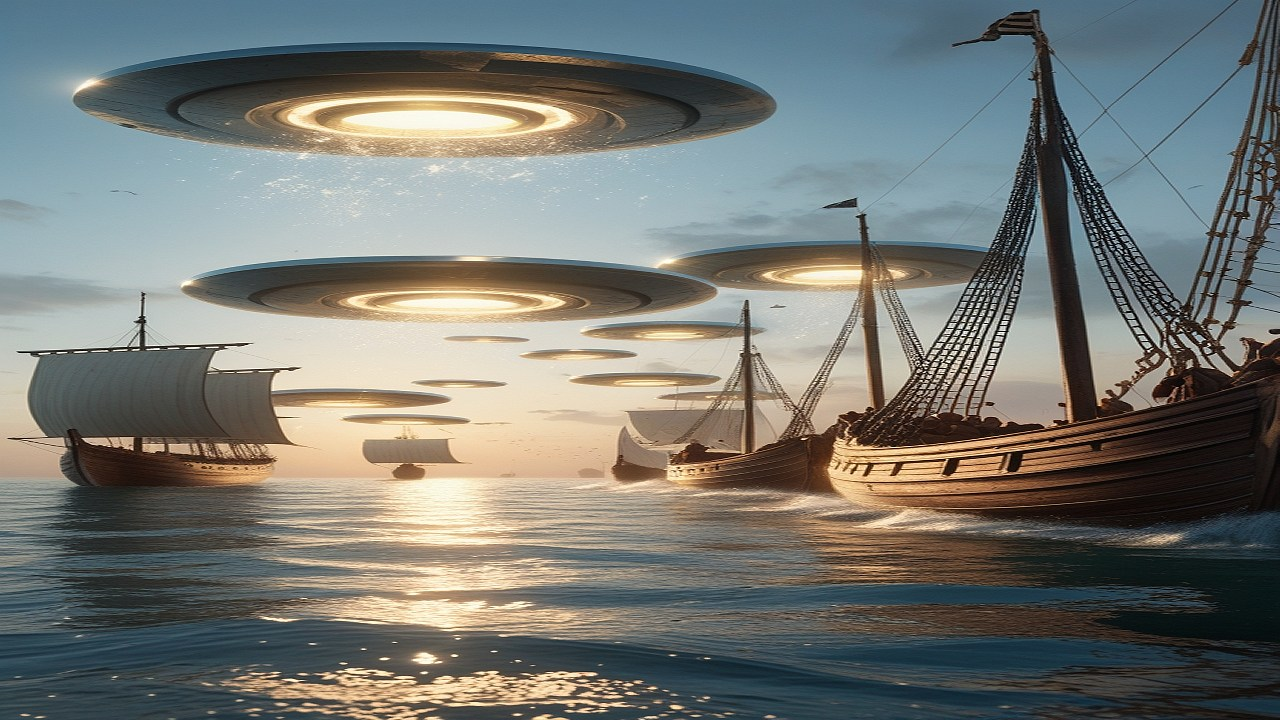
The story of the so-called “Silver Shields” of 329 BC occupies a strange and fascinating space between ancient military history, early maritime lore, and the long arc of unidentified aerial and submersible phenomena that continues into the modern era. While the incident is not as widely known as the famous sightings of the twentieth century, it sits at the crossroads of one of history’s greatest military campaigns and humanity’s earliest recorded encounters with objects demonstrating capabilities far beyond the technology of their time.
Even with the fragmentary nature of ancient chronicles, the reports that survive paint a picture of something startling: bright, metallic disks that moved with intentional behavior, entered and exited the sea with great speed, and instilled fear among battle-hardened soldiers and sailors. These accounts originate from a time when myth and history intertwined freely, but their descriptions of physical, mechanical, and luminous phenomena bear strong resemblance to what today we classify as unidentified aerial phenomena or unidentified submerged objects.
Although no single surviving chronicle gives a complete narrative, the fragments we do have—scattered among Greek and Roman writers referencing lost primary sources—align in key details. The event took place during Alexander the Great’s operations in the eastern Mediterranean as he sought to consolidate naval control over strategic coastal territories.
The fleet, composed of transports and warships designed in the Greek and Phoenician styles, was navigating waters already known for unpredictable weather and treacherous conditions. Even so, the sailors who served under Alexander were experienced men accustomed to storms, hostile engagements, and the uncertainty of long maritime expeditions.
What they encountered, however, did not fit the natural world or the familiar threats of warfare. Several chronicles describe “silver shields” or “shining disks” that dove repeatedly into and out of the sea. These disks, described as bright and metallic, moved with a level of speed and agility that startled the observers. Some accounts emphasize their sudden emergence from beneath the waves, rising high enough to frighten the men on deck. Others mention disruption to fleet operations, with panicked sailors losing coordination and officers struggling to restore order.
The terminology varies because ancient writers did not have the vocabulary of aerospace or marine engineering. They described the objects using the analogies available to them: shields, disks, mirrors, gleaming metal. Yet throughout the centuries that followed, translators and historians observed that the descriptions were strikingly consistent: round, reflective, luminous, and capable of rapid movement both above and below the water’s surface.
These characteristics, interestingly, parallel the behavior documented in many modern USO cases. The idea that an object could enter the sea without generating significant turbulence, move underwater at speeds greater than known vessels, and then rise into the sky remains beyond current human engineering. That such a phenomenon was reported more than two millennia ago raises implications that many today find compelling. It suggests that these encounters are not a contemporary invention but part of a much older and broader human experience.
From the perspective of Alexander’s sailors, however, the event was far from abstract. Men who had spent their lives fighting in close formation or navigating long voyages were overwhelmed with fear. Naval discipline —essential for maintaining course, rowing rhythm, and coordinated maneuvers—broke down. Panic spread even among officers who rarely allowed emotion to interfere with duty.
The sudden appearance of these disks, moving with intelligence and purpose, shattered the fragile sense of control that men relied upon to push through hardship.
Ancient naval life was difficult on its best days: cramped quarters, exposure to the elements, limited rations, and constant risk of shipwreck or disease. In that context, encountering something wholly outside the known world struck at the psychological core of the fleet. Even if the objects caused no physical damage, their impact on morale was severe. Chroniclers describe confusion, awe, and dread as common reactions.
For Alexander himself, though the records are sparse, the incident may have carried strategic implications. He relied heavily on fleet mobility to support coastal sieges, supply lines, and reconnaissance. Interference with his naval operations could have reshaped the campaign’s timeline. Alexander was known for his ambition, discipline, and logical mind. He also grew up in a cultural environment steeped in omens, divine signs, and supernatural interpretations.
While he often dismissed superstition when it conflicted with pragmatic decision-making, he was not immune to the belief that extraordinary events had meaning. Even so, there is no evidence that he explicitly interpreted the silver shields as divine or as threats to his authority. More likely, he recognized the danger posed by panic and focused on restoring order. Still, the incident might have reinforced his perception that his conquests unfolded under the gaze of forces beyond human comprehension.
The sailors who experienced the phenomenon carried those memories with them long after the campaign. The ancient world did not have a formal genre for documenting unexplained aerial or marine phenomena, so such reports often found their way into chronicles indirectly, filtered through the lens of religion, myth, or military narrative.
Over generations, the specific details faded, but the impression remained: brilliant disks entering and exiting the sea during a time of war, appearing before one of history’s greatest military leaders. This phenomenon likely spread orally through veterans, merchants, and travelers.
Stories of strange lights and metallic objects over the water might have influenced later maritime traditions, contributing in subtle ways to the lore of sea gods, signs from the heavens, and supernatural portents.
Fast-forward to the modern era, and the incident has become a minor but intriguing historical reference point in UFO and USO research. In the twentieth and twenty-first centuries, when governments, scientists, naval officers, and civilian organizations began examining unidentified phenomena seriously, investigators looked back through ancient sources for patterns. The silver shields of 329 BC stood out because they described technologically advanced behavior that had no place in the known abilities of ancient civilizations.
Despite the immense time gap, behaviors described in the chronicles parallel contemporary USO encounters witnessed by naval personnel equipped with sonar, radar, and advanced imaging systems. The idea that objects could travel seamlessly between the air and the sea appears repeatedly in modern reports, and the ancient accounts add historical depth to this pattern. Rather than suggesting that such encounters are a recent development, the Alexander incident implies that humanity has been observing similar phenomena for at least twenty-three centuries.
In modern UFO studies, the incident is often referenced as one of the earliest proto-USO sightings. Researchers highlight it when making the case that these phenomena have long been part of human experience, regardless of cultural or technological context. The event also surfaces in discussions about how ancient societies interpreted unexplained occurrences.
While people today can record sightings with cameras, sensors, and data analysis tools, ancient soldiers had only language and symbolic comparison. Yet, the consistency of their descriptions with modern reports is striking. This supports the argument that the objects were not hallucinations, myths, or metaphors but actual physical phenomena observed by trained military personnel.
Even with limited evidence, the silver shields incident influences present day public discussions around unidentified aerial and marine phenomena. In recent years, as governments have become more open about acknowledging UAP encounters, historical reports have gained a new layer of relevance. They show that humanity’s contact with unexplained objects is not an anomaly of the modern technological world.
Instead, it is a longstanding pattern that predates modern science, modern warfare, and even the early foundations of Western civilization. The idea that these encounters have persisted throughout human history suggests a continuity that many find compelling. It raises questions about whether the phenomena represent a long-term presence operating in ways we still do not understand.
From a cultural standpoint, the silver shields also symbolize the continuity of curiosity and wonder. Throughout history, people across civilizations have looked to the sky and the sea with a sense of mystery. Ancient sailors feared the unknown because they had so little control over their environment.
Today, despite our technology, our satellites, and our submarines, we remain humbled by the unexplored depths of the ocean and the unknown possibilities beyond our atmosphere. The Alexander incident bridges that ancient fear with modern fascination. While the men of the fleet reacted with panic, today we react with investigation and speculation, driven by the possibility that these objects represent visitors, advanced technology, or natural phenomena not yet understood.
The event also underscores the important role of chroniclers and early historians. Without their efforts to capture the extraordinary moments of their own eras—even in incomplete, fragmentary form—modern researchers would have no record to compare against contemporary sightings. Although we lack the original detailed accounts, the surviving mentions reflect the observations of trained soldiers who served under one of history’s most disciplined militaries.
Their testimony carries weight, not because it proves the nature of the objects, but because it demonstrates that the phenomena were taken seriously enough to record. That seriousness echoes in modern discussions as military personnel continue to report encounters with objects that defy current understanding.
In the end, the 329 BC silver shields incident stands not merely as a curiosity of ancient history but as part of a wider narrative. It suggests that humanity has long been witnessing displays of technology, intelligence, or phenomena far beyond its own capabilities. Whether these objects belonged to an advanced civilization, represented natural forces we still do not understand, or came from somewhere even more distant, the echoes of their presence have persisted for thousands of years. Today, the incident serves as a reminder that we are not the first generation to look out across the water, to see something impossible, and to wonder who or what might be sharing our world.
The story of the so-called “Silver Shields” of 329 BC occupies a strange and fascinating space between ancient military history, early maritime lore, and the long arc of unidentified aerial and submersible phenomena that continues into the modern era. While the incident is not as widely known as the famous sightings of the twentieth century, it sits at the crossroads of one of history’s greatest military campaigns and humanity’s earliest recorded encounters with objects demonstrating capabilities far beyond the technology of their time.
Even with the fragmentary nature of ancient chronicles, the reports that survive paint a picture of something startling: bright, metallic disks that moved with intentional behavior, entered and exited the sea with great speed, and instilled fear among battle-hardened soldiers and sailors. These accounts originate from a time when myth and history intertwined freely, but their descriptions of physical, mechanical, and luminous phenomena bear strong resemblance to what today we classify as unidentified aerial phenomena or unidentified submerged objects.
Although no single surviving chronicle gives a complete narrative, the fragments we do have—scattered among Greek and Roman writers referencing lost primary sources—align in key details. The event took place during Alexander the Great’s operations in the eastern Mediterranean as he sought to consolidate naval control over strategic coastal territories.
The fleet, composed of transports and warships designed in the Greek and Phoenician styles, was navigating waters already known for unpredictable weather and treacherous conditions. Even so, the sailors who served under Alexander were experienced men accustomed to storms, hostile engagements, and the uncertainty of long maritime expeditions.
What they encountered, however, did not fit the natural world or the familiar threats of warfare. Several chronicles describe “silver shields” or “shining disks” that dove repeatedly into and out of the sea. These disks, described as bright and metallic, moved with a level of speed and agility that startled the observers. Some accounts emphasize their sudden emergence from beneath the waves, rising high enough to frighten the men on deck. Others mention disruption to fleet operations, with panicked sailors losing coordination and officers struggling to restore order.
The terminology varies because ancient writers did not have the vocabulary of aerospace or marine engineering. They described the objects using the analogies available to them: shields, disks, mirrors, gleaming metal. Yet throughout the centuries that followed, translators and historians observed that the descriptions were strikingly consistent: round, reflective, luminous, and capable of rapid movement both above and below the water’s surface.
These characteristics, interestingly, parallel the behavior documented in many modern USO cases. The idea that an object could enter the sea without generating significant turbulence, move underwater at speeds greater than known vessels, and then rise into the sky remains beyond current human engineering. That such a phenomenon was reported more than two millennia ago raises implications that many today find compelling. It suggests that these encounters are not a contemporary invention but part of a much older and broader human experience.
From the perspective of Alexander’s sailors, however, the event was far from abstract. Men who had spent their lives fighting in close formation or navigating long voyages were overwhelmed with fear. Naval discipline —essential for maintaining course, rowing rhythm, and coordinated maneuvers—broke down. Panic spread even among officers who rarely allowed emotion to interfere with duty.
The sudden appearance of these disks, moving with intelligence and purpose, shattered the fragile sense of control that men relied upon to push through hardship.
Ancient naval life was difficult on its best days: cramped quarters, exposure to the elements, limited rations, and constant risk of shipwreck or disease. In that context, encountering something wholly outside the known world struck at the psychological core of the fleet. Even if the objects caused no physical damage, their impact on morale was severe. Chroniclers describe confusion, awe, and dread as common reactions.
For Alexander himself, though the records are sparse, the incident may have carried strategic implications. He relied heavily on fleet mobility to support coastal sieges, supply lines, and reconnaissance. Interference with his naval operations could have reshaped the campaign’s timeline. Alexander was known for his ambition, discipline, and logical mind. He also grew up in a cultural environment steeped in omens, divine signs, and supernatural interpretations.
While he often dismissed superstition when it conflicted with pragmatic decision-making, he was not immune to the belief that extraordinary events had meaning. Even so, there is no evidence that he explicitly interpreted the silver shields as divine or as threats to his authority. More likely, he recognized the danger posed by panic and focused on restoring order. Still, the incident might have reinforced his perception that his conquests unfolded under the gaze of forces beyond human comprehension.
The sailors who experienced the phenomenon carried those memories with them long after the campaign. The ancient world did not have a formal genre for documenting unexplained aerial or marine phenomena, so such reports often found their way into chronicles indirectly, filtered through the lens of religion, myth, or military narrative.
Over generations, the specific details faded, but the impression remained: brilliant disks entering and exiting the sea during a time of war, appearing before one of history’s greatest military leaders. This phenomenon likely spread orally through veterans, merchants, and travelers.
Stories of strange lights and metallic objects over the water might have influenced later maritime traditions, contributing in subtle ways to the lore of sea gods, signs from the heavens, and supernatural portents.
Fast-forward to the modern era, and the incident has become a minor but intriguing historical reference point in UFO and USO research. In the twentieth and twenty-first centuries, when governments, scientists, naval officers, and civilian organizations began examining unidentified phenomena seriously, investigators looked back through ancient sources for patterns. The silver shields of 329 BC stood out because they described technologically advanced behavior that had no place in the known abilities of ancient civilizations.
Despite the immense time gap, behaviors described in the chronicles parallel contemporary USO encounters witnessed by naval personnel equipped with sonar, radar, and advanced imaging systems. The idea that objects could travel seamlessly between the air and the sea appears repeatedly in modern reports, and the ancient accounts add historical depth to this pattern. Rather than suggesting that such encounters are a recent development, the Alexander incident implies that humanity has been observing similar phenomena for at least twenty-three centuries.
In modern UFO studies, the incident is often referenced as one of the earliest proto-USO sightings. Researchers highlight it when making the case that these phenomena have long been part of human experience, regardless of cultural or technological context. The event also surfaces in discussions about how ancient societies interpreted unexplained occurrences.
While people today can record sightings with cameras, sensors, and data analysis tools, ancient soldiers had only language and symbolic comparison. Yet, the consistency of their descriptions with modern reports is striking. This supports the argument that the objects were not hallucinations, myths, or metaphors but actual physical phenomena observed by trained military personnel.
Even with limited evidence, the silver shields incident influences present day public discussions around unidentified aerial and marine phenomena. In recent years, as governments have become more open about acknowledging UAP encounters, historical reports have gained a new layer of relevance. They show that humanity’s contact with unexplained objects is not an anomaly of the modern technological world.
Instead, it is a longstanding pattern that predates modern science, modern warfare, and even the early foundations of Western civilization. The idea that these encounters have persisted throughout human history suggests a continuity that many find compelling. It raises questions about whether the phenomena represent a long-term presence operating in ways we still do not understand.
From a cultural standpoint, the silver shields also symbolize the continuity of curiosity and wonder. Throughout history, people across civilizations have looked to the sky and the sea with a sense of mystery. Ancient sailors feared the unknown because they had so little control over their environment.
Today, despite our technology, our satellites, and our submarines, we remain humbled by the unexplored depths of the ocean and the unknown possibilities beyond our atmosphere. The Alexander incident bridges that ancient fear with modern fascination. While the men of the fleet reacted with panic, today we react with investigation and speculation, driven by the possibility that these objects represent visitors, advanced technology, or natural phenomena not yet understood.
The event also underscores the important role of chroniclers and early historians. Without their efforts to capture the extraordinary moments of their own eras—even in incomplete, fragmentary form—modern researchers would have no record to compare against contemporary sightings. Although we lack the original detailed accounts, the surviving mentions reflect the observations of trained soldiers who served under one of history’s most disciplined militaries.
Their testimony carries weight, not because it proves the nature of the objects, but because it demonstrates that the phenomena were taken seriously enough to record. That seriousness echoes in modern discussions as military personnel continue to report encounters with objects that defy current understanding.
In the end, the 329 BC silver shields incident stands not merely as a curiosity of ancient history but as part of a wider narrative. It suggests that humanity has long been witnessing displays of technology, intelligence, or phenomena far beyond its own capabilities. Whether these objects belonged to an advanced civilization, represented natural forces we still do not understand, or came from somewhere even more distant, the echoes of their presence have persisted for thousands of years. Today, the incident serves as a reminder that we are not the first generation to look out across the water, to see something impossible, and to wonder who or what might be sharing our world.