


Blog Categories
- African Incidents
- Atlantis Incidents
- Australian Incidents
- Belgian Incidents
- Bermuda Triangle Incidents
- Brazilian Incidents
- Canadian Incidents
- Chinese Incidents
- European Incidents
- France Incidents
- Ghosts
- Giants
- Italy Incidents
- Japanese Incidents
- Middle East Incidents
- Portugal Incidents
- Project Serpo
- Puerto Rico Incidents
- Russian Incidents
- Sasquatch
- Scandinavia Incidents
- Spanish Incidents
- UFOs
- United Kingdom Incidents
- United States Incidents
The Willimantic Ascension of 1896
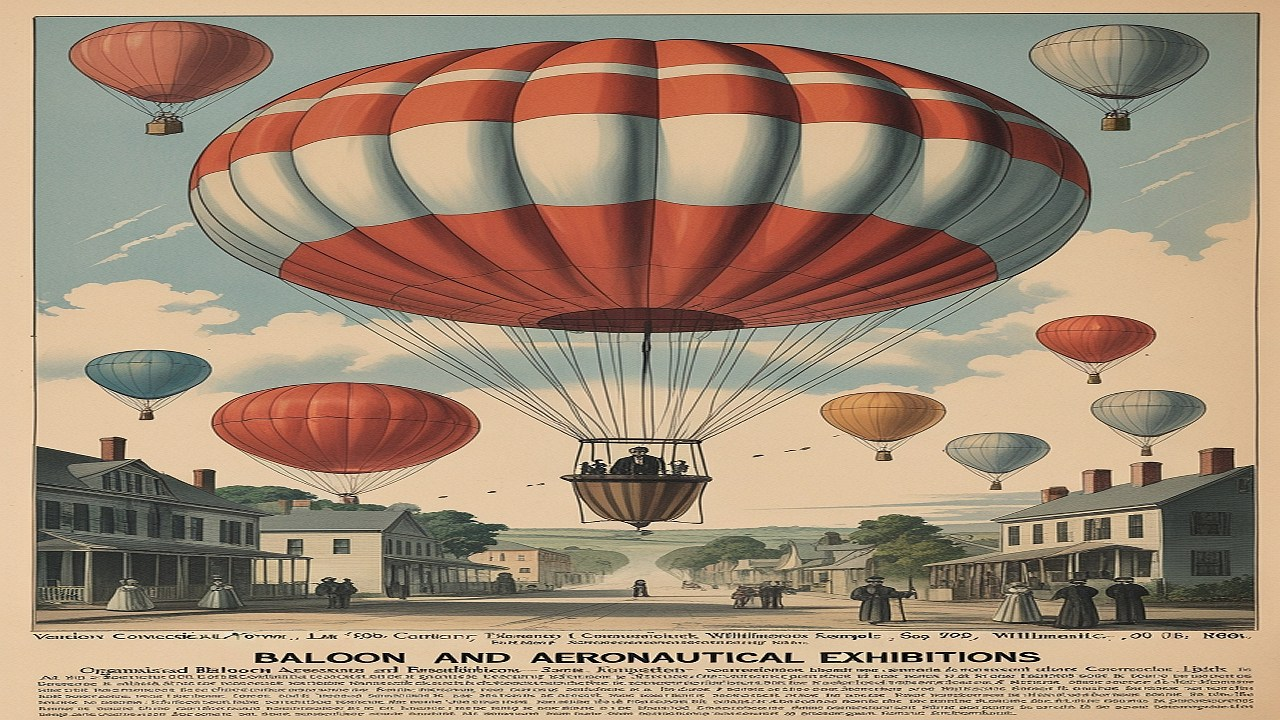
In the waning years of the 19th century, the skies over Connecticut often filled with spectacle. Before airplanes or dirigibles became part of everyday life, balloon ascensions and parachute demonstrations thrilled crowds across the state. These exhibitions were more than entertainment —they were technological marvels that blurred the line between science, showmanship, and the mysterious unknown. Among the most well documented examples was the balloon exhibition held in Willimantic, Connecticut, on September 30, 1896, by Professor Joseph La Roux, a noted aeronaut and showman of the era.
This event, along with others like it, reflected the public’s growing fascination with flight. It also helped lay the groundwork for how Connecticut residents would later interpret reports of strange lights and “airships” in the skies during the nationwide UFO wave of 1896–97.
Balloon ascensions had been popular public spectacles since the early 1800s, but by the late 19th century, they had evolved into highly organized exhibitions. Aeronauts—men and women who specialized in balloon flight—were often traveling performers, part of a larger circuit of fairs and carnivals. They were celebrated for their daring and occasionally for their scientific insight.
Their flights were advertised widely in newspapers, drawing enormous crowds who gathered to witness the remarkable sight of a human being floating skyward under a giant sphere of gas and fabric. For people living in the industrial towns of Connecticut, these demonstrations represented both entertainment and the promise of progress.
Professor Joseph La Roux’s 1896 Willimantic exhibition exemplified this phenomenon. La Roux, a professional balloonist who had toured across the northeastern United States, was scheduled to perform a balloon ascension followed by a parachute drop—a thrilling routine that combined aerial skill with calculated risk.
On September 30, 1896, hundreds of spectators gathered to witness the event. As La Roux’s balloon filled with hydrogen or coal gas, the massive fabric envelope expanded and strained against the ropes holding it to the ground. When released, it rose gracefully into the autumn sky, carrying the aeronaut aloft until he appeared as a distant speck above the town. At the appropriate height, La Roux cut loose his parachute and drifted back toward earth, often landing to the cheers of the crowd. Such scenes were both awe-inspiring and unsettling to contemporary observers, many of whom saw in these exhibitions the dawning of a new technological age.
The importance of events like this goes beyond mere entertainment. They played a key role in shaping the public’s perception of aerial phenomena. In the 1890s, when reports of mysterious “airships” began to surface across the United States—often described as cigar-shaped craft with bright lights and mechanical sounds—many witnesses and reporters had already seen balloon ascensions.
They knew that humans could rise into the air using lighter-than-air craft, that fire or gaslight could illuminate the sky, and that strange silhouettes could appear against the twilight. As a result, not every “mystery airship” sighting from the period can be regarded as a UFO in the modern sense. Some were almost certainly misinterpretations of legitimate aeronautical demonstrations, exhibitions, or stray advertising balloons.
Connecticut, with its thriving industrial towns and active fair circuit, hosted many such balloon events throughout the late 19th century. Cities like New Haven, Hartford, Bridgeport, and Willimantic often included aeronautical exhibitions as part of agricultural fairs or civic celebrations. These shows not only drew crowds but also generated significant local press coverage.
Newspapers published dramatic accounts of aeronauts’ exploits, sometimes exaggerating the danger or describing unusual atmospheric effects observed during flights. In doing so, they helped cultivate public fascination with the sky—and, occasionally, public confusion about what exactly people were seeing overhead.
By the 1890s, balloon exhibitions had become so common that they occasionally sparked rumors of strange or unexplained lights. For example, a bright glow from a gas balloon at night could easily be mistaken for something mysterious, especially if seen from a distance. In some cases, people unfamiliar with aeronautical activity might report such lights as “mysterious airships.” When the great airship wave of 1896–97 swept across the United States, many of the early reports originated in regions where balloon exhibitions were popular. This connection suggests that widespread familiarity with ballooning helped frame how people interpreted aerial phenomena—turning what might once have been seen as celestial wonders into the more modern idea of technological craft.
In Connecticut, the Willimantic demonstration of 1896 occurred just weeks before the national “mystery airship” sightings began to dominate headlines in California, Illinois, and later the Northeast. This timing is significant. It shows that residents of Connecticut were already accustomed to seeing flying objects in their skies—objects that were mechanical, human-made, and often spectacular in appearance. When reports of cigar-shaped airships appeared later that year, they would have seemed less outlandish and more within the realm of possibility. The public imagination had already been primed by the likes of Professor La Roux and his contemporaries.
For those who attended these exhibitions, the experience was both thrilling and transformative. To witness a balloon rise into the clouds at a time when most people had never left the ground was an almost spiritual experience. It symbolized human ingenuity and freedom, the ability to transcend earthly limits. Yet, it also provoked anxiety. Balloons were fragile, and accidents were common. Parachutes could fail, balloons could ignite, and strong winds could carry aeronauts miles off course. The mixture of wonder and danger gave these events a mystical quality, one that blurred the boundaries between science and the supernatural. That sense of awe—and of the sky as a place of mystery—would carry forward into the 20th century, influencing how later generations interpreted sightings of unidentified flying objects.
Professor Joseph La Roux himself was part of a larger tradition of professional aeronauts who toured America’s fairs in the late 19th century. These figures, often referred to as “professors” regardless of their formal education, were the showmen of early flight. They were predecessors to the aviators and astronauts who would later capture the public imagination. Their exhibitions demonstrated courage, technical skill, and an early form of aerospace engineering. Though few of their names are widely remembered today, their influence was profound. They normalized the idea of humans in flight long before powered aircraft became a reality.
The legacy of Connecticut’s late-19th-century aeronautical exhibitions continues to resonate. For historians and UFO researchers alike, these events are a vital part of the forensic background for understanding aerial phenomena reports. They remind us that many “mysteries” have historical and technological explanations. When people in the 1890s described seeing glowing, cigar-shaped objects in the sky, they were drawing upon cultural experiences shaped by balloon ascensions and mechanical flight exhibitions. These experiences did not diminish the wonder of what they saw—but they gave those observations context.
Today, when examining the lineage of aerial phenomena in Connecticut, it is clear that the fascination with the skies did not begin with flying saucers or military aircraft. It began with men like Joseph La Roux and the countless spectators who gathered to watch his daring ascents. Their shared sense of awe created the foundation for later generations to look skyward with curiosity and imagination. The balloon ascensions of the 19th century may have been born of hydrogen and canvas, but they carried within them the seeds of a cultural transformation—one that turned the sky into a realm of possibility, invention, and mystery.
In reflecting on the Willimantic exhibition of September 30, 1896, and others like it, we can see how the line between spectacle and science shaped both aviation history and the public’s readiness to accept the extraordinary. When lights began appearing in the skies over Connecticut and the rest of America in the years that followed, people were prepared to believe. They had seen humans rise into the heavens with their own eyes. The wonder of those early aeronauts helped transform the impossible into the imaginable—and, eventually, into the unexplained.
In the waning years of the 19th century, the skies over Connecticut often filled with spectacle. Before airplanes or dirigibles became part of everyday life, balloon ascensions and parachute demonstrations thrilled crowds across the state. These exhibitions were more than entertainment —they were technological marvels that blurred the line between science, showmanship, and the mysterious unknown. Among the most well documented examples was the balloon exhibition held in Willimantic, Connecticut, on September 30, 1896, by Professor Joseph La Roux, a noted aeronaut and showman of the era.
This event, along with others like it, reflected the public’s growing fascination with flight. It also helped lay the groundwork for how Connecticut residents would later interpret reports of strange lights and “airships” in the skies during the nationwide UFO wave of 1896–97.
Balloon ascensions had been popular public spectacles since the early 1800s, but by the late 19th century, they had evolved into highly organized exhibitions. Aeronauts—men and women who specialized in balloon flight—were often traveling performers, part of a larger circuit of fairs and carnivals. They were celebrated for their daring and occasionally for their scientific insight.
Their flights were advertised widely in newspapers, drawing enormous crowds who gathered to witness the remarkable sight of a human being floating skyward under a giant sphere of gas and fabric. For people living in the industrial towns of Connecticut, these demonstrations represented both entertainment and the promise of progress.
Professor Joseph La Roux’s 1896 Willimantic exhibition exemplified this phenomenon. La Roux, a professional balloonist who had toured across the northeastern United States, was scheduled to perform a balloon ascension followed by a parachute drop—a thrilling routine that combined aerial skill with calculated risk.
On September 30, 1896, hundreds of spectators gathered to witness the event. As La Roux’s balloon filled with hydrogen or coal gas, the massive fabric envelope expanded and strained against the ropes holding it to the ground. When released, it rose gracefully into the autumn sky, carrying the aeronaut aloft until he appeared as a distant speck above the town. At the appropriate height, La Roux cut loose his parachute and drifted back toward earth, often landing to the cheers of the crowd. Such scenes were both awe-inspiring and unsettling to contemporary observers, many of whom saw in these exhibitions the dawning of a new technological age.
The importance of events like this goes beyond mere entertainment. They played a key role in shaping the public’s perception of aerial phenomena. In the 1890s, when reports of mysterious “airships” began to surface across the United States—often described as cigar-shaped craft with bright lights and mechanical sounds—many witnesses and reporters had already seen balloon ascensions.
They knew that humans could rise into the air using lighter-than-air craft, that fire or gaslight could illuminate the sky, and that strange silhouettes could appear against the twilight. As a result, not every “mystery airship” sighting from the period can be regarded as a UFO in the modern sense. Some were almost certainly misinterpretations of legitimate aeronautical demonstrations, exhibitions, or stray advertising balloons.
Connecticut, with its thriving industrial towns and active fair circuit, hosted many such balloon events throughout the late 19th century. Cities like New Haven, Hartford, Bridgeport, and Willimantic often included aeronautical exhibitions as part of agricultural fairs or civic celebrations. These shows not only drew crowds but also generated significant local press coverage.
Newspapers published dramatic accounts of aeronauts’ exploits, sometimes exaggerating the danger or describing unusual atmospheric effects observed during flights. In doing so, they helped cultivate public fascination with the sky—and, occasionally, public confusion about what exactly people were seeing overhead.
By the 1890s, balloon exhibitions had become so common that they occasionally sparked rumors of strange or unexplained lights. For example, a bright glow from a gas balloon at night could easily be mistaken for something mysterious, especially if seen from a distance. In some cases, people unfamiliar with aeronautical activity might report such lights as “mysterious airships.” When the great airship wave of 1896–97 swept across the United States, many of the early reports originated in regions where balloon exhibitions were popular. This connection suggests that widespread familiarity with ballooning helped frame how people interpreted aerial phenomena—turning what might once have been seen as celestial wonders into the more modern idea of technological craft.
In Connecticut, the Willimantic demonstration of 1896 occurred just weeks before the national “mystery airship” sightings began to dominate headlines in California, Illinois, and later the Northeast. This timing is significant. It shows that residents of Connecticut were already accustomed to seeing flying objects in their skies—objects that were mechanical, human-made, and often spectacular in appearance. When reports of cigar-shaped airships appeared later that year, they would have seemed less outlandish and more within the realm of possibility. The public imagination had already been primed by the likes of Professor La Roux and his contemporaries.
For those who attended these exhibitions, the experience was both thrilling and transformative. To witness a balloon rise into the clouds at a time when most people had never left the ground was an almost spiritual experience. It symbolized human ingenuity and freedom, the ability to transcend earthly limits. Yet, it also provoked anxiety. Balloons were fragile, and accidents were common. Parachutes could fail, balloons could ignite, and strong winds could carry aeronauts miles off course. The mixture of wonder and danger gave these events a mystical quality, one that blurred the boundaries between science and the supernatural. That sense of awe—and of the sky as a place of mystery—would carry forward into the 20th century, influencing how later generations interpreted sightings of unidentified flying objects.
Professor Joseph La Roux himself was part of a larger tradition of professional aeronauts who toured America’s fairs in the late 19th century. These figures, often referred to as “professors” regardless of their formal education, were the showmen of early flight. They were predecessors to the aviators and astronauts who would later capture the public imagination. Their exhibitions demonstrated courage, technical skill, and an early form of aerospace engineering. Though few of their names are widely remembered today, their influence was profound. They normalized the idea of humans in flight long before powered aircraft became a reality.
The legacy of Connecticut’s late-19th-century aeronautical exhibitions continues to resonate. For historians and UFO researchers alike, these events are a vital part of the forensic background for understanding aerial phenomena reports. They remind us that many “mysteries” have historical and technological explanations. When people in the 1890s described seeing glowing, cigar-shaped objects in the sky, they were drawing upon cultural experiences shaped by balloon ascensions and mechanical flight exhibitions. These experiences did not diminish the wonder of what they saw—but they gave those observations context.
Today, when examining the lineage of aerial phenomena in Connecticut, it is clear that the fascination with the skies did not begin with flying saucers or military aircraft. It began with men like Joseph La Roux and the countless spectators who gathered to watch his daring ascents. Their shared sense of awe created the foundation for later generations to look skyward with curiosity and imagination. The balloon ascensions of the 19th century may have been born of hydrogen and canvas, but they carried within them the seeds of a cultural transformation—one that turned the sky into a realm of possibility, invention, and mystery.
In reflecting on the Willimantic exhibition of September 30, 1896, and others like it, we can see how the line between spectacle and science shaped both aviation history and the public’s readiness to accept the extraordinary. When lights began appearing in the skies over Connecticut and the rest of America in the years that followed, people were prepared to believe. They had seen humans rise into the heavens with their own eyes. The wonder of those early aeronauts helped transform the impossible into the imaginable—and, eventually, into the unexplained.