

Blog Categories
- African Incidents
- Atlantis Incidents
- Australian Incidents
- Belgian Incidents
- Bermuda Triangle Incidents
- Brazilian Incidents
- Canadian Incidents
- Chinese Incidents
- European Incidents
- France Incidents
- Ghosts
- Giants
- Italy Incidents
- Japanese Incidents
- Middle East Incidents
- Portugal Incidents
- Project Serpo
- Puerto Rico Incidents
- Russian Incidents
- Sasquatch
- Scandinavia Incidents
- Spanish Incidents
- UFOs
- United Kingdom Incidents
- United States Incidents
Unveiling Hidden Alliances 1950s: Sgt. Clifford Stone
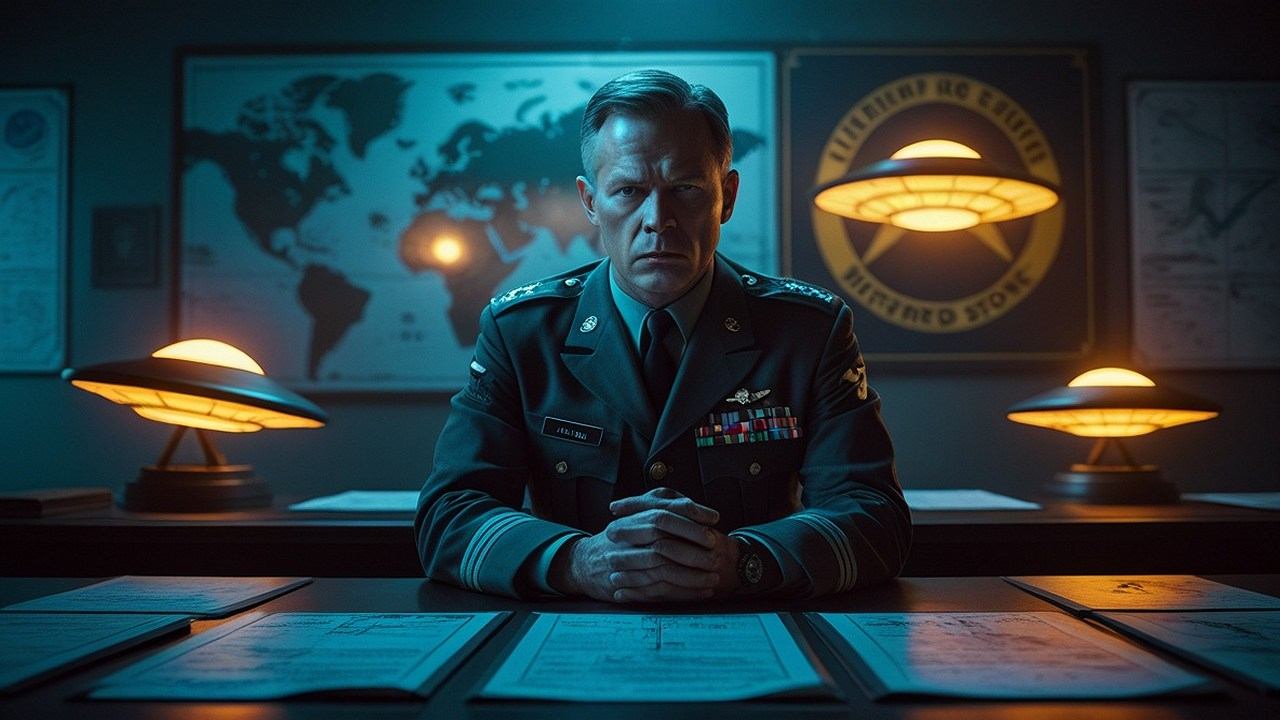
In the shadowed corridors of military history, where the lines between earthly conflicts and cosmic enigmas blur, emerges the compelling narrative of Sgt. Clifford Stone. A U.S. Army veteran who served from 1969 to 1990, Stone rose to the rank of sergeant, but his duties extended far beyond conventional warfare. According to his accounts, he participated in the retrieval and analysis of artifacts and entities that defied human understanding. His revelations, shared through interviews, books, and public testimonies in the 1980s and 1990s, point to a clandestine world where governments grappled with phenomena that challenged the very fabric of reality.
This is the story of Sgt. Clifford Stone — one of the most significant insider voices in the history of UFO disclosure. Today, we explore his journey, his claims of crash retrieval operations, and the threads suggesting cooperative efforts between the United States, Britain, and Canada in handling unexplained aerial incidents during the 1950s and 1960s.
Welcome to the channel. We’re diving deep into one of the most compelling insider testimonies in UFO research. Everything in this video is drawn directly from Stone’s own accounts and the historical context he referenced. No speculation. Just the facts as he presented them.
Clifford Stone was born in 1949. From an early age, his life intersected with the unknown. He described personal encounters that would later propel him into secretive operations within the U.S. Army. Upon enlisting at age 17, he found himself assigned to roles that capitalized on his unique sensitivities, including participation in specialized teams tasked with recovering downed craft and their occupants.
According to Stone, these operations fell under programs like Project Moon Dust and Operation Blue Fly — initiatives designed to retrieve foreign space debris but often encompassing objects of non-terrestrial origin. His service spanned the Vietnam era, yet much of his work remained classified, involving rapid response to crash sites where teams secured perimeters, documented anomalies, and handled biological entities with protocols akin to those for hazardous materials.
Stone emphasized that these efforts were not isolated to the United States. They reflected a global awareness, with intelligence sharing among allies to manage the implications of such events. The 1950s and 1960s, in particular, were rife with incidents that suggested coordinated responses, as radar tracks and eyewitness reports from Europe and North America painted a picture of visitors monitoring human advancements in nuclear and aerospace technologies.
The postwar landscape provided fertile ground for such collaborations. Nations rebuilt from World War II’s devastation while eyeing each other’s progress in rocketry and aviation. Documents from the era reveal that the U.S., Britain, and Canada were entangled in joint ventures, such as Project Y, a developmental program aimed at creating nonconventional aircraft inspired by observed phenomena. This initiative, involving Canadian, British, and American scientists, sought to replicate saucer-like designs, fueled by sightings that baffled military observers.
Stone drew on declassified documents and insider knowledge to link earlier events to international efforts. For instance, the 1950 memorandum from Canadian engineer Wilbert Smith, who headed a government lab on Lake Ontario, revealed discreet inquiries through embassy channels confirming U.S. classifications of flying saucers as higher than the H-bomb. Smith, who exchanged samples of alleged extraterrestrial metal with American counterparts, represented a bridge to Canadian involvement, implying that RAF stations in the UK might have shared radar data or debris from European overflights.
Stone’s testimony at the 2001 Disclosure Project press conference amplified these connections. He noted that countries in Europe treated the phenomena with greater seriousness than the U.S., pursuing investigations that could involve collaborative retrievals in NATO territories.
The significance of these alleged collaborations lies in their implications for global security and technological advancement. During the 1950s, as the Iron Curtain descended, sightings over sensitive sites in Europe prompted memos outlining procedures for objects exceeding conventional speeds and altitudes. A 1960 RAF directive from Headquarters No. 11 Group instructed pilots to report phenomena traveling above 700 knots or 60,000 feet. Incidents like the multiple objects tracked at West Freugh in Scotland demonstrated radar-confirmed anomalies.
Stone suggested that such events were not isolated. They fed into a network where British intelligence liaised with Canadian and American agencies, particularly through NORAD structures established in 1958. The 1951 Newfoundland case, involving a UFO approaching at 1,800 mph and changing colors, was interrogated by U.S. Air Force personnel but involved Canadian ground control, illustrating how proximity fostered shared responses.
Stone’s broader claims of over 57 extraterrestrial species visiting Earth, some recovered from crashes, imply that debris from European incidents might have been funneled through these alliances, with RAF facilities serving as initial containment points before transfer to secure North American sites.
As Stone’s stories surfaced in the 1980s and 1990s, they resonated with a public increasingly attuned to government secrecy. His book "UFOs Are Real," drawing on declassified documents, argued for the existence of advanced intelligences dating back to the 1940s, with international dimensions evident in allied wartime reports.
The impact on people was immediate and widespread, sparking a wave of interest in disclosure movements. Individuals who had witnessed unexplained lights or craft found validation in Stone’s empathetic portrayal of entities as non-hostile, often humanitarian in intent. This narrative shifted perceptions from fear to curiosity, encouraging veterans and civilians alike to share their experiences.
Notable figures intertwined with Stone’s narrative added layers of credibility. Dr. Steven M. Greer, founder of the Disclosure Project, facilitated Stone’s 2001 testimony. Wilbert Smith, the Canadian pioneer, emerges as a key connector. General Nathan Twining established Project Sign in 1948. Edward J. Ruppelt documented British interest in UFOs. J. Allen Hynek transitioned from skeptic to advocate. Former Canadian Minister of Defense Paul Hellyer later echoed Stone’s claims of multiple species.
The societal ripple effects of Stone’s disclosures were profound, fostering a collective awakening. In the 1980s, as Cold War thaw allowed for declassifications, people grappled with suppressed knowledge. Books and documentaries inspired by his accounts encouraged philosophical reflections on our place in the cosmos.
In contemporary times, Stone’s legacy endures amid renewed UAP discussions. Figures like Luis Elizondo parallel Stone’s evolution from insider to advocate. David Grusch’s 2023 testimony echoes Stone’s retrieval claims. Polls reflect shifting opinions, with growing acceptance of extraterrestrial visitation. Organizations such as MUFON, where Stone contributed, continue evidence-based inquiry.
Expanding on the mid-century context, the 1950s saw a surge in European sightings that likely necessitated allied responses. RAF memos from 1960 detailed high-altitude objects. Canadian inquiries through Smith revealed geomagnetic links. Stone’s references to Operation Paperclip suggest that European debris might have been analyzed collaboratively.
The human element in Stone’s story cannot be overstated. His empathy for recovered entities, described as diverse in form yet unified in purpose, humanized the phenomena. He recounted interfacing with beings for scientific exchange, emphasizing their concern for Earth’s nuclear path. This perspective influenced notable collaborators like Phillip Corso.
In Europe, incidents like the 1954 USAF procedures aligned with RAF directives. Canadian involvement, through figures like Hellyer, reinforces Stone’s global framework.
Ultimately, Sgt. Clifford Stone’s revelations serve as a beacon, illuminating the intricate alliances that may have shaped our understanding of the cosmos. From childhood encounters to classified retrievals, his life embodies the pursuit of truth amid secrecy. The alleged Canada-RAF collaborations underscore a shared vigilance over skies that hold profound secrets. As modern inquiries build on his foundation, humanity stands poised to embrace these realities, fostering a future of wonder and unity.
Stone’s story reminds us that the truth about our place in the universe may have been hidden in plain sight for decades — protected by alliances formed in the shadow of the unknown. Whether one accepts every detail or approaches with skepticism, his testimony remains one of the most compelling insider perspectives in the history of UFO research.
The question is no longer just “Are we alone?” but “How long have they been here — and who else has known?”
In the shadowed corridors of military history, where the lines between earthly conflicts and cosmic enigmas blur, emerges the compelling narrative of Sgt. Clifford Stone. A U.S. Army veteran who served from 1969 to 1990, Stone rose to the rank of sergeant, but his duties extended far beyond conventional warfare. According to his accounts, he participated in the retrieval and analysis of artifacts and entities that defied human understanding. His revelations, shared through interviews, books, and public testimonies in the 1980s and 1990s, point to a clandestine world where governments grappled with phenomena that challenged the very fabric of reality.
This is the story of Sgt. Clifford Stone — one of the most significant insider voices in the history of UFO disclosure. Today, we explore his journey, his claims of crash retrieval operations, and the threads suggesting cooperative efforts between the United States, Britain, and Canada in handling unexplained aerial incidents during the 1950s and 1960s.
Welcome to the channel. We’re diving deep into one of the most compelling insider testimonies in UFO research. Everything in this video is drawn directly from Stone’s own accounts and the historical context he referenced. No speculation. Just the facts as he presented them.
Clifford Stone was born in 1949. From an early age, his life intersected with the unknown. He described personal encounters that would later propel him into secretive operations within the U.S. Army. Upon enlisting at age 17, he found himself assigned to roles that capitalized on his unique sensitivities, including participation in specialized teams tasked with recovering downed craft and their occupants.
According to Stone, these operations fell under programs like Project Moon Dust and Operation Blue Fly — initiatives designed to retrieve foreign space debris but often encompassing objects of non-terrestrial origin. His service spanned the Vietnam era, yet much of his work remained classified, involving rapid response to crash sites where teams secured perimeters, documented anomalies, and handled biological entities with protocols akin to those for hazardous materials.
Stone emphasized that these efforts were not isolated to the United States. They reflected a global awareness, with intelligence sharing among allies to manage the implications of such events. The 1950s and 1960s, in particular, were rife with incidents that suggested coordinated responses, as radar tracks and eyewitness reports from Europe and North America painted a picture of visitors monitoring human advancements in nuclear and aerospace technologies.
The postwar landscape provided fertile ground for such collaborations. Nations rebuilt from World War II’s devastation while eyeing each other’s progress in rocketry and aviation. Documents from the era reveal that the U.S., Britain, and Canada were entangled in joint ventures, such as Project Y, a developmental program aimed at creating nonconventional aircraft inspired by observed phenomena. This initiative, involving Canadian, British, and American scientists, sought to replicate saucer-like designs, fueled by sightings that baffled military observers.
Stone drew on declassified documents and insider knowledge to link earlier events to international efforts. For instance, the 1950 memorandum from Canadian engineer Wilbert Smith, who headed a government lab on Lake Ontario, revealed discreet inquiries through embassy channels confirming U.S. classifications of flying saucers as higher than the H-bomb. Smith, who exchanged samples of alleged extraterrestrial metal with American counterparts, represented a bridge to Canadian involvement, implying that RAF stations in the UK might have shared radar data or debris from European overflights.
Stone’s testimony at the 2001 Disclosure Project press conference amplified these connections. He noted that countries in Europe treated the phenomena with greater seriousness than the U.S., pursuing investigations that could involve collaborative retrievals in NATO territories.
The significance of these alleged collaborations lies in their implications for global security and technological advancement. During the 1950s, as the Iron Curtain descended, sightings over sensitive sites in Europe prompted memos outlining procedures for objects exceeding conventional speeds and altitudes. A 1960 RAF directive from Headquarters No. 11 Group instructed pilots to report phenomena traveling above 700 knots or 60,000 feet. Incidents like the multiple objects tracked at West Freugh in Scotland demonstrated radar-confirmed anomalies.
Stone suggested that such events were not isolated. They fed into a network where British intelligence liaised with Canadian and American agencies, particularly through NORAD structures established in 1958. The 1951 Newfoundland case, involving a UFO approaching at 1,800 mph and changing colors, was interrogated by U.S. Air Force personnel but involved Canadian ground control, illustrating how proximity fostered shared responses.
Stone’s broader claims of over 57 extraterrestrial species visiting Earth, some recovered from crashes, imply that debris from European incidents might have been funneled through these alliances, with RAF facilities serving as initial containment points before transfer to secure North American sites.
As Stone’s stories surfaced in the 1980s and 1990s, they resonated with a public increasingly attuned to government secrecy. His book "UFOs Are Real," drawing on declassified documents, argued for the existence of advanced intelligences dating back to the 1940s, with international dimensions evident in allied wartime reports.
The impact on people was immediate and widespread, sparking a wave of interest in disclosure movements. Individuals who had witnessed unexplained lights or craft found validation in Stone’s empathetic portrayal of entities as non-hostile, often humanitarian in intent. This narrative shifted perceptions from fear to curiosity, encouraging veterans and civilians alike to share their experiences.
Notable figures intertwined with Stone’s narrative added layers of credibility. Dr. Steven M. Greer, founder of the Disclosure Project, facilitated Stone’s 2001 testimony. Wilbert Smith, the Canadian pioneer, emerges as a key connector. General Nathan Twining established Project Sign in 1948. Edward J. Ruppelt documented British interest in UFOs. J. Allen Hynek transitioned from skeptic to advocate. Former Canadian Minister of Defense Paul Hellyer later echoed Stone’s claims of multiple species.
The societal ripple effects of Stone’s disclosures were profound, fostering a collective awakening. In the 1980s, as Cold War thaw allowed for declassifications, people grappled with suppressed knowledge. Books and documentaries inspired by his accounts encouraged philosophical reflections on our place in the cosmos.
In contemporary times, Stone’s legacy endures amid renewed UAP discussions. Figures like Luis Elizondo parallel Stone’s evolution from insider to advocate. David Grusch’s 2023 testimony echoes Stone’s retrieval claims. Polls reflect shifting opinions, with growing acceptance of extraterrestrial visitation. Organizations such as MUFON, where Stone contributed, continue evidence-based inquiry.
Expanding on the mid-century context, the 1950s saw a surge in European sightings that likely necessitated allied responses. RAF memos from 1960 detailed high-altitude objects. Canadian inquiries through Smith revealed geomagnetic links. Stone’s references to Operation Paperclip suggest that European debris might have been analyzed collaboratively.
The human element in Stone’s story cannot be overstated. His empathy for recovered entities, described as diverse in form yet unified in purpose, humanized the phenomena. He recounted interfacing with beings for scientific exchange, emphasizing their concern for Earth’s nuclear path. This perspective influenced notable collaborators like Phillip Corso.
In Europe, incidents like the 1954 USAF procedures aligned with RAF directives. Canadian involvement, through figures like Hellyer, reinforces Stone’s global framework.
Ultimately, Sgt. Clifford Stone’s revelations serve as a beacon, illuminating the intricate alliances that may have shaped our understanding of the cosmos. From childhood encounters to classified retrievals, his life embodies the pursuit of truth amid secrecy. The alleged Canada-RAF collaborations underscore a shared vigilance over skies that hold profound secrets. As modern inquiries build on his foundation, humanity stands poised to embrace these realities, fostering a future of wonder and unity.
Stone’s story reminds us that the truth about our place in the universe may have been hidden in plain sight for decades — protected by alliances formed in the shadow of the unknown. Whether one accepts every detail or approaches with skepticism, his testimony remains one of the most compelling insider perspectives in the history of UFO research.
The question is no longer just “Are we alone?” but “How long have they been here — and who else has known?”